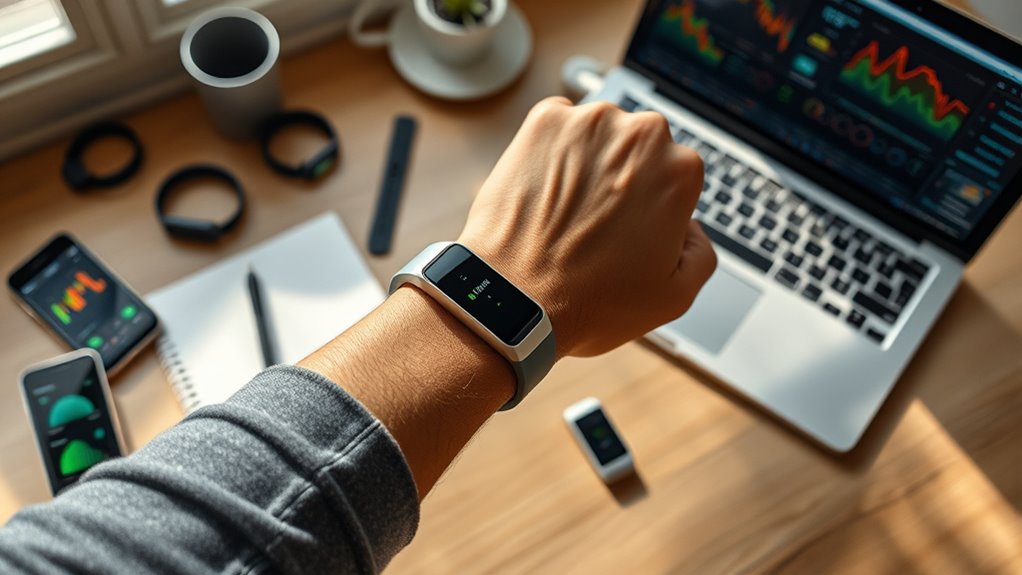

Using wearables to track your habits provides you with precise data on your daily routines, helping you see patterns and identify areas for improvement. These devices make monitoring health metrics and activity levels convenient, so you can reinforce positive habits and adjust those that aren’t working. Compatibility and data privacy are important, so choose vetted devices that suit your smartphone. Keep exploring to discover how to harness this data effectively for long-term routine success.
Key Takeaways
- Wearables enable continuous activity and health metric tracking to identify habits and monitor progress over time.
- Data collected helps analyze patterns, allowing for targeted habit adjustments and routine optimization.
- Ensuring device compatibility with your smartphone guarantees seamless syncing and accurate data collection.
- Selecting vetted, reliable wearables protects data privacy and ensures trustworthy habit tracking performance.
- Proper use of wearable data supports consistent habit reinforcement and long-term routine strengthening.
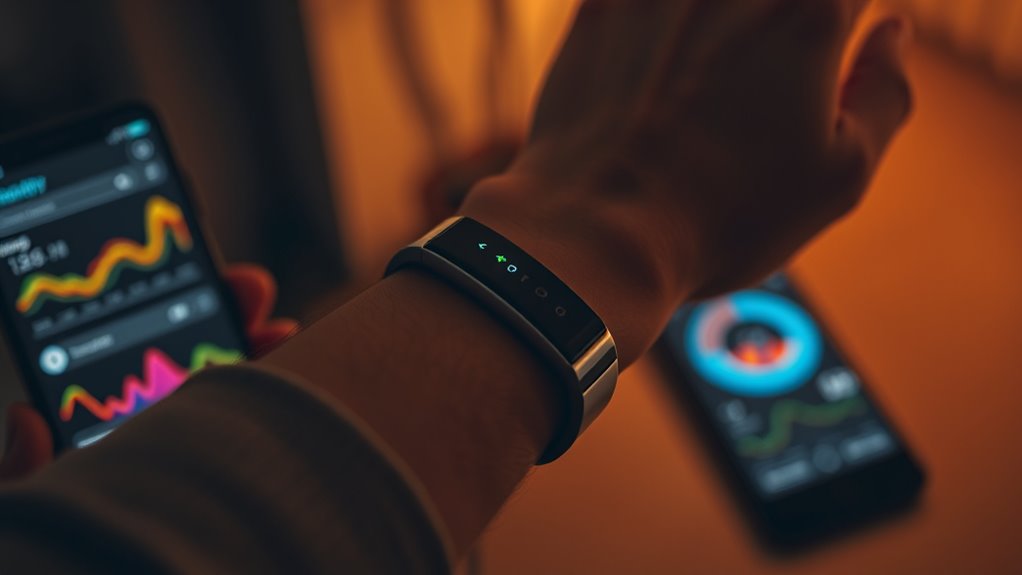
Many people are turning to wearables to better understand and improve their habits. These devices offer a convenient way to track activities, monitor health metrics, and gather data that can help you refine your routines. But as you start relying more on wearables, it’s essential to consider factors like data privacy and device compatibility. Your personal information is valuable, and understanding how your data is stored and shared should be a priority. Manufacturers often have different policies on data privacy, so it’s wise to read the privacy policies carefully. Some devices store data locally, while others upload it to cloud servers, which could pose risks if security measures aren’t robust. Knowing how your data is protected can help you make informed decisions about which wearable to use and how much information you’re comfortable sharing. Additionally, considering vetted products that have undergone safety and effectiveness reviews can help ensure you select a device that meets high standards. Device compatibility is another vital aspect. Not all wearables work seamlessly with every smartphone or operating system. Before purchasing, check whether the device is compatible with your phone or tablet. Some wearables are designed specifically for iOS, while others work better with Android. Compatibility issues can lead to frustration, such as syncing problems or limited functionality, diminishing the benefits you expect from tracking your habits. Ensuring your wearable integrates smoothly with your existing devices guarantees you get real-time updates and thorough data collection, which are essential for analyzing your routines effectively.
Frequently Asked Questions
How Accurate Are Wearable Devices in Tracking Specific Habits?
Wearable devices are generally quite accurate for tracking specific habits, but their precision depends on factors like sensor calibration and data synchronization. When sensors are well-calibrated, they provide reliable data, helping you understand your habits better. However, if data isn’t synchronized properly across devices or apps, it can lead to inaccuracies. To get the best results, regularly update your device’s firmware and guarantee proper sensor calibration.
Can Wearables Help Modify or Break Bad Habits Effectively?
Think of wearables as your personal cheerleader in your journey to break bad habits. They can effectively support behavior change and habit reinforcement by providing real-time feedback and reminders. When you track patterns, you spot triggers and celebrate small wins, making it easier to replace bad habits with healthier ones. While not a magic wand, they’re a powerful tool to help you stay committed and make lasting changes.
What Features Should I Look for in a Habit-Tracking Wearable?
When choosing a habit-tracking wearable, look for motivational features like reminders, badges, or streaks to keep you engaged. Customization options are also key—ensure it allows you to tailor goals and notifications to fit your routine. A device with real-time feedback, easy data syncing, and a user-friendly app helps you stay accountable and motivated. Prioritize these features to make habit tracking both effective and enjoyable.
How Does Data Privacy Work With Wearable Habit Trackers?
Did you know that 78% of users worry about their data privacy? Your wearable habit tracker protects your info through data encryption, making it unreadable to outsiders. Plus, your device only shares data with your consent, ensuring you’re in control. Always review privacy settings and understand the app’s policies—this way, your routines stay private, and your data remains secure.
Are There Any Recommended Apps to Supplement Wearable Habit Tracking?
You should try apps like Strava, Fitbit, or MyFitnessPal, which supplement your wearable habit tracker. They often include fitness challenges to keep you motivated and enable social sharing, so you can connect with friends and stay accountable. These apps sync seamlessly with your devices, offering detailed insights into your progress and helping you build consistent routines while keeping your data secure.
Conclusion
By embracing wearables, you gently guide your routines with subtle insights, allowing habits to evolve naturally over time. The data becomes a quiet partner, offering hints rather than commands, helping you refine your daily rhythm without overwhelming. With patience and awareness, you’ll find yourself steadily aligning your actions with your intentions, all while maintaining a sense of effortless grace. Ultimately, these tools serve as a refined compass, steering you toward a more harmonious and mindful lifestyle.