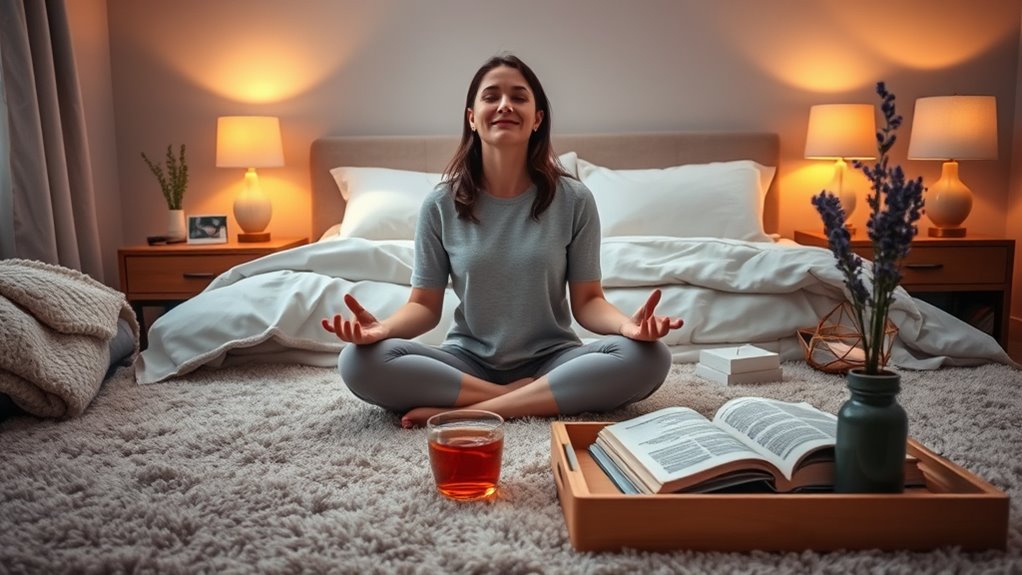

Establishing calming evening rituals helps you shift smoothly into restful sleep and boosts overall well-being. By creating a consistent routine—such as dimming lights, relaxing activities, and maintaining a comfortable sleep environment—you signal your body to unwind and reduce stress. Avoiding screens and intense exercise before bed also improves sleep quality. These habits make falling asleep easier and enhance your health over time. Keep exploring ways to perfect your evening routine for better rest and greater energy.
Key Takeaways
- Establishing calming evening routines signals the body to relax, reducing stress and promoting better sleep quality.
- Consistent sleep schedules and habits help regulate the internal clock for easier, more restful sleep.
- Creating a sleep-friendly environment—cool, dark, quiet—enhances relaxation and minimizes disruptions.
- Pre-sleep activities like dimming lights and journaling reduce anxiety and prepare the mind for restful sleep.
- Using mindful habits and automation supports routine adherence, making healthy nighttime behaviors automatic.
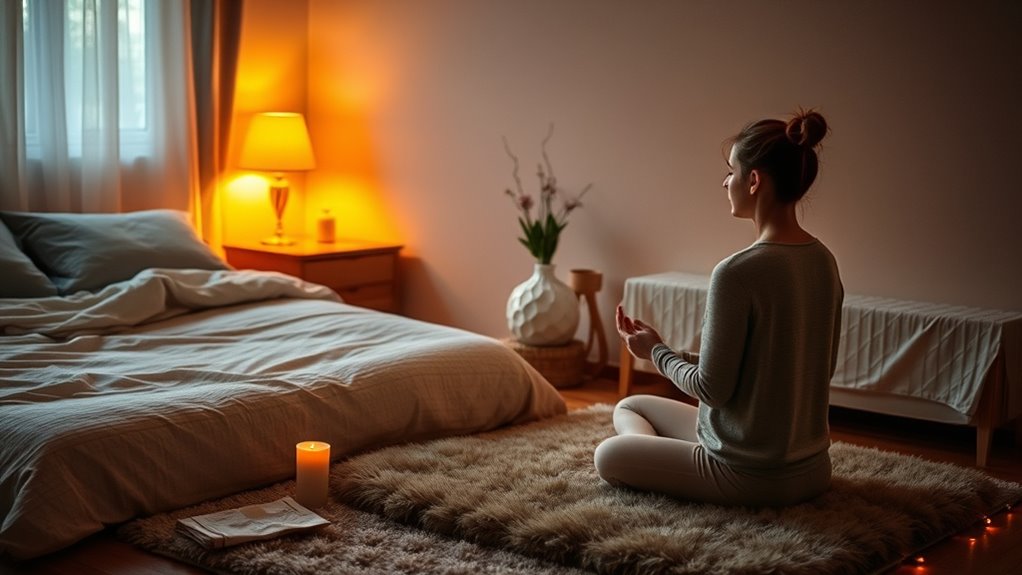
Have you ever wondered how your evening routine can set the tone for a restful night? The way you wind down after a busy day plays a fundamental role in shaping your sleep quality and overall well-being. Establishing calming evening rituals helps you shift from the hustle of daytime activities to a state of relaxation, which is indispensable for good sleep hygiene. When you prioritize stress reduction during your evening, you signal to your body that it’s time to unwind, lowering cortisol levels and easing tension. This not only makes falling asleep easier but also improves the depth and restorative quality of your sleep. Engaging in relaxing activities like reading, gentle stretching, or listening to soothing music can help clear your mind of racing thoughts, reducing stress and promoting a peaceful mind before bed.
Creating a consistent routine is key to reinforcing healthy sleep habits. Going to bed and waking up at the same time every day helps regulate your internal clock, making it easier to fall asleep naturally and wake up refreshed. Avoiding stimulating activities close to bedtime, such as intense exercise or screen time, is essential. The blue light emitted by screens suppresses melatonin production, which interferes with your sleep hygiene. Instead, opt for calming rituals like dimming the lights, practicing deep breathing exercises, or journaling your thoughts to release worries. These practices foster a sense of control and calmness, further reducing stress and making your sleep environment more conducive to rest. Additionally, understanding how automation can play a role in optimizing your sleep routines—such as setting automated reminders for bedtime—can help reinforce these habits.
Consistent bedtime routines and relaxing activities promote restful, restorative sleep each night.
Your sleep environment itself should support your evening rituals. Keep your bedroom cool, dark, and quiet to optimize your sleep hygiene. Investing in a comfortable mattress and pillows can also considerably improve sleep quality. When your surroundings are inviting and free from distractions, your brain associates the space with relaxation, helping you drift off more easily. Additionally, cultivating a pre-sleep routine signals to your body that it’s time to wind down, reinforcing the connection between your habits and quality sleep. Over time, these habits become automatic, making it easier to transition into restful sleep night after night.
In short, your evening rituals can profoundly influence your sleep and overall well-being. By consciously incorporating stress reduction techniques and prioritizing sleep hygiene, you set the stage for a peaceful night’s rest. It’s about creating a gentle passage from the demands of the day to the tranquility of sleep, so your body and mind can fully recharge. The more consistent and mindful you are about your nighttime habits, the more naturally restful your sleep becomes, paving the way for better health and brighter days ahead.
adjustable blackout curtains for bedroom
As an affiliate, we earn on qualifying purchases.
As an affiliate, we earn on qualifying purchases.
Frequently Asked Questions
How Long Before Bed Should I Start My Evening Rituals?
You should start your evening rituals about 30 to 60 minutes before bed. This timing allows you to engage in relaxation techniques and wind down, promoting better sleep. Consistency is key, so try to stick to the same schedule each night. By establishing a routine within this window, you help signal to your body that it’s time to relax, making it easier to fall asleep and improve your overall well-being.
Can Evening Rituals Help With Insomnia or Sleep Disorders?
Evening rituals can be your guiding lighthouse through foggy nights, helping with insomnia and sleep disorders. By practicing good sleep hygiene and relaxation techniques, you calm your mind and prepare your body for restful sleep. Consistent routines signal your brain it’s time to wind down, easing you into slumber. These habits create a soothing rhythm, making it easier to overcome sleep struggles and embrace peaceful, restorative nights.
Are There Any Rituals I Should Avoid Before Bedtime?
You should avoid caffeine consumption and excessive screen time before bed. Caffeine can stay in your system and disrupt your sleep, so skip coffee or energy drinks at least six hours before bedtime. Also, limit screen time because the blue light from devices suppresses melatonin, making it harder to fall asleep. Instead, try relaxing activities like reading a book or practicing deep breathing to prepare your mind and body for restful sleep.
Do Different Age Groups Benefit From Specific Evening Routines?
An ounce of prevention is worth a pound of cure, so yes, different age groups benefit from specific routines. Teenagers need relaxation techniques to calm their minds before sleep, while seniors should establish a consistent bedtime to improve sleep quality. Tailoring your evening routine to your age helps optimize rest, so prioritize calming activities like reading or gentle stretches to support your unique sleep needs.
How Quickly Can I Expect to See Improvements in Sleep Quality?
You can start noticing improvements in your sleep quality within a week of adopting regular evening rituals. Incorporate relaxation techniques like deep breathing or meditation to help regulate your sleep cycle. Consistency is key, so stick to your routine every night. Over time, your body will adjust, leading to better sleep, fewer disruptions, and more restorative rest. Be patient, and you’ll see the benefits unfold gradually.
memory foam mattress for better sleep
As an affiliate, we earn on qualifying purchases.
As an affiliate, we earn on qualifying purchases.
Conclusion
By embracing evening rituals, you naturally create a peaceful passage into sleep, often finding that these habits align just when you need them most. It’s almost as if your body and mind coordinate silently, whispering that rest is near. When you prioritize these habits, you might notice how even small changes seem to unexpectedly improve your well-being. Sometimes, it’s the simple coincidence of consistency and intention that open your best night’s sleep and brighter mornings.

Magicteam Sound White Noise Machine with 20 Non Looping Natural Soothing Sounds and Memory Function 32 Levels of Volume Powered by AC or USB and Sleep Sound Timer Therapy for Baby Kids Adults
- 20 Non-Looping Soothing Sounds: Includes white, brown, pink, blue noise, and nature sounds
- Adjustable Volume & Timer: 32 volume levels and multiple timer options
- Portable & Compact Design: Small size for home, office, or travel
As an affiliate, we earn on qualifying purchases.
As an affiliate, we earn on qualifying purchases.
aromatherapy diffuser for relaxation
As an affiliate, we earn on qualifying purchases.
As an affiliate, we earn on qualifying purchases.