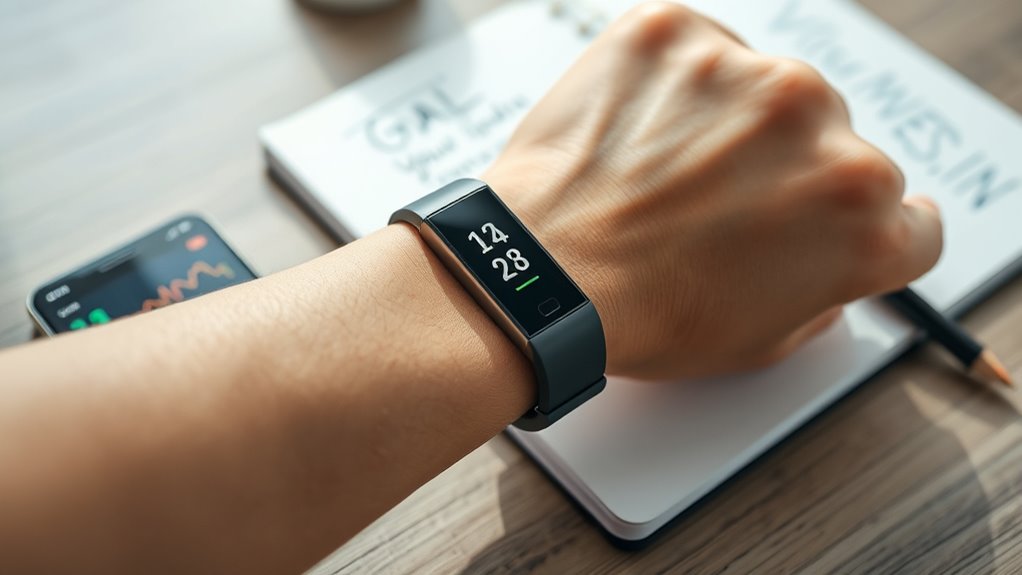

Using your wearable’s accurate data, you can track progress effectively and make smarter self-improvement decisions. Reliable sensors and validation tools guarantee your activity, sleep, and heart rate info are dependable, boosting confidence and motivation. As you monitor trends and celebrate milestones, you can adjust goals and habits for better results. Consistent, trustworthy data turns your device into a personal coach, helping you stay on track and inspired to improve—exploring more will give you even deeper insights.

Turn your quiet moments into listening time
- Thousands of audiobooks, podcasts and originals
- Listen on your phone, tablet or Echo — also offline
- Cancel anytime
Key Takeaways
- Reliable sensor data allows users to recognize patterns and make informed adjustments to their routines.
- Accurate metrics like sleep quality and heart rate enable targeted habit modifications for better health.
- Data validation tools ensure the consistency and dependability of wearable measurements, boosting confidence.
- Visual progress tracking and motivational alerts help sustain engagement and reinforce positive behaviors.
- Wearables act as personal coaches by providing real-time feedback, guiding users toward continuous self-improvement.

Have you ever wondered how wearable devices can help you monitor your health and fitness goals? These gadgets are more than just trendy accessories; they’re powerful tools that provide real-time insights into your physical activity, sleep patterns, and overall wellness. At the core of their usefulness is data accuracy. When you rely on a wearable, you want to be confident that the numbers it reports—steps taken, calories burned, heart rate, or sleep quality—are precise. Manufacturers continually improve sensors and algorithms to enhance this accuracy, ensuring you get reliable feedback. Accurate data means you can make smarter decisions, set realistic goals, and track your progress without second-guessing the numbers. If your device’s data isn’t accurate, it can lead to frustration or misguided efforts, so choosing a reputable brand with proven reliability is essential.
Trustworthy devices often include features like data validation to help verify that the information you’re receiving is consistent and dependable. Once you trust the data, wearable devices start to serve as motivational feedback tools. They don’t just passively record your activity; they actively encourage you to push further and stay consistent. For example, a wearable might notify you when you’ve reached a daily step goal or remind you to move after long periods of inactivity. These prompts create a sense of accountability, making it easier to stay committed to your fitness routine. Over time, seeing your progress visually—like a graph showing your increasing activity levels—can boost your motivation. It’s a tangible way to see that your efforts are paying off, which fuels your desire to keep improving. Many devices also incorporate badges, challenges, or social sharing features to add a layer of gamification, making the journey more engaging. This motivational feedback can turn a mundane workout into a rewarding experience, encouraging you to stay on track even on days when motivation dips.
Furthermore, data accuracy and motivational feedback work hand-in-hand to help you refine your goals. When your device provides consistent, reliable data, you can identify patterns and adjust your routines accordingly. If you notice your sleep quality dips after certain nights, you can modify your habits. If your heart rate shows improvement during workouts, it confirms your training is effective. The feedback loop keeps you informed and inspired, helping you develop healthier habits over time. As you gather more data, you gain a clearer picture of what works best for your body, enabling self-improvement grounded in factual insights. In this way, wearable devices become personalized coaches, guiding you toward your health and fitness goals with precision and encouragement. With accurate data and motivating feedback, tracking your progress becomes not just easy but also empowering, turning everyday activity into a meaningful journey of self-improvement.
best fitness wearables for health tracking
As an affiliate, we earn on qualifying purchases.
As an affiliate, we earn on qualifying purchases.
Frequently Asked Questions
How Accurate Are Wearable Devices in Tracking Health Metrics?
Wearable devices generally offer good data accuracy, but their precision depends on proper device calibration. You should regularly calibrate your device to guarantee reliable readings. While they excel at tracking trends over time, they might not always provide perfect accuracy for every health metric. Keep in mind that slight discrepancies can occur, so use wearable data as a helpful guide rather than an absolute measure.
Can Wearables Predict Future Health Issues?
Wearables can help predict future health issues by analyzing your data in conjunction with genetic predispositions and environmental factors. They detect patterns that might signal risks, such as irregular heart rates or changes in activity levels. While they aren’t foolproof, they provide valuable early warnings, prompting you to seek medical advice. By continuously monitoring, you stay proactive about your health and can address potential problems before they become serious.
What Privacy Concerns Exist With Wearable Data?
You might worry that your wearable data isn’t fully secure, and you’re right to be cautious. Data security concerns arise because sensitive health info can be vulnerable to breaches or misuse. Without clear user consent, companies could share or sell your data without your knowledge. Protect your privacy by understanding how your data is stored, who has access, and ensuring you give explicit consent before sharing personal health details.
How Do Wearables Influence Long-Term Behavior Change?
Wearables influence your long-term behavior change by providing motivation boosts through real-time feedback, keeping you engaged and focused. They help you build habits by tracking progress consistently, making it easier to see improvements and stay committed. Over time, this reinforcement encourages you to adopt healthier routines, solidifying habits and fostering sustained change. With continuous data, you stay motivated and on track toward your personal goals.
Are There Any Risks Associated With Wearable Device Usage?
Wearing devices can boost your motivation, but watch out for risks like data security breaches and user dependency. Your personal health data might be vulnerable if the device isn’t secure. Over-relying on wearables can also lead to anxiety or obsession with numbers. Stay cautious by choosing trusted brands, regularly updating software, and balancing tech use with real-world experiences to keep your self-improvement journey safe and effective.
accurate sleep tracking wearable devices
As an affiliate, we earn on qualifying purchases.
As an affiliate, we earn on qualifying purchases.
Conclusion
By using wearables, you can unseal your full potential—just like the 70% of users who report increased motivation. These devices give you real-time feedback, helping you stay on track and make smarter choices. Imagine seeing your step count surge or your sleep improve each week; it’s motivating and empowering. So, keep tracking your progress. With consistent effort and data-driven insights, you’re well on your way to reaching your goals faster than ever before.
wearable heart rate monitor with validation
As an affiliate, we earn on qualifying purchases.
As an affiliate, we earn on qualifying purchases.
activity tracker with motivational alerts
As an affiliate, we earn on qualifying purchases.
As an affiliate, we earn on qualifying purchases.
Fall Picks
fall essentials
As an affiliate, we earn on qualifying purchases.