
When stressful days hit, try mindful breathing techniques to regain your calm. Find a comfortable spot, close your eyes, and just notice your breath. Practice deep breathing by inhaling through your nose for four counts and exhaling through your mouth for six. Combine this with positive affirmations like “I am calm” to amplify peace. For quick grounding, use the 4-7-8 method. These habits can make a big difference, and there’s even more to explore that can help you manage stress effectively.

Turn your quiet moments into listening time
- Thousands of audiobooks, podcasts and originals
- Listen on your phone, tablet or Echo — also offline
- Cancel anytime
Key Takeaways
- Practice mindful breathing by focusing on your breath to regain control during stressful moments and promote relaxation.
- Use the 4-7-8 breathing technique to quickly ground yourself and reduce anxiety during challenging times.
- Incorporate positive affirmations with your breath, such as “I am calm” while inhaling, to enhance feelings of tranquility.
- Create a comfortable environment for breathing exercises using smart home technology to support relaxation.
- Observe your breathing rhythm to slow your heart rate and release muscle tension effectively.
When stress starts to creep in, you might not realize how powerful your breath can be in calming your mind and body. By practicing mindful breathing, you can tap into a natural tool that’s always at your disposal. It’s easy to overlook your breath when life gets hectic, but being aware of it can help you regain control and achieve stress relief.
Start by finding a comfortable spot to sit or lie down. Close your eyes and take a moment to notice your breath without changing it. This is breath awareness, and it allows you to connect with your body. As you focus on the rhythm of your breathing, you might notice your heart rate slowing down and your muscles relaxing. This simple act of observation is the foundation of mindful breathing. Incorporating relaxation techniques can further enhance the calming effects. Additionally, integrating smart home technology such as calming lighting or ambient sounds can create an environment conducive to relaxation.
Find a comfortable position, close your eyes, and embrace breath awareness to connect with your body and promote relaxation.
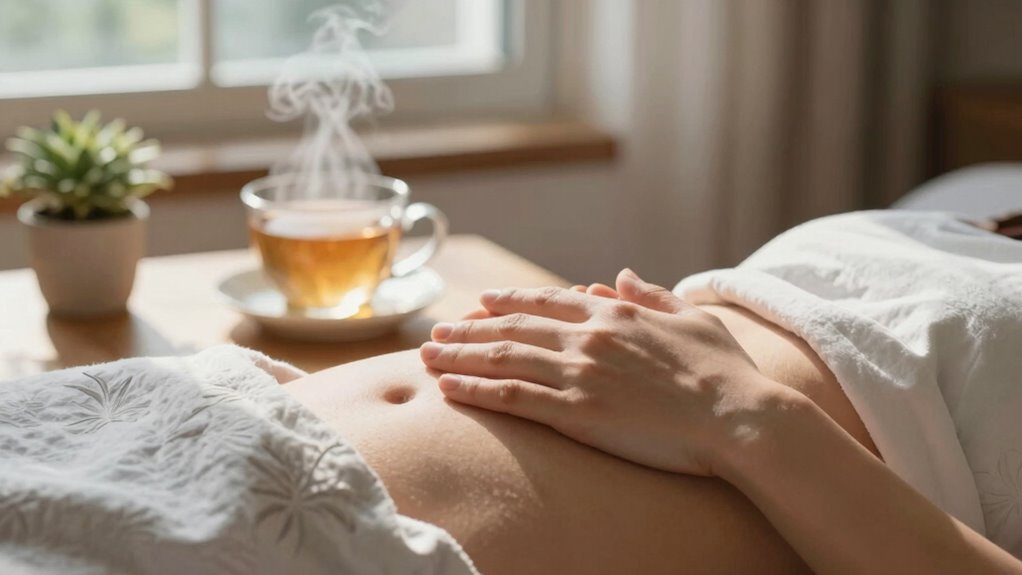
Next, try deep inhalation. Breathe in through your nose for a count of four, allowing your belly to expand fully. Hold that breath for a moment, savoring the feeling of fullness. Then, exhale slowly through your mouth for a count of six, letting go of any tension. You might find it helpful to visualize stress leaving your body with each exhale. This process not only calms your mind but also provides significant stress relief. Incorporating breath control techniques can enhance the calming effects. Paying attention to your respiratory patterns can help you better regulate your stress response and improve overall well-being.
You can make this practice even more effective by incorporating a mantra or affirmation as you breathe. As you inhale, think, “I am calm.” As you exhale, say to yourself, “I release stress.” This combination of mindful breathing and positive affirmations can amplify your sense of peace.
Another great technique is the 4-7-8 breathing method. Inhale deeply through your nose for a count of four, hold for seven seconds, and then exhale through your mouth for a count of eight. This pattern can quickly help you feel grounded and in control, especially when you’re feeling overwhelmed. Recognizing the benefits of mindfulness practices can enhance your overall stress management toolkit.
mindfulness breathing exercises for stress relief
As an affiliate, we earn on qualifying purchases.
As an affiliate, we earn on qualifying purchases.
Frequently Asked Questions
How Long Should I Practice Breath-Based Habits Daily?
You should aim for about 10 to 20 minutes of breath-based practice daily. This duration allows you to effectively calm your mind and reduce stress. Try to practice at least once a day; consistency is key. If you can, break it into two shorter sessions—one in the morning and another in the evening. This frequency will help you integrate these habits into your routine, enhancing your overall well-being.
Can Children Benefit From Breath-Based Habits for Stress?
Absolutely, children can benefit from breath-based habits for stress! By practicing mindful breathing, they enhance focus, improve emotional regulation, and build resilience. When kids learn to pause and breathe deeply, they calm their minds, reduce anxiety, and increase their ability to handle challenges. So, encourage them to take those moments—breathe in, breathe out, and watch them grow stronger and more centered in the face of stress. It’s a simple yet powerful tool!
Are There Specific Breathing Techniques for Anxiety Attacks?
Yes, there are specific breathing techniques for anxiety attacks. You can use breath awareness by focusing on your inhale and exhale, allowing yourself to feel more grounded. Guided imagery can also help; picture a calm place while you breathe deeply. Try inhaling for four counts, holding for four, and exhaling for four. This rhythmic breathing can reduce panic and bring you back to a sense of control during overwhelming moments.
What Time of Day Is Best for Breath Exercises?
The best time for breath exercises is really up to you, but many find morning routines and evening relaxation effective. In the morning, deep breathing sets a positive tone for the day, helping you stay focused and calm. In the evening, it’s a great way to unwind, clearing your mind and reducing stress before bed. Try incorporating breath exercises at both times to see what works best for your lifestyle.
Can Breath-Based Habits Improve Sleep Quality?
Absolutely, breath-based habits can greatly improve your sleep quality. Research shows that 80% of people experience better sleep patterns after incorporating breathing exercises into their nightly routine. By activating your relaxation response, these techniques help calm your mind and lower stress levels. Try simple practices like deep belly breathing or 4-7-8 techniques before bed. You’ll likely find it easier to drift off and enjoy a more restful sleep.
As an affiliate, we earn on qualifying purchases.
Conclusion
Incorporating breath-based habits into your daily routine can transform even the most stressful days into manageable moments. Just as a gentle breeze can shift the direction of a storm, your breath can anchor you amidst chaos. By taking a few minutes to focus on your breath, you reclaim your power and restore your calm. So, the next time stress creeps in, remember: it’s not just about surviving the storm, but learning to dance in the rain.
relaxing ambient lighting for meditation
As an affiliate, we earn on qualifying purchases.
As an affiliate, we earn on qualifying purchases.
As an affiliate, we earn on qualifying purchases.
Fall Picks
fall essentials
As an affiliate, we earn on qualifying purchases.