
To start cold plunges at home, choose a suitable, clean tub that fits your body and use a thermometer to keep water between 50-59°F (10-15°C). Begin with 1-3 minutes, gradually increasing as you get comfortable. Always have a buddy nearby for safety, and listen to your body for signs of discomfort. Stay hydrated and warm up slowly afterward. Curious about more tips? Keep exploring to make certain you enjoy safe and effective cold exposure.
Key Takeaways
- Use a clean, appropriately sized tub and monitor water temperature with a thermometer, aiming for 50-59°F (10-15°C).
- Start with 1-3 minute sessions and gradually increase duration as your body adapts.
- Consult a healthcare professional if you have underlying health conditions before beginning cold plunges.
- Never plunge alone; have someone nearby to assist in case of discomfort or emergency.
- Pay attention to body signals like numbness or dizziness, and exit immediately if feeling unwell.
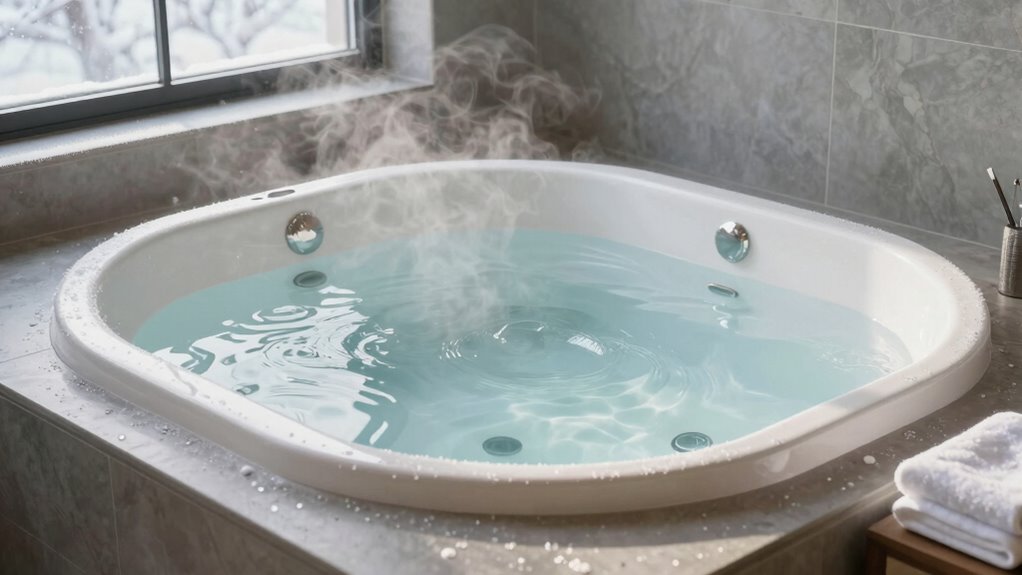
If you’re interested in reaping the health benefits of cold plunges but prefer to stay home, setting up a cold plunge tub is simpler than you might think. You don’t need a fancy spa or costly equipment—just a tub, some ice, and a little preparation. Cold plunges offer several therapeutic benefits, including reducing muscle soreness, boosting circulation, and enhancing mental clarity. But before you dive in, it’s important to understand safety precautions to make your experience both effective and safe.
Setting up a cold plunge tub at home is simple, affordable, and offers numerous health benefits with proper safety precautions.
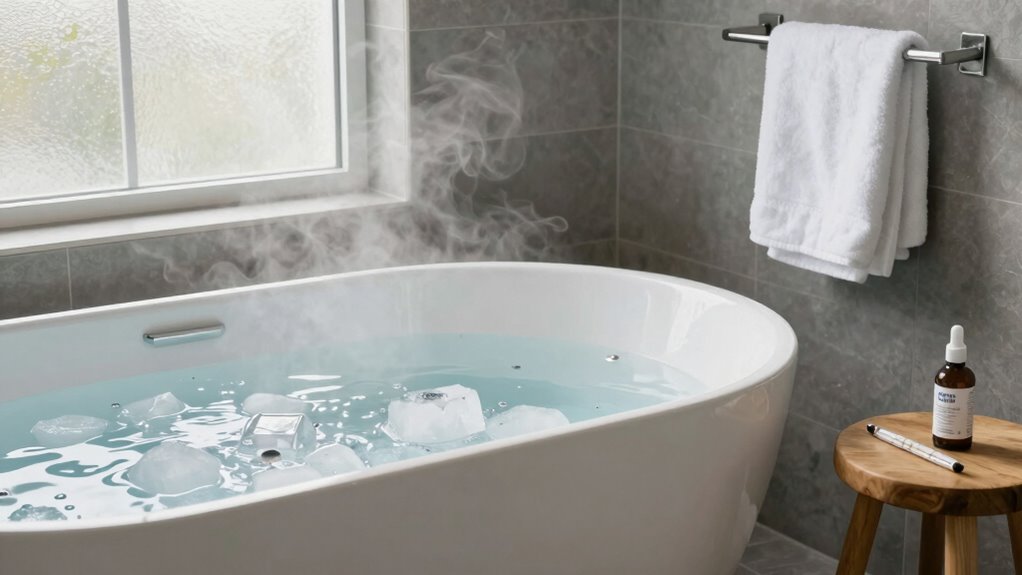
First, choose a suitable tub that can comfortably hold your body and is easy to fill and drain. Many beginners start with a standard bathtub or a large storage container, making sure it’s clean and free of sharp edges. Fill it with cold water and add ice until the water temperature reaches around 50-59°F (10-15°C). Use a thermometer to monitor the temperature closely, as staying within this range maximizes the therapeutic benefits while minimizing risks. Always limit your initial sessions to 1-3 minutes and gradually increase duration as your body adapts.
Safety precautions are critical. Cold exposure can cause shock, especially if you have underlying health issues like cardiovascular problems or hypertension. It’s essential to consult your doctor before starting cold plunges, particularly if you have a medical condition. Never plunge alone; having someone nearby ensures help is available if you experience dizziness, numbness, or difficulty breathing. Pay attention to your body’s signals—if you start feeling numb, excessively cold, or uncomfortable, get out immediately. Warm up gradually afterward, avoiding sudden heat exposure that could stress your body. Incorporating biodiversity-conscious practices such as using eco-friendly ice sources or sustainable water management can also enhance your wellness routine. Staying informed about the effects of cold exposure can help you better understand your body’s responses and improve safety. Hydration also plays a role in safety. Make sure you’re well-hydrated before and after your cold plunge. Keep a towel nearby for drying off, and consider warming your extremities afterward to prevent prolonged numbness. If you’re pregnant, elderly, or have certain health conditions, it’s especially important to seek medical advice before attempting cold plunges.
Starting slow and listening to your body will help you enjoy the therapeutic benefits safely. Incorporate your cold plunge routine into your wellness regimen gradually, and always prioritize safety precautions. With proper setup and awareness, you can safely experience the invigorating and restorative effects of cold plunges right at home.
As an affiliate, we earn on qualifying purchases.
Frequently Asked Questions
How Long Should Beginners Stay in a Cold Plunge?
As a beginner, start with 1 to 3 minutes in a cold plunge. This helps your body gradually adapt to cold exposure, aiding in cold adaptation and immune boosting. Don’t push yourself too hard initially; listen to your body and gradually increase your time as you become more comfortable. Consistency is key, and over time, you’ll notice improved resilience and benefits from your cold plunge routine.
Can Cold Plunges Help With Mental Health Issues?
Cold plunges can definitely bolster your mental health by boosting mindfulness benefits and easing anxiety relief. The brisk, bracing experience encourages you to breathe deeply and stay present, promoting mental clarity. Regular cold plunges can reduce stress, sharpen focus, and lift your mood. As you immerse yourself in icy waters, you activate your body’s natural calming responses, helping you manage mental health issues more effectively and fostering a sense of calm and control.
What Are the Signs of Hypothermia During Cold Plunges?
During cold plunges, watch for hypothermia symptoms like intense shivering, confusion, dizziness, and numbness. You might also experience fatigue, slurred speech, or a slow heart rate. Recognizing cold exposure risks early helps prevent serious health issues. If you notice these signs, get out of the water immediately, warm up gradually, and seek medical attention if symptoms worsen. Staying alert guarantees your safety during cold plunges.
Is a Cold Plunge Safe for Pregnant Women?
Like a delicate porcelain vase, pregnancy safety requires careful handling. Cold exposure risks can be significant, and a cold plunge isn’t recommended for pregnant women. The sudden shock of cold water may cause constriction of blood vessels, risking fetal health. Always consult your healthcare provider before attempting cold therapy during pregnancy, as safety should come first. Prioritize gentle, warm alternatives to support your well-being and that of your baby.
How Often Should I Use a Cold Plunge for Best Results?
You should use a cold plunge about 2-3 times a week for ideal results. Keep durations within 3-5 minutes, following safety precautions to prevent hypothermia or shock. Always listen to your body, and gradually build up your tolerance. Consistency is key, but don’t overdo it. By following duration guidelines and safety precautions, you’ll maximize benefits while minimizing risks.
thermometer for water temperature
As an affiliate, we earn on qualifying purchases.
As an affiliate, we earn on qualifying purchases.
Conclusion
As you set up your cold plunge at home, remember that even a small, unexpected moment—a sudden chill or a invigorating splash—can turn into a reminder of why you started. It’s funny how sometimes the simplest things, like embracing the cold, lead to the biggest benefits. So, stay curious and keep exploring. With each plunge, you’ll discover more about your resilience and well-being—sometimes when you least expect it, it all just clicks.
As an affiliate, we earn on qualifying purchases.
large plastic storage container for cold plunge
As an affiliate, we earn on qualifying purchases.
As an affiliate, we earn on qualifying purchases.