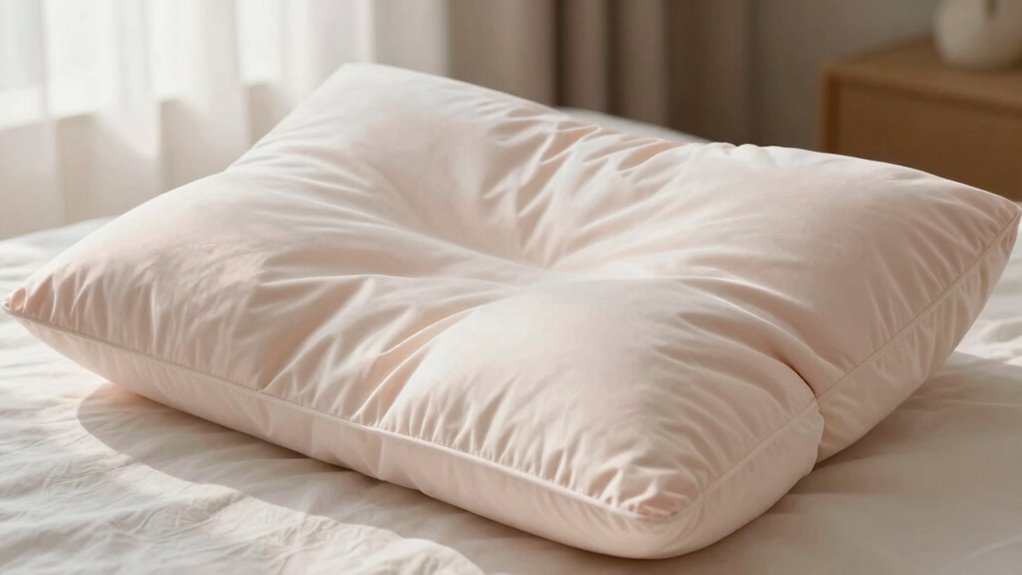

The right pillow influences your sleep more than you think by providing proper support for your head and neck, which helps maintain spinal alignment and reduces discomfort. It also affects temperature regulation and moisture control, keeping you comfortable throughout the night. An appropriate pillow minimizes tossing and turning, leading to deeper, uninterrupted rest. When your pillow matches your sleep posture and preferences, you wake up feeling refreshed. Keep exploring to discover how choosing the best fit can improve your sleep even further.

Turn your quiet moments into listening time
- Thousands of audiobooks, podcasts and originals
- Listen on your phone, tablet or Echo — also offline
- Cancel anytime
Key Takeaways
- Proper pillow support maintains spinal alignment, reducing discomfort and preventing long-term neck and back issues.
- Material choice influences breathability and temperature regulation, enhancing overall sleep quality.
- Correct pillow firmness and thickness suit sleep posture, minimizing pressure points and tossing.
- Adequate support decreases sleep disruptions, leading to deeper, uninterrupted rest.
- The right pillow promotes musculoskeletal health, contributing to waking refreshed and less fatigued.

Have you ever wondered how much your pillow influences the quality of your sleep? It’s more significant than most people realize. The pillow you choose doesn’t just provide comfort; it plays a critical role in aligning your body properly throughout the night. The right pillow supports your head and neck, reducing strain and preventing discomfort that can wake you up. The key lies in understanding how pillow material and sleep posture interact to create a restful sleep environment.
Your choice of pillow material impacts how well your pillow adapts to your needs. Memory foam, latex, down, or hybrid fills each offer different levels of support and breathability. Memory foam pillows contour to your shape, providing tailored support that can help keep your spine aligned, especially if you tend to sleep on your back or side. Latex pillows are resilient, offering a firm yet responsive feel, and tend to promote airflow, keeping you cool. Down pillows are softer and more malleable, which some find cozy, but they may not offer enough support for everyone. The material influences not only comfort but also how well the pillow maintains its shape and support over time, directly impacting your sleep quality.
Choosing the right pillow material affects comfort, support, breathability, and long-term sleep quality.
Your sleep posture is equally essential in choosing the right pillow. If you sleep on your back, you’ll likely need a pillow that offers medium support to keep your head and neck aligned without pushing your chin too far forward. Side sleepers require a firmer, thicker pillow to fill the space between your ear and shoulder, maintaining proper spinal alignment. Stomach sleepers often benefit from a softer, thinner pillow—or no pillow at all—to prevent neck strain. When your pillow matches your sleep posture, it minimizes pressure points, reduces tossing and turning, and prevents waking up with aches and pains. Using an appropriate pillow material can also influence how well your pillow regulates temperature and moisture, which are important factors for restful sleep. Proper pillow support is essential in preventing long-term issues like neck pain, headaches, or even disrupted breathing. An ill-suited pillow can throw your whole sleep cycle off, leaving you tired and unrefreshed. Additionally, selecting a pillow that promotes proper spinal alignment can contribute to overall musculoskeletal health. Ensuring that your pillow is made from breathable materials can help regulate your body temperature throughout the night, further enhancing sleep quality. By paying attention to pillow material and how it supports your sleep posture, you’re making an investment in better sleep quality. When your pillow aligns with your body’s needs, you’re more likely to enjoy deeper, uninterrupted rest. And that’s the secret to waking up feeling truly refreshed and ready for the day.
memory foam pillow for neck support
As an affiliate, we earn on qualifying purchases.
As an affiliate, we earn on qualifying purchases.
Frequently Asked Questions
Can Pillow Material Impact Allergy Symptoms During Sleep?
Yes, pillow material can impact your allergy symptoms during sleep. Choosing pillows made from hypoallergenic materials helps reduce allergy triggers, while those with dust mite resistance prevent common allergens from accumulating. These features can substantially minimize allergy symptoms, leading to a more comfortable and restful sleep. Opting for such pillows is especially beneficial if you suffer from allergies or asthma, ensuring you wake up feeling refreshed rather than congested or sneezing.
How Often Should I Replace My Sleeping Pillow?
Think of your pillow as a trusted friend who needs regular checkups. You should replace your pillow every 1 to 2 years to maintain good pillow hygiene and guarantee ideal support. Customizing your pillow’s firmness and filling can extend its life, but over time, allergens and wear build up. Regular replacement keeps your sleep fresh, clean, and supportive, helping you wake up feeling rested and ready.
Does Pillow Firmness Influence Sleep Quality?
Yes, pillow firmness directly influences your sleep quality. If your pillow is too firm, it can cause neck strain and discomfort, making it harder to relax. Conversely, a pillow that’s too soft might not support your head properly, leading to misalignment and restless sleep. Finding the right pillow firmness guarantees proper spinal alignment, reduces discomfort, and enhances overall sleep quality, helping you wake up refreshed and pain-free.
Are Memory Foam Pillows Better for Neck Support?
Yes, memory foam pillows are better for neck support because they contour to your neck and head, providing personalized comfort. By conforming to your shape, memory foam helps maintain proper spinal alignment, reducing strain and tension. This enhanced neck support can lead to improved sleep quality, less pain, and fewer disruptions during the night. If you need extra support, a memory foam pillow is a smart choice for better rest.
Can Pillow Height Affect Breathing During Sleep?
Yes, pillow height can affect your breathing during sleep. If your pillow shape is too high or too low, it can misalign your sleeping posture, leading to restricted airflow or snoring. Proper pillow height supports your neck and keeps your airways open, especially when choosing a pillow that matches your sleeping posture. Ensuring the right pillow shape helps you breathe easier and improves overall sleep quality.
latex ergonomic pillow for side sleepers
As an affiliate, we earn on qualifying purchases.
As an affiliate, we earn on qualifying purchases.
Conclusion
Choosing the right pillow might seem small, but it profoundly impacts your sleep quality. Just like a good night’s rest can refresh your mind, a poor pillow can leave you restless and irritable. The difference isn’t just comfort—it’s your overall health. So, don’t underestimate this simple choice. Sometimes, the smallest adjustments lead to the most profound improvements, proving that what supports you during sleep shapes your mornings more than you realize.
down pillow for comfort and support
As an affiliate, we earn on qualifying purchases.
As an affiliate, we earn on qualifying purchases.
adjustable firmness pillow for back sleepers
As an affiliate, we earn on qualifying purchases.
As an affiliate, we earn on qualifying purchases.
Fall Picks
fall essentials
As an affiliate, we earn on qualifying purchases.