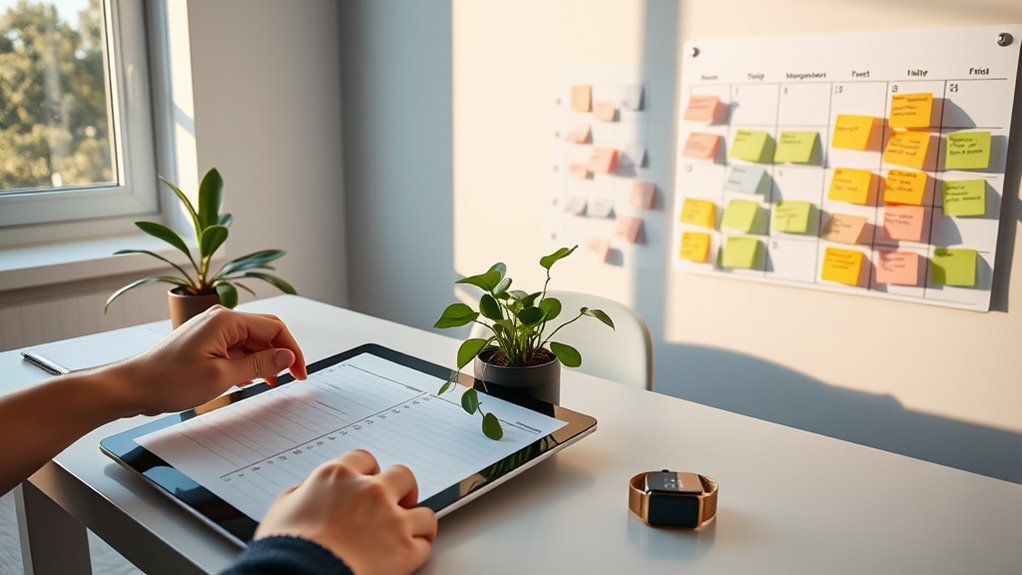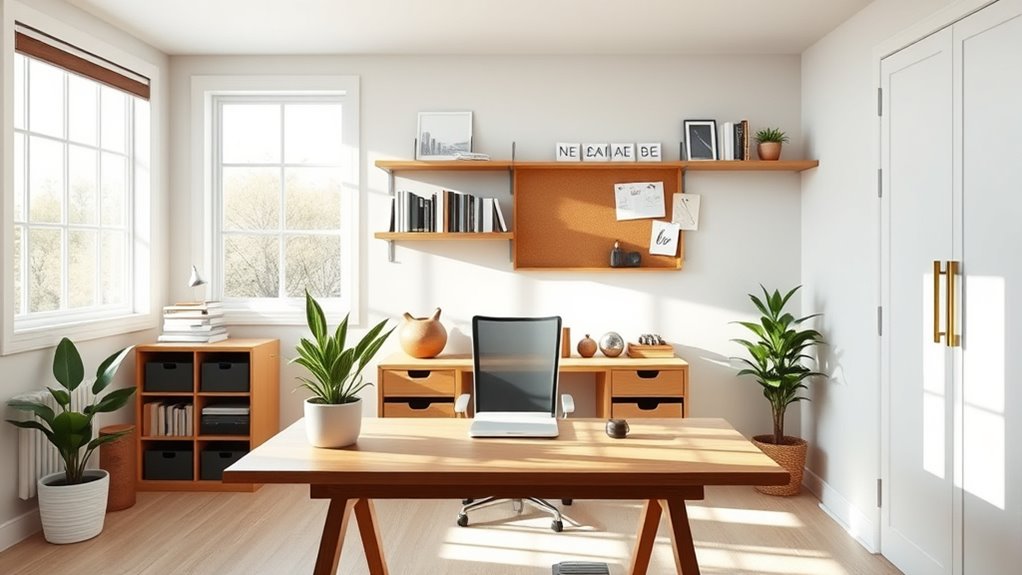

Designing your space for success starts with organizing clutter and placing goal-related items within easy reach. Use thoughtful cues like shoes by the door or a journal on your nightstand to serve as gentle reminders. Keep your environment tidy and visual noise-free to foster focus and calm. Clear purpose and accessibility make habit formation effortless. Stay tuned to discover how simple environmental tweaks can turn your space into a powerful tool for lasting change.
Key Takeaways
- Place goal-related items within easy reach to reduce effort and encourage immediate action.
- Use visual cues, like designated spots or reminders, to reinforce habits effortlessly.
- Minimize clutter to create a calm, focused environment that supports routine adherence.
- Design spaces that facilitate quick accessibility and clear purpose for each item or zone.
- Arrange your environment to naturally prompt desired behaviors and make habits feel seamless.
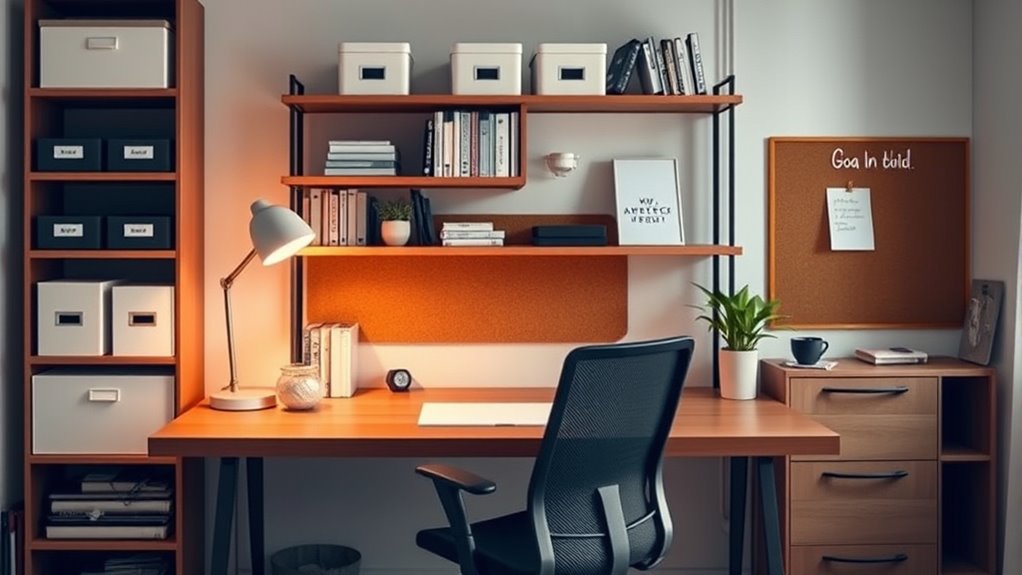
Designing your environment to support habits isn’t just about decoration—it’s about creating spaces that make positive behaviors easier and more natural. When you set up your surroundings thoughtfully, you’re fundamentally giving yourself gentle nudges that encourage good habits to take root. One of the most effective ways to do this is by incorporating motivational cues. These cues act as subtle reminders or signals that trigger specific behaviors. For example, placing your running shoes by the door or setting out a journal on your nightstand can prompt you to act without needing to rely solely on willpower. Motivational cues serve as environmental triggers, making it easier for you to remember and engage in the habits you want to build. They help bridge the gap between intention and action, turning small cues into powerful prompts that reinforce your goals.
Clutter reduction is equally crucial in creating a space conducive to habit formation. A cluttered environment can be overwhelming and mentally draining, making it harder to focus and stick to routines. When your space is tidy and organized, you remove distractions that can derail your efforts. Clutter acts as a visual noise, pulling your attention away from your priorities and making it difficult to establish consistency. By intentionally reducing clutter, you create a calming atmosphere that invites focus and ease. This simplicity helps you to start tasks more quickly and stay engaged longer, reinforcing positive behaviors without unnecessary friction. Additionally, a clean environment signals to your brain that the space is ready for action, whether it’s preparing healthy meals, studying, or exercising.
To optimize your environment further, consider how each element supports your habits. Keep items related to your goals within easy reach—this reduces the effort needed to get started and lowers the chance of procrastination. For instance, if you want to read more, keep books on your bedside table or in your bag where they’ll be accessible. If you’re working on developing a meditation habit, have your mat or cushion in a designated, easy-to-access spot that visually cues relaxation and mindfulness. Every piece of your environment should serve a purpose, guiding you effortlessly toward your desired behaviors.
Frequently Asked Questions
How Long Does It Typically Take to See Results From Environment Changes?
You might start noticing results from environment changes within a few days to a few weeks. Using habit tracking helps you see progress quickly, keeping you motivated. Motivation strategies like visual cues and setting small goals reinforce your new habits. Stay consistent, and you’ll find that your space and routines support your success, making positive changes more noticeable and sustainable over time.
Can Small Space Adjustments Significantly Impact My Habits?
Yes, small space adjustments can considerably impact your habits. By focusing on space saving and clutter reduction, you create an environment that promotes positive behaviors and minimizes distractions. These minor changes make it easier to stay organized and motivated, encouraging consistency. Over time, you’ll notice better focus, increased productivity, and healthier routines. Even simple tweaks can foster a more supportive space that aligns with your habits and goals.
What Are Common Mistakes to Avoid in Environment Design?
Avoid common mistakes like neglecting clutter reduction, overlooking lighting optimization, and ignoring flow. You might clutter your space, making it harder to focus; you could neglect lighting, dimming motivation; or create awkward layouts that disrupt movement. Instead, prioritize decluttering, enhance lighting, and design for smooth flow. These steps help you build an environment that supports your habits, keeps you motivated, and makes success easier to achieve every day.
How Do I Maintain Motivation During Environmental Restructuring?
To stay motivated during environmental restructuring, focus on clear visual cues that remind you of your goals and progress. Keep your space organized to reduce distractions, and set small, achievable milestones to celebrate. Enlist accountability partners who can provide encouragement and feedback, making the process more engaging. Regularly revisit your reasons for change, and remind yourself of the positive outcomes you’re working toward to maintain momentum.
Is Professional Help Necessary for Complex Habit Environments?
You don’t necessarily need professional help for complex habit environments; DIY approaches can work if you’re confident in your ability to organize and adapt your space. However, expert assistance can provide valuable insights, personalized strategies, and accountability that make the process easier and more effective. If your environment feels overwhelming or persistent challenges arise, seeking professional guidance can guarantee you’re on the right track toward lasting habit change.
Conclusion
By thoughtfully arranging your space, you gently steer yourself toward success without feeling forced. When your environment subtly supports your habits, it’s like planting seeds in fertile soil—growth comes naturally. As you create a welcoming and organized backdrop, you’ll find your intentions bloom effortlessly, guiding you toward your goals with quiet confidence. Remember, a well-designed space whispers encouragement, making your journey smoother and more enjoyable every step of the way.