

When you encounter a cue, your brain triggers a dopamine response that creates a craving, reinforcing the behavior associated with that cue. Repeated actions strengthen neural pathways through plasticity, making habits more automatic over time. Dopamine signals reward, so your brain links the cue, craving, and reward cycle. As these neural connections grow stronger, habits crystallize. If you want to understand how this cycle can be changed, there’s more to uncover about the brain’s remarkable ability to rewire itself.
Key Takeaways
- Cues trigger neural pathways that activate dopamine release, initiating the craving process.
- Dopamine reinforces behaviors associated with cues, strengthening habit-related neural circuits.
- Repeated exposure to cues and rewards solidifies neural connections, leading to habit crystallization.
- Cravings emerge as dopamine signals anticipate the reward, making behaviors more automatic.
- Understanding cue-dopamine-craving cycles offers strategies for disrupting or establishing habits.
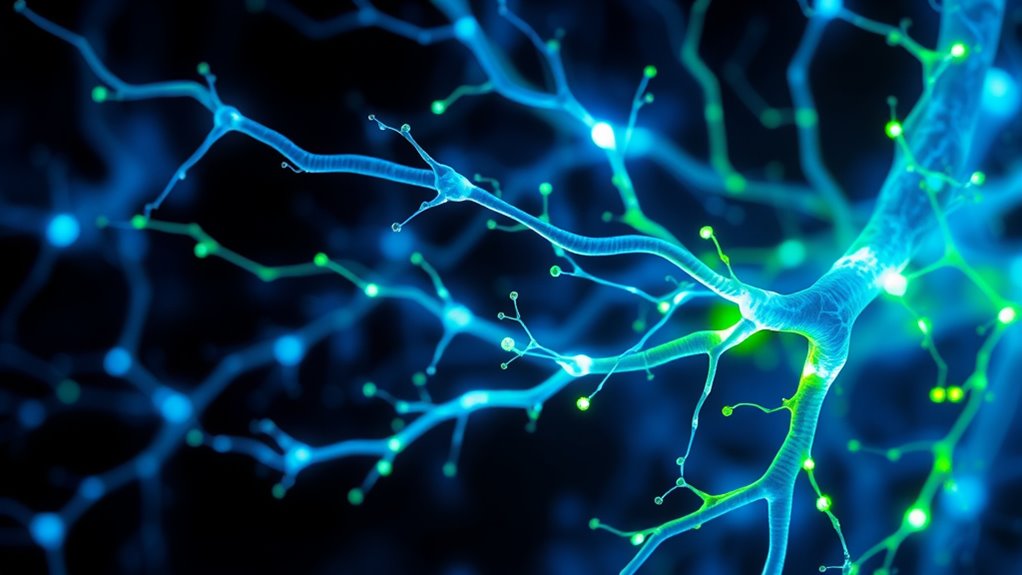
Have you ever wondered how certain habits become so ingrained they feel almost automatic? The answer lies deep within your brain’s wiring, specifically in the way your dopamine pathways and neural plasticity work together to shape your behaviors. When you perform an action repeatedly, your brain begins to strengthen the neural connections associated with that behavior. This process, known as neural plasticity, allows your brain to adapt and reorganize itself in response to your experiences. Over time, these strengthened pathways make the behavior easier to perform without conscious effort, eventually becoming a habit.
Dopamine pathways play a pivotal role in this process. When you engage in a behavior that leads to a rewarding outcome — like eating delicious food, checking social media, or smoking — your brain releases dopamine, a neurotransmitter associated with pleasure and motivation. This surge of dopamine acts as a kind of reward signal, reinforcing the behavior and encouraging you to repeat it. The more you perform the activity, the more your brain associates it with positive feelings, strengthening the neural connections involved. Over time, these connections become deeply embedded, making the response almost automatic. Additionally, neural plasticity enables the brain to rewire itself, facilitating both the formation and the alteration of habits over time.
Understanding this process is key to both building good habits and breaking bad ones. When you want to establish a new routine, you need to repeatedly activate the relevant neural pathways, encouraging neural plasticity to support the change. Conversely, breaking a habit involves disrupting the dopamine reward cycle and creating new pathways that override the old ones. Recognizing how dopamine pathways reinforce habits through reward and how neural plasticity allows these patterns to become deeply embedded gives you insight into how habits form and, importantly, how they can be altered. Your brain’s remarkable ability to rewire itself offers hope — change is always possible when you understand the underlying neuroscience.
Frequently Asked Questions
How Long Does It Typically Take to Form a New Habit?
You can typically form a new habit in about 21 to 66 days, though it varies based on your consistency and the habit loop involved. Your brain’s plasticity allows it to rewire itself as you repeat behaviors, strengthening neural pathways. The more you stick to the routine, the faster your brain adapts, making the new habit more automatic over time. Stay consistent, and your habit will crystallize sooner.
Can Habits Be Completely Unlearned or Just Replaced?
Think of habits as old friends—you can’t just erase them, but you can change the story. While complete unlearning is tough, you can achieve habit suppression by replacing subconscious triggers with healthier responses. Like pruning a tree, you trim the old habits and cultivate new ones. This process rewires your brain, making the old habits fade, yet the potential for them to resurface always exists, urging you to stay mindful.
What Role Does Genetics Play in Habit Formation?
Genetics influence how easily you form habits through genetic predispositions that affect your brain chemistry and behavior patterns. Your gene-environment interactions also play a role, meaning your environment can amplify or mitigate genetic tendencies. So, while some habits may be more ingrained due to your genetics, your surroundings and experiences interact with these predispositions, shaping how habits develop and how resistant they are to change.
How Do Environmental Changes Impact Existing Habits?
Environmental changes can profoundly impact your existing habits by altering environmental cues and contextual triggers. When your surroundings change, the familiar cues that prompt your habits may fade or shift, making it harder to follow through. Conversely, new cues might trigger different behaviors. By recognizing how environmental cues influence you, you can modify your environment to support or disrupt specific habits, helping you gain better control over your behaviors.
Are Certain Habits More Resistant to Change Than Others?
Did you know that about 45% of daily behaviors are habits? Some habits are more resistant to change due to strong resistance mechanisms and high habit persistence. You might find breaking certain routines difficult because your brain has wired these behaviors deeply, making them stick longer. These deeply ingrained habits resist change, requiring more effort and targeted strategies to modify than newer or less established ones.
Conclusion
As you understand the neuroscience behind habit crystallization, you’ll see how small cues can shape big behaviors. Did you know that about 40% of our daily actions are habits, performed almost automatically? Recognizing this, you can start to reshape your routines consciously. By understanding the brain’s role, you gain the power to break unwanted habits or forge new ones more effectively. Take control, and turn your cravings into positive, lasting change.