Art therapy combines creative activities with psychological healing, helping you express emotions that are hard to put into words. Using techniques like drawing, collage, or guided imagery, you can explore feelings, reduce stress, and build emotional resilience. Colors play a key role in influencing your mood, promoting calm or energizing you based on your needs. If you’re curious about how these methods can support your healing journey, there’s more to discover ahead.
Key Takeaways
- Art therapy combines creative expression with psychological healing to facilitate emotional awareness and growth.
- Color psychology guides deliberate color choices to influence mood and support therapeutic goals.
- Techniques like guided imagery, free drawing, and collage help access subconscious feelings and promote healing.
- Symbolism in art allows clients to communicate complex emotions and gain insight into their inner world.
- Overall, art therapy reduces stress, builds resilience, and fosters self-awareness through safe, expressive creative practices.
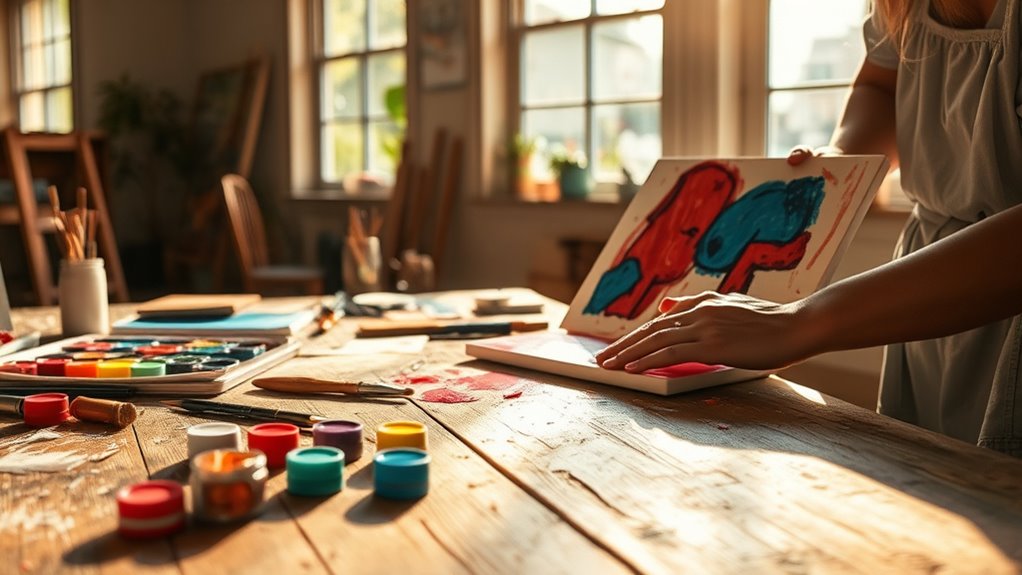
Art therapy is a powerful tool that combines creative expression with psychological healing. When you engage in art therapy, you’re not just making pretty pictures; you’re tapping into a deeper part of yourself that can reveal emotions, thoughts, and memories often difficult to articulate with words alone. One of the key elements that makes art therapy effective is the understanding of color psychology. Colors can influence your mood and emotional state, and through deliberate use of specific hues, you can access different feelings or promote healing. For example, using calming blues and greens might help reduce anxiety, while vibrant reds and oranges can energize or inspire confidence. Recognizing how these colors impact your mood allows you to choose the right palette for your therapeutic goals. Additionally, understanding the emotional effects of color can enhance your ability to select colors that support your healing process.
Colors influence mood and healing—calming blues reduce anxiety, vibrant reds inspire confidence. Choose hues deliberately for emotional well-being.
Art therapy techniques are designed to be accessible and adaptable, making it easier for you to process complex emotions. These techniques include guided imagery, where you create visuals based on your inner thoughts, or free drawing, which encourages spontaneous expression without judgment. You might also work with collage, combining images and materials to symbolize your feelings or experiences. These methods help bypass the internal critic that often inhibits honest expression, allowing your subconscious to surface through your art. As you practice these techniques, you’ll notice how your creative process becomes a mirror of your emotional state, providing insight and clarity.
Another effective art therapy technique involves the use of symbolism, where specific images or objects carry personal meaning. This method helps you communicate feelings that words might struggle to capture. For instance, drawing a storm might symbolize inner turmoil, while a blooming flower could represent hope or renewal. Using symbolism allows you to explore difficult topics safely, fostering a sense of control and empowerment in your healing journey. Additionally, journaling alongside your art can deepen your reflection, helping you connect visual expressions with your thoughts and experiences.
Through consistent practice of these art therapy techniques, you’ll discover new ways to manage stress, process grief, or confront fears. The act of creating becomes not just an outlet but a form of self-care that nurtures your emotional resilience. As you explore color psychology and various artistic methods, you’ll find that your creative expressions become a personalized language for healing. This process encourages you to trust your intuition, fostering self-awareness and emotional growth. Ultimately, art therapy offers a safe space where your inner world can be expressed, understood, and transformed into a source of strength.
Frequently Asked Questions
Can Art Therapy Be Effective for Children?
Yes, art therapy can be highly effective for children. It encourages child engagement, making it easier for kids to express emotions they might not put into words. Through creative activities, children develop emotional skills and resilience, helping them process feelings and experiences. As you guide them, you’ll see their emotional development improve, fostering self-awareness and confidence. Art therapy provides a safe space where children can explore and heal through their artistic expressions.
What Materials Are Commonly Used in Art Therapy Sessions?
You’ll find that common art supplies like colored pencils, markers, paints, and clay are essential for art therapy sessions. These creative mediums help you express feelings visually and tangibly, making complex emotions easier to explore. Some sessions might also include collage materials, pastels, or even digital tools. With a variety of art supplies on hand, you can confidently create a safe space for self-expression and emotional healing through different visual representations.
How Does Art Therapy Differ From Traditional Psychotherapy?
You’ll find that art therapy differs from traditional psychotherapy because it emphasizes visual expression alongside verbal processing. Instead of solely talking through issues, you create art to explore emotions, which can reveal insights that words might not capture. This approach helps you access subconscious feelings, promotes healing, and encourages self-discovery through creative activities, making it a powerful complement or alternative to traditional talk therapy.
Are There Any Risks or Contraindications in Art Therapy?
Did you know that about 10% of clients might experience emotional risks during art therapy? While generally safe, you could face emotional risks like distress or discomfort, especially with sensitive topics. Physical limitations might also hinder participation for some individuals. Always work with a trained therapist to navigate these risks safely, ensuring your emotional well-being is prioritized and adaptations are made if needed.
How Long Does It Typically Take to See Benefits From Art Therapy?
You might start noticing benefits from art therapy within a few sessions, but the therapy duration and your progress timeline vary based on your goals and individual needs. Typically, consistent attendance over several months helps you see meaningful improvements in emotional well-being. Stay patient and committed, as progress often unfolds gradually. Regular sessions build momentum, allowing you to experience the positive effects of creative expression on your healing journey.
Conclusion
As you pick up the brush and let your colors flow, remember that your artwork is a lighthouse guiding you through storms inside. Each stroke is a step toward understanding and healing, illuminating hidden corners of your mind. Embrace this creative journey, knowing that your art is more than just images—it’s a mirror reflecting your resilience. Through your unique expression, you open the power to transform pain into hope, lighting your path forward.