

Designing a mindful workspace starts with prioritizing comfort and functionality through ergonomic furniture and thoughtful lighting. By positioning your desk near natural light sources, you boost your mood and alertness while reducing eye strain. Incorporate adjustable furniture to promote movement and better posture, which helps prevent discomfort. A well-planned environment supports both your physical health and mental clarity, leading to increased focus and well-being. Continue exploring to discover more ways to create a healthier, more supportive office space.
Key Takeaways
- Incorporate natural light through window placement and reflective surfaces to boost mood and alertness.
- Use ergonomic furniture that supports proper posture, reduces strain, and encourages movement throughout the day.
- Design flexible workstations with adjustable desks for sitting and standing options to improve circulation.
- Create a calming environment with minimal clutter, soothing colors, and noise reduction for mental clarity.
- Prioritize physical and mental well-being by fostering a space that promotes comfort, mindfulness, and productivity.
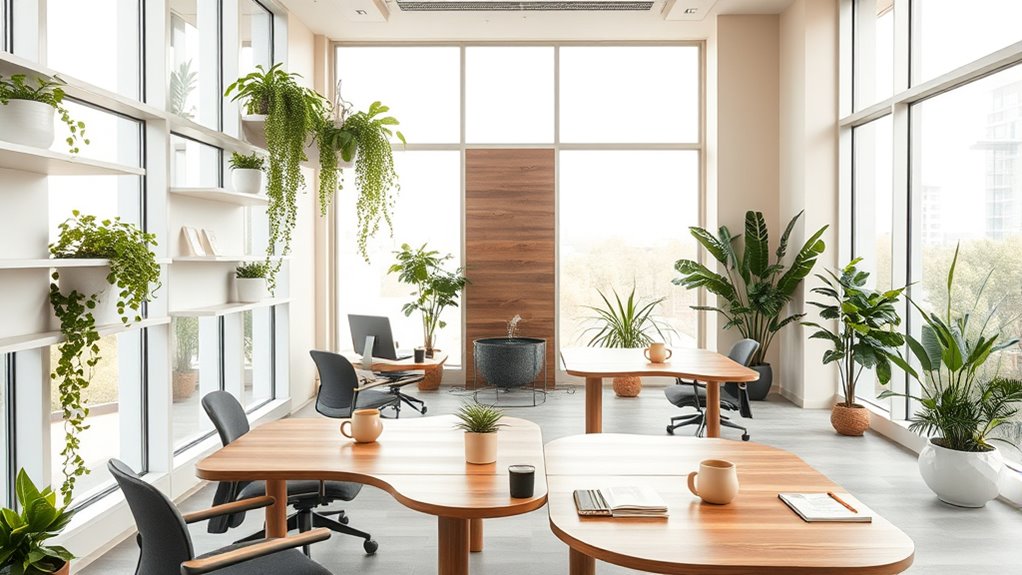
Have you ever considered how your workspace impacts your focus and well-being? The environment where you spend most of your day can profoundly influence your productivity, mood, and overall health. Designing a mindful workspace isn’t just about aesthetics; it’s about creating a setting that supports your physical comfort and mental clarity. One of the most effective ways to achieve this is by incorporating ergonomic furniture. When your desk, chair, and accessories are designed to fit your body, you reduce strain and prevent discomfort. A good ergonomic chair supports your lower back, encourages good posture, and minimizes fatigue, so you can focus on your tasks rather than battling aches. Adjustable desks allow you to alternate between sitting and standing, promoting circulation and reducing the negative effects of prolonged sitting. Pairing ergonomic furniture with a well-thought-out layout ensures your workspace promotes movement and reduces stiffness, which can boost your energy levels and concentration throughout the day. Additionally, understanding postpartum sexual activity and its physical and emotional considerations can help create a more compassionate and supportive environment for new parents returning to work.
Natural lighting plays a vital role in creating a mindful workspace as well. Bright, natural light has been proven to improve mood, enhance alertness, and regulate your circadian rhythm. When you’re exposed to daylight, your body produces more serotonin, which can lift your spirits and make you feel more energized. Positioning your desk near windows or in spaces with ample daylight allows you to take advantage of this natural resource. Not only does natural lighting benefit your mental health, but it also reduces the need for artificial lighting, which can sometimes cause eye strain and headaches. If natural light isn’t readily available, consider using full-spectrum bulbs that mimic daylight, helping to create a balanced and inviting environment. Additionally, incorporating light-colored walls and reflective surfaces can amplify the natural light, making your workspace feel brighter and more open.
Combining ergonomic furniture with plenty of natural lighting creates a workspace that nurtures both your body and mind. The physical comfort provided by ergonomic pieces enables you to work longer without discomfort, while natural lighting keeps you alert and improves your overall mood. When designing your environment, think about how these elements work together to foster a sense of calm and focus. A well-lit, ergonomically sound workspace isn’t just a place to work—it’s a space that encourages mindfulness, reduces stress, and enhances your well-being. By paying attention to these details, you’re investing in your health and productivity, making your workday not only more efficient but also more enjoyable.
Frequently Asked Questions
How Can Companies Measure the Success of Mindful Workspace Initiatives?
You can measure the success of mindful workspace initiatives by tracking changes in employee engagement through surveys and feedback, and analyzing productivity metrics like task completion rates and quality of work. Observe if employees feel more comfortable and balanced, leading to reduced stress and absenteeism. Regularly review these data points to assess progress, and adjust your strategies to foster ongoing well‑being and improved work performance.
What Are Cost-Effective Ways to Implement Mindful Design in Existing Offices?
You can easily transform your office without breaking the bank by adding natural elements like plants or sunlight, creating a calming atmosphere. DIY upgrades such as repainting walls in soothing colors or installing simple, ergonomic accessories also make a difference. Imagine a space where fresh greenery and warm light inspire focus; these small changes foster well-being and boost productivity, all while remaining cost-effective and straightforward to implement.
How Do Cultural Differences Influence Workspace Mindfulness Preferences?
You should consider how cross-cultural perceptions shape workspace mindfulness preferences, as different cultures value aspects like privacy, social interaction, or natural elements differently. To promote inclusivity, emphasize design adaptability, allowing spaces to be customized to diverse needs. By understanding these cultural nuances, you guarantee your office fosters well-being for all employees, creating an environment where everyone feels comfortable and supported, regardless of their cultural background.
Are There Specific Furniture Choices That Promote Well-Being?
You’ll find that choosing ergonomic chairs and incorporating biophilic elements can substantially boost well-being in your workspace. Ergonomic chairs support good posture and reduce discomfort, keeping you focused and energized. Meanwhile, biophilic elements like plants and natural light create a calming environment that fosters mental clarity. When these furniture choices align with your needs, you naturally create a space that promotes comfort, productivity, and overall well-being.
How Can Remote or Hybrid Teams Incorporate Mindfulness Into Their Work Environments?
To incorporate mindfulness into your remote or hybrid team’s virtual collaboration, you can schedule regular mindfulness training sessions to build awareness and reduce stress. Encourage team members to create dedicated, calming spaces for work and moments of reflection. Promote intentional breaks and mindful check-ins during meetings. By fostering a culture that values mindfulness, you help everyone stay present, improve focus, and enhance overall well-being in your virtual work environment.
Conclusion
By designing mindful workspaces, you create environments that boost well-being and productivity. Imagine a company that incorporates natural light, quiet zones, and greenery—employees report feeling more focused and less stressed. For example, a tech firm in San Francisco transformed their office into a calm, inviting space, and saw a 20% increase in employee satisfaction. When you prioritize well-being in your workspace, you foster happier, healthier, and more engaged teams.