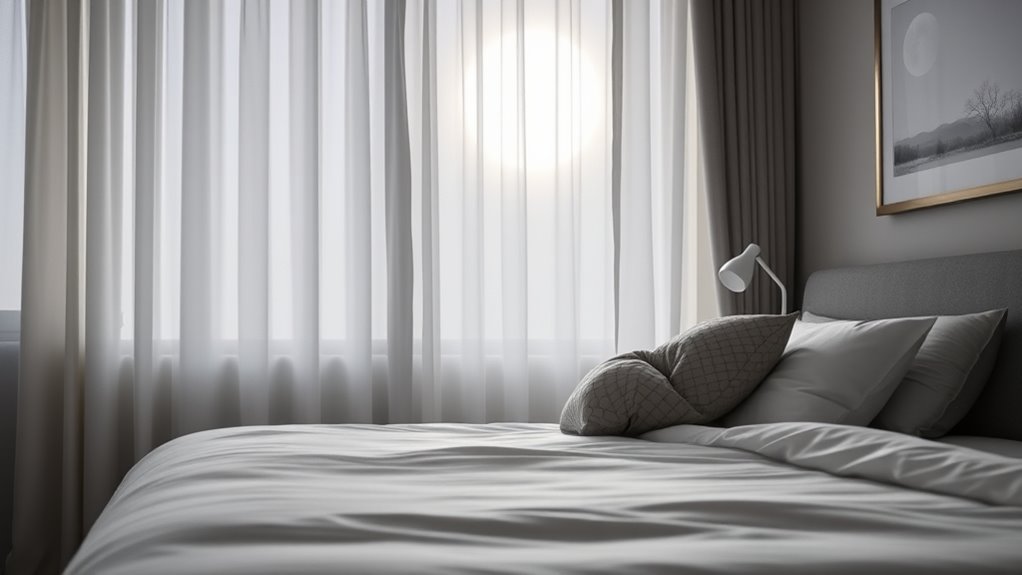

To boost your sleep hygiene as a high achiever, establish a consistent bedtime routine with calming activities like warm baths or gentle stretches, and avoid screens before bed to reduce blue light exposure. Create a sleep-friendly environment by keeping your room cool, dark, and quiet, while using comfortable bedding. Stick to regular sleep schedules, even on weekends, to anchor your internal clock. Keep exploring for more tips to optimize your rest and enhance your success.
Key Takeaways
- Establish a consistent bedtime routine with calming activities like reading or gentle stretches to signal your body to relax.
- Limit screen exposure before bed to reduce blue light interference and promote melatonin production.
- Optimize your sleep environment by keeping it cool, dark, and quiet for better rest and dream quality.
- Stick to a regular sleep schedule, even on weekends, to maintain your internal clock and improve sleep efficiency.
- Incorporate relaxation techniques such as meditation or deep breathing to reduce stress and enhance sleep onset.
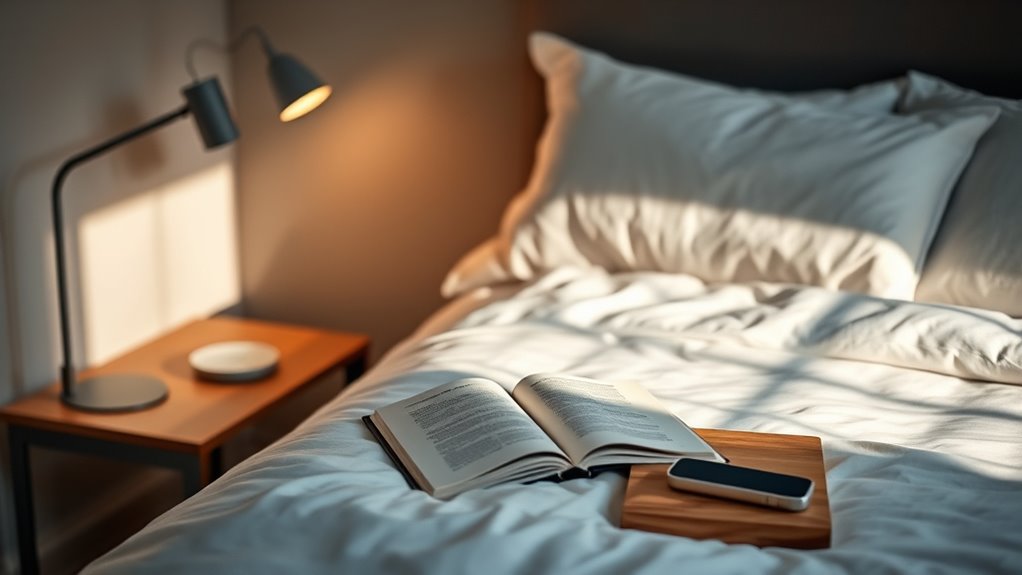
Getting quality sleep is essential for your health, but many people struggle to achieve it. High achievers often push themselves too hard, making it even harder to wind down at night. One effective way to improve your sleep hygiene is by focusing on dream relaxation. Creating an environment that promotes peaceful dreams can make a significant difference. This involves limiting exposure to screens before bed, as the blue light emitted can interfere with your melatonin production, delaying sleep onset. Instead, opt for calming activities like reading a book, listening to soothing music, or practicing gentle stretches. These habits help ease your mind and prepare it for restful sleep, making your dreams more restorative.
Prioritize dream relaxation by limiting screens and engaging in calming activities for more restorative sleep.
Another crucial aspect is establishing consistent bedtime routines. When you follow a set schedule, your body learns to anticipate sleep, which can improve its ability to fall asleep faster and stay asleep longer. Start winding down at the same time every evening, allowing your body to transition smoothly from wakefulness to rest. Incorporate relaxing activities such as a warm bath, meditation, or light stretching into your routine. These actions signal to your brain that it’s time to relax, reducing stress levels and promoting a sense of calm. Avoid stimulating activities, like intense workouts or work-related tasks, close to bedtime, as they can elevate your alertness and delay sleep.
Your environment also plays a vital role in supporting dream relaxation and effective bedtime routines. Keep your bedroom cool, dark, and quiet to foster an ideal sleep setting. Invest in blackout curtains or a sleep mask to block out light and use earplugs or white noise machines to minimize disruptions. Your bed should be comfortable, with supportive pillows and a quality mattress that suits your preferences. When your environment is conducive to sleep, your body can relax more easily, making it simpler to stick to your bedtime routines and enjoy better dream quality. Additionally, understanding the importance of contrast ratio in projectors can help you create a relaxing visual environment if you enjoy watching movies before bed, as higher contrast ratios contribute to more immersive and comfortable viewing experiences.
Consistency is key. Stick to your routines even on weekends, as irregular sleep schedules can throw off your internal clock. Over time, these habits become automatic, making it easier to fall asleep quickly and wake up refreshed. Remember, prioritizing dream relaxation and a set bedtime routine isn’t just about getting enough sleep; it’s about improving the quality of your rest. When your sleep improves, so does your focus, mood, and overall productivity. High achievers like you need to protect your sleep as a *crucial* part of your success strategy.
weighted sleep mask for better rest
As an affiliate, we earn on qualifying purchases.
As an affiliate, we earn on qualifying purchases.
Frequently Asked Questions
How Does Stress Impact Sleep Quality for High Achievers?
Stress can markedly lower your sleep quality by triggering your body’s fight-or-flight response, making it hard to unwind. When you don’t manage stress well, it disrupts your sleep environment, causing difficulties falling or staying asleep. Prioritizing stress management techniques and optimizing your sleep environment helps you relax, leading to more restorative sleep. High achievers should focus on calming routines to reduce stress and improve overall sleep quality.
Can Diet Choices Improve Sleep Hygiene Effectively?
Ever wondered if your diet choices can boost your sleep? Absolutely. By paying attention to meal timing, you prevent discomfort that can disrupt rest, and maintaining good hydration habits avoids waking up thirsty. Choosing sleep-friendly foods rich in magnesium and tryptophan can also promote relaxation. You’re in control—adjust your diet, and you’ll likely see a noticeable improvement in your sleep quality. Wouldn’t you want to sleep better tonight?
What Are Quick Relaxation Techniques Before Bedtime?
You want quick relaxation techniques before bedtime? Try guided breathing to calm your mind and slow your heart rate. Focus on deep, slow inhales and exhales to relax your body. Additionally, practice progressive relaxation by tensing and releasing muscle groups, starting from your toes up. These methods help you unwind swiftly, making it easier to fall asleep and improve your overall sleep quality.
How Does Caffeine Consumption Affect Sleep for Professionals?
Imagine the quiet of your night shattered by unexpected wakefulness—that’s the impact of caffeine dependency. Consuming caffeine too late can cause significant sleep disruption, making it harder for you to fall asleep and stay asleep. Even small amounts can interfere with your rest, leaving you tired and less focused. For high achievers, understanding how caffeine affects sleep is vital; it’s a secret that can either boost your productivity or sabotage your success.
Are Sleep Trackers Reliable for High Achievers?
Sleep tracking can be helpful for high achievers, but you should be cautious about relying solely on these devices. Their data accuracy varies, and some may misinterpret rest or wake periods. You’ll get useful insights, but don’t ignore how you feel during the day. Use sleep tracking as a guide, not gospel, and combine it with other signs of good sleep to optimize your rest and performance.
white noise machine for sleep
As an affiliate, we earn on qualifying purchases.
As an affiliate, we earn on qualifying purchases.
Conclusion
By implementing these sleep hygiene hacks, you’ll set yourself up for better rest and higher productivity. Imagine Sarah, a busy executive, who started winding down an hour earlier and noticed her focus and energy improved dramatically. Small changes like establishing a consistent bedtime or avoiding screens can make a big difference. Prioritize your sleep, and watch how your high-achieving potential soars — because when you rest well, you perform better.
memory foam supportive pillow
As an affiliate, we earn on qualifying purchases.
As an affiliate, we earn on qualifying purchases.
blackout curtains for bedroom
As an affiliate, we earn on qualifying purchases.
As an affiliate, we earn on qualifying purchases.