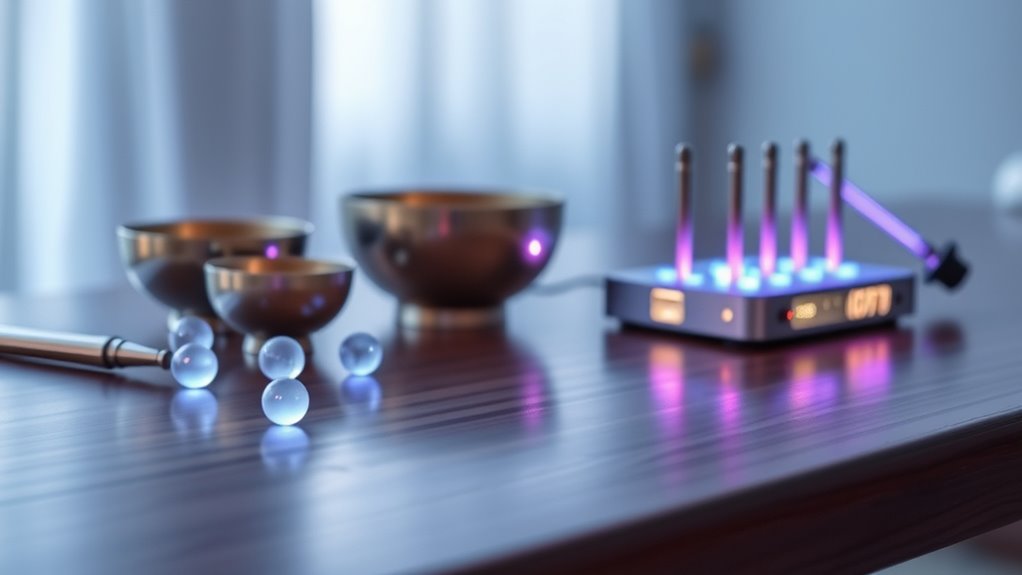

Sound therapy uses specific sound frequencies to help your body restore its natural energy balance and promote healing. These vibrations influence your cells, tissues, and nerve systems by aligning with your body’s natural rhythms. Scientific studies show that sound waves can improve brain activity, reduce pain, and support emotional well-being. By applying targeted frequencies through tools like tuning forks or singing bowls, you can harness vibrational healing. If you keep exploring, you’ll discover even more about how sound waves support your health.
Key Takeaways
- Sound therapy uses specific frequencies to entrain and realign the body’s natural rhythms, promoting healing and emotional balance.
- Vibrational medicine employs tools like tuning forks and singing bowls to deliver targeted vibrations that influence cellular and energetic functions.
- Scientific studies show sound frequencies can affect brain activity, reduce stress, and accelerate physical healing processes.
- Frequencies penetrate tissues and cells, supporting cellular communication and improving overall physiological health.
- The approach is non-invasive and enhances traditional treatments by harnessing the body’s response to sound waves for optimal well-being.

Have you ever noticed how certain sounds can instantly relax or energize you? It’s a fascinating phenomenon, and it’s at the core of sound therapy. This practice taps into the power of frequency healing and vibrational medicine to promote physical, emotional, and mental well-being. When you listen to specific tones or vibrations, you’re not just hearing sounds—you’re engaging with energy patterns that can influence your body on a deep level. These vibrations can help balance your nervous system, reduce stress, and even accelerate healing processes. That’s because everything in nature, including your body, operates at particular frequencies. When these frequencies are out of sync, discomfort or illness can arise. Vibrational medicine aims to restore harmony by applying sound frequencies that resonate with your body’s natural rhythms.
In sound therapy, practitioners often use tuning forks, singing bowls, or specially designed recordings to deliver targeted vibrations. These tools emit precise frequency healing signals that penetrate your body’s tissues and cells. The idea is to entrain your body’s natural frequencies, encouraging your energy fields to align and harmonize. For example, certain low frequencies might help calm your nervous system, easing anxiety and promoting relaxation. Conversely, higher frequencies can energize and invigorate you, lifting your mood and increasing alertness. The beauty of vibrational medicine is that it works on a fundamental level, engaging your body’s energetic blueprint to foster healing and balance. This approach is rooted in ancient traditions but has gained scientific validation in recent years, with studies demonstrating how sound waves influence brain activity and cellular function.
When you experience frequency healing, you may notice changes in your mental clarity, emotional state, and physical sensations. Many report feeling a profound sense of peace after a session, as if their internal systems have been reset or recalibrated. This isn’t coincidence—your body responds to the sound vibrations by adjusting its own frequencies, which can help clear blockages and promote the flow of energy. As vibrational medicine continues to develop, more people are discovering its potential to complement traditional treatments or serve as a standalone therapy. You might find that incorporating sound therapy into your routine offers a simple, non-invasive way to enhance your overall health. Whether you’re seeking stress relief, pain reduction, or emotional balance, understanding the science behind these frequencies could release new pathways to wellness.
tuning forks for sound therapy
As an affiliate, we earn on qualifying purchases.
As an affiliate, we earn on qualifying purchases.
Frequently Asked Questions
Can Sound Therapy Replace Traditional Medical Treatments?
Sound therapy can’t replace traditional medical treatments, as it lacks extensive scientific validation. While some believe in its benefits, the placebo effect might explain improvements for certain individuals. You should view sound therapy as a complementary approach rather than a substitute. Always consult healthcare professionals for serious conditions, ensuring you’re receiving evidence-based care. Relying solely on sound therapy without medical guidance could delay necessary treatment.
How Long Does It Take to See Results With Sound Therapy?
You might start noticing results within a few sessions, but the duration timeline varies based on individual conditions and consistency. Effectiveness indicators include improved mood, reduced stress, or better sleep. Typically, some people see changes in a few weeks, while others may take longer. Stay patient and monitor your progress regularly to gauge how sound therapy impacts your healing journey, adjusting your approach as needed for ideal results.
Is Sound Therapy Suitable for Children and Seniors?
Yes, sound therapy can be suitable for children and seniors. You should look for child-friendly techniques designed to engage young ones gently and senior-specific sessions tailored to their needs. Always consult with a qualified practitioner to guarantee the approach fits their health conditions. With proper guidance, sound therapy offers a safe, soothing experience that promotes relaxation and well-being across all age groups.
Are There Any Risks or Side Effects Associated With Sound Therapy?
Did you know that less than 1% of sound therapy users report side effects? Potential risks are minimal, but some people may experience temporary discomfort, like headaches or dizziness. While generally safe, it’s important to be aware of possible side effects and consult a professional if you have underlying health issues. Always listen to your body and stop if you feel any adverse reactions.
What Qualifications Should a Sound Therapist Have?
You should look for a sound therapist with verified credentials and proper training, guaranteeing their qualifications are credible through credentials verification. They should adhere to strict ethical standards, prioritizing your safety and well-being. A qualified therapist typically has certifications from reputable organizations and extensive experience in sound therapy techniques. Always ask about their background, training, and adherence to ethical practices to ensure you receive safe, effective treatment.
singing bowls for meditation and healing
As an affiliate, we earn on qualifying purchases.
As an affiliate, we earn on qualifying purchases.
Conclusion
Imagine your body as a delicate instrument, finely tuned by the right frequencies. When you use sound therapy, it’s like turning a dial to restore harmony within. One person I know felt her stress melt away after just a few sessions, like a guitar string calming into perfect pitch. Scientific studies support this, showing how specific sounds can promote healing and balance. Embrace sound therapy—you might just find your own harmony waiting to be accessed.
frequency healing sound recordings
As an affiliate, we earn on qualifying purchases.
As an affiliate, we earn on qualifying purchases.
vibrational therapy tools
As an affiliate, we earn on qualifying purchases.
As an affiliate, we earn on qualifying purchases.