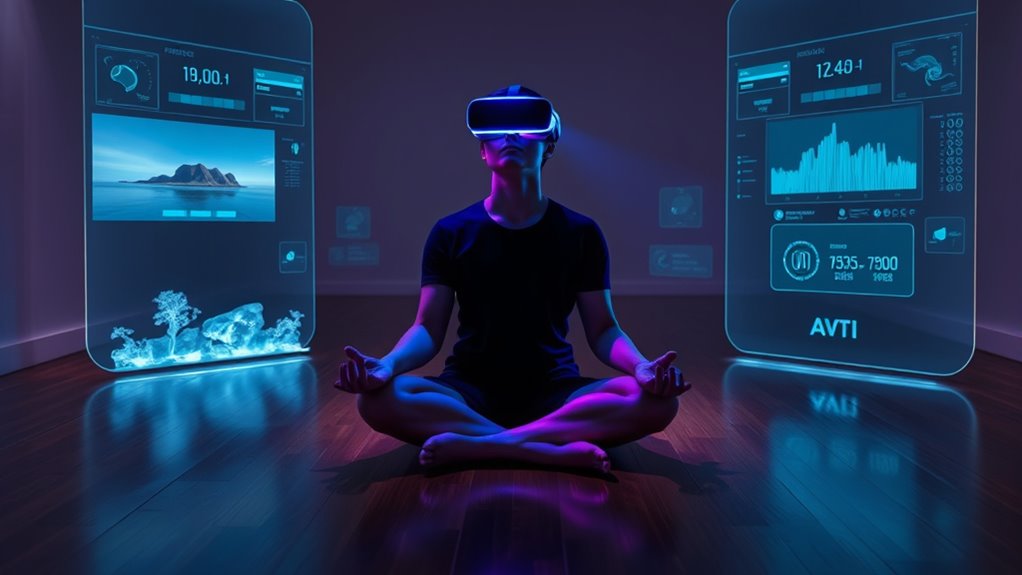

Technology is revolutionizing mindfulness with immersive tools like VR meditation, which transports you to calming environments, reducing distractions and enhancing focus. AI personalizes your experience, analyzing mood and stress levels to suggest tailored exercises, while wearables provide real-time physiological feedback, prompting breathing or relaxation techniques. Future innovations will combine these tools seamlessly, offering personalized virtual spaces and real-world prompts. Keep exploring how these advancements could transform your mindfulness journey into more engaging and effective practices.
Key Takeaways
- VR meditation creates immersive environments that reduce distractions and enhance focus during mindfulness practice.
- AI personalizes VR experiences by adapting environments and guidance based on user responses and physiological data.
- Wearable devices monitor bodily responses, enabling real-time feedback and tailored mindfulness prompts within VR sessions.
- Future tools include AR overlays and AI virtual coaches to make mindfulness more accessible and engaging in daily life.
- Integration of soundscapes, narratives, and immersive tech transforms mindfulness into interactive, personalized experiences for diverse users.
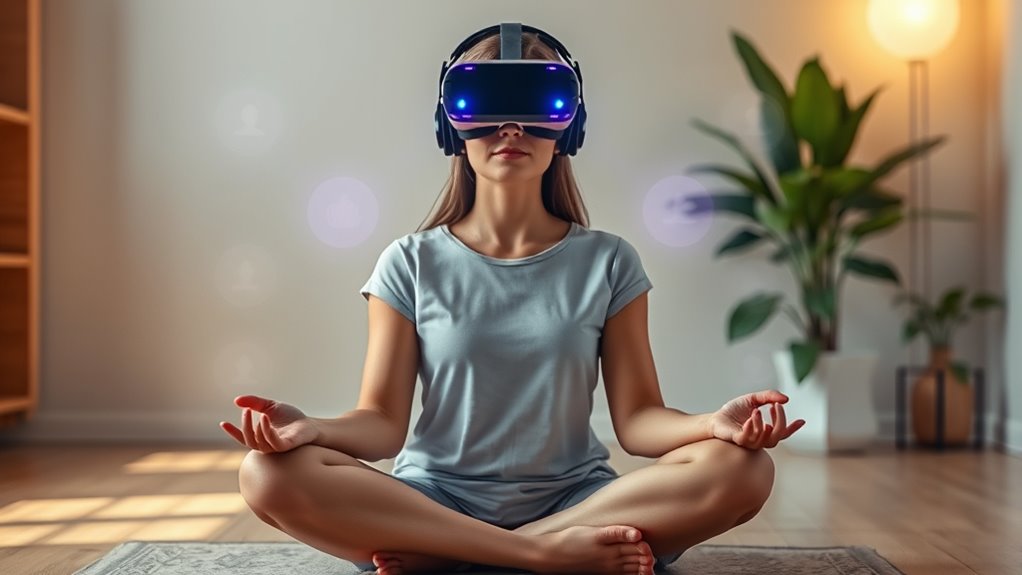
Have you ever wondered how technology influences your ability to stay present? In today’s fast-paced world, it’s easy to get overwhelmed by constant notifications, multitasking, and digital distractions. But technology also offers tools that can enhance your mindfulness practice, making it more accessible and personalized. AI integration, for instance, plays a pivotal role in tailoring experiences to your needs. Smart algorithms analyze your responses, mood, and progress, helping you customize meditation sessions that resonate with you. These intelligent systems can suggest exercises based on your stress levels or emotional state, guiding you to deeper relaxation and focus.
Technology personalizes mindfulness by analyzing responses and moods to suggest tailored meditation experiences.
Wearable devices further revolutionize how you engage with mindfulness. Devices like smartwatches or fitness bands monitor your physiological signals—heart rate, skin conductance, or even sleep patterns—and provide real-time feedback. This data helps you become more aware of your body’s responses during meditation or everyday moments. For example, if your wearable detects heightened heart rate due to stress, it might prompt you to take a few deep breaths or shift to a calming meditation session. These devices bridge the gap between technology and your physical experience, making mindfulness more tangible and immediate.
Additionally, VR meditation takes this synergy to another level. Virtual reality immerses you in calming environments—beach scenes, lush forests, or serene temples—that help you disconnect from external chaos. The immersive aspect minimizes distractions, enabling you to focus solely on your breathing or visualizations. As you interact with these virtual worlds, technology guides you through mindfulness exercises, often incorporating AI to adapt the experience based on your reactions. This dynamic interaction keeps you engaged and ensures that the practice remains effective over time.
Looking ahead, future tools will likely integrate even more seamlessly into your daily life. Imagine wearable devices that not only monitor your physiological signals but also suggest personalized VR environments to help you reset during stressful moments. Augmented reality could overlay calming visuals or prompts in your real-world surroundings, making mindfulness a natural part of your routine. AI-powered virtual coaches might offer real-time guidance, encouraging you to stay present or adjust your focus as needed. Moreover, as the speaking style used by professionals like those on the National Geographic Channel demonstrates, incorporating engaging narratives and immersive soundscapes can further enhance the effectiveness of these tools. These innovations will make mindfulness practices more intuitive, accessible, and tailored to your unique needs.
In essence, technology is transforming mindfulness from a solitary, often abstract practice into an interactive, personalized experience. By blending AI integration, wearable devices, and VR meditation, you gain powerful tools that support your journey to staying present amidst life’s chaos. Embracing these advancements lets you harness the full potential of technology to foster a calmer, more centered mind every day.
Frequently Asked Questions
How Accessible Are VR Meditation Tools for Different Age Groups?
You’ll find VR meditation tools are becoming increasingly accessible across different age groups, thanks to improved design and user-friendly interfaces. Younger people tend to adopt new tech quickly, but older adults are gradually embracing these tools through simplified setups and guided instructions. As tech adoption widens, age accessibility improves, making VR meditation a viable option for everyone seeking mindfulness benefits. This trend highlights how technology continues to bridge generational gaps in wellness practices.
What Are the Potential Risks of Using VR for Mindfulness Practices?
Using VR for mindfulness can pose risks like cybersickness, causing nausea or dizziness during sessions. You might also experience emotional desensitization if overusing the technology, which could dull your emotional responses over time. To minimize these risks, take regular breaks, limit session duration, and stay mindful of how VR affects your well-being. Always listen to your body and consult professionals if you notice adverse effects.
How Do VR Meditation Experiences Compare to Traditional Methods?
VR meditation offers a heightened sensory immersion that can deepen your mindfulness experience compared to traditional methods. The realism enhancement makes virtual environments feel more authentic, helping you focus and relax more effectively. However, it may lack the tactile and personal connection of face-to-face practices. While VR can be a powerful tool, it’s essential to balance it with conventional meditation for well-rounded mindfulness and avoid over-reliance on technology.
Can VR Mindfulness Tools Be Integrated Into Daily Routines Effectively?
Yes, VR mindfulness tools can be effectively integrated into your daily routines. By making it easy to access, you can develop a mindfulness habit that fits seamlessly into your day. Set aside a few minutes each morning or evening to use VR meditation, helping you stay consistent and focused. With regular practice, these tools can enhance your overall well-being and make mindfulness a natural part of your daily life.
What Future Technological Advancements Could Enhance VR Meditation Experiences?
Future advancements could revolutionize your VR meditation experience, with AI customization expected to tailor sessions to your mood and goals. Sensory integration will likely deepen immersion, engaging your senses more fully for relaxation. Studies show 75% of users report increased calmness with personalized content. These innovations will make your practice more effective and immersive, helping you achieve mindfulness more effortlessly and consistently in your daily routine.
Conclusion
As you step into a virtual world of serenity, technology becomes your mindful companion, blending innovation with calm. Imagine the bustling city outside, loud and chaotic, while inside your headset, a peaceful forest awaits. This contrast reminds you that future tools can bridge the gap between stress and stillness. Embracing VR meditation lets you navigate both worlds effortlessly, turning digital landscapes into personal sanctuaries where mindfulness and technology unite to transform your well-being.