
Poor indoor air quality can make it hard for you to focus, fall asleep, and stay calm at home. Pollutants and allergens can cause headaches, fatigue, and sleep disruptions, while also triggering allergies and respiratory issues. Using air purifiers, ventilating your space, and adding indoor plants can improve air quality and promote relaxation. Maintaining good air quality supports your mental and physical health, so if you’re curious about how to create a healthier home environment, there’s more to discover.
Key Takeaways
- Poor indoor air quality can cause fatigue and concentration difficulties, impairing focus at home.
- Pollutants and allergens disrupt sleep patterns, leading to restless nights and decreased restfulness.
- Clean air with plants and purifiers promotes relaxation and emotional calmness in the home environment.
- Proper ventilation and air filtration reduce airborne irritants, supporting better mental clarity and stress reduction.
- Monitoring air quality helps maintain a healthy space that enhances sleep quality and emotional stability.
Good air quality is essential for your home’s overall well-being, as it directly impacts your health, comfort, and productivity. When the air inside your house is clean and fresh, you’re more likely to focus better, sleep more soundly, and feel calmer throughout the day. Poor air quality, on the other hand, can cause headaches, fatigue, difficulty concentrating, and even disrupt your sleep cycle. That’s why paying attention to what circulates in your indoor environment matters so much. You can improve your air quality by introducing indoor plants, which naturally filter toxins and increase oxygen levels. Plants like snake plants, pothos, or peace lilies are especially effective at removing airborne pollutants and boosting the freshness of your indoor air. They also add a touch of nature, creating a calming atmosphere that helps you unwind after a busy day.
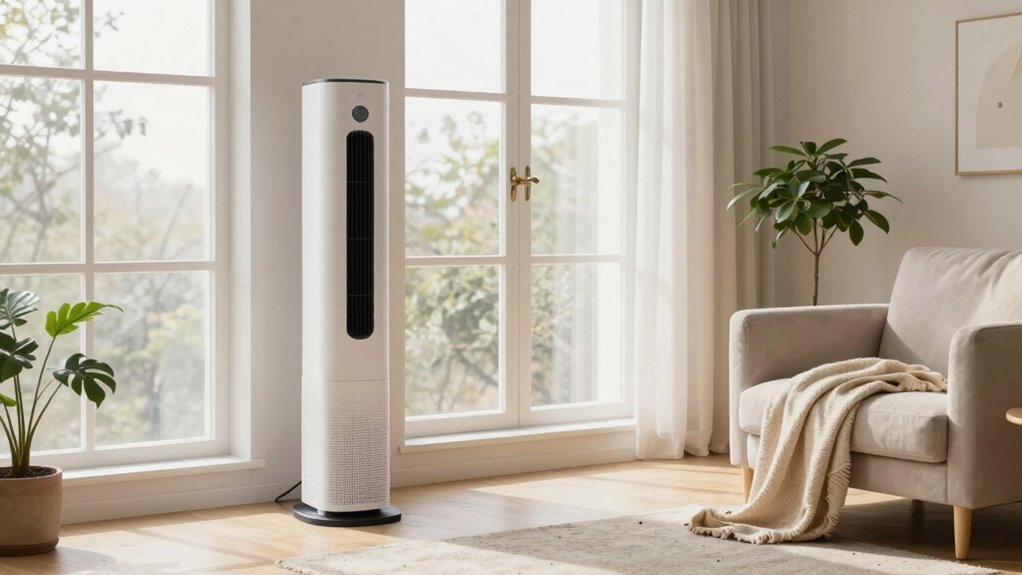
In addition to plants, air purifiers serve as a practical and efficient way to maintain good air quality. Modern air purifiers are equipped with HEPA filters that trap dust, pollen, pet dander, and even some bacteria or viruses. Using an air purifier in your living space reduces airborne irritants, which can otherwise cause allergies or respiratory issues that interfere with your focus or sleep. When your air is cleaner, your body doesn’t have to work as hard to breathe, leaving you feeling more energized and less congested. This creates a more peaceful environment, conducive to relaxation and mental clarity. Ensuring proper ventilation can further enhance indoor air quality by removing stale air and bringing in fresh outdoor air, which supports overall well-being. Additionally, air quality standards play a crucial role in maintaining a healthy indoor environment and can guide you in selecting the right air cleaning solutions. Regularly monitoring indoor air quality levels can help you identify issues before they impact your health and comfort. Understanding indoor air pollutants can also help you take targeted actions to reduce specific contaminants in your home. Moreover, maintaining good air circulation helps prevent the buildup of pollutants and ensures a steady exchange of fresh air.
Your sleep quality is closely tied to the air you breathe at night. Pollutants and allergens often worsen conditions like asthma or allergies, leading to restless nights and poor sleep cycles. By incorporating indoor plants and air purifiers into your bedroom, you set the stage for more restful sleep. You’ll notice fewer nighttime awakenings and a deeper, more restorative rest. Better sleep then leads to sharper focus during the day, as your mind is more alert and less foggy. When your environment feels calm and balanced, it’s easier to relax, which promotes a sense of calmness and stability.
Ultimately, maintaining good indoor air quality isn’t just about health—it’s about creating a home that supports your mental and emotional well-being. You’ll find that with cleaner air, your focus sharpens, your sleep improves, and your overall sense of calm increases. Small adjustments like adding indoor plants and using air purifiers can make a big difference, transforming your space into a healthier, more peaceful sanctuary.
HEPA air purifier for allergies
As an affiliate, we earn on qualifying purchases.
As an affiliate, we earn on qualifying purchases.
Frequently Asked Questions
How Quickly Can Poor Air Quality Impact Mental Clarity?
Poor air quality can cause immediate cognitive decline, making you feel mentally foggy within minutes. You might notice reduced focus and clarity almost instantly, with mental fog lasting for hours if the air remains polluted. The effects depend on the level of pollutants and your sensitivity, but overall, the impact on mental clarity can be swift and noticeable, disrupting your day and your ability to concentrate effectively.
Are There Specific Indoor Plants That Improve Air Quality Effectively?
You can improve indoor air with plant varieties like snake plants, peace lilies, and pothos, which effectively filter toxins and boost oxygen. These lush greens contrast with the often stale indoor air, bringing freshness and calm. While their beauty enhances your space, they also work silently to purify the air, making your home healthier and more inviting. Incorporate these plants and enjoy cleaner indoor air effortlessly.
Can Air Purifiers Eliminate All Airborne Pollutants at Home?
Air purifiers can substantially reduce airborne pollutants, but they can’t eliminate all pollutants. Air purifier limitations include their inability to remove gases or chemicals completely, especially if the chemical filtration efficiency isn’t high. While HEPA filters trap particles like dust and pollen effectively, VOCs and odors may require activated carbon filters. So, for ideal air quality, combine purifiers with good ventilation and source control.
What Are the Long-Term Health Effects of Low Indoor Air Quality?
Like Icarus flying too close to the sun, you risk harm from long-term indoor pollution if you ignore air quality. Low indoor air quality can lead to chronic respiratory issues, allergies, and even heart problems over time. Your lungs and overall health suffer silently, making it essential to improve ventilation and reduce pollutants. Investing in air purification now helps prevent these serious health effects, safeguarding your well-being in the future.
How Does Air Quality Influence Sleep Cycle Hormones?
Poor air quality disrupts your sleep cycle hormones by causing inflammation and stress in your body. When pollutants like dust, mold, or VOCs are present, your hormone regulation struggles, leading to difficulty falling asleep or staying asleep. Clean air supports healthy hormone balance, helping your circadian rhythm stay on track. Improving indoor air quality can enhance your sleep quality, making it easier to wake refreshed and maintain overall well-being.
indoor air purifying plants
As an affiliate, we earn on qualifying purchases.
As an affiliate, we earn on qualifying purchases.
Conclusion
Ever wonder why some days you feel more calm and focused at home? It’s no coincidence that your air quality plays a big role. When your air is clean, you sleep better, stay calmer, and concentrate more easily. So, next time you notice your mood slipping, check your air. Sometimes, the smallest change—like improving ventilation—can make all the difference. After all, your home’s air quality might just be the secret to your everyday well-being.
air quality monitor for home
As an affiliate, we earn on qualifying purchases.
As an affiliate, we earn on qualifying purchases.
best ventilation fans for indoor air
As an affiliate, we earn on qualifying purchases.
As an affiliate, we earn on qualifying purchases.