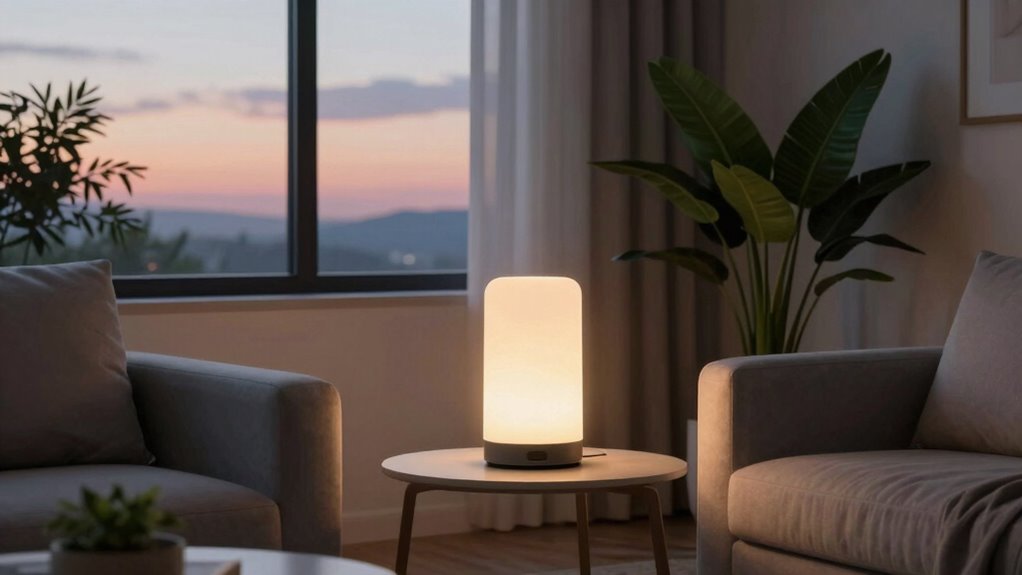

Smart lamps with circadian lighting help you create more intentional days by adjusting brightness and color temperature to match your natural rhythms. They detect your activity and environment to promote better sleep, focus, and mood. These lamps also support energy efficiency, reducing waste and lowering bills. By controlling them through apps or voice commands, you can automate routines like gentle wake-ups or wind-downs. Keep exploring to discover how this technology can truly transform your daily life.

Get books, candles and calm essentials delivered free — and shop member deals
- Fast, free delivery on millions of items
- Access to Prime Big Deal Days deals on October 6–7
- Prime Video, Amazon Music and more included
Key Takeaways
- Smart lamps adjust brightness and color temperature to align with natural circadian rhythms, promoting better sleep and alertness.
- They utilize sensors and routines to mimic natural light patterns, enhancing daily energy and mood regulation.
- Adaptive lighting supports environmental health and biodiversity by reducing unnecessary light pollution.
- Remote control and automation optimize lighting for routines, improving convenience and overall well-being.
- Energy-efficient smart lamps reduce electricity use while fostering healthier, more intentional living habits.

Smart lamps are revolutionizing the way we manage indoor lighting by integrating technology that adapts to our natural biological rhythms. Instead of manually adjusting your lights or sticking to static schedules, you can rely on lighting automation to create a more harmonious environment. These lamps use sensors and software to detect the time of day, your activity, and even your mood, adjusting brightness and color temperature accordingly. As a result, your indoor space becomes more responsive, promoting better sleep, improved focus, and a sense of well-being. This seamless integration helps you stay aligned with your circadian rhythm, which governs your sleep-wake cycle, making your days more intentional and less stressful. Incorporating biodiversity considerations into your lighting choices can further support a healthier environment both inside and outside your home.
With smart lamps, energy efficiency is more than just a buzzword; it’s a practical benefit that saves you money and reduces your environmental footprint. Because these devices are designed to turn off or dim when not needed, you avoid unnecessary power consumption. Lighting automation ensures that lights are only on when you need them, adapting to your schedule and natural light levels. For example, your smart lamp can gradually dim in the evening, mimicking sunset, to signal your body that it’s time to wind down. During the day, it can maximize brightness to boost alertness and productivity without wasting energy. This smart management of lighting helps you cut down on electricity bills while supporting sustainable living. Additionally, energy efficiency is a key factor in designing smarter, greener homes.
You’ll find that smart lamps also bring a level of convenience that transforms your daily routine. No more fumbling for switches or adjusting multiple bulbs — your lighting can be controlled via smartphone, voice commands, or automated routines. As you wake up, the lamp can simulate sunrise, gently waking you up with warm light that feels natural. In the evening, it can shift to cooler tones that prepare your body for rest. This intentional control over your lighting environment contributes to a healthier lifestyle, helping you establish consistent routines that align with your body’s needs. Additionally, understanding the role of circadian rhythms in lighting design can further enhance your home’s energy efficiency and health benefits. Recognizing how lighting adaptation influences our daily health and mood can lead to more effective and personalized lighting solutions.
As an affiliate, we earn on qualifying purchases.
Frequently Asked Questions
How Do Smart Lamps Differ From Traditional Lamps?
Smart lamps differ from traditional lamps by offering adjustable color temperature and user control. You can change the light’s warmth or coolness to match your mood or time of day, enhancing your environment. Unlike traditional lamps, which stay fixed, smart lamps adapt to your needs, helping you create more intentional days. You control settings via apps or voice commands, making lighting more personalized, convenient, and better suited to your daily routines.
Can Circadian Lighting Improve Mental Health?
Yes, circadian lighting can improve your mental health by aiding mood regulation and sleep enhancement. When your lighting mimics natural daylight, it helps regulate your internal clock, reducing feelings of fatigue and depression. Better sleep quality supports emotional stability, while improved mood regulation boosts overall mental well-being. By aligning lighting with your body’s rhythms, you create a healthier environment that promotes mental clarity and emotional resilience.
Are Smart Lamps Energy-Efficient?
Smart lamps are energy-efficient, helping you save on power consumption and reduce energy bills. They use advanced LED technology, which consumes less energy than traditional bulbs, and often feature customizable brightness settings for ideal use. By adjusting brightness and schedules, you maximize energy savings, minimize waste, and lower your environmental impact. So, you get better lighting while being kinder to your wallet and the planet.
How Customizable Are Circadian Lighting Settings?
Circadian lighting settings offer impressive customization, allowing you to tailor lighting schedules to your routine. You can adjust personalization options like brightness, color temperature, and timing, enabling a lighting experience that aligns with your natural rhythms. Technical customization features let you create specific lighting scenes for different times of day or activities. This flexibility helps you optimize your environment for better sleep, productivity, and overall well-being, making your days more intentional.
Do Smart Lamps Require Professional Installation?
Smart lamps usually don’t require professional installation, making them accessible for most users. The installation complexity is low, especially if the lamp is compatible with your smart home system and your existing Wi-Fi network. You typically just need to screw in the smart bulb, connect it via an app, and sync it with your circadian lighting settings. Make sure your smart bulb compatibility before buying to avoid any setup hassles.
adjustable color temperature desk lamp
As an affiliate, we earn on qualifying purchases.
As an affiliate, we earn on qualifying purchases.
Conclusion
As you embrace smart lamps and circadian lighting, you might notice your days aligning more naturally, like the sun rising just as you wake. These lights become subtle allies, guiding your body’s rhythm without you even realizing. Before long, your mornings feel brighter, and your evenings calmer—almost as if the universe conspired to make your space a sanctuary of balance. In the quiet dance of light and time, you find a more intentional, harmonious rhythm for your life.
As an affiliate, we earn on qualifying purchases.
energy-efficient smart light bulb
As an affiliate, we earn on qualifying purchases.
As an affiliate, we earn on qualifying purchases.
Fall Picks
fall essentials
As an affiliate, we earn on qualifying purchases.