
Understanding how dopamine influences your brain’s reward system helps you see how motivation and pleasure are intertwined. When you engage in activities like eating or exercising, dopamine signals reward, encouraging you to repeat these behaviors. Unfortunately, substances or habits that flood your brain with dopamine can hijack this system, leading to addiction. By learning more, you’ll discover ways to harness dopamine’s power for healthier habits and lasting well-being.
Key Takeaways
- Dopamine drives motivation and pleasure, reinforcing rewarding behaviors and learning processes in the brain.
- Excessive dopamine release from substances or habits can hijack the reward system, leading to addiction.
- Brain adaptation reduces natural dopamine production, increasing cravings and dependence on external stimuli.
- Understanding dopamine’s role helps develop healthier habits and prevents dependency by balancing reward signals.
- Awareness of dopamine mechanisms empowers conscious choices to harness motivation and maintain mental well-being.
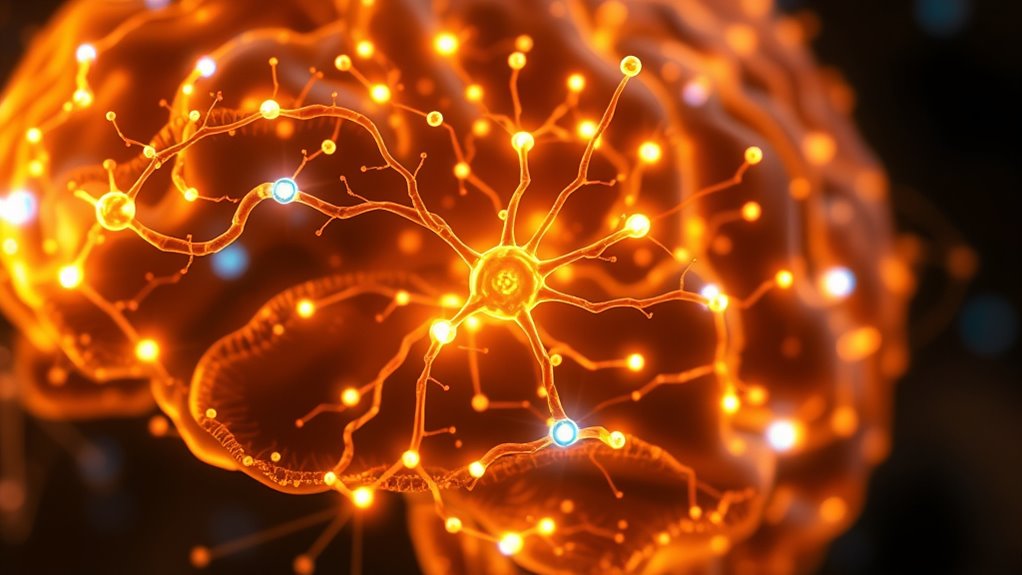
Dopamine plays a crucial role in how your brain perceives pleasure and motivation. It’s a key player in your brain’s reward system, influencing your feelings of satisfaction and encouraging you to seek out rewarding experiences. This neurotransmitter functions by transmitting signals between nerve cells, helping you learn what feels good and motivating you to pursue those activities again. When you engage in pleasurable activities like eating, exercising, or achieving goals, dopamine levels spike, reinforcing those behaviors. Understanding these neurotransmitter functions is essential because they form the foundation of your brain’s reward circuitry.
Dopamine drives motivation and pleasure, reinforcing behaviors that shape your brain’s reward system.
However, this system can also be a double-edged sword. The way dopamine operates is closely linked to addiction mechanisms. When you repeatedly expose your brain to addictive substances or behaviors, dopamine release becomes exaggerated, creating intense feelings of euphoria. Over time, your brain adapts to these heightened dopamine levels by reducing its natural production or decreasing receptor sensitivity. This adaptation makes you crave the addictive substance or activity more desperately to feel the same pleasure, leading to a cycle of dependence. Recognizing how dopamine influences addiction mechanisms can help you better understand why breaking free from addictive behaviors can be so challenging.
Your brain’s reward system is designed to reinforce beneficial behaviors, but substances like drugs or compulsive habits can hijack this process. When dopamine floods your brain during drug use, it creates an artificially intense reward signal, which your brain may interpret as more valuable than natural rewards. This hijacking can override your normal decision-making processes, making it harder to resist cravings. The more you indulge in these behaviors, the more your neural pathways adapt, requiring increasingly higher doses or more frequent engagement to achieve the same dopamine surge. This cycle demonstrates how addiction mechanisms are rooted in the very functions that normally promote survival and well-being, like eating and social bonding, but become destructive when manipulated by external substances or compulsive habits.
In essence, understanding the neurotransmitter functions of dopamine helps you grasp how your brain learns and adapts to experiences, both positive and negative. It also sheds light on why certain behaviors and substances can lead to addiction. You can leverage this knowledge to develop healthier habits and recognize the signs of dependency. By understanding the delicate balance of dopamine’s role in your motivation and pleasure systems, you gain insight into how to harness it for positive change, rather than allowing it to control you through addiction mechanisms. This awareness empowers you to take conscious steps toward maintaining a balanced and rewarding life.
dopamine supplement for motivation
As an affiliate, we earn on qualifying purchases.
As an affiliate, we earn on qualifying purchases.
Frequently Asked Questions
How Does Dopamine Influence Motivation Beyond the Reward System?
Dopamine influences your motivation beyond just the reward system by promoting neuroplasticity enhancement and emotional regulation. When dopamine levels increase, you become more open to learning new skills and adapting to challenges. It also helps you manage emotions, keeping you focused and driven. This dual role boosts your overall motivation, making it easier to pursue goals even when immediate rewards aren’t present, ultimately strengthening your resilience and growth.
Can Dopamine Levels Be Intentionally Increased or Decreased?
Yes, you can intentionally influence dopamine levels through dopamine regulation and behavioral interventions. Activities like exercise, meditation, and setting achievable goals boost dopamine naturally. Conversely, reducing stress, avoiding substance abuse, and maintaining a healthy diet help prevent dopamine depletion. By understanding how your behaviors impact dopamine, you can actively manage your motivation and mood, promoting overall mental well-being.
What Role Does Dopamine Play in Addiction and Relapse?
Ironically, dopamine’s role in addiction and relapse is like a double-edged sword. It fuels your pursuit of rewards, influencing social behavior and decision making, but also makes you crave that next hit, even when it’s harmful. When levels spike, you feel invincible, yet this very surge can trap you in cycles of relapse. Understanding dopamine’s influence helps you see how it drives both your choices and addictive behaviors.
Are There Genetic Factors Affecting Dopamine Production?
You might have genetic predispositions that influence dopamine production, affecting how your brain experiences reward. Variability in dopamine receptor genes can make some individuals more sensitive or less responsive to dopamine signals. This receptor variability impacts your motivation, pleasure, and risk of addiction. Understanding these genetic factors can help tailor personalized approaches to managing addiction and improving mental health, as your brain’s reward system is partly shaped by your unique genetic makeup.
How Does Dopamine Interact With Other Neurotransmitters?
Imagine your brain’s a busy city where dopamine teams up with neurotransmitters like serotonin and norepinephrine during synaptic transmission. This interaction maintains neurotransmitter balance, influencing your mood, motivation, and focus. Dopamine often enhances or modulates these signals, creating a harmonious or chaotic communication network. By understanding how dopamine interacts with other neurotransmitters, you can better grasp how your brain orchestrates complex behaviors and emotional responses.
natural dopamine booster
As an affiliate, we earn on qualifying purchases.
As an affiliate, we earn on qualifying purchases.
Conclusion
Now that you understand how dopamine fuels your brain’s reward system, picture it as a guiding light, illuminating your path toward pleasure and motivation. When you chase goals or indulge in rewards, dopamine sparks that vibrant glow, encouraging you to keep moving forward. By harnessing this powerful neurotransmitter, you can steer your mind toward positive habits and fulfillment. Remember, your brain’s reward system is your inner compass—trust it to lead you to a brighter, more motivated you.
dopamine detox kit
As an affiliate, we earn on qualifying purchases.
As an affiliate, we earn on qualifying purchases.
brain health supplements
As an affiliate, we earn on qualifying purchases.
As an affiliate, we earn on qualifying purchases.