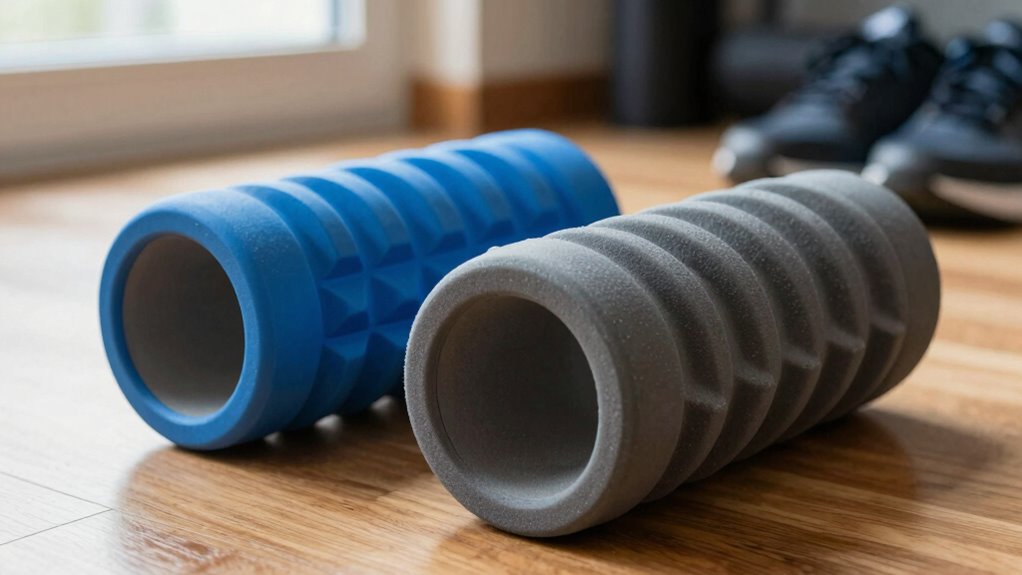

Using a foam roller helps ease soreness and muscle tightness, making you feel more comfortable and motivated to stay active. As your muscles become more flexible and pain decreases, you’ll notice improved performance and lower injury risk. This boost in physical well-being can enhance your mental resilience and motivation to stick with your workout routine. Regular use creates a positive feedback loop, encouraging consistency. Keep exploring to discover how you can make foam rolling an empowering part of your recovery.

Turn your quiet moments into listening time
- Thousands of audiobooks, podcasts and originals
- Listen on your phone, tablet or Echo — also offline
- Cancel anytime
Key Takeaways
- Regular foam rolling reduces muscle soreness, making workouts more comfortable and motivating continued exercise.
- Improved flexibility and mobility from foam rolling enhance performance, encouraging consistency and progress.
- Feeling physically better through recovery boosts mental resilience and confidence, fostering motivation.
- Easy, portable foam rolling routines create positive habits that reinforce commitment and self-care.
- The sense of well-being from effective recovery routines fuels long-term motivation and sustained training efforts.
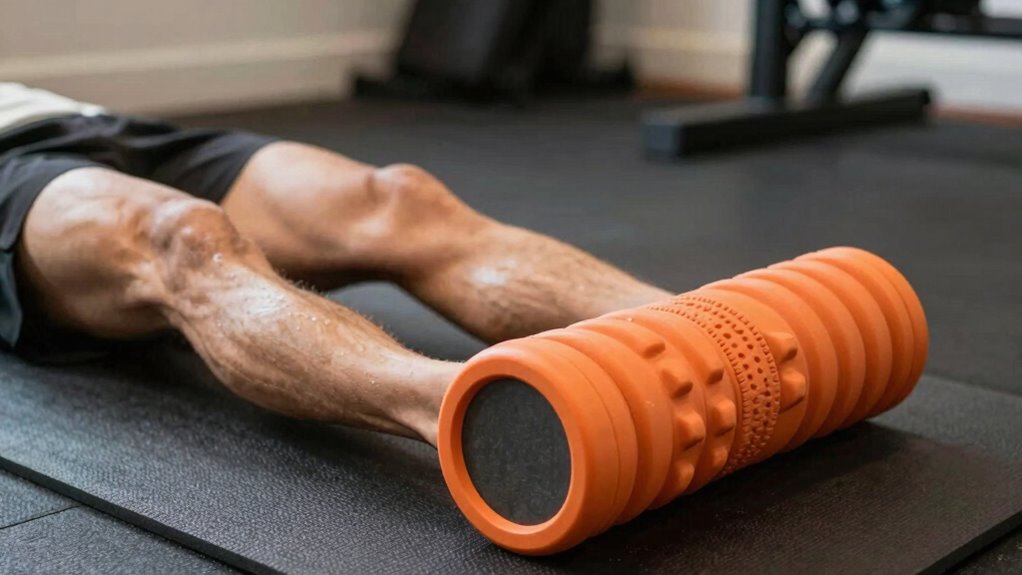
If you’re looking to enhance your recovery routine, foam rollers can be a game-changer. They’re not just about easing soreness—they actively help improve muscle flexibility and offer effective pain relief. When you incorporate foam rolling into your fitness regimen, you’re doing more than just preventing injuries; you’re setting yourself up for sustained motivation. Feeling less tight and more limber keeps you committed to your workouts, making it easier to stay consistent over time.
Using a foam roller regularly helps break up muscle knots and adhesions, which are often responsible for tightness and discomfort. As you roll out those tight spots, you’ll notice an immediate reduction in muscle tension, allowing your body to move more freely. This increased muscle flexibility isn’t just about feeling good; it translates directly into better performance and fewer setbacks. When your muscles are more pliable, you can push yourself a little harder in your training, knowing that recovery is part of the process. That sense of progress fuels your motivation because you see tangible results from your efforts.
Pain relief is another crucial aspect that keeps you engaged and motivated. Chronic pain or soreness can be demoralizing, leading to skipped workouts or giving up altogether. Foam rolling alleviates discomfort by promoting blood flow and releasing endorphins, your body’s natural painkillers. When you feel less pain, you’re more inclined to stick with your routine, knowing that your body is actively healing and strengthening. Developing a consistent recovery routine can further enhance these benefits by establishing habits that support your overall well-being. Regular use of foam rollers can also improve your muscle elasticity, which is essential for maintaining mobility and preventing injuries over time. Additionally, understanding the importance of muscle recovery can help you better prioritize your workouts and rest periods, leading to more sustainable progress. This sense of well-being becomes a positive feedback loop, encouraging you to keep going even on days when motivation wanes.
Moreover, the simplicity and portability of foam rollers mean you can easily integrate them into your daily routine. Whether you’re at home or traveling, you have a quick tool to boost your recovery and keep your motivation high. As you develop a habit of regular foam rolling, you’ll notice not only physical benefits but also a boost in mental resilience. Feeling more comfortable in your body fosters confidence, making it easier to stay committed to your fitness journey. The combination of increased flexibility, pain relief, and the convenience of foam rolling creates a powerful motivator—your body rewards your consistency, inspiring you to push further and stay dedicated.
In essence, foam rollers serve as a bridge between recovery and motivation. They help you feel better physically, which in turn fuels your mental drive to keep moving forward. Developing mind-body awareness through consistent recovery practices like foam rolling can further enhance your overall motivation and well-being. When recovery becomes an empowering part of your routine, staying motivated becomes much simpler.
As an affiliate, we earn on qualifying purchases.
Frequently Asked Questions
How Often Should I Use a Foam Roller for Optimal Recovery?
You should use a foam roller about 3 to 4 times a week for maximum recovery. This frequency helps reduce muscle tension and promotes flexibility improvement. Focus on areas that feel tight or sore, spending around 1-2 minutes on each muscle group. Consistent use encourages faster recovery, enhances mobility, and keeps your muscles loose, motivating you to stay active and committed to your fitness goals.
Can Foam Rolling Prevent Future Injuries?
Foam rolling can be a game-changer in injury prevention, markedly boosting your muscle flexibility. By regularly using a foam roller, you help release tightness and improve blood flow, making your muscles less prone to strains and tears. While it might not prevent every injury, incorporating foam rolling into your routine considerably reduces your risk of future issues, keeping you active and injury-free for the long haul.
Are There Specific Foam Rollers for Different Body Parts?
Yes, there are specific foam rollers for different body parts. You’ll find equipment variety designed for targeted muscle targeting, ensuring you can effectively relieve tension in areas like your back, legs, or shoulders. Using the right foam roller helps improve recovery and prevents injury by addressing specific muscle groups. Choose a smaller, denser roller for precision and larger, softer ones for broader muscle areas, tailoring your recovery routine to your needs.
How Long Does It Take to See Recovery Benefits?
Ever wonder how quickly you’ll feel relief? You might notice reduced muscle soreness and flexibility improvement within just a few sessions, often after one week of regular use. Consistent foam rolling boosts circulation and releases tension, accelerating recovery. So, if you stick to a routine, you could start feeling better in as little as a few days, motivating you to stay committed and keep progressing toward your fitness goals.
Is Foam Rolling Suitable for All Fitness Levels?
Yes, foam rolling suits all fitness levels. You can start with gentle foam roller techniques to target muscle tension without overdoing it. Beginners should focus on light pressure and short sessions, gradually increasing intensity as your muscles adapt. Foam rolling helps reduce muscle tension and increase flexibility, which benefits everyone. So, whether you’re just starting out or an experienced athlete, adapting your foam rolling routine makes it suitable for you.
massage foam roller for soreness relief
As an affiliate, we earn on qualifying purchases.
As an affiliate, we earn on qualifying purchases.
Conclusion
So, next time you’re feeling too lazy to stretch, just blame your foam roller. It’s the unsung hero secretly fueling your recovery and motivation—while you sit there thinking it’s just a fancy piece of foam. Ironically, that simple tool might be the reason you keep pushing harder, even when motivation wanes. Who knew that the real secret to staying motivated is just a roll away? Now, go roll and conquer!
As an affiliate, we earn on qualifying purchases.
high-density foam roller for flexibility
As an affiliate, we earn on qualifying purchases.
As an affiliate, we earn on qualifying purchases.
Halloween Picks
halloween
As an affiliate, we earn on qualifying purchases.