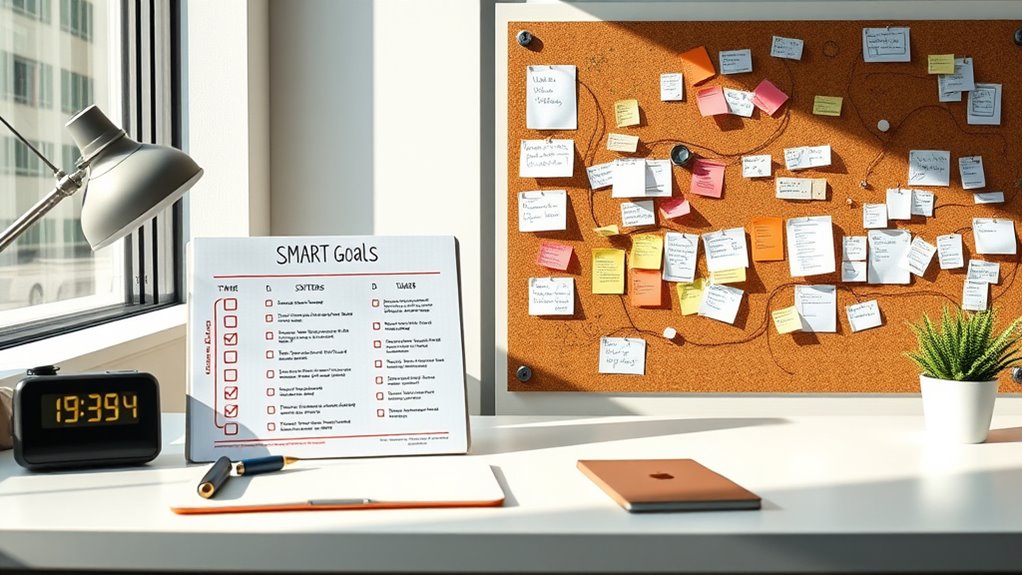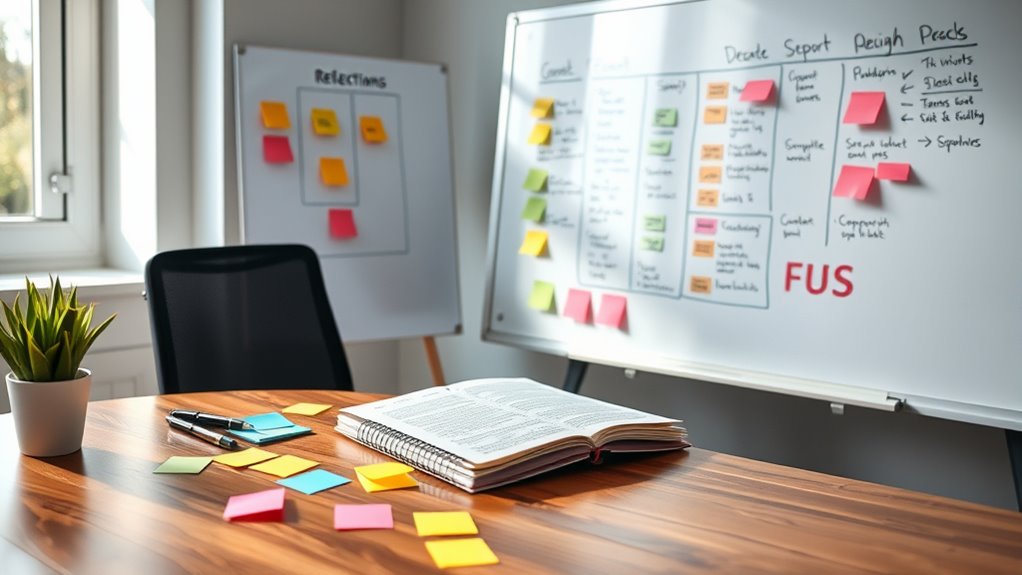

By adopting retrospective practices from agile methods, you can regularly evaluate your progress toward life goals, identify what works, and adjust strategies effectively. This approach encourages honest self-assessment, helps you recognize growth opportunities, and keeps your motivation high. It transforms goal-setting into an ongoing, adaptive process that promotes resilience and continuous improvement. Keep exploring how integrating these techniques can make your personal development more intentional and successful.
Key Takeaways
- Regular self-retrospectives enable continuous assessment of progress, helping to realign goals with evolving priorities.
- Borrowing agile’s iterative approach fosters adaptability, allowing flexible adjustments based on honest self-assessment.
- Reflective cycles promote a growth mindset, viewing setbacks as learning opportunities to refine strategies.
- Incorporating structured retrospectives enhances motivation, celebrating small wins and identifying patterns for improvement.
- Practical techniques like space-saving reflections make continuous self-improvement manageable and sustainable over time.

Have you ever wondered how reflecting on your past can help shape your future? Personal reflection isn’t just about looking back; it’s a powerful tool for understanding your journey, recognizing patterns, and making meaningful changes. When you regularly pause to evaluate what’s worked and what hasn’t, you gain clarity on your progress toward your goals. This habit allows you to adjust your approach, aligning your actions with your evolving priorities and values. Think of it as a personal retrospective—an opportunity to assess your efforts, celebrate successes, and identify areas needing improvement.
By engaging in honest self-assessment, you can catch small misalignments early, preventing them from turning into larger setbacks. When you review your past efforts, you might realize that some goals no longer resonate or that your initial strategies weren’t as effective as you’d hoped. That realization prompts goal adjustment, which is essential for staying motivated and making continuous progress. Instead of rigidly sticking to a plan that no longer fits, you learn to pivot, refining your objectives in response to new insights. This iterative process keeps you engaged and adaptable, key traits for long-term success.
Regular self-assessment helps identify misalignments early, enabling flexible goal adjustment for sustained motivation and progress.
The concept of goal adjustment through personal reflection mirrors agile methodologies used in project management. Just as teams hold regular retrospectives to improve workflows, you can schedule personal reviews to evaluate your growth. During these sessions, ask yourself what went well, what challenges you faced, and what you can do differently moving forward. These insights serve as a roadmap for fine-tuning your goals, ensuring they remain relevant and attainable. Over time, this cycle of reflection and adjustment becomes second nature, making your pursuit of life goals more dynamic and responsive.
Moreover, embracing goal adjustment fosters a growth mindset. When you view setbacks as opportunities to learn rather than failures, you’re more likely to experiment with new strategies and push beyond comfort zones. Personal reflection helps you see your progress objectively, removing emotional biases that might cloud judgment. It encourages you to celebrate small wins, recognize patterns of behavior, and set more realistic, achievable milestones. As a result, your motivation stays high, and you develop resilience in *steering* life’s inevitable ups and downs.
Additionally, incorporating space-saving techniques into your planning can make ongoing reflection more manageable and less overwhelming. Ultimately, integrating regular personal reflection into your routine transforms how you pursue your goals. It turns goal-setting from a static task into an ongoing, adaptive process. By consciously reviewing your past efforts and making necessary goal adjustments, you create a sustainable path forward. This approach not only accelerates your growth but also ensures that your life journey remains aligned with your true aspirations, making your pursuit of self-improvement more intentional and effective.
personal reflection journal
As an affiliate, we earn on qualifying purchases.
As an affiliate, we earn on qualifying purchases.
Frequently Asked Questions
How Often Should I Conduct Life Retrospectives?
You should conduct life retrospectives every 4 to 6 weeks, balancing timing frequency with reflection depth. This interval allows you to review progress without feeling overwhelmed, giving enough time to see meaningful changes. Regular check-ins help you stay aligned with your goals, identify obstacles early, and celebrate successes. Adjust the timing based on your needs—more frequent if you’re making rapid changes or less often if your goals are long-term.
What Tools Are Best for Tracking Personal Progress?
Imagine you want to improve your fitness routine. Using habit tracking apps like Habitica or journaling techniques helps you monitor progress daily. These tools keep you accountable by visually showing your achievements and setbacks. For example, a person used journaling to reflect on habits and adjusted their plan based on insights. You should choose tools that suit your style, whether digital habit trackers or traditional journaling, to stay motivated and track personal progress effectively.
How Do I Handle Setbacks During Self-Improvement Retrospectives?
When facing setbacks during self-improvement retrospectives, focus on emotional resilience to stay motivated. Acknowledge your challenges without judgment and view them as growth opportunities. Reach out to accountability partners for support and perspective, helping you stay committed. Remember, setbacks are part of progress, so adjust your goals if needed, and keep moving forward with a positive mindset. This approach keeps your self-improvement journey steady and resilient.
Can Retrospectives Replace Traditional Goal-Setting Methods?
They say “Old habits die hard,” but retrospectives can shake things up. While they aren’t a complete replacement for traditional goal-setting, they encourage mindset shifts and continuous improvement. You can use them to reflect regularly, track progress, and stay accountable. Partnering with accountability partners during retrospectives keeps you honest and motivated. So, they complement rather than replace, helping you adapt and grow more effectively on your self-improvement journey.
How Do I Involve Others in My Personal Retrospectives?
You involve others in your personal retrospectives by inviting peer accountability, which keeps you motivated and honest. Share your progress and challenges openly, encouraging emotional reflection to deepen understanding. Ask trusted friends or mentors for feedback and support, making the process collaborative. Their perspectives can reveal blind spots, and their encouragement helps you stay committed, turning retrospectives into a shared journey toward your goals.
goal setting planner
As an affiliate, we earn on qualifying purchases.
As an affiliate, we earn on qualifying purchases.
Conclusion
By adopting retrospectives for your life goals, you stay proactive and adaptable, just like agile teams do. Studies show that people who regularly review their progress are 30% more likely to achieve their goals. So, take a moment to reflect, learn from your experiences, and adjust your plans. Embracing this habit can make your self-improvement journey more effective and fulfilling. Why not start today and turn your goals into tangible achievements?
self-assessment workbook
As an affiliate, we earn on qualifying purchases.
As an affiliate, we earn on qualifying purchases.
habit tracking journal
As an affiliate, we earn on qualifying purchases.
As an affiliate, we earn on qualifying purchases.