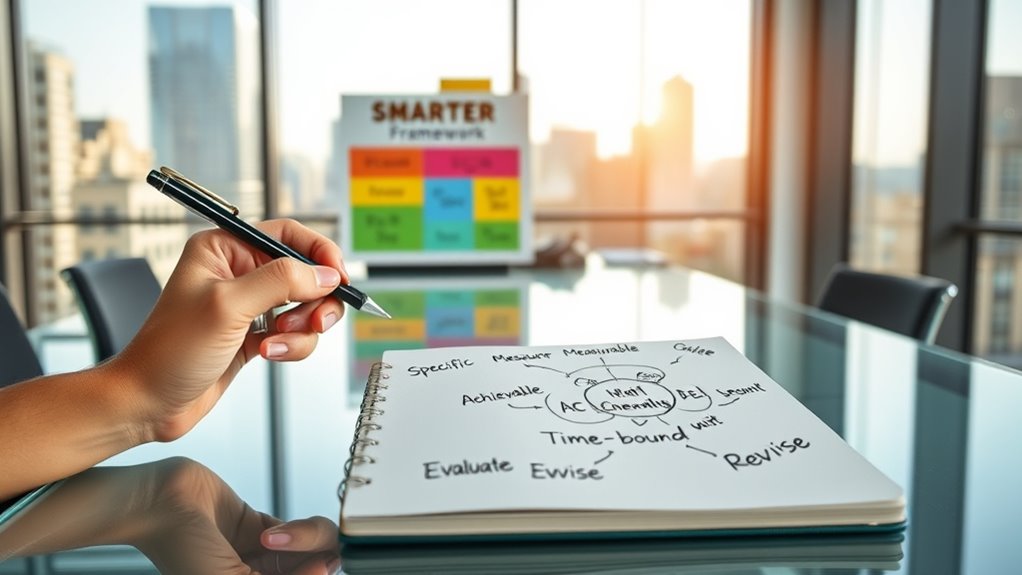
Reflecting on the past year helps you harvest valuable lessons by evaluating your achievements, setbacks, and habits. You can assess which goals you met, understand what strategies worked, and identify areas needing improvement. Recognizing patterns of behavior allows you to celebrate wins and adjust for growth. This honest evaluation builds clarity and motivation for the year ahead. Keep exploring these insights to set meaningful goals and embrace your ongoing journey of growth.
Key Takeaways
- Assess your initial goals, progress, and strategies to understand what worked and what needs adjustment.
- Reflect on setbacks as learning opportunities to identify growth areas and improve future approaches.
- Review habits and routines that supported your well-being and productivity, reinforcing beneficial ones.
- Recognize personal achievements and challenges to foster gratitude and resilience for the year ahead.
- Use insights to set meaningful, realistic goals with renewed motivation and clarity for the coming year.

As the year draws to a close, it’s the perfect opportunity to pause and reflect on your experiences, achievements, and lessons learned. This moment of introspection allows you to evaluate how far you’ve come and identify areas where you can grow. When you look back, consider your goal setting throughout the year. Did you set clear, achievable objectives? Were you able to stay focused and motivated? Reflecting on your goals helps you understand what worked and what didn’t, guiding your personal growth moving forward. Maybe some goals shifted as circumstances changed, and that’s okay. Recognizing this flexibility is part of your development. Take note of the strategies that helped you stay on track and those that fell short, so you can refine your approach for the future.
During this reflection, don’t just celebrate your successes—analyze your setbacks too. They’re valuable lessons in disguise. Perhaps you didn’t meet a particular goal or faced unexpected obstacles. Instead of dwelling on disappointment, view these moments as opportunities to learn. Ask yourself what you could do differently next time, whether it’s adjusting your goals, improving your time management, or seeking support when needed. This honest assessment fosters personal growth because it encourages you to view challenges as stepping stones rather than barriers. Every experience, positive or negative, contributes to your understanding of yourself and your capabilities.
Analyze setbacks as lessons, and turn challenges into stepping stones for growth and self-discovery.
As you review the past year, consider the habits you developed or abandoned. Did you cultivate routines that supported your well-being and productivity? Did you take time for self-care and reflection? Recognizing these patterns helps you reinforce what benefits you and discard what doesn’t. This process of continuous improvement is central to personal growth—by intentionally shaping your habits, you set the stage for a more fulfilling year ahead. Remember, goal setting isn’t a one-time act but a dynamic process that evolves as you learn more about yourself. Celebrate your progress, acknowledge your setbacks, and use this insight to set fresh, meaningful goals for the upcoming year.
Incorporating positive affirmations and inspiring quotes can further reinforce your motivation and outlook as you move forward. Ultimately, this year-end reflection is about honoring your journey. It’s about understanding that growth isn’t linear but a series of strides and stumbles. By taking stock now, you equip yourself with the clarity and motivation needed to pursue new heights. Your past experiences serve as a foundation for future success, and this moment of reflection ensures you’re ready to face the next chapter with renewed focus and purpose.
goal setting planner
As an affiliate, we earn on qualifying purchases.
As an affiliate, we earn on qualifying purchases.
Frequently Asked Questions
How Do I Start My End-Of-Year Reflection Effectively?
To start your end-of-year reflection effectively, embrace mindful introspection by setting aside quiet time to honestly assess your experiences. Use storytelling techniques to frame your journey, highlighting key moments and lessons learned. Begin with a compelling anecdote or a vivid memory that encapsulates your growth. This approach helps you connect emotionally, making your reflection more engaging and meaningful as you move through the rest of your review.
What Tools Can Assist in Tracking My Progress Throughout the Year?
Ever wonder how you can see your growth clearly? Progress journals and digital apps are excellent tools to track your progress throughout the year. Progress journals help you reflect on milestones and setbacks, while digital apps offer real-time insights and easy organization. Using both, you stay motivated and aware of your development, making it easier to identify lessons learned and celebrate achievements as you prepare your year-end reflection.
How Can I Stay Motivated During the Reflection Process?
To stay motivated during your reflection, celebrate your achievements, no matter how small, to boost your confidence. Remind yourself of how you’ve overcome setbacks, which shows your resilience and growth. Keep a positive mindset, focus on progress rather than perfection, and set new goals based on lessons learned. This approach helps you stay engaged, inspired, and motivated to continue improving as you reflect on your journey.
What Common Pitfalls Should I Avoid During Year-End Review?
You should avoid overgeneralization and ignoring feedback during your year-end review. Overgeneralizing can lead you to overlook specific achievements or challenges, while ignoring feedback prevents growth. Stay objective, focus on concrete examples, and be open to constructive criticism. By doing so, you gain a balanced perspective, identify real areas for improvement, and make meaningful plans for the year ahead. Keep your review honest and receptive to growth opportunities.
How Do I Set Realistic Goals Based on My Reflections?
Imagine planting seeds in fertile soil; you want your goal setting to nurture growth. To set realistic targets, reflect on your past achievements and challenges, then break down big ambitions into manageable steps. Picture each milestone as a stepping stone, guiding you forward. By aligning your goals with your capacity and resources, you create a clear path, making your ambitions achievable and inspiring steady progress throughout the year.
habit tracking journal
As an affiliate, we earn on qualifying purchases.
As an affiliate, we earn on qualifying purchases.
Conclusion
As you reflect on the past year, remember that 78% of people find year-end reviews help them set clearer goals. Take this time to celebrate your wins and learn from challenges. Embrace the lessons you’ve gathered, and use them as fuel for the year ahead. Your growth is ongoing, and each experience adds valuable insight. Keep moving forward with purpose—you’re building a stronger, wiser version of yourself with every step.
self-reflection workbook
As an affiliate, we earn on qualifying purchases.
As an affiliate, we earn on qualifying purchases.
motivational quotes wall art
As an affiliate, we earn on qualifying purchases.
As an affiliate, we earn on qualifying purchases.