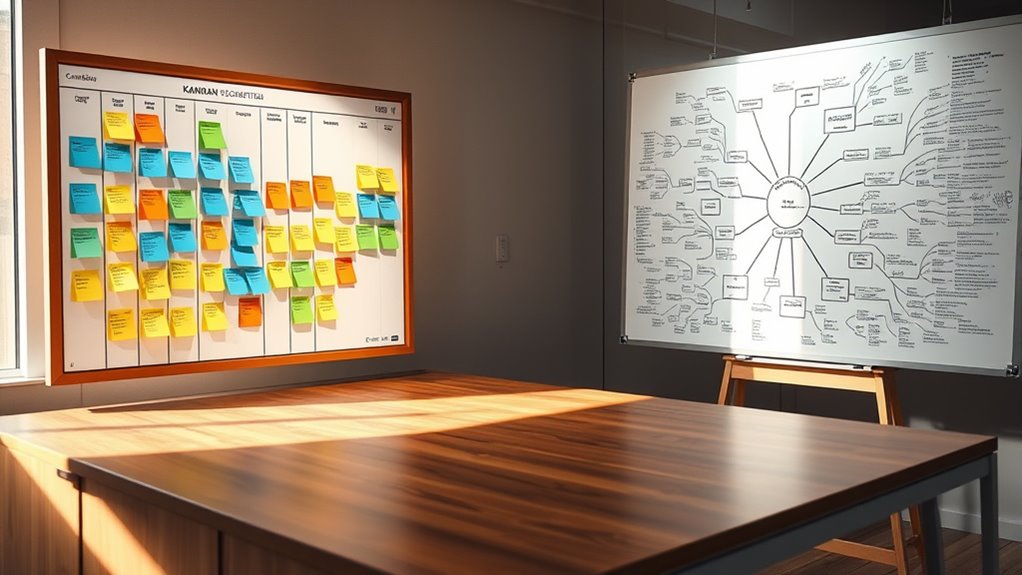
Gamification of goals involves turning everyday tasks into engaging challenges by adding points, badges, and leaderboards. This approach boosts your motivation by making routine activities feel like fun, competitive games. It helps you see progress through rewards and small wins, encouraging you to stay persistent. By tapping into your natural desire for achievement, it makes working towards your goals more enjoyable. Keep going, and you’ll discover how these strategies can transform your efforts into rewarding experiences.
Key Takeaways
- Transform routine tasks into engaging challenges by applying game design elements like points, badges, and leaderboards.
- Break large goals into small, manageable steps rewarded with points or badges to boost motivation.
- Use leaderboards to foster healthy competition and increase engagement in goal pursuit.
- Reinforce consistent effort and persistence through instant feedback and meaningful rewards.
- Enhance intrinsic motivation by making goal achievement satisfying and recognition-driven.
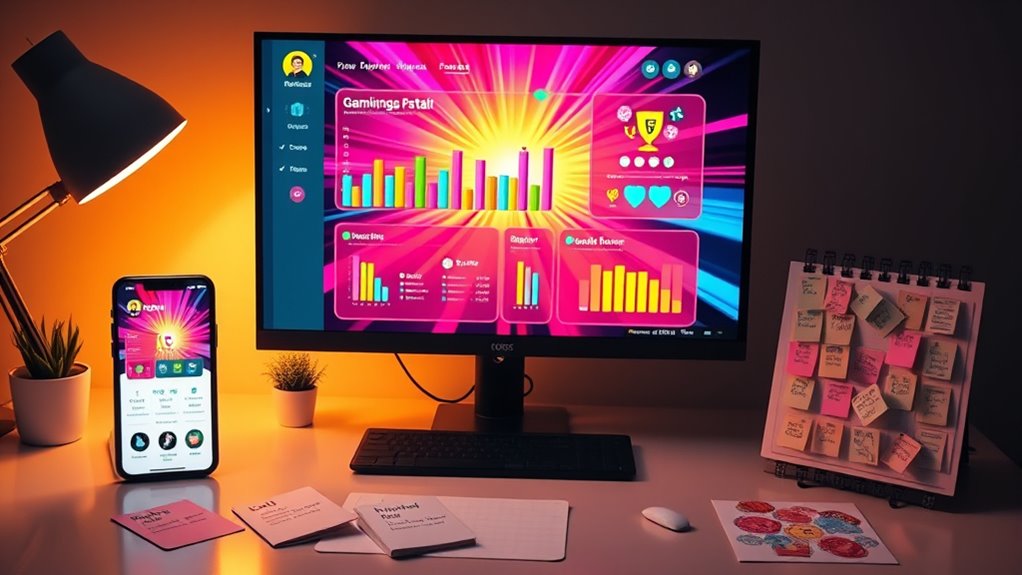
Gamification of goals transforms everyday tasks into engaging challenges by applying game design elements like points, badges, and leaderboards. This approach taps into your innate desire for achievement and competition, making routine activities feel less like chores and more like exciting pursuits. When you incorporate reward systems into your goals, you create a structure that encourages consistent effort. These reward systems can be as simple as earning points for completing tasks or as elaborate as unlocking new levels after reaching milestones. By attaching meaningful rewards to your actions, you reinforce positive behavior and keep your motivation high. It’s a proven motivation technique that leverages the human love for recognition and progress, helping you stay committed to your goals over time.
As you engage with gamification, you’ll notice that the way you perceive tasks shifts dramatically. Instead of viewing work as tedious or monotonous, you start seeing each activity as a game you’re eager to win. The use of leaderboards introduces a competitive element, pushing you to improve your performance relative to others or even your past efforts. This healthy competition fuels your motivation and encourages you to push beyond your comfort zone. Rewards like badges or points serve as instant feedback, giving you a sense of accomplishment right after completing a task. These small wins keep you motivated and make it easier to maintain momentum—even when faced with challenging or uninteresting activities.
Implementing reward systems within your goal-setting strategy also helps you break down larger objectives into manageable, motivating steps. Instead of feeling overwhelmed by a big project, you focus on earning points or badges for each small task you complete. This creates a sense of progress, which boosts your confidence and keeps you moving forward. These motivation techniques are especially effective because they appeal to your natural desire for achievement and recognition. Plus, they foster a stronger sense of intrinsic motivation, encouraging you to pursue goals for personal satisfaction rather than external rewards.
These strategies not only make tasks more enjoyable but also help you build habits of persistence and resilience. Reward systems and motivation techniques work hand in hand to turn mundane chores into rewarding challenges. By leveraging these principles, you give yourself a powerful tool to stay motivated, track progress, and achieve your desired outcomes with greater ease and enthusiasm.
gamification task management app
As an affiliate, we earn on qualifying purchases.
As an affiliate, we earn on qualifying purchases.
Frequently Asked Questions
How Can Gamification Improve Long-Term Motivation?
Gamification boosts your long-term motivation by leveraging extrinsic motivation through rewards and points, making tasks more engaging. It also fosters habit formation by creating consistent routines that become automatic over time. When you see progress and earn rewards, you stay motivated to continue. This combination keeps you interested, reinforces positive behaviors, and helps you build sustainable habits, ensuring you remain committed to your goals over the long haul.
What Are Common Pitfalls in Implementing Gamified Goals?
You might face pitfalls like over-relying on extrinsic rewards, which can undermine intrinsic motivation. If you focus too much on points and badges, you risk making tasks feel like chores rather than engaging activities. Additionally, poorly designed gamification can lead to frustration or burnout. To avoid these issues, balance extrinsic rewards with meaningful, intrinsic motivators, ensuring that goals remain enjoyable and personally valuable.
How Do Rewards Influence User Behavior?
Rewards can boost your motivation like a boost of caffeine, but over time, they risk saturation, dulling your intrinsic motivation. When you rely too much on external rewards, you might lose interest in the task itself. For example, a study shows that too many rewards can reduce genuine engagement. So, while rewards influence behavior by encouraging effort, balance is key to avoid undermining your internal drive.
Can Gamification Be Effective for Team Goals?
Yes, gamification can be effective for team goals. It leverages leaderboard dynamics to foster healthy competition and boost engagement. When you incorporate rewards, it taps into intrinsic motivation, encouraging team members to perform better. By making goals fun and interactive, you create a sense of achievement and camaraderie, motivating everyone to collaborate and reach targets more efficiently. This approach keeps the team energized and focused on shared successes.
What Tools Are Best for Tracking Gamified Progress?
Imagine your team’s success as a shining beacon—that’s what tracking apps and progress dashboards do. They help you monitor gamified progress effortlessly. Tools like Trello, Asana, or dedicated apps like Habitica and Badgeville offer real-time updates and visual insights. These tools keep everyone motivated, making progress clear and achievable. With the right tracking apps, you’ll turn goal-setting into a compelling game where wins are celebrated and growth is unstoppable.
reward system for goal tracking
As an affiliate, we earn on qualifying purchases.
As an affiliate, we earn on qualifying purchases.
Conclusion
By turning your goals into a game, you boost motivation and make tasks more engaging. Studies show that gamified tasks can increase productivity by up to 25%. When you reward yourself with points and rewards, you stay focused and committed longer. So, why not incorporate gamification into your routine? It’s a simple way to stay motivated, enjoy the process, and achieve more—making your goals feel less like chores and more like exciting challenges.
badges and points achievement system
As an affiliate, we earn on qualifying purchases.
As an affiliate, we earn on qualifying purchases.
leaderboard motivation tool
As an affiliate, we earn on qualifying purchases.
As an affiliate, we earn on qualifying purchases.