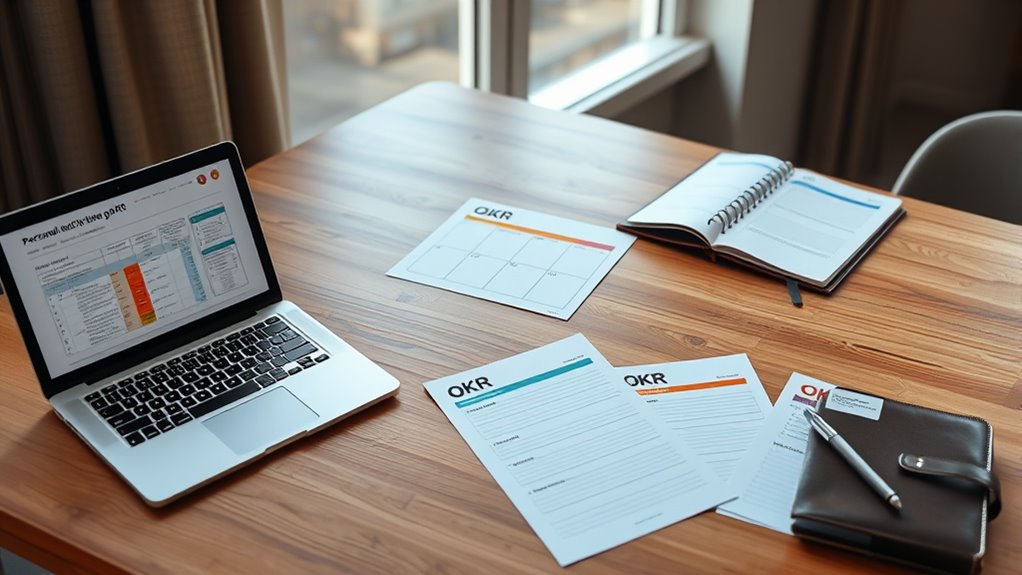

To design effective personal OKR templates, use tools like spreadsheet software, goal-setting apps, or dedicated OKR platforms that offer customizable layouts. Focus on clear objectives, measurable key results, and visual progress indicators like progress bars or color codes. Examples include weekly check-ins for progress updates and flexible formats to adapt to changing priorities. Keep your template straightforward, engaging, and aligned with your larger aspirations—discover more tips and sample templates that can help you stay on track.
Key Takeaways
- Use clear sections for objectives and measurable key results to enhance focus and track progress effectively.
- Incorporate visual elements like progress bars and color coding for quick status assessment.
- Select user-friendly tools such as Excel, Google Sheets, or specialized OKR platforms for easy customization.
- Regularly review and update your OKRs to stay aligned with evolving personal goals and priorities.
- Refer to example templates that demonstrate best practices for structuring and tracking personal OKRs.

Have you ever wondered how to stay focused and motivated while achieving your personal goals? Designing effective personal OKR templates can make all the difference. The key lies in goal alignment, ensuring that each objective resonates with your bigger aspirations, and progress tracking, so you can see how far you’ve come and stay motivated. When you create a clear, structured template, it becomes easier to break down your ambitions into manageable, measurable steps. This alignment helps you avoid distractions and keeps your efforts focused on what’s truly important, while regular progress tracking provides tangible proof of your advancement, fueling your motivation to keep going.
Start by defining your broad, long-term goals, then translate them into specific, actionable objectives. Your template should include sections for your main objectives, along with key results that act as benchmarks for success. When setting these key results, focus on quantifiable outcomes, like “exercise three times a week” or “save $1,000 in three months.” This creates a direct link between your daily actions and your overall goals, enhancing goal alignment. As you fill out your template, remember that clarity is essential; vague objectives lead to confusion and stagnation. Be precise about what you want to achieve and how you’ll measure progress, so your efforts remain directed and purposeful.
Tracking progress is a fundamental part of maintaining momentum. Your OKR template should include a dedicated space for regular updates—weekly or bi-weekly check-ins work well. During these reviews, assess whether you’re on track, behind, or ahead. Use visual elements like progress bars or color coding to make these evaluations quick and intuitive. These visual cues help you recognize patterns early, so you can adjust your efforts if needed. For example, if you notice your progress on a key result is slowing down, you can reallocate your time or resources accordingly. This ongoing process of progress tracking not only keeps you accountable but also reinforces your commitment, turning abstract goals into concrete achievements. Incorporating research‑backed insights into your review process can further improve your ability to adapt and succeed.
Lastly, remember that your personal OKR template should be adaptable enough to change as your priorities shift. Life is unpredictable, and your goals might evolve over time. Regularly revisit and refine your template to make sure it remains aligned with your current aspirations. By doing so, you create a dynamic system that supports your personal growth, keeps you motivated, and helps you turn your aspirations into realities. With a well-designed template, you’ll find it easier to stay focused, track your progress accurately, and ultimately, achieve the success you’re aiming for.
personal OKR template spreadsheet
As an affiliate, we earn on qualifying purchases.
As an affiliate, we earn on qualifying purchases.
Frequently Asked Questions
How Do I Align Personal OKRS With Professional Goals?
To align your personal OKRs with professional goals, start by identifying your key priorities in both areas. Use goal alignment to make certain each personal OKR supports your professional ambitions. Set clear, measurable objectives that reflect your priorities, and regularly review progress. This approach helps you stay focused, maintain balance, and guarantee your efforts contribute to your overall success. Prioritize tasks that drive both personal growth and professional development.
What Common Mistakes Should I Avoid When Creating OKRS?
Think of goal setting as planting a tree—you want strong roots and clear directions. Avoid vague objectives that are like tangled branches, making progress hard to track. Steer clear of overambitious goals that don’t match your capacity, risking frustration. Keep your OKRs specific and measurable to guarantee accountability, like watering your tree regularly. By doing so, you foster growth and stay motivated, turning your goals into a thriving, fruitful reality.
How Often Should I Review and Update My OKRS?
You should review your OKRs at least once a month to stay aligned and track progress effectively. Regular review frequency helps identify what’s working and what needs adjustment. Update strategies accordingly, making small tweaks as needed to stay on course. Don’t wait too long; frequent reviews keep you motivated and make sure your OKRs remain relevant, helping you achieve your goals efficiently and adapt to any changes along the way.
Can OKRS Be Adapted for Team or Family Use?
Back in the day, OKRs can definitely be adapted for family and team use. You set clear family goals and align everyone’s efforts, fostering team collaboration. By defining objectives and measurable key results, you make certain everyone stays on track and motivated. Whether it’s planning a vacation or improving household routines, OKRs help you track progress and celebrate achievements, making group efforts more focused and successful.
What Tools Are Best for Tracking Personal OKRS Digitally?
For digital tracking of personal OKRs, you should consider tools like Notion, Todoist, or Trello, which excel in goal management. These platforms let you set, monitor, and update your OKRs easily, keeping you organized and motivated. They also offer visual progress tracking and reminders, making it simple to stay aligned with your goals. Choose one that fits your style, and you’ll enhance your personal goal management effectively.
goal setting app for personal goals
As an affiliate, we earn on qualifying purchases.
As an affiliate, we earn on qualifying purchases.
Conclusion
Now that you’ve crafted your personal OKR template, you’re holding a compass for your journey ahead. Like a lighthouse guiding ships through foggy waters, your goals will illuminate your path and keep you on course. Embrace these tools as your trusty map, turning dreams into tangible milestones. With clarity and focus, you’ll navigate life’s tides with confidence, transforming aspirations into achievements and making your vision a reality that shines brilliantly in your story.
OKR tracking software
As an affiliate, we earn on qualifying purchases.
As an affiliate, we earn on qualifying purchases.
visual progress tracker tools
As an affiliate, we earn on qualifying purchases.
As an affiliate, we earn on qualifying purchases.