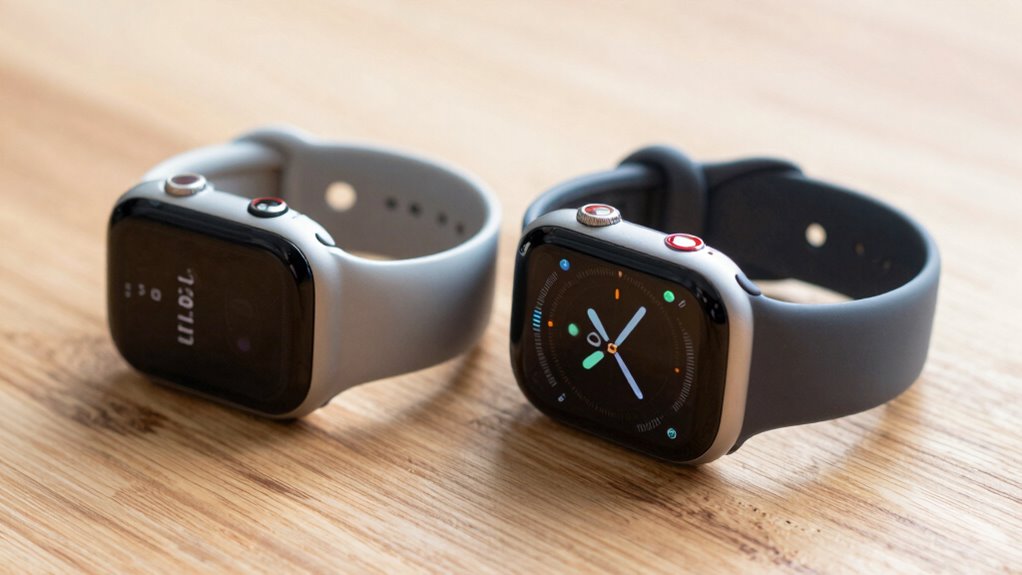

If you’re seeking daily accountability, both smartwatches and fitness trackers can help, but your choice depends on your priorities. Fitness trackers offer longer battery life, lightweight design, and focus mainly on health metrics, making them practical for consistent wear. Smartwatches provide more advanced features like notifications, apps, and stylish displays, but typically require daily charging. To find the best fit for your routine, consider what features matter most—more functionality or longer-lasting simplicity—and explore further.

Get books, candles and calm essentials delivered free — and shop member deals
- Fast, free delivery on millions of items
- Access to Prime Big Deal Days deals on October 6–7
- Prime Video, Amazon Music and more included
Key Takeaways
- Fitness trackers excel in long battery life, ensuring continuous monitoring without frequent recharging for daily accountability.
- Smart watches offer comprehensive features, including notifications and apps, enhancing overall engagement and motivation.
- Fitness trackers have minimalistic designs focused on core health metrics, promoting consistent wear for daily health tracking.
- Smart watches provide customizable displays and quick access to information, supporting real-time accountability.
- Both device types can be eco-friendly, with longer battery life and sustainable materials aligning with environmentally conscious lifestyles.

When choosing between smart watches and fitness trackers, understanding their differences can help you make the right decision for your health and tech needs. Both devices aim to boost your daily accountability, but they do so in distinct ways, and considering their unique features can guide your choice. One of the most noticeable differences lies in their battery life. Fitness trackers typically excel here, often lasting several days or even a week on a single charge. This longer battery life means you can wear them continuously without worrying about frequent recharging, making them ideal for tracking your activity levels around the clock. Smart watches, on the other hand, usually require daily charging due to their more advanced features, like notifications, apps, and vibrant displays. If you prefer a device that stays powered longer and doesn’t interrupt your routine with daily charges, a fitness tracker might suit you better.
Design aesthetics also play a significant role in your daily accountability. Fitness trackers tend to have a more streamlined, minimalist look. They’re designed to be lightweight and unobtrusive, which makes them comfortable for all-day wear. Many models are slim with simple screens, focusing primarily on fitness metrics like steps, heart rate, and sleep. Smart watches, however, often feature larger, more stylish displays and a broader range of customization options. They look more like traditional watches or even fashion accessories, which can motivate you to wear them consistently because they complement your personal style. If you prefer a device that doubles as a fashion statement while keeping you accountable, a smart watch might be more appealing.
While both devices can help you stay accountable to your health goals, your choice depends on what matters most to you. If you value longer battery life and a discreet, straightforward design, a fitness tracker offers practicality and simplicity. But if you want a device with more functionality, customizable features, and a stylish look, a smart watch could be the better fit. Ultimately, your daily habits and preferences should guide your decision. Think about how often you’re willing to charge your device and whether you want a sleek accessory or a feature-rich gadget. Also, consider device compatibility to ensure seamless integration with your smartphone or other tech. When selecting your device, it’s also helpful to evaluate user interface accessibility and ease of use, especially if you’re not tech-savvy. Additionally, understanding biodiversity and its importance can encourage you to incorporate sustainable practices into your daily routine, even with your wearable tech. Recognizing the impact of environmental sustainability can motivate you to choose eco-friendly options when possible. Incorporating eco-conscious choices can help you align your health and environmental values. By understanding these differences, you can pick a device that seamlessly integrates into your routine, keeps you motivated, and supports your health goals without adding unnecessary hassle.
fitness tracker with long battery life
As an affiliate, we earn on qualifying purchases.
As an affiliate, we earn on qualifying purchases.
Frequently Asked Questions
Can Both Devices Track Sleep Quality Accurately?
Both devices can track sleep quality, but their sleep monitoring technology varies, affecting sleep tracking accuracy. Smart watches often use heart rate sensors and accelerometers to monitor sleep stages, offering detailed insights. Fitness trackers typically rely on movement data, which might be less precise. Your choice depends on how detailed you want your sleep data and how much you trust the sleep tracking accuracy of each device.
Which Device Offers Better Battery Life for Daily Use?
They say, “A penny saved is a penny earned,” and when it comes to battery life, fitness trackers often lead the way. With better battery optimization and lower power consumption, they typically last longer between charges than smart watches. If you want a device that keeps up with your daily routine without frequent recharging, a fitness tracker is your best bet for extended battery life.
Are There Significant Cost Differences Between Smart Watches and Fitness Trackers?
Yes, there are notable cost differences between smart watches and fitness trackers. Generally, fitness trackers are more affordable, making them a great choice if you’re budget-conscious. A quick pricing comparison shows fitness trackers start around $50, while smart watches can range from $150 to over $500. Brand variety also influences prices, with well-known brands offering more premium features, but at a higher cost. Consider your needs and budget to choose the best option.
Do Both Devices Support Third-Party App Integration?
Both devices are like gateways to a personalized experience; they support third-party apps that enhance functionality. Smart watches often allow you to customize with third-party apps and watch faces, offering more variety. Fitness trackers may have limited app support, but some do offer third-party integrations. If customization matters to you, a smart watch’s support for third-party apps and custom watch faces makes it a more versatile choice.
How Do Durability and Water Resistance Compare?
You’ll find that smartwatches often have superior durability and water resistance, thanks to robust design features and high-quality materials like stainless steel or reinforced plastics. Fitness trackers usually offer basic water resistance, suitable for splashes or brief swims, but may not withstand heavy water exposure. When choosing, consider the material quality and design features to guarantee your device can handle your daily activities and environmental challenges effectively.
stylish smartwatch with notifications
As an affiliate, we earn on qualifying purchases.
As an affiliate, we earn on qualifying purchases.
Conclusion
Whether you choose a smartwatch or a fitness tracker, both can become your daily accountability partner, fitting seamlessly into your routine. Imagine waking up, your device gently nudging you to stay active, like a trusted friend guiding your day. As you go about your tasks, these gadgets quietly remind you of your goals, turning everyday moments into opportunities for progress. In the end, it’s your commitment that turns coincidence into consistent achievement.
As an affiliate, we earn on qualifying purchases.
fashionable smart watch for daily wear
As an affiliate, we earn on qualifying purchases.
As an affiliate, we earn on qualifying purchases.
Halloween Picks
halloween
As an affiliate, we earn on qualifying purchases.