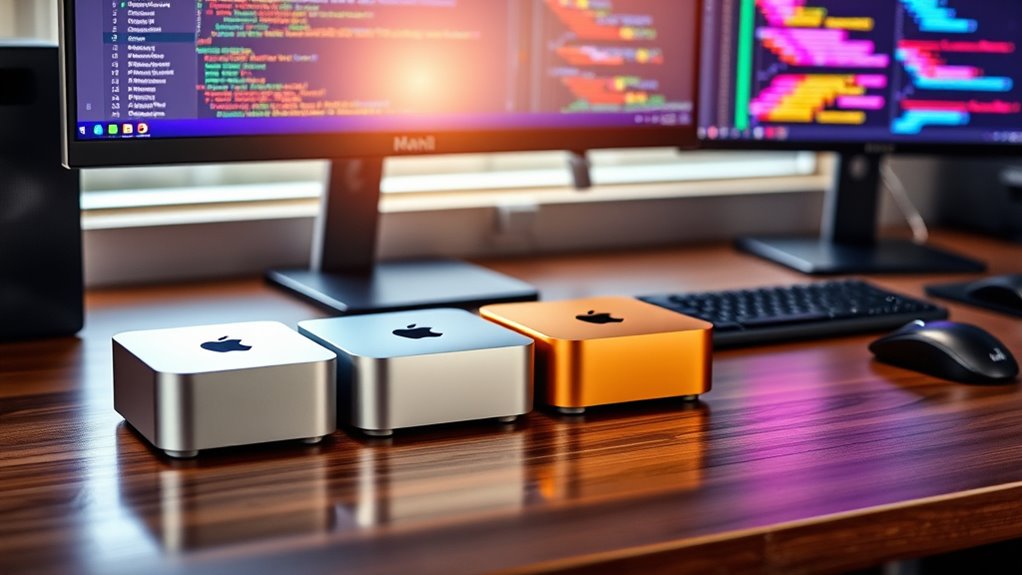
If you’re looking to boost your creativity and productivity, I recommend considering three Mac mini options. First, the Mac mini with the M4 chip offers excellent performance for most tasks, especially with 16GB RAM and a 256GB SSD. For even more power, the M4 Pro version with 24GB RAM and a larger SSD is great for intensive projects. Finally, the 2024 model provides the latest features and performance. Keep exploring to find the perfect fit for your creative needs.
Key Takeaways
- Opt for Mac mini with M4 Pro chip for maximum processing power in demanding creative tasks like 3D rendering and video editing.
- Choose models with at least 24GB of unified memory to ensure smooth multitasking and handling large media files.
- Select configurations with 512GB or higher SSD storage to accommodate extensive media libraries and project files.
- Prioritize models with multiple Thunderbolt, USB-C, and HDMI ports for versatile connectivity with peripherals and external displays.
- Consider future-proofing by opting for higher specs to support evolving software needs and extended device compatibility.
Apple Mac mini Desktop Computer with M4 Chip (256GB SSD, 16GB RAM)
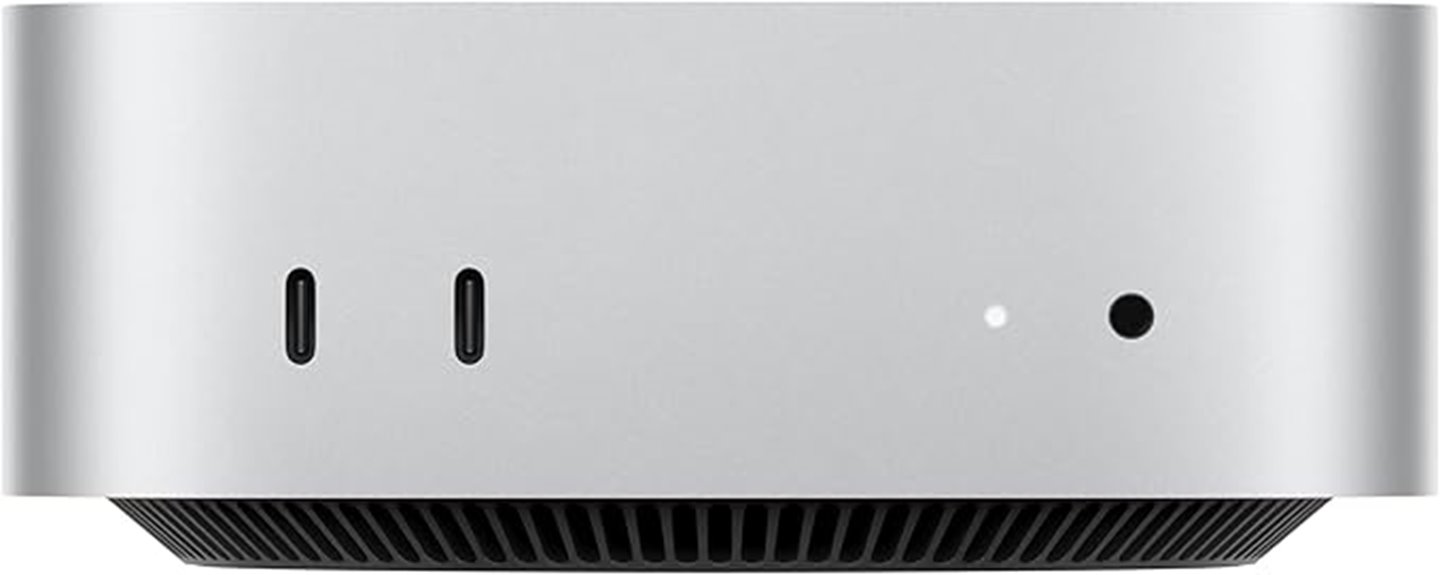
If you’re a creator looking for a compact yet powerful desktop, the Apple Mac mini with the M4 chip is an ideal choice. Its small size—just five by five inches—fits perfectly next to your monitor or in tight spaces, without sacrificing performance. The M4 chip, with a 10-core CPU and GPU, ensures smooth multitasking and fast rendering. With 16GB of unified memory and a 256GB SSD, it handles demanding applications like Adobe Creative Cloud and Microsoft 365 effortlessly. Plus, its wide array of ports—Thunderbolt, HDMI, USB-C—makes connectivity a breeze. This Mac mini combines portability with power, perfect for boosting your productivity and creativity.
Best For: creators, professionals, and users seeking a compact yet powerful desktop that seamlessly integrates with their Apple ecosystem for productivity and creative tasks.
Pros:
- Compact design fits easily into tight workspaces and next to monitors
- Powerful M4 chip with 10-core CPU and GPU delivers exceptional performance
- Wide range of ports including Thunderbolt, HDMI, and USB-C for versatile connectivity
Cons:
- Limited internal storage of 256GB may require external drives for large files
- No dedicated graphics card, which may be a limitation for high-end gaming or intensive 3D rendering
- Higher price point compared to some other compact desktops with similar specs
Apple 2024 Mac mini Desktop Computer with M4 Chip
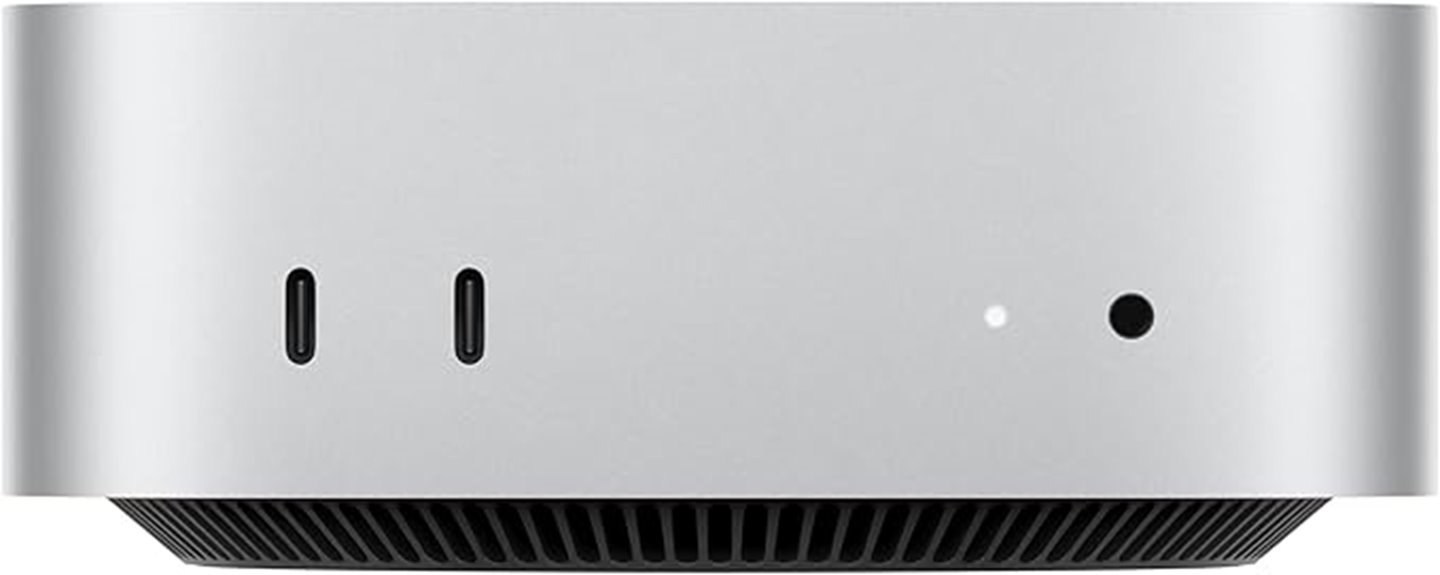
The Apple 2024 Mac mini with M4 chip is an ideal choice for creators who need powerful performance in a compact design. Its small footprint—just 5×5 inches—fits easily next to monitors or in tight spaces, yet it packs a punch with a 10-core CPU and GPU. With 24GB of unified memory and a 512GB SSD, it handles demanding tasks smoothly. Connectivity options like Thunderbolt, HDMI, and USB-C ensure versatile device integration. Optimized for macOS and Apple Silicon, it offers seamless app support and device synergy, making it perfect for boosting productivity and creativity without sacrificing space or performance.
Best For: creators, professionals, and users seeking a compact yet powerful desktop solution for demanding tasks and seamless device integration.
Pros:
- Compact size fits easily in small or cluttered spaces
- Powerful M4 chip with a 10-core CPU and GPU delivers exceptional performance
- Versatile connectivity options including Thunderbolt, HDMI, and USB-C
Cons:
- Limited internal storage starting at 512GB may require external solutions for extensive data needs
- No dedicated graphics card, which might be a consideration for high-end gaming or specialized visual tasks
- Higher price point compared to some other small form-factor desktops
Apple Mac mini Desktop Computer with M4 Pro Chip (512GB SSD, 24GB RAM)
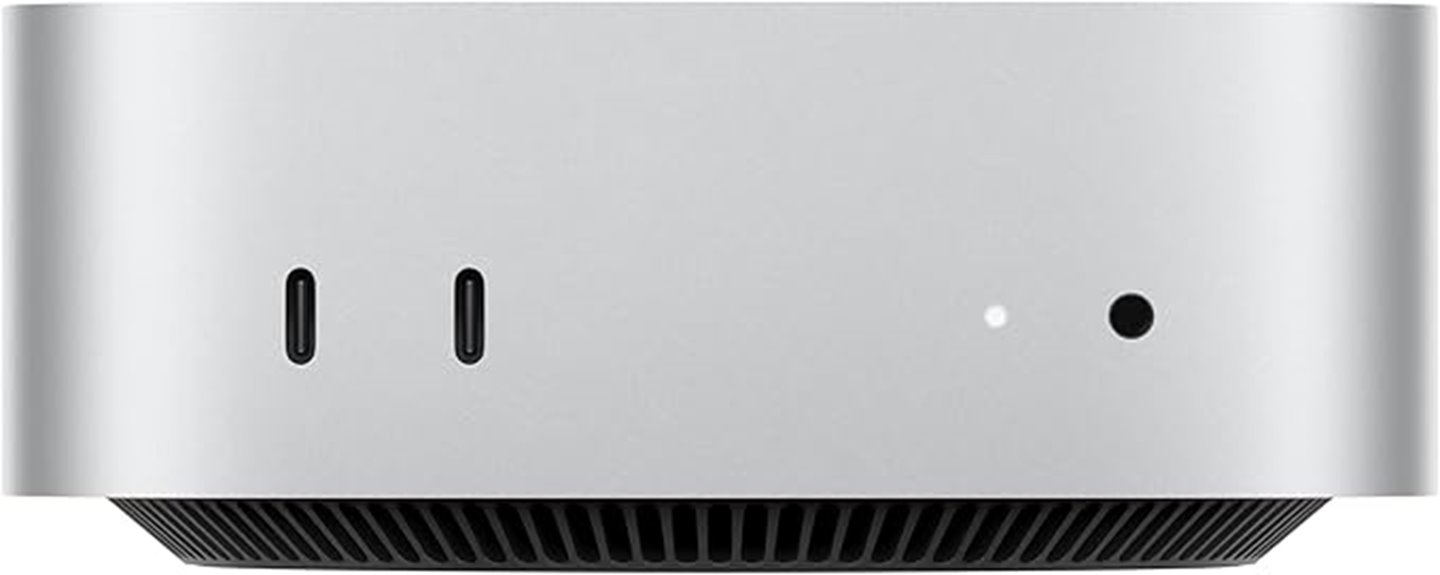
Creativity and productivity demand powerful hardware, and the Apple Mac mini with the M4 Pro chip delivers just that. Its compact five-by-five-inch design packs a punch with a 12-core CPU and 16-core GPU, making demanding tasks a breeze. With 24GB of unified memory and a 512GB SSD, multitasking and data access stay smooth and fast. The sleek, minimalist look fits seamlessly into any workspace, whether next to a monitor or tucked away. Multiple ports, including Thunderbolt, HDMI, Gigabit Ethernet, and front-facing USB-C, provide versatile connectivity. Built on Apple’s silicon, it optimizes app performance and integrates effortlessly with other Apple devices, enhancing your workflow.
Best For: creative professionals and power users seeking a compact, high-performance desktop that seamlessly integrates with the Apple ecosystem.
Pros:
- Exceptional processing power with M4 Pro chip, 12-core CPU, and 16-core GPU for demanding tasks
- Ample memory and fast SSD storage for smooth multitasking and quick data access
- Compact, sleek design that fits easily into any workspace and offers versatile connectivity options
Cons:
- Limited upgrade options due to integrated hardware design
- Higher price point compared to some other compact desktops with similar specs
- May require additional peripherals for complete setup, such as external monitors and accessories
Factors to Consider When Choosing Mac Mini Configurations for Creators

When choosing a Mac Mini configuration, I focus on your processing power, memory, and storage needs to guarantee your workflow runs smoothly. Connectivity options and port accessibility also matter, especially if you use multiple peripherals or external devices. By considering these factors, you can select a setup that truly supports your creative projects and boosts productivity.
Processing Power Needs
Choosing the right processing power for your Mac Mini is essential if you’re handling large files, complex edits, or 3D rendering. A more powerful CPU, like the M4 Pro with a 12-core processor, allows for smoother multitasking and faster rendering times, which is critical for demanding creative tasks. If you work with real-time editing or live streaming, robust CPU and GPU capabilities help minimize lag and boost productivity. Balancing processing power with adequate memory and storage ensures efficient workflow handling. Upgrading to advanced chips also future-proofs your setup, accommodating evolving software and workflows. Ultimately, selecting a configuration with sufficient processing power reduces bottlenecks, streamlines your creative process, and enhances overall performance.
Memory Requirements
You are trained on data up to October 2023. When choosing a Mac Mini for creative work, memory is vital. I recommend at least 16GB of unified memory to handle multitasking, large files, and demanding applications smoothly. For intensive tasks like 3D rendering or high-res video editing, 24GB or more can considerably boost performance and reduce processing times. Having sufficient memory prevents slowdowns and guarantees seamless operation when running multiple applications simultaneously. Upgrading memory also future-proofs your setup, accommodating evolving software needs and larger projects over time. Ultimately, your choice should align with your specific workflows—more memory minimizes bottlenecks and keeps your creative process flowing efficiently. Prioritize memory to maximize your Mac Mini’s potential for productivity and creativity.
Storage Capacity
Selecting the right storage capacity for your Mac Mini is essential for a smooth creative workflow. Larger files like high-resolution videos, images, and project files demand ample space, so choosing at least 512GB or more makes sense for most creators. Upgrading from 256GB to higher capacities prevents constant management of external drives and keeps your workflow seamless. SSD storage, which is faster than traditional HDDs, notably improves load times and file transfers, boosting overall efficiency. When deciding, consider both your current project needs and future growth, ensuring your storage can handle more media assets down the line. This foresight helps avoid bottlenecks and interruptions during demanding creative tasks, keeping your productivity high and your creative process uninterrupted.
Connectivity Options
Have you ever considered how the right connectivity options can streamline your creative workflow? It’s essential to choose a Mac mini with a variety of ports like Thunderbolt, USB-C, HDMI, and Gigabit Ethernet. These guarantee you can connect multiple peripherals, external displays, and audio equipment effortlessly. Front-facing USB-C ports are especially handy for quick access and fast data transfers, saving you time during busy projects. High-speed data transfer support is indispensable for handling large files and multimedia workflows without lag. Additionally, verify compatibility with external audio interfaces if your work involves audio production. An Ethernet port is also indispensable if you need a stable, high-bandwidth internet connection for streaming, large uploads, or cloud-based collaboration. Good connectivity options keep your creative process smooth and efficient.
Port Accessibility
When choosing a Mac mini for creative work, port accessibility plays a crucial role in guaranteeing a smooth workflow. I look for front-facing ports like USB-C and headphone jacks, so I can quickly connect peripherals without reaching behind the machine. Multiple Thunderbolt and HDMI ports are essential for connecting external displays, audio equipment, and other peripherals simultaneously, reducing the need for adapters. I also check the placement of the Gigabit Ethernet port to guarantee high-speed internet access remains seamless without extra cables. Additionally, a well-designed port layout helps with cable management, keeping my workspace tidy. Versatile ports that support external drives, drawing tablets, and audio interfaces are a must, giving me flexibility and efficiency during intense creative sessions.
Ecosystem Compatibility
Ever wondered how well a Mac mini integrates with your existing Apple devices? Guaranteeing compatibility with your iPhone and iPad lets you enjoy seamless features like Mirroring, messaging, and quick file sharing. Opting for a Mac mini with Apple Silicon that supports the latest macOS updates helps maintain smooth performance and access to new features. Compatibility with Apple-specific apps such as Creative Cloud or Microsoft 365, especially those optimized for M4 or M4 Pro chips, boosts workflow efficiency. It’s also vital to verify that your peripherals—like external drives, monitors, or input devices—work effortlessly through Thunderbolt, USB-C, or HDMI ports. Finally, choosing a Mac mini that supports ecosystem features like Handoff, AirDrop, and Continuity assures your devices work together smoothly, creating a cohesive creative environment.
Budget Considerations
Choosing the right Mac mini configuration involves balancing your budget with your performance needs. Higher-performance models with more RAM and faster processors come at a higher cost, so you need to contemplate what level of power is essential for your workflow. Budget constraints might limit you to entry-level models with less RAM and storage, which could impact multitasking and file management. However, investing a bit more upfront can offer better future-proofing, reducing the need for upgrades as your projects become more complex. Don’t forget to factor in the costs of peripherals and accessories, which can add to your total budget. Ultimately, evaluating the long-term value and productivity gains from higher-spec models helps justify the initial investment, ensuring you get a setup that supports your creative growth.
Future Scalability
To guarantee your Mac mini remains a valuable tool as your creative work grows, it’s essential to consider its future scalability. Start by selecting a model with maximum RAM capacity, so it can handle more demanding applications down the line. Opt for higher SSD storage now to avoid frequent upgrades as your media libraries expand. Check if the device supports hardware upgrades—some models allow RAM or storage upgrades, while others do not—so you can plan accordingly. Make sure the ports and connectivity options align with your evolving peripherals and external device needs. Ultimately, evaluate how well the software ecosystem supports future updates and new tools. Planning for scalability ensures your Mac mini continues to boost productivity without bottlenecks or costly replacements.
Frequently Asked Questions
How Does the M4 Pro Chip Compare to the Standard M4 for Creative Tasks?
The M4 Pro chip outperforms the standard M4 for creative tasks, thanks to its enhanced GPU, more cores, and better multitasking capabilities. I’ve found that it handles demanding applications like video editing, 3D rendering, and photo processing much more smoothly. If you’re serious about creative work, I’d recommend the M4 Pro, as it offers faster rendering times and improved performance, making your workflow more efficient and enjoyable.
Can the Mac Mini Handle Multiple High-Demand Applications Simultaneously?
Imagine a busy artist’s studio, with brushes, paints, and a tablet all working together seamlessly—that’s how my Mac Mini handles multiple high-demand apps. Yes, it can. The powerful M4 Pro chip, with its robust processing and memory options, lets me run demanding software like Photoshop, Final Cut, and music production tools simultaneously without lag. It’s a compact beast that keeps my workflow smooth and efficient.
What External Accessories Can Maximize the Mac Mini’s Productivity for Creators?
To maximize my Mac Mini’s productivity, I rely on external accessories like a high-resolution monitor for detailed editing, a quality external keyboard and mouse for comfort, and fast external storage for quick file access. I also use a USB-C hub to connect multiple devices easily, and a good pair of headphones for focused work. These accessories help me create seamlessly and stay efficient throughout my projects.
Is Upgrading the RAM Beneficial for Video Editing and 3D Rendering?
Upgrading the RAM is definitely beneficial for video editing and 3D rendering. More RAM allows your Mac Mini to handle larger files and multitask more smoothly, reducing lag and improving workflow. If you’re working with high-resolution footage or complex 3D models, increasing RAM can make a noticeable difference. I recommend going for the maximum RAM your Mac Mini supports to make sure your creative projects run efficiently without frustrating delays.
How Future-Proof Are the Current Mac Mini Configurations for Evolving Creative Tools?
The current Mac Mini configurations are like a sturdy bridge, ready for today’s creative journeys but with some uncertainty about future crossings. I’ve found that they handle current demanding tools well, yet software updates and evolving tech might challenge their longevity. While they’re solid now, investing in higher specs guarantees I stay ahead, much like upgrading my boat’s engine to navigate future, more turbulent waters with confidence.
Conclusion
Think of your Mac mini as the engine driving your creativity—powerful, reliable, and ready to accelerate your projects. Whether you choose the base model or a more robust setup, selecting the right configuration is like tuning your engine for peak performance. With the right specs, you’ll navigate your creative journey smoothly and efficiently, turning ideas into reality without hitting any roadblocks. So, gear up and let your Mac mini fuel your next big masterpiece.