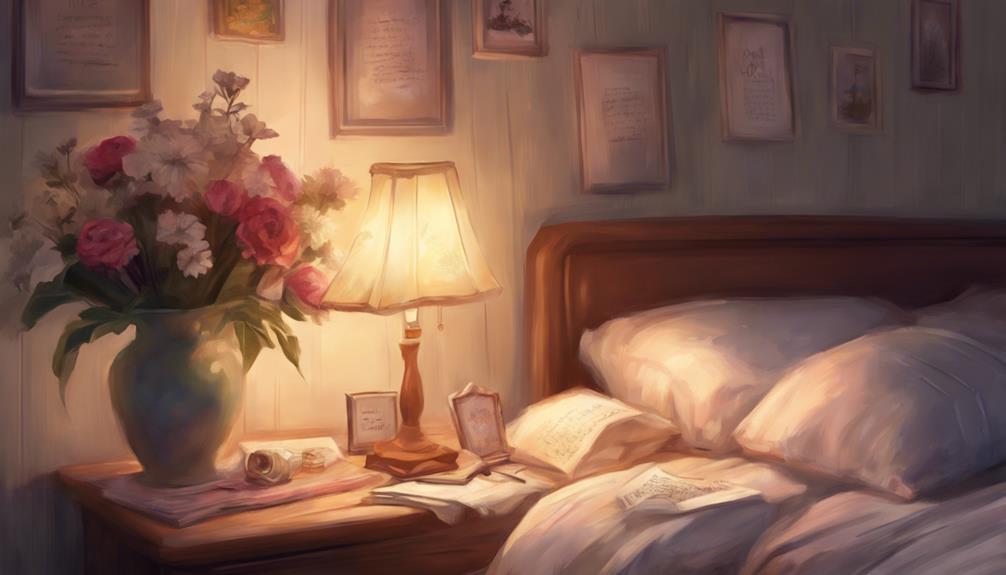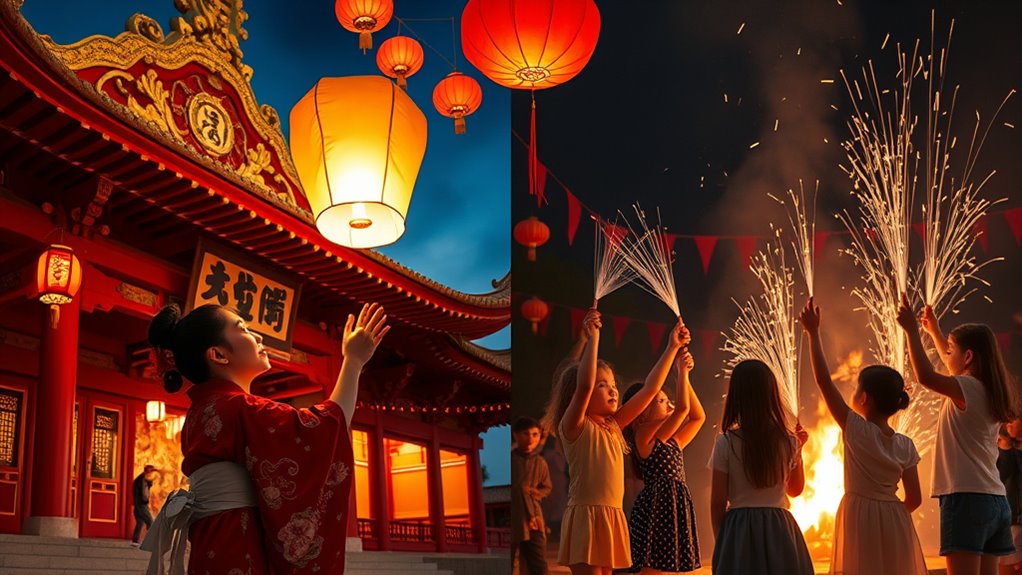
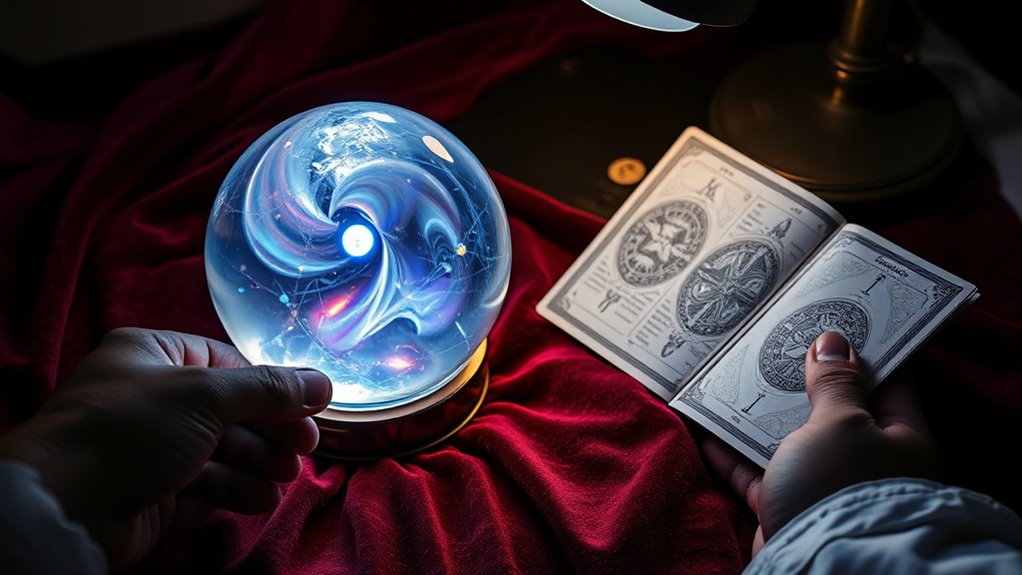
In Eastern cultures, wish making involves rituals tied to spiritual beliefs, such as offering prayers, burning incense, or tying colorful ribbons to connect with divine forces. Western societies focus more on personal intent and symbolic acts like blowing out candles or tossing coins, emphasizing hope and positivity. Both traditions aim to foster connection—whether with higher powers or personal aspirations. If you keep exploring, you’ll discover more about how these distinct approaches shape cultural practices worldwide.

Turn your quiet moments into listening time
- Thousands of audiobooks, podcasts and originals
- Listen on your phone, tablet or Echo — also offline
- Cancel anytime
Key Takeaways
- Eastern wish-making involves elaborate rituals like burning incense and offerings, rooted in spiritual beliefs and tradition.
- Western practices focus on symbolic acts such as blowing out candles or tossing coins, emphasizing personal intent.
- Eastern customs align wish timing with lunar phases or festivals to enhance spiritual harmony and success.
- Western traditions are more individualistic, with less formal rituals centered on positive thinking and hope.
- Both cultures see wish making as a connection to something greater—divine forces, luck, or personal aspirations.
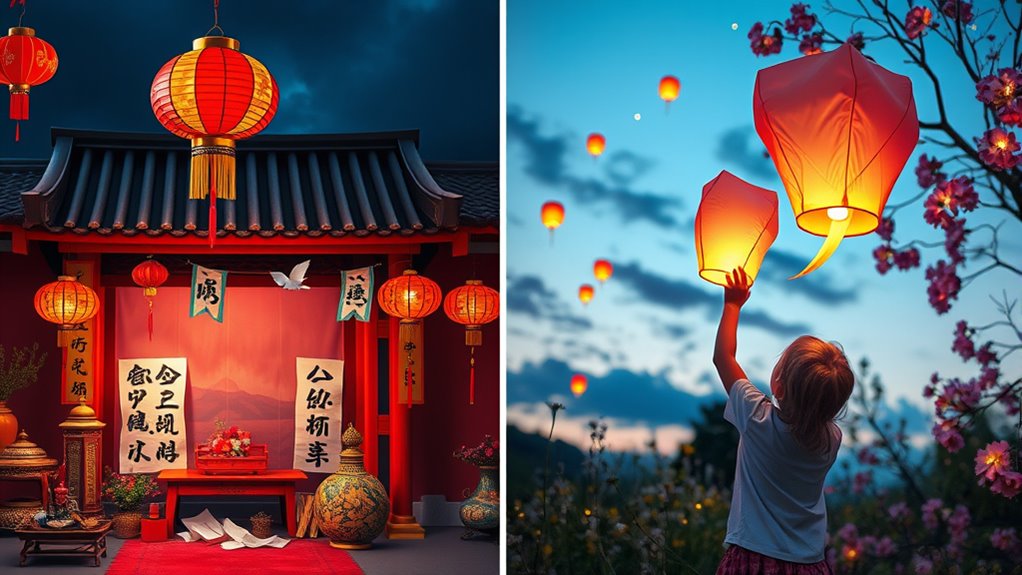
Wish making is a universal practice, but how people approach it varies greatly across cultures. In many Eastern societies, wishes are often intertwined with superstitions and rituals deeply rooted in centuries-old belief systems and customs. You might find that during certain festivals or special occasions, people perform specific actions or follow particular rituals to enhance the likelihood of their wishes coming true. For example, burning incense, tying colorful ribbons, or offering prayers at temples are common practices that symbolize respect for spiritual forces. These rituals aren’t just symbolic; they reflect a belief that the universe or divine powers respond to sincere gestures, reinforcing a sense of harmony and connection with higher beings. Such customs are passed down through generations, shaping how individuals in these cultures approach the act of wishing. Additionally, many cultures believe that the timing of wish making, such as during specific lunar phases or festivals, can influence the outcome, highlighting the importance of ritual timing in these practices.
In contrast, Western perspectives tend to emphasize personal intention and positivity rather than elaborate rituals. When you make a wish in Western cultures, it often involves simple acts like blowing out birthday candles or tossing a coin into a fountain. These actions are typically viewed as symbolic gestures rather than spiritual obligations. The focus is on personal hope and belief rather than adherence to specific superstitions. While some may believe in luck or the power of positive thinking, the overall approach tends to be less formalized and more individualistic. This reflects a broader cultural tendency to see wishes as personal expressions of desire, rather than as part of a complex system of customs and rituals.
Despite these differences, both East and West recognize the significance of wish making as a way to express hopes and aspirations. In the East, the act is often embedded within a framework of superstitions and rituals that aim to align you with cosmic or spiritual forces. This can involve specific gestures, prayers, or offerings rooted in a shared belief system. Conversely, Western traditions often emphasize the power of personal intent and the symbolic nature of simple acts. Whether through elaborate ceremonies or casual gestures, the core idea remains the same: wishing is a way to connect with something greater, whether that’s spiritual forces, luck, or personal optimism. Understanding these cultural nuances helps reveal how deeply wish making is woven into the fabric of human belief systems and customs worldwide.
incense burner for spiritual rituals
As an affiliate, we earn on qualifying purchases.
As an affiliate, we earn on qualifying purchases.
Frequently Asked Questions
How Do Different Cultures Interpret the Sincerity of a Wish?
You might notice that different cultures interpret the sincerity of a wish through various cultural perceptions and sincerity expressions. In some cultures, a heartfelt, verbal wish is seen as genuine, while others value subtle gestures or symbolic acts as more sincere. You may find that expressing true intent differs, with some cultures emphasizing emotional honesty and others valuing respect and tradition. Recognizing these differences helps you better understand how sincerity is perceived worldwide.
Are There Specific Rituals Associated With Wish-Making in Various Societies?
You might be surprised, but many societies have unique rituals for wish-making that carry deep symbolism. In some cultures, lighting candles or burning incense symbolizes sending your wish to the heavens. Others use specific gestures or symbols, like the Japanese omikuji, to reveal future fortunes. These cultural rituals and wish symbolism create a powerful connection between your desire and the universe, making your wish feel more real and meaningful.
How Does the Concept of Fate Influence Wish-Making Practices Worldwide?
Fate heavily influences your wish-making practices worldwide by shaping superstitious beliefs and ritual significance. You might believe that wishing can influence your destiny or that certain rituals help align your desires with fate’s flow. In some cultures, people perform specific rituals to invoke luck, trusting that fate will guide their wishes. These practices reflect a deep-rooted hope that fate can be influenced through symbolic actions and superstitions.
Do Language Differences Affect How Wishes Are Expressed and Understood?
You might find that language differences greatly affect how you express and understand wishes. Linguistic nuances shape the words you choose, while cultural context influences the meaning behind them. Sometimes, a phrase that feels hopeful in one language could seem vague or even inappropriate in another. By paying attention to these subtle differences, you improve your ability to communicate wishes clearly and genuinely across diverse cultures.
How Have Globalization and Technology Impacted Traditional Wish-Making Customs?
Globalization and technology have transformed how you make and share wishes through digital communication and social media. Instead of traditional methods, you now send wishes instantly, reaching a wider audience. Social media platforms let you celebrate festivals and special occasions globally, blending customs and making wish-making more immediate and interactive. This shift fosters a sense of connection, but it can also dilute the personal, cultural significance of traditional wish-making practices.
colorful wish ribbons for festivals
As an affiliate, we earn on qualifying purchases.
As an affiliate, we earn on qualifying purchases.
Conclusion
Just like a river flowing through diverse landscapes, wish making reflects the unique flow of cultures. In the East, wishes are gentle ripples, quietly nurturing hope and harmony. In the West, they surge like powerful waves, driven by individual dreams and ambitions. Embrace these differences as the colors on a vibrant tapestry, each adding depth and beauty. Understanding these cultural currents helps you appreciate the rich, varied ways people wish for a better tomorrow around the world.
coin tossing fountain for wishes
As an affiliate, we earn on qualifying purchases.
As an affiliate, we earn on qualifying purchases.
As an affiliate, we earn on qualifying purchases.
Halloween Picks
halloween
As an affiliate, we earn on qualifying purchases.