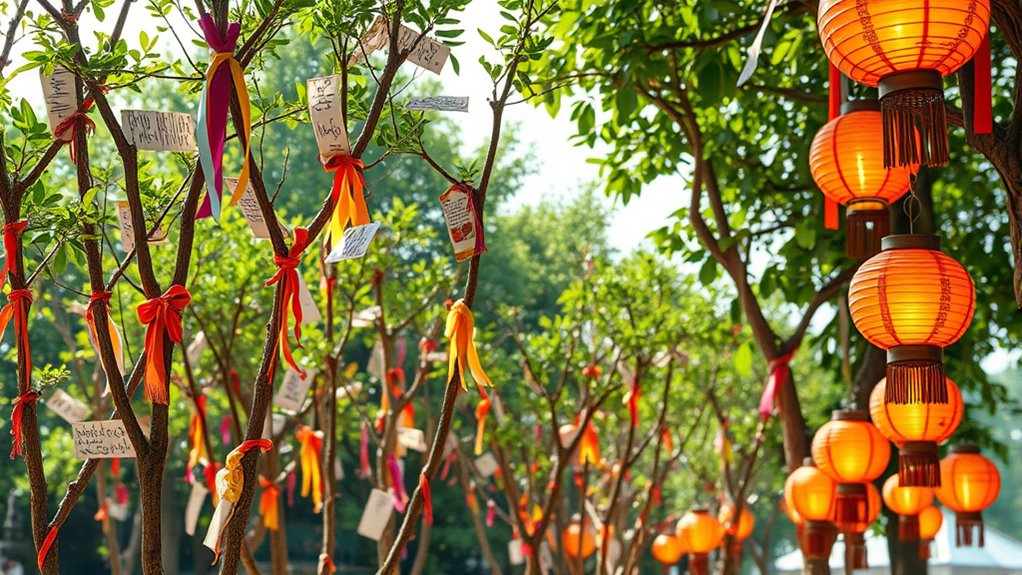

Wish trees are a powerful symbol found in many cultures worldwide, where people attach hopes, dreams, or offerings to branches to send their desires into the universe. These rituals often involve ceremonies, chants, or dances that strengthen community bonds and reflect cultural values about nature and spirituality. Participating in such traditions helps foster hope, mindfulness, and collective unity. If you want to explore how these practices connect communities and spiritual beliefs, keep going to discover more.
Key Takeaways
- Wish trees are cultural symbols of hope, where communities attach wishes and offerings to express dreams and aspirations.
- Rituals involving wish trees often include ceremonies, chants, or dances, reinforcing social bonds and collective hope.
- Tying wishes to trees signifies respect for nature and spiritual connection, transforming trees into sacred spaces.
- Visual displays of wishes inspire community reflection, mindfulness, and shared aspirations beyond individual desires.
- These practices foster human connection by uniting diverse communities in collective dreaming and spiritual expression.

Throughout history, wish trees have served as powerful symbols of hope and tradition in many cultures around the world. When you visit a wish tree, you might notice its branches adorned with countless pieces of paper, cloth, or other symbolic offerings. These offerings aren’t just decorations; they represent your hopes, dreams, and intentions. People believe that by attaching their wishes to the tree, they’re sending their desires into the universe, hoping for them to come true. This act of making symbolic offerings often becomes part of larger community rituals, where groups gather to celebrate, pray, or mark significant life events. Such rituals reinforce a sense of shared purpose and collective hope, turning individual aspirations into communal expressions of faith and unity. In many cultures, these community rituals involve specific ceremonies, chants, or dances that accompany the act of attaching wishes. These traditions help to reinforce social bonds and create a collective sense of optimism, reminding everyone involved that they’re not alone in their hopes.
You might also find that wish trees serve as a physical reminder of cultural values and spiritual beliefs. For example, in some traditions, the act of tying a wish to a tree symbolizes respect for nature and acknowledgment of its spiritual significance. The trees become sacred spaces, where the act of making symbolic offerings transforms a simple tree into a vessel of spiritual connection. Over time, the accumulation of wishes on a single tree can create a powerful visual display of community aspirations, inspiring others to add their own hopes and dreams. Participating in these rituals often feels like becoming part of a larger story—one where individual desires weave into a collective narrative of hope and renewal. Additionally, the practice of creating symbolic offerings on wish trees can foster a deep sense of mindfulness and reflection, encouraging participants to consider their true desires.
Moreover, wish trees often foster a sense of mindfulness and reflection. When you engage in this practice, you’re encouraged to pause and focus on what truly matters to you. The act of writing down your wish and attaching it to the tree becomes a moment of intentionality, a way to clarify your hopes and set positive intentions. As you watch others participate, you realize that these community rituals transcend language and cultural differences, creating a universal space of shared aspiration. They remind us that, regardless of where we come from, hope is a fundamental human experience. In this way, wish trees and their symbolic offerings become more than just physical objects; they become powerful symbols of collective dreaming, uniting diverse communities in their pursuit of a better future.
wish tree ritual supplies
As an affiliate, we earn on qualifying purchases.
As an affiliate, we earn on qualifying purchases.
Frequently Asked Questions
How Do Wish Trees Influence Local Communities’ Spiritual Beliefs?
Wish trees influence your community’s spiritual beliefs by serving as sacred spaces for meditative rituals. When you participate in hanging wishes, you connect with others, strengthening community bonding. These trees symbolize hope and faith, fostering shared spiritual values. As you perform these rituals, you deepen your understanding of collective beliefs, creating a sense of unity and spiritual purpose that resonates through generations.
Are Wish Trees Protected by Legal or Environmental Regulations?
You’ll find that wish trees are often protected by legal protections and environmental regulations, depending on their location. Authorities may designate them as protected areas or impose regulations to prevent damage from excessive offerings or deforestation. These laws aim to preserve the trees’ cultural significance while maintaining ecological balance. So, if you’re visiting or caring for a wish tree, be aware of local regulations that safeguard these cherished natural and cultural symbols.
What Are the Environmental Impacts of Wish Tree Practices?
You should consider that wish tree practices can lead to deforestation concerns, as people often add numerous tags or ribbons, damaging the trees. Additionally, pollution impacts occur when non-biodegradable materials like plastic or synthetic ribbons are used, harming the environment. These practices might seem harmless but can threaten local ecosystems if not managed sustainably, so it’s important to balance cultural traditions with environmental preservation efforts.
How Do Different Cultures Interpret the Symbolism of Wish Trees?
Your curiosity about wish trees reveals that different cultures see them as powerful symbols of hope and connection. In some, they represent spiritual interpretations of divine communication, while others see them as embodying cultural symbolism of community and tradition. You might find that, across the world, wish trees serve as sacred spaces where people express their deepest desires and dreams, transforming personal hopes into collective spiritual experiences.
Can Wish Tree Traditions Be Integrated Into Modern Environmental Activism?
Yes, you can integrate wish tree traditions into modern environmental activism by promoting sustainable wish making and eco-conscious rituals. By encouraging people to write wishes for nature’s preservation and planting trees as part of these rituals, you foster a deeper connection to the environment. This approach combines cultural symbolism with activism, inspiring collective efforts to protect ecosystems while honoring traditional practices responsibly and sustainably.
spiritual offering paper tags
As an affiliate, we earn on qualifying purchases.
As an affiliate, we earn on qualifying purchases.
Conclusion
As you explore the world’s wish trees and cultural traditions, you realize they’re like threads weaving humanity’s hopes and dreams into a vibrant tapestry. These practices remind you that, no matter where you are, our shared desire to connect with something greater is a universal song. By honoring these customs, you keep alive the delicate dance between tradition and aspiration, ensuring that dreams like fragile blossoms continue to bloom across the globe’s diverse landscapes.
ceremonial wish tree decorations
As an affiliate, we earn on qualifying purchases.
As an affiliate, we earn on qualifying purchases.
community prayer and wish kits
As an affiliate, we earn on qualifying purchases.
As an affiliate, we earn on qualifying purchases.