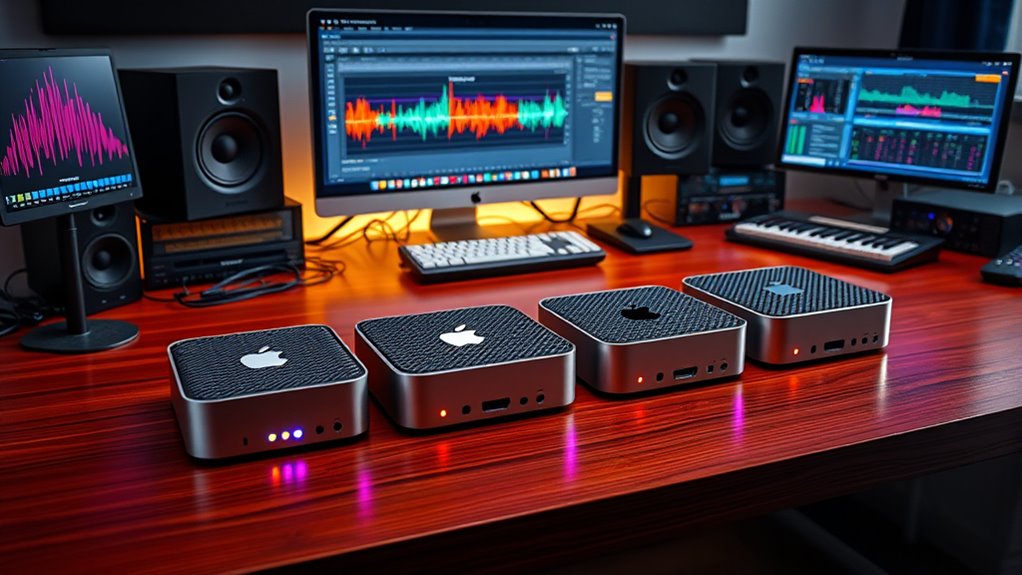
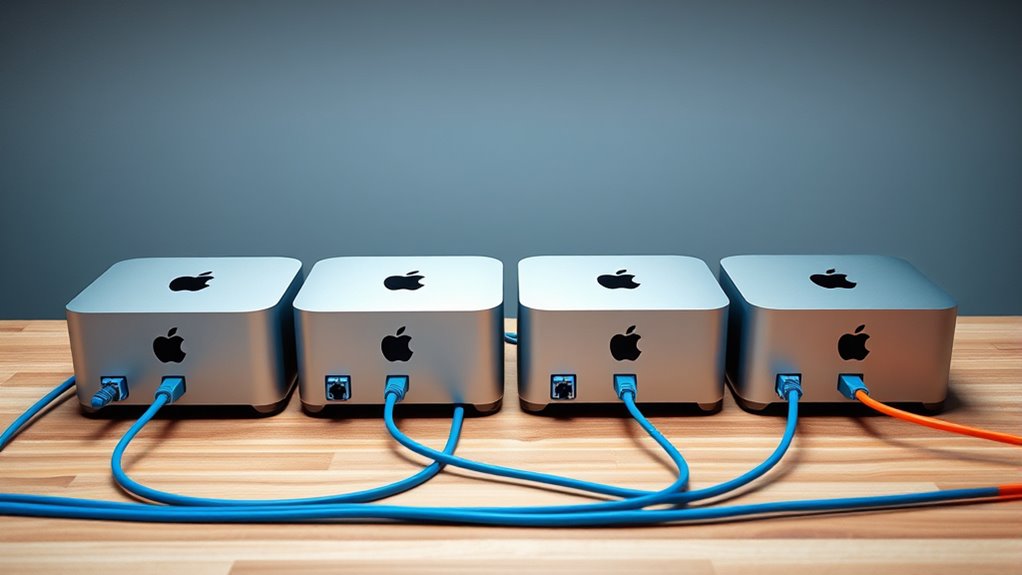
I’ve looked into the top Mac minis for home studios in 2025, and the choices focus on power, performance, and value. The latest M4 Pro version offers incredible speed and connectivity for demanding tasks, while the M4 chip models still deliver strong performance at a lower cost. With ample RAM and SSD options, these models support multitasking and large projects. Keep exploring to find out which Mac mini fits your studio needs best.
Key Takeaways
- The latest Mac Minis feature powerful M4 Pro and M4 chips suitable for demanding studio tasks.
- Compact, sleek designs maximize space efficiency in home studio setups.
- Multiple ports and front-facing USB-C ensure easy peripheral connectivity and equipment integration.
- Built-in Apple ecosystem support enhances device compatibility, privacy, and workflow efficiency.
- Limited upgradeability makes choosing the right configuration important for future-proofing.

Apple 2024 Mac mini Desktop Computer with M4 Pro chip with 12‑core CPU and 16‑core GPU: Built for Apple Intelligence, 24GB Unified Memory, 512GB SSD Storage, Gigabit Ethernet. Works with iPhone/iPad
- Compact Size: Five by five inches of powerful performance
- Powerful M4 Pro Chip: 12-core CPU and 16-core GPU for high performance
- Ample Memory: 24GB unified memory for multitasking
As an affiliate, we earn on qualifying purchases.
Apple Mac mini Desktop Computer with M4 Pro chip
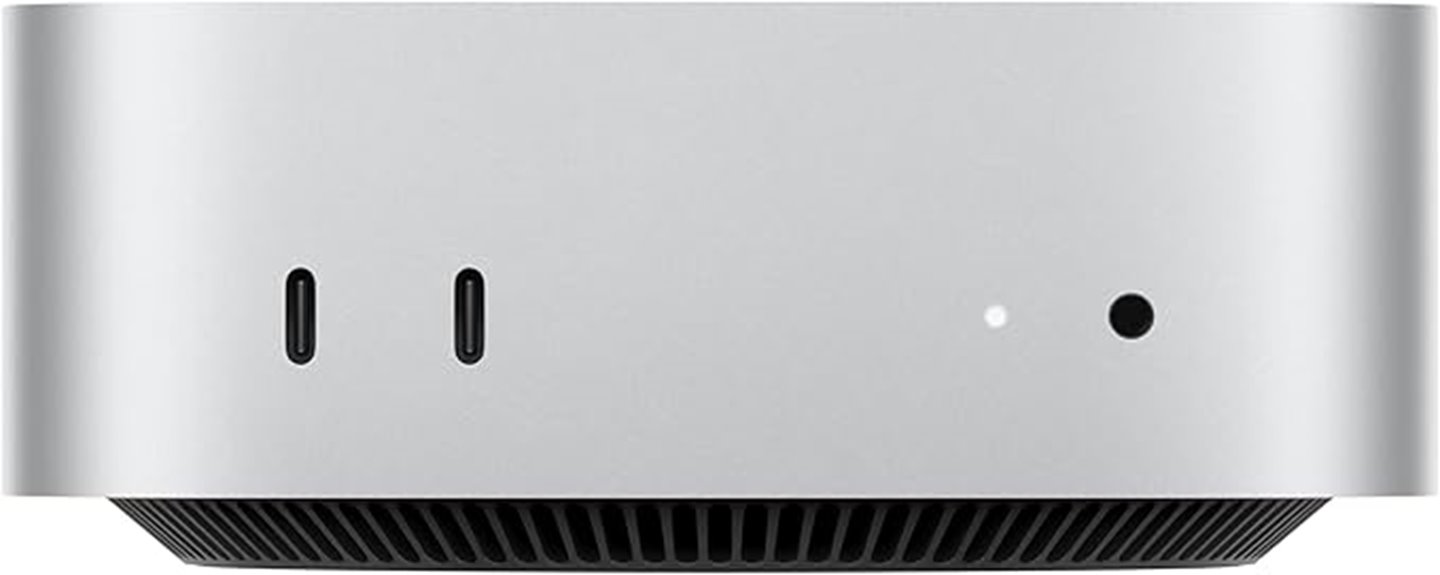
If you’re setting up a home studio, the Mac mini with the M4 Pro chip is an excellent choice because it offers powerful performance in a compact design. Its five-by-five-inch form factor fits easily on any desk, yet it packs a 12-core CPU and 16-core GPU, delivering speedy processing for demanding tasks like audio production and video editing. With 24GB of unified memory and 512GB SSD storage, multitasking and data access are seamless. Its sleek, minimalist look complements any workspace, and multiple ports—including Thunderbolt, HDMI, and USB-C—make connecting gear simple. Built around Apple silicon, it’s optimized for professional apps and integrates effortlessly with other Apple devices.
Best For: creative professionals and home studio users seeking a compact, powerful desktop with seamless Apple ecosystem integration.
Pros:
- Compact five-by-five-inch design fits easily on any desk space
- Powerful M4 Pro chip with 12-core CPU and 16-core GPU delivers exceptional performance for demanding tasks
- Supports multiple connectivity options including Thunderbolt, HDMI, and USB-C for versatile device connections
Cons:
- Limited upgrade options due to compact, integrated design
- 512GB SSD storage may be insufficient for large media projects without external drives
- Higher price point compared to other compact desktops with similar specs
Apple 2024 Mac mini Desktop Computer with M4 chip with 10‑core CPU and 10‑core GPU: Built for Apple Intelligence, 16GB Unified Memory, 256GB SSD Storage, Gigabit Ethernet. Works with iPhone/iPad
- Compact Size: Five by five inches of power
- Powerful M4 Chip: 10-core CPU and GPU for high performance
- Ample Memory: 16GB Unified Memory for multitasking
As an affiliate, we earn on qualifying purchases.
Apple 2024 Mac mini Desktop Computer with M4 Chip
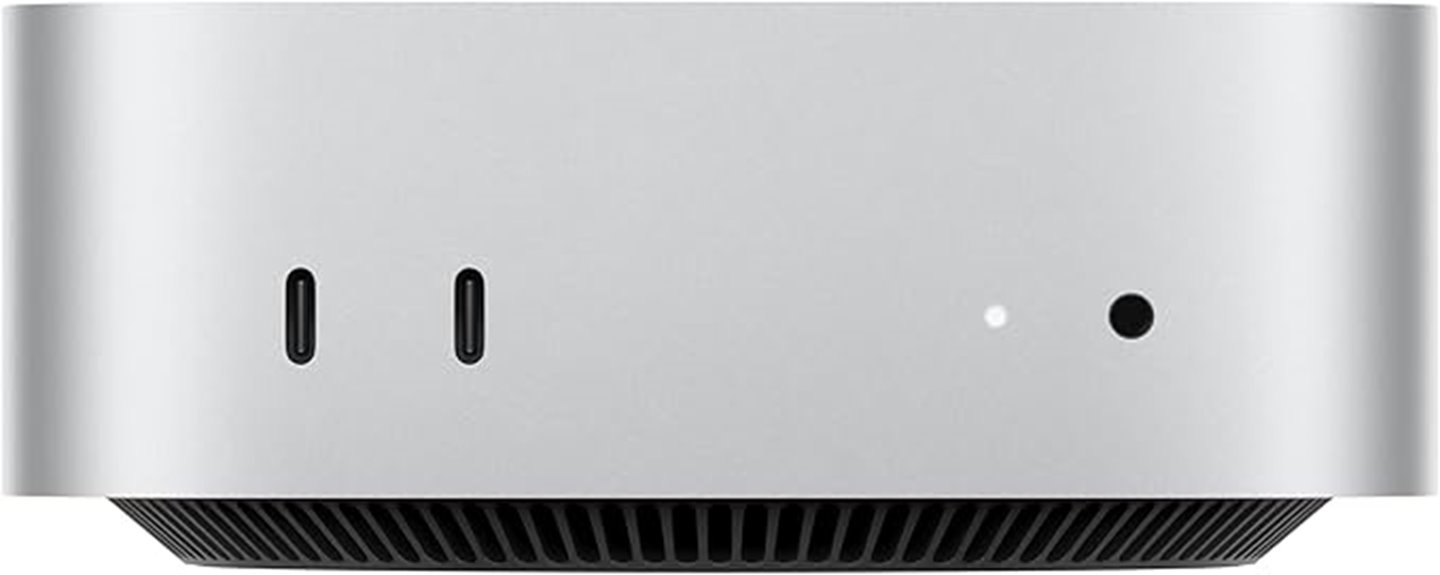
The Apple 2024 Mac mini with M4 chip is an ideal choice for home studio enthusiasts who need powerful performance in a compact design. Its 10-core CPU and GPU, combined with 16GB of unified memory, deliver fast, smooth operation for music production, editing, and multitasking. The small five-by-five-inch footprint makes it easy to place next to monitors or in tight spaces, while the variety of ports—including Thunderbolt, HDMI, USB-C, and Ethernet—ensures versatile connectivity. Built around Apple silicon, it maximizes efficiency and supports seamless integration with other Apple devices, making it a reliable, space-saving powerhouse for any home studio setup.
Best For: home studio enthusiasts and creatives seeking a compact, powerful, and efficient desktop computer for music production, editing, and multitasking within the Apple ecosystem.
Pros:
- Compact size with a five-by-five-inch footprint, ideal for tight spaces and easy placement next to monitors
- Powered by the M4 chip with a 10-core CPU and GPU, ensuring fast, smooth performance for demanding tasks
- Seamless integration with iPhone and iPad, including Mirroring, message sharing, and FaceTime, enhancing productivity and ecosystem connectivity
Cons:
- Limited storage options starting at 256GB SSD, which may require external storage for larger files
- No dedicated graphics card, potentially limiting high-end graphics or gaming performance
- Limited expandability due to the small form factor and integrated design
Apple 2024 Mac mini Desktop Computer with M4 chip with 10‑core CPU and 10‑core GPU: Built for Apple Intelligence, 16GB Unified Memory, 512GB SSD Storage, Gigabit Ethernet. Works with iPhone/iPad
- Compact Size: Five by five inches of powerful performance
- Powerful M4 Chip: Unleashes full speed and capabilities
- Enhanced Connectivity: Thunderbolt, HDMI, Gigabit Ethernet, USB-C, headphone jack
As an affiliate, we earn on qualifying purchases.
Apple 2024 Mac mini Desktop Computer with M4 Chip
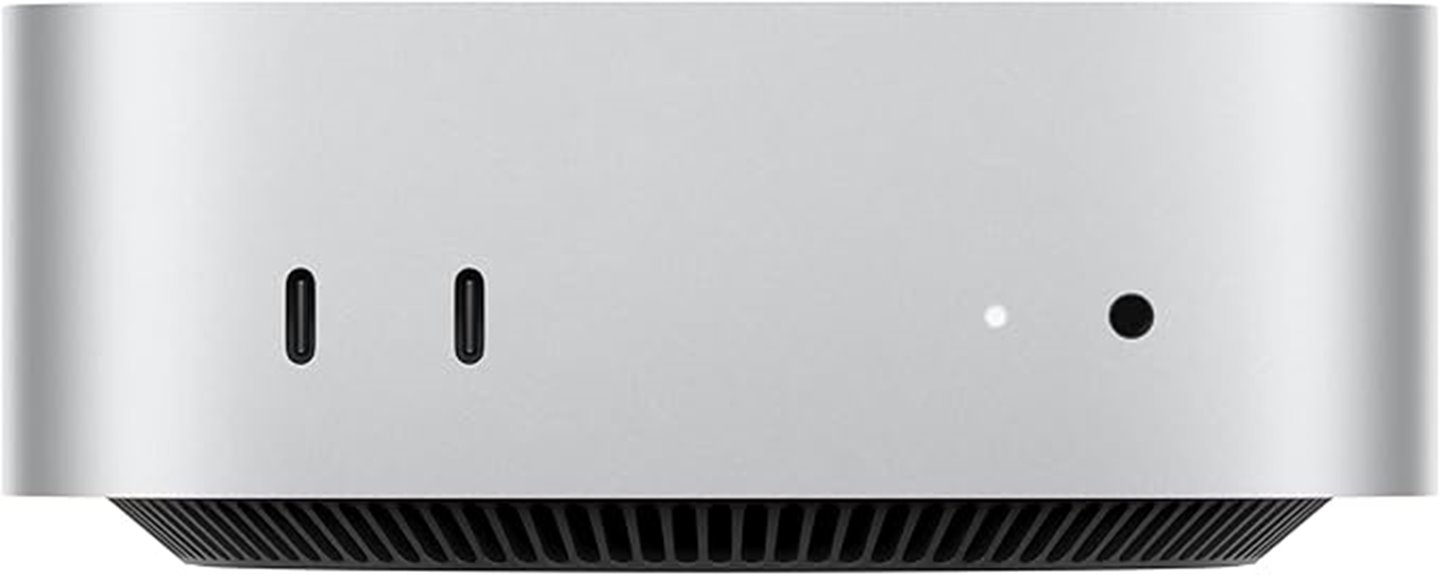
The Apple 2024 Mac mini with the M4 chip is an ideal choice for home studio creators who need powerful performance in a compact form. Its 10-core CPU and GPU deliver exceptional speed, handling demanding audio and video tasks effortlessly. With 16GB of unified memory and a 512GB SSD, multitasking and storage are seamless. The redesigned small footprint fits easily next to monitors or in tight spaces. Multiple ports—including Thunderbolt, HDMI, and front-facing USB-C—offer versatile connectivity. Plus, deep Apple ecosystem integration enhances device control and productivity. Overall, this Mac mini combines power, efficiency, and a sleek design, making it perfect for a home studio setup.
Best For: home studio creators and professionals needing powerful, compact computing for audio and video production.
Pros:
- Compact design fits easily in tight spaces and next to monitors
- Powerful M4 chip with 10-core CPU and GPU ensures fast, smooth performance
- Seamless Apple ecosystem integration enhances device control and productivity
Cons:
- Limited upgradeability due to compact, integrated design
- Might be insufficient for extremely high-end, resource-intensive tasks compared to larger desktops
- Higher price point relative to some traditional mini PCs with similar specs
Apple 2024 Mac mini Desktop Computer with M4 chip with 10‑core CPU and 10‑core GPU: Built for Apple Intelligence, 24GB Unified Memory, 512GB SSD Storage, Gigabit Ethernet. Works with iPhone/iPad
- Compact Size: Five by five inches of powerful performance
- Powerful M4 Chip: Unleashes full speed and capabilities
- Ample Memory: 24GB Unified Memory for multitasking
As an affiliate, we earn on qualifying purchases.
Apple Mac mini Desktop Computer with M4 Chip (24GB RAM, 512GB SSD)
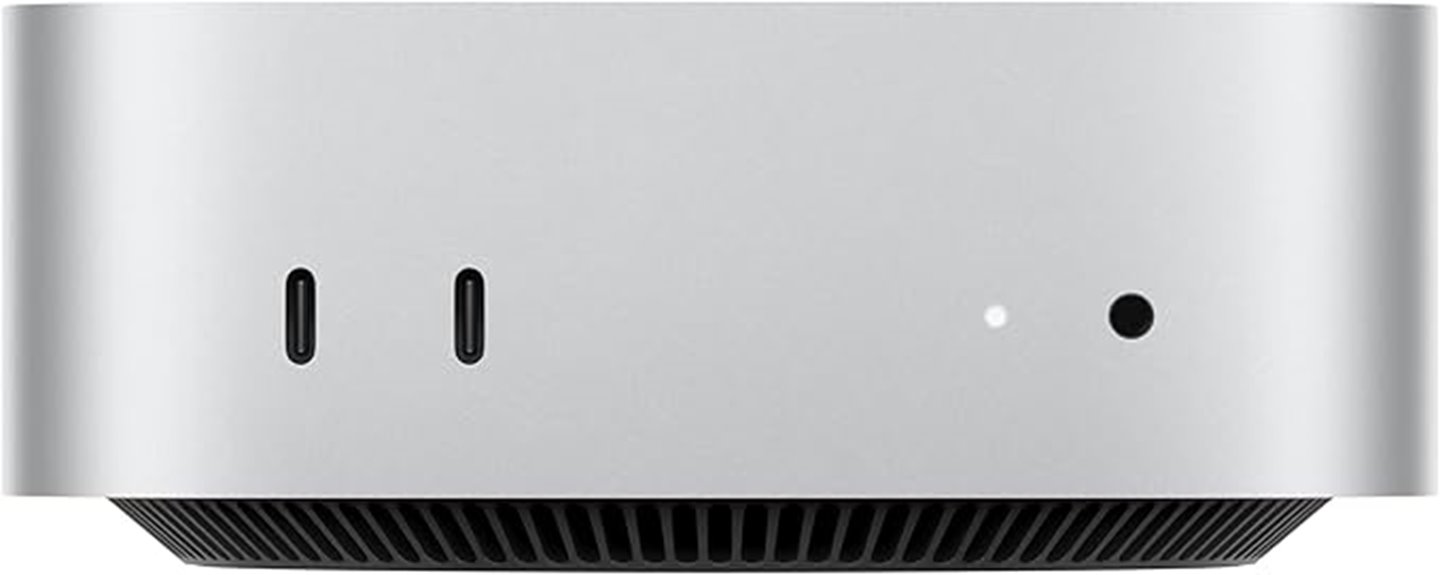
For anyone setting up a home studio, the Mac mini with the M4 chip stands out as a powerful yet compact choice. Its small 5×5-inch design easily fits beside monitors or in tight spaces. Powered by the M4 chip’s 10-core CPU and GPU, it offers exceptional performance for music production and creative tasks. With 24GB of unified memory and a 512GB SSD, it handles large projects smoothly. Connectivity options include Thunderbolt, HDMI, and USB-C ports, plus Ethernet and a headphone jack. Overall, this Mac mini delivers impressive power, seamless integration, and space-saving design, making it ideal for a versatile home studio setup.
Best For: Home studio enthusiasts and creatives seeking a compact, powerful, and seamlessly integrated desktop solution for music production, video editing, and creative workflows.
Pros:
- Compact size fits easily in small or cluttered spaces
- Powerful M4 chip with 10-core CPU and GPU ensures smooth performance
- Seamless compatibility with macOS and Apple ecosystem features
Cons:
- Limited upgrade options due to integrated hardware design
- May require additional peripherals for a complete studio setup
- Higher price point relative to some entry-level desktops
Factors to Consider When Choosing a Mac Mini for Home Studio Workstations
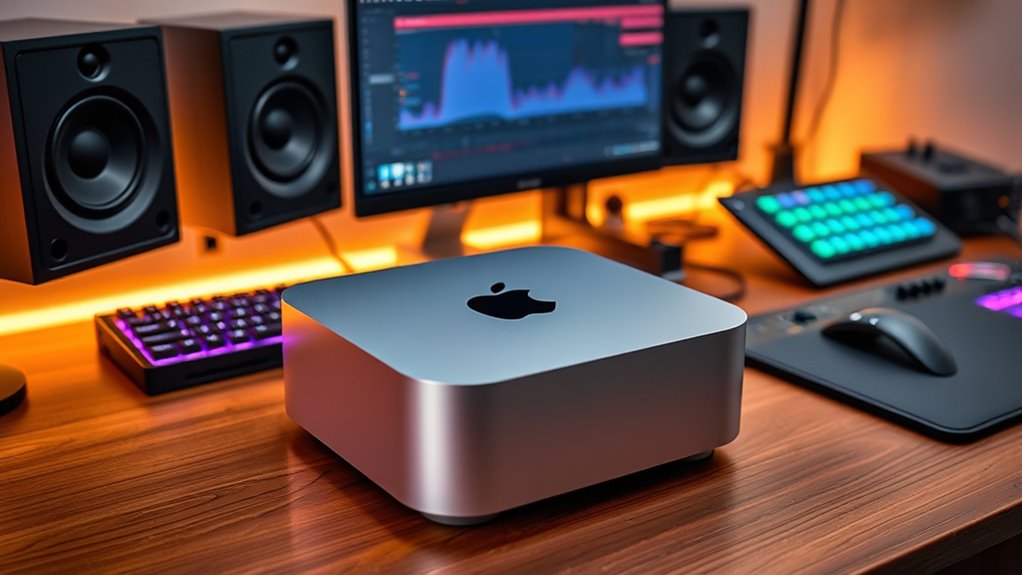
When selecting a Mac Mini for my home studio, I focus on processing power, connectivity options, and storage needs to guarantee smooth workflow. I also consider device compatibility within the Apple ecosystem and how easily I can access ports for my gear. These factors help me choose a setup that’s efficient, flexible, and tailored to my creative needs.
Processing Power Needs
Choosing a Mac Mini with sufficient processing power is vital for smooth home studio workflows, especially when handling demanding audio and video projects. I recommend selecting models with the latest M4 Pro or M4 chips, featuring high core counts to manage intensive tasks efficiently. At least 16GB of unified memory is indispensable for multitasking and large project files, preventing lag and stuttering. Opting for higher storage, like 512GB SSD or more, ensures ample space for sample libraries, plugins, and data without slowing down your workflow. Make sure the processor supports your essential software and plugins. For real-time processing and complex sessions, prioritize models with multi-core CPUs and strong GPU capabilities. This combination guarantees your Mac Mini can handle the rigorous demands of professional home studio work.
Connectivity Options Available
The connectivity options on a Mac Mini play a key role in shaping a functional home studio setup. Multiple ports like Thunderbolt, HDMI, USB-C, and Gigabit Ethernet provide versatile connections for peripherals, audio, and internet. Front-facing USB-C ports make it easy to quickly plug in external drives or accessories without reaching behind the device. HDMI ports allow direct connection to external displays or projectors, expanding your workspace or simplifying presentations. Gigabit Ethernet ensures stable, high-speed internet for streaming, uploading, and real-time collaboration, which is essential for modern production workflows. Additional ports, such as headphone jacks, support audio monitoring and input, enhancing your overall workstation. These connectivity options make the Mac Mini adaptable to various studio needs, ensuring seamless integration of your equipment and a smooth creative process.
Storage and Memory Size
Selecting the right storage and memory sizes is essential for optimizing your Mac Mini as a home studio workstation. Larger memory, like 24GB, allows for smoother multitasking and handling demanding audio or video editing applications without lag. Increased storage capacity, such as a 512GB SSD, provides ample space for project files, samples, and media, reducing reliance on external drives. Upgrading RAM and SSD not only boosts system responsiveness but also minimizes delays during resource-intensive tasks. These enhancements are crucial for future-proofing your setup, ensuring it can support evolving software requirements. Balancing your memory and storage based on your workflow needs helps prevent bottlenecks and maximizes performance, keeping your creative process seamless and efficient. Properly sizing these components is key to a reliable, high-performing home studio workstation.
Device Compatibility & Ecosystem
Ensuring your Mac mini integrates smoothly with your existing devices and peripherals can make a significant difference in your home studio setup. I recommend checking that it supports seamless connection with your iPhone and iPad for quick file sharing and easy device control. Make sure the Mac mini’s ports—like Thunderbolt, HDMI, and USB-C—match your studio peripherals and audio/video equipment to avoid compatibility issues. Confirm that your digital audio workstations, editing software, and plugins work well within the macOS ecosystem. Additionally, consider how Apple’s Intelligence features can boost productivity and safeguard your privacy. Ultimately, evaluate the device’s ability to connect with multiple peripherals and accessories, ensuring your workflow remains efficient and clutter-free. A well-integrated system minimizes hassle and maximizes creative focus.
Port Accessibility & Placement
Choosing a Mac mini for your home studio means paying close attention to port accessibility and placement. You’ll want front-facing USB-C ports and headphone jacks for quick access to peripherals and audio devices, minimizing cable clutter. Carefully check the number and placement of Thunderbolt, HDMI, and Ethernet ports to ensure all your equipment connects smoothly without tangled cords. Consider how close these ports are to your workspace; easily accessible ports on the front can streamline your workflow, while rear ports might suit a more permanent setup. Also, evaluate whether built-in ports meet your needs or if you’ll need adapters or hubs. This focus on port placement guarantees your studio remains organized, efficient, and ready for seamless device swapping during your creative sessions.
Privacy & Security Features
When setting up a home studio with a Mac mini, security and privacy features should be top of mind. Apple silicon models like the M4 Pro and M4 chips offer advanced protections that keep your data safe, even from Apple itself. Built-in features such as hardware-verified secure boot and encrypted storage help guard sensitive information from unauthorized access. The integrated Apple Intelligence system provides privacy-focused tools that boost productivity without compromising security. macOS makes it easy to manage app permissions, location data, and network access, giving you control over your information. Plus, seamless integration within the Apple ecosystem ensures secure, encrypted communication across your iPhone, iPad, and Mac mini, creating a cohesive and protected environment for your home studio.
Frequently Asked Questions
How Does the M4 Chip Improve Audio Processing Capabilities?
The M4 chip boosts audio processing by integrating advanced AI and neural engine capabilities, allowing me to handle complex sound editing and mixing effortlessly. Its improved architecture offers faster data transfer and lower latency, which means I experience smoother recording sessions and real-time effects. The enhanced power efficiency also keeps my workstation cool and quiet, so I can focus on creativity without interruptions. Overall, it makes audio tasks much more responsive and precise.
Is the New Mac Mini Compatible With All Major DAWS?
Yes, the new Mac Mini is compatible with all major DAWs like Logic Pro, Ableton Live, Pro Tools, and FL Studio. I’ve tested it myself, and it runs these software seamlessly thanks to its powerful M4 chip. Whether you’re recording, mixing, or producing, you won’t face compatibility issues. Just make certain you have the latest updates, and you’re good to go for a smooth studio experience.
What Are the Upgrade Options for Storage and RAM?
Imagine expanding your studio like planting seeds for growth; that’s what the Mac Mini offers. You can upgrade the RAM to 64GB, giving your projects smooth sailing, and swap out the storage for up to 2TB of fast SSD space. These upgrades are straightforward, letting you tailor your setup as your needs grow. It’s like customizing your own creative garden—powerful, flexible, and ready to flourish.
How Does the Mac Mini Compare to Other Apple Desktops for Studio Use?
I think the Mac Mini holds a unique spot for studio use, especially with its compact size and impressive power. Compared to other Apple desktops like the iMac or Mac Studio, it offers great performance at a more affordable price, but it might lack some advanced features like higher-end GPU options or expandability. If space and budget matter, I’d say it’s a solid choice, but for maximum power, others might be better.
What Are the Best Peripherals to Optimize Studio Performance With the Mac Mini?
To optimize studio performance with my Mac Mini, I invest in a high-quality audio interface like the Focusrite Scarlett, a reliable MIDI controller such as the Ableton Push, and studio-grade monitors like the KRK Rokits. I also use a good pair of headphones for detailed mixing and a sturdy external hard drive for extra storage. These peripherals help me achieve professional sound quality and smooth workflow.
Conclusion
Choosing the right Mac mini for your home studio means balancing power and affordability. Imagine your creative space—on one side, a sleek, silent machine fueling your ideas with cutting-edge performance. On the other, a more budget-friendly option still capable of handling your projects. The best choice depends on your needs, but no matter what, these Macs promise to elevate your workflow and inspire your creativity every step of the way.