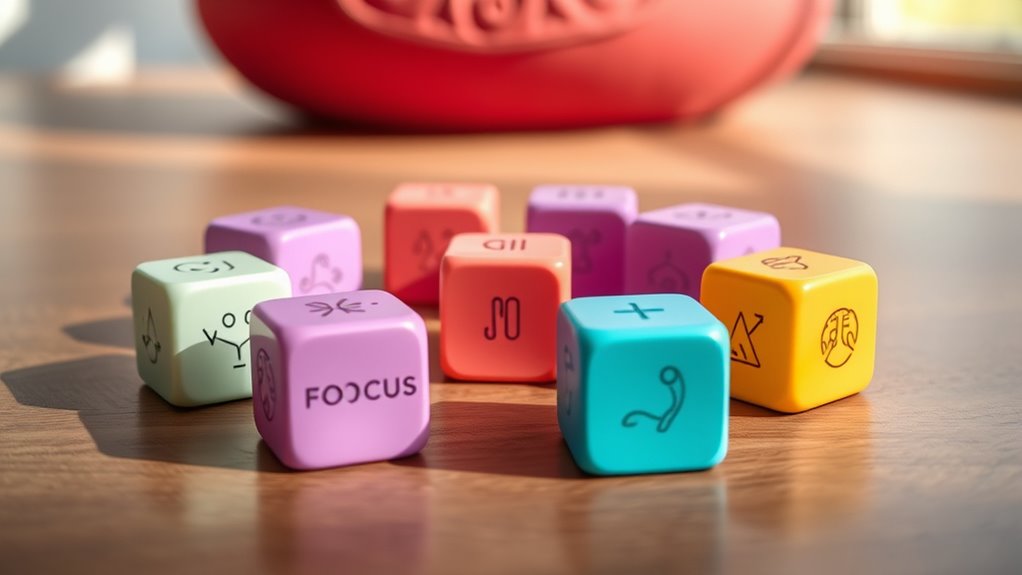

Mindfulness dice turn reflection, calming exercises, and self-care prompts into quick activities, but the best choice depends on whether you want solo guidance, emotional support, or conversation with others. My best overall pick is the Gratitude Dice Set with Companion Journal App, which pairs eight wooden dice with reflection prompts and a playbook for a more guided practice. For shared use, the color-coded Gratitude Dice Set is a stronger fit for conversation and group activities, while Excellerations Emotions Dice focus more directly on calming and focus. The main tradeoffs are prompt variety versus simplicity, individual use versus group play, and tactile materials versus portable formats. Read on for the full comparison and help choosing a set that fits your routine.

Turn your quiet moments into listening time
- Thousands of audiobooks, podcasts and originals
- Listen on your phone, tablet or Echo — also offline
- Cancel anytime
Key Takeaways
- Guidance separates the leading options: the Gratitude Dice Set with Companion Journal App combines multiple dice, reflection prompts, and a playbook, while simpler sets offer a quicker, less structured activity.
- Group use calls for prompts that invite conversation: the color-coded wooden Gratitude Dice Set is designed for shared discussion, unlike compact decision dice aimed at choosing an individual self-care activity.
- Emotional regulation is a distinct use case: Excellerations Emotions Dice center calming and focus, so they serve a different need from gratitude and intention prompts.
- Dice count does not tell the whole story: nine activity dice or eight reflection dice may offer varied play, but buyers should check whether the prompts match their audience and how much guidance comes with them.
- Materials shape the experience: wooden sets suit hands-on routines and group tables, while the stainless-steel UNICRAFTALE dice and boxed format favor a compact, gift-oriented choice over a broad prompt system.


| mindfulness dice | Material | Dimensions | Pieces | Age range |
|---|---|---|---|---|
| Gratitude Dice | Foam | — | 1 | Adult |
| 12-Sided Self-Care Decision Di | Wood | 2.8 x 2.8 x 0.1 inches | 1 | — |
| Excellerations Emotions Dice: | Ethylene Vinyl Acetate (EVA) | 7 x 7 x 0.04 inches | 3 | 3 years and up |
| Gratitude Dice Set | Wood | 4.53 x 3.35 x 0.1 inches | 9 | 14 years and up |
| UNICRAFTALE Self Care Relief G | Stainless steel | — | 1 | — |
| Gratitude Dice Set with Compan | — | — | — | 12 years and up |
| Mindfulness Dice by Chronicle | Wood | 3.6 x 3.6 x 3.55 inches | — | — |
| Wooden Meditation Decision Dic | Eco-friendly wood | — | — | — |
| Two Tumbleweeds Mood-Boosting | Solid wood | 1 x 1 x 0.1 inches | — | 15 years and up |
| Intention Dice | Acrylic | 0.75 x 0.75 x 0.04 inches | — | — |
More Details on Our Top Picks
Gratitude Dice – 20-Sided Dice with Daily Gratitude Exercises and Guidebook
Twenty gratitude exercises give this die more variety than the six-choice UNICRAFTALE stainless steel decision die, which focuses on a handful of general activities. The included journal and thank-you notes help turn a roll into a next step: write a reflection or express appreciation to someone. That makes this a stronger fit for someone building a repeatable gratitude routine than for a group looking for broad conversation prompts like the seven-die wooden Gratitude Dice Set. Its foam construction keeps the die light and portable, but may feel less substantial than a wooden or metal option. The main tradeoff is that the die supplies prompts, not a habit by itself; regular use and writing are still up to you. Choose it for focused gratitude practice, not varied mindfulness activities.
Pros:- Twenty exercises offer more prompt variety than a six-sided activity die.
- Journal and thank-you notes turn a roll into concrete reflection or appreciation.
- Lightweight foam die is easy to keep nearby as a habit cue.
Cons:- The prompts focus on gratitude rather than a broad range of mindfulness practices.
- Building a routine depends on continued personal effort.
- Foam may feel less durable or premium than wood or stainless steel.
Best for: Adults who want a portable prompt for a regular gratitude routine and will use the included journal or thank-you notes.
Not ideal for: Buyers seeking group conversation prompts, a substantial wooden keepsake, or a range of mindfulness exercises beyond gratitude.
- Pieces:1
- Die:20-sided
- Material:Foam
- Age range:Adult
- Included components:20-sided die, gratitude journal, thank-you notes and envelopes
- Manufacturer:Good Odds LLC
Our verdict“Choose this set if you want a lightweight, guided prompt for solo gratitude practice and are willing to keep up the journaling.”
12-Sided Self-Care Decision Dice – Gift for Him, Her, Couples, Family, Wellness Activity Game
This wooden 12-sided self-care die is the most straightforward option here for choosing a small wellness activity without opening a journal or setting up a group exercise. Its prompts include meditation, journaling, and stretching, giving it a broader everyday self-care angle than the gratitude-only 20-sided Gratitude Dice. Compared with the three-die Excellerations Emotions Dice, however, it is not built around children’s calming strategies or classroom use; its appeal is a simple, portable nudge for general routines. The wooden construction offers a sturdier feel than a foam die, while the single-die format keeps the activity easy to grasp. The tradeoff is limited personalization: one set of prompts has to suit the person rolling it, and there is only one die rather than a set for group play.
Pros:- Twelve sides provide more choices than a six-option decision die.
- Wood offers a more solid feel than foam prompt dice.
- Prompts cover several familiar self-care activities, including meditation and stretching.
- Compact format is easy to keep at a desk or carry along.
Cons:- A single set of prompts may not match every user’s needs or preferences.
- The activity focus is broad self-care rather than structured gratitude or emotional skills.
- One die offers less scope for group play than multi-die sets.
Best for: Adults, couples, or families who want a simple physical prompt to pick from familiar self-care activities at home or on the go.
Not ideal for: Buyers who want tailored prompts, a multi-die group activity, or child-focused emotional regulation exercises.
- Pieces:1
- Sides:12
- Shape:Dodecahedron
- Material:Wood
- Size:2.8 inches
- Dimensions:2.8 x 2.8 x 0.1 inches
Our verdict“Pick this wooden die if you want an uncomplicated way to choose a familiar self-care activity, rather than a detailed or group-oriented mindfulness tool.”
Excellerations Emotions Dice: Calming and Focusing
Unlike the adult-oriented Gratitude Dice, this three-die set is aimed at helping children practice calming and focusing strategies through activities such as breathing and drawing. The child-friendly, interactive format can give a teacher or caregiver a concrete prompt when a child needs help settling, while its EVA foam construction suits hands-on use better than a small metal decision die. An included guide makes the activities easier for adults to introduce, though younger children may still need supervision. Its narrow focus is also its main limitation: it addresses calming and focus rather than gratitude, open-ended reflection, or a wide menu of adult self-care choices. Compared with the wooden 12-sided Self-Care Decision Dice, this is better suited to supported emotional skills practice than independent daily wellness decisions.
Pros:- Three dice offer a more varied activity format than a single decision die.
- Prompts such as deep breathing and drawing give children practical calming strategies.
- EVA foam is suited to an interactive, child-focused tool.
- An activity guide helps adults introduce the exercises.
Cons:- The prompts focus on calming and focusing rather than broader mindfulness themes.
- Younger children may need adult support to use the activities.
- The product is less suited to adult solo practice than general self-care dice.
Best for: Teachers, counselors, and caregivers looking for an interactive prompt to help children aged three and up practice calming strategies.
Not ideal for: Adults wanting a personal mindfulness routine, or buyers seeking broad reflection prompts and activities for independent use.
- Brand:Excellerations
- Pieces:3
- Age range:3 years and up
- Material:Ethylene Vinyl Acetate (EVA)
- Color:Blue
- Shape:Octahedron
- Dimensions:7 x 7 x 0.04 inches
Our verdict“Choose this set for guided calming activities with children, not for an adult gratitude or general self-care routine.”
Gratitude Dice Set – Conversation Starter & Group Therapy Game | Wooden Color-Coded Mindfulness & Wellness Gift
With seven color-coded wooden dice, this set is the clearest group-oriented choice in this batch: the format invites participants to select or roll prompts for conversation, therapy activities, or shared reflection. That gives it more flexibility for a facilitated session than the single 20-sided Gratitude Dice, whose journal and thank-you notes make more sense for a solo routine. The wooden format and gift-ready presentation also make it feel more substantial than the foam Excellerations set, though the latter is better tailored to children’s calming strategies. These dice center on gratitude and reflection, not action-based self-care choices such as stretching or meditation. They also depend on people being willing to discuss their answers, so the group format can be a poor match for private practice or participants who prefer less personal prompts.
Pros:- Seven color-coded dice provide a group-friendly prompt format.
- Wooden construction offers a more substantial feel than foam dice.
- Designed for individual reflection as well as group or therapy activities.
- Gift-ready presentation suits wellness gifting.
Cons:- Reflection prompts may feel too personal or conversation-focused for some users.
- The set emphasizes gratitude rather than practical activities like stretching or meditation.
- Regular use requires participants to make time for reflection.
Best for: Therapists, facilitators, and adults who want a tactile set of gratitude prompts for group discussion or shared reflection.
Not ideal for: People seeking private, action-based self-care prompts or a guided journaling kit for solo daily use.
- Pieces:9
- Dice described:7 color-coded wooden dice
- Age range:14 years and up
- Material:Wood
- Dimensions:4.53 x 3.35 x 0.1 inches
- Shape:Hexahedron
- Set name:Single Set
Our verdict“Choose this wooden set when shared gratitude discussion matters more than solo prompts or action-based self-care choices.”
UNICRAFTALE Self Care Relief Gifts 1-Set Stainless Steel Decision Dice with Box Stress Relief Meditation Yoga Gift for Women and Men
The UNICRAFTALE die stands apart from the larger prompt collections with its 16 mm stainless steel body and gift box. It is a compact, durable choice for someone who wants a small physical cue to pick among meditation, yoga, reading, and other activities, rather than a journal-based routine like the 20-sided Gratitude Dice. Compared with the wooden 12-sided Self-Care Decision Dice, its metal construction feels more like a keepsake, but the supplied information lists only six activity choices, so it offers less variety. The small format makes it easy to carry, yet can be difficult to read for people with visual impairments. Its appeal depends on wanting a simple decision aid; it is not a structured reflection tool, and no warranty is specified in the product details.
Pros:- Stainless steel construction is durable and compact.
- Small size makes it easy to carry as a personal reminder.
- Gift box presentation suits gifting.
- Offers a quick choice among familiar relaxation activities.
Cons:- Six choices provide less variety than the 12-sided wooden self-care die.
- Small lettering or symbols may be hard to see for some users.
- Product details do not specify a warranty.
Best for: Gift buyers or adults who want a pocket-sized, sturdy reminder to choose among a few familiar relaxation activities.
Not ideal for: People who need large, easy-to-read prompts, a wide range of activities, or guided gratitude and journaling exercises.
- Pieces:1
- Material:Stainless steel
- Size:16 x 16 x 16 mm
- Weight:40 g
- Shape:Hexahedron
- Color:Silver
Our verdict“Choose this metal die for a compact, giftable decision aid, but pick a larger prompt set if variety or readability matters more.”
Gratitude Dice Set with Companion Journal App – 8 Wooden Dice, 60 Reflection Prompts & Playbook
For buyers who want a gratitude ritual with more structure than a single roll, this set combines eight wooden dice with a playbook and a companion journal app. Its 60 reflection prompts offer a clear starting point for solo practice or conversation with family and friends, while the app adds a digital place to continue reflecting. Compared with Mindfulness Dice by Chronicle Books, which focuses on a booklet of varied mindfulness practices, this one stays more firmly centered on gratitude and supported reflection. That focus is useful for building a repeatable routine, but it also narrows the activity: the prompt pool may start to feel familiar, and using the app requires scanning a QR code. Choose it for guided gratitude; skip it if you prefer open-ended meditation or a paper-only journal.
Pros:- Eight wooden dice make it easy to vary a short gratitude practice.
- The 60 prompts and 20-page playbook provide more guidance than dice alone.
- Companion app adds a digital option for continued reflection.
- Suitable for individual use as well as shared family or group activities.
Cons:- App access depends on scanning the included QR code.
- A set of 60 prompts may feel repetitive with frequent use.
- The gratitude focus offers less variety than broader mindfulness activity dice.
Best for: Individuals, couples, or families who want guided gratitude prompts plus an optional digital journaling companion.
Not ideal for: People who avoid apps, want a broad mix of meditation exercises, or prefer to write only in a traditional journal.
- Number of pieces:8
- Dice material:Wood
- Included dice:8 wooden gratitude dice
- Prompt count:60 reflection prompts
- Included guide:20-page Gratitude Playbook
- Digital component:Companion journal app accessed via QR card
- Storage:Storage tube
- Age range:12 years and up
Our verdict“Choose this set if you want a guided, gratitude-first routine with both printed and app-based support.”
Mindfulness Dice by Chronicle Books
Six wooden dice and an instructional booklet containing 36 mindfulness practices make this the broadest guided-practice option in this group. The activities include meditations, mantras, and exercises, so a roll can suggest more than a general wellness intention. Compared with the gratitude-focused Gratitude Dice Set with Companion Journal App, Chronicle Books gives less emphasis to journaling and gratitude, but more range across mindfulness techniques. The booklet is helpful for newcomers who want directions rather than just a prompt; it also means the experience depends on the included set of practices, with limited built-in expansion. The wooden pieces and compact box suit a shelf or gift, though the age guidance starts at 12, ruling it out for young children. I’d pick this for variety and instruction, not for an app-supported reflection habit.
Pros:- Booklet explains 36 practices, helping users act on a roll rather than invent an exercise.
- Mix of meditations, mantras, and exercises provides more variety than a single-theme set.
- Wooden dice offer a tactile, screen-free way to choose a practice.
- Compact dimensions make the set easy to store or give as a gift.
Cons:- The practice selection is limited to the included 36 activities.
- Ages 12 and up makes it unsuitable for younger children.
- Offers less journaling support than the Gratitude Dice Set with Companion Journal App.
Best for: Teens and adults who want a guided introduction to several kinds of mindfulness practice in one screen-free set.
Not ideal for: Buyers seeking a digital journal, a gratitude-specific prompt system, or an activity set for children under 12.
- Brand:Chronicle Books
- Number of pieces:6
- Material:Wood
- Included practices:36
- Included guide:Instructional booklet
- Dimensions:3.6 x 3.6 x 3.55 inches
- Item weight:7.04 ounces
- Recommended age:12 years and up
Our verdict“Pick Chronicle Books if you want booklet-guided variety rather than a narrow gratitude routine or digital companion.”
Wooden Meditation Decision Dice, 12-Sided for Stress Relief and Self-Care
This single 12-sided wooden die is for someone who wants a quick nudge toward an activity, not a multi-step prompt game. Its listed choices include meditation, yoga, and journaling, turning “what should I do for myself?” into a simple roll. Compared with the Two Tumbleweeds Mood-Boosting Activity Dice, which uses nine dice for a wider set of prompts and group play, this one is more compact and direct. That simplicity can make it easier to use during a busy day, but the activity selection is fixed on the die, with no booklet or app described to add instructions or fresh prompts. The eco-friendly wood construction suits buyers who prefer a tactile object over a digital tool; skip it if you want detailed guidance, customizable routines, or a broader practice library.
Pros:- Twelve-sided format presents more possible choices than a standard six-sided die.
- Activity-based prompts can help turn indecision into a simple self-care action.
- Wood construction offers a tactile alternative to phone-based reminders.
- Single-die format is straightforward to carry and use.
Cons:- The die is limited to the activities printed on it.
- No guide, app, or additional components are listed to develop the activities.
- Less suited to varied group play than the nine-die Two Tumbleweeds set.
Best for: Adults who want a portable, low-effort way to choose among familiar self-care activities such as meditation, yoga, and journaling.
Not ideal for: People who want detailed instructions, many customizable prompts, or a multi-die activity game for group sessions.
- Brand:PUDDISOTI
- Number of dice:1
- Number of sides:12
- Material:Eco-friendly wood
- Included components:Dice
- Listed activities:Meditation, yoga, journaling, and other wellness activities
- Manufacturer:Linhai Xintai Crafts Co., Ltd
- Recommended age:18 months and up
Our verdict“Choose this die for quick activity selection, but opt for a guided set if you need instructions or ongoing prompt variety.”
Two Tumbleweeds Mood-Boosting Activity Dice – Set of 9
The nine-die set takes mindfulness in an active, playful direction, mixing prompts for creativity, relaxation, and refocusing rather than centering every roll on meditation. Multiple dice give solo users more combinations and make the set easier to share in a group than the single-die Wooden Meditation Decision Dice. Its solid wood construction adds a tangible, screen-free quality for casual activity breaks. The tradeoff is that prompts printed directly on the dice may wear with repeated handling, and the set is recommended for ages 15 and up, so it is not a fit for younger family play. It also lacks the booklet-style instruction offered by Mindfulness Dice by Chronicle Books; buyers who need step-by-step meditation guidance may find these prompts too open-ended. I’d choose it for flexible activities, not formal practice.
Pros:- Nine dice combine mindfulness, creativity, and active relaxation prompts.
- Works for both individual use and group activities.
- Solid wood creates a tactile, screen-free format.
- Gift-ready packaging suits wellness-minded recipients.
Cons:- Printed prompts may wear with repeated handling.
- Recommended for ages 15 and up, limiting use with younger children.
- Less instructional than the Chronicle Books booklet-based mindfulness set.
Best for: Adults and older teens who want a tactile, screen-free prompt set for casual solo breaks or shared wellness activities.
Not ideal for: Families with younger children, buyers who need guided meditation instructions, or anyone concerned about printed prompts wearing over time.
- Number of pieces:9
- Material:Solid wood
- Dimensions:1 x 1 x 0.1 inches
- Weight:0.12 kg
- Colors:Red, blue, green, yellow, and purple
- Theme:Mindfulness and wellness
- Age range:15 years and up
- Prompt format:Colorful prompts printed on the dice
Our verdict“Choose this set for varied, social wellness prompts, not for a structured meditation curriculum.”
Intention Dice – Set of 5 Inspirational Dice for Mindfulness, Personal Growth & Spiritual Reflection
These five compact acrylic dice are aimed at people who want a brief intention or affirmation to carry into a morning routine, meditation, or journaling session. Their small format makes them more portable than the wooden Gratitude Dice Set with Companion Journal App, but the tradeoff is a smaller, simpler prompt experience: this set is described as offering affirmations and prompts, not a guidebook or broad activity library. Its spirituality-oriented style may suit reflective buyers, while those looking for varied exercises may prefer Mindfulness Dice by Chronicle Books. The listed size is just 0.75 inches, which helps with portability but may be awkward for users who prefer larger pieces. I’d treat these as a compact cue for setting an intention, not as a complete mindfulness program.
Pros:- Five themed dice offer several cues for intentions and reflection.
- Compact acrylic pieces are easy to carry.
- Can be incorporated into meditation, journaling, or group discussion.
- Spirituality-oriented prompts suit buyers drawn to personal-growth practices.
Cons:- Small 0.75-inch size may be difficult for some users to handle.
- Basic affirmations and prompts may not offer enough depth for experienced practitioners.
- No guidebook or app is listed to add instructions or expand the routine.
Best for: Wellness enthusiasts who want a small set of spiritual or personal-growth prompts for morning intention-setting, meditation, or journaling.
Not ideal for: People who prefer detailed practice instructions, a wide range of activities, or larger dice that are easier to handle.
- Number of pieces:5
- Material:Acrylic
- Size:0.75 inches
- Dimensions:0.75 x 0.75 x 0.04 inches
- Weight:0.07 kg
- Style:Spirituality
- Shape:Hexahedron
- Recommended age:5 years and up
Our verdict“Choose these dice as a portable cue for simple intention-setting, not as a substitute for a guided practice set.”

How We Picked
I compared these mindfulness dice by the kind of practice they support, how clearly a buyer can begin using them, and whether their prompts suit solo reflection, emotional regulation, or shared conversation. I also weighed the role of supporting materials—such as a guidebook, journal app, playbook, or color coding—because those details can make a set easier to use repeatedly rather than leaving the owner to invent an activity. Material, portability, and the likely audience mattered as well: a set for a family table has different needs from a small gift for an individual.
The ranking gives priority to useful guidance and versatility, then distinguishes products by their strongest audience and tradeoffs. The Gratitude Dice Set with Companion Journal App leads for its combination of multiple dice and guided reflection; focused options rank well for buyers whose needs are narrower. Simpler decision dice may be easier to pick up, but they offer less depth than a set with supporting prompts. Product details provided here do not establish durability or exact prompt content beyond the listed features, so I avoid treating those as proven advantages.
| mindfulness dice | Shape |
|---|---|
| Gratitude Dice | — |
| 12-Sided Self-Care Decision Di | Dodecahedron |
| Excellerations Emotions Dice: | Octahedron |
| Gratitude Dice Set | Hexahedron |
| UNICRAFTALE Self Care Relief G | Hexahedron |
| Gratitude Dice Set with Compan | — |
| Mindfulness Dice by Chronicle | — |
| Wooden Meditation Decision Dic | — |
| Two Tumbleweeds Mood-Boosting | — |
| Intention Dice | Hexahedron |
Factors to Consider When Choosing Mindfulness Dice
Before choosing a set, decide what you want the dice to do in real life. A short reset, a reflective routine, and a group conversation need different prompt styles, and a bigger set is not automatically a better fit. These factors can help you match the format to your habits and avoid buying a set that stays in its box.
Choose the Practice Before Counting the Dice
Start with the moment you want the dice to support: a quick pause, a gratitude habit, a calming exercise, or a conversation. A set focused on emotional prompts can be more useful during a difficult moment than a broad collection of general reflection activities. Conversely, if you want variety across different days, a guided set with several dice and supporting prompts may suit you better. A common mistake is treating a higher dice count as proof of better coverage; the prompts still need to match your intended use. If you cannot name when you would reach for the set, choose a simpler format that is easy to keep visible and use spontaneously.
Decide How Much Guidance You Want
Some buyers want the dice to supply the whole activity, while others are happy to interpret an open-ended prompt. Supporting materials such as a guidebook, playbook, or journal prompts can help new users turn a roll into a repeatable routine. They may feel unnecessary to someone who already journals or uses their own reflection questions. Check whether you want structured steps, a prompt to discuss, or just a small choice to act on. Buying a highly guided set for a casual, spontaneous practice can add friction rather than value. A minimal set makes more sense when simplicity is the point, not a missing feature.
Match Prompt Style to the People Using It
Mindfulness prompts are personal, so consider age, comfort with sharing, and whether the set is for one person or a group. A family activity or therapy setting may call for clear, accessible prompts that invite discussion without requiring intimate disclosure. Solo use can accommodate more private reflection, while a couple or group may need prompts everyone can answer comfortably. Do not assume that a product described as a wellness game will suit every group; the actual prompt themes and wording matter. When those details are not available before purchase, favor a format with flexible use rather than one that depends on a specific social setting.
Think About Tactile Feel and Where the Set Will Live
Wooden dice can feel at home on a desk, therapy table, or family shelf, while a compact boxed set may be easier to store or give as a gift. Material alone does not establish long-term durability, so avoid paying extra based only on an assumption that one finish will last longer. Consider whether you want to carry the dice, leave them in a visible spot, or bring them out for group sessions. Small pieces can be easy to misplace, especially when a set includes several dice. Pick a format that fits your storage habits as well as your preferred look and feel.
Look for a Routine You Can Repeat
A prompt can be appealing once and still fail to become part of a routine. Ask whether you would use the dice at a regular time, keep them nearby for occasional resets, or bring them out only for a group activity. A journal or playbook may help establish a repeated practice, while a simple decision die can lower the effort needed for a brief pause. More elaborate sets can offer variety but may ask for more time and attention. Choose the smallest level of structure that supports the habit you actually want; extra components are useful only when you plan to use them.
Separate Gift Appeal From Everyday Fit
Gift language and attractive materials can make a set feel appealing, but the recipient’s likely use matters more than presentation. A compact stainless-steel option may suit someone who appreciates a small, tangible reminder, while a set with multiple prompts may be better for someone who enjoys journaling or guided activities. For a group gift, favor flexible prompts that do not presume everyone shares the same beliefs or comfort level. A frequent mistake is choosing a set because its theme sounds thoughtful without checking whether the recipient likes reflection activities. If you are unsure, simpler, broadly usable prompts are a safer match than a specialized practice.
Frequently Asked Questions
Which mindfulness dice set makes the most sense for someone new to reflection?
For a beginner, I would favor a set that supplies clear prompts or a guide rather than one that expects the user to invent a routine. The Gratitude Dice Set with Companion Journal App includes reflection prompts and a playbook, offering more direction than a basic decision die. If the person wants a very short, low-commitment activity, a simpler set may feel less demanding. Think about whether they enjoy writing, since a journal-linked approach may not suit someone who prefers a quick spoken or mental prompt. The best starting point is the format they are most likely to use again.
Are mindfulness dice suitable for group therapy or family activities?
They can support group conversation when the prompts are accessible and participants can choose how much to share. The color-coded Gratitude Dice Set is explicitly positioned for group therapy and conversation, while a solo-focused reflection set may need more adaptation. Before using any dice with a group, review the prompt themes and decide whether people can pass or answer in a less personal way. This helps keep the activity inclusive without putting anyone on the spot. For children or mixed-age groups, prioritize clear language and a short activity over a large number of prompts.
Should I choose a guided set or a simple decision die?
Choose guided prompts if you want help building a regular reflection practice or need ideas beyond a single action. A simpler decision die is a better fit when the goal is to pick a quick self-care activity without reading instructions or recording thoughts. The guided format can offer more variety, but it may feel like extra work if you only want an occasional reminder. The simple option has less built-in depth, so it may become repetitive for someone who uses it often. Match the amount of structure to the time and attention you intend to give the activity.
What should I check before buying mindfulness dice as a gift?
Consider the recipient’s preferred style: private journaling, spoken conversation, a calming exercise, or a small prompt they can keep nearby. Check whether the set is designed for an individual, a couple, a family, or a group, since those uses are not interchangeable. Supporting materials can help a new user get started, but a journal component may not appeal to someone who avoids writing. Also check the listed materials and packaging if portability or presentation matters to the gift. When you cannot learn the exact prompts, a flexible, broadly themed set is usually a safer choice than a specialized one.
Do more dice or prompts automatically make a set better?
No. More pieces can provide variety, but only if the prompts fit the user’s needs and are easy to access during the intended activity. A focused emotional-regulation set may be more useful for calming and focus than a larger collection built around general reflection. Supporting guides can also matter more than the number of dice because they show how to turn a roll into an activity. Think about how often the set will be used and whether variety or ease matters more. A compact, focused set can be the better purchase for someone who wants one clear purpose.
Conclusion
For most buyers seeking guided reflection with room for variety, I recommend the Gratitude Dice Set with Companion Journal App as the best overall pick. The best value depends on whether you want a straightforward activity or a more developed practice: a simpler decision-dice set can be the sensible choice when minimal setup matters, while buyers wanting extra guidance should favor a set with included prompts or a playbook. For a premium-style guided experience, the eight-dice set stands out for its companion materials, though those extras only help if you will use them. Beginners may prefer a clear guide or a compact, uncomplicated prompt format. For specific needs, choose Excellerations Emotions Dice for calming and focus, or the color-coded Gratitude Dice Set for group conversation; match the set to the people and purpose rather than choosing by dice count alone.