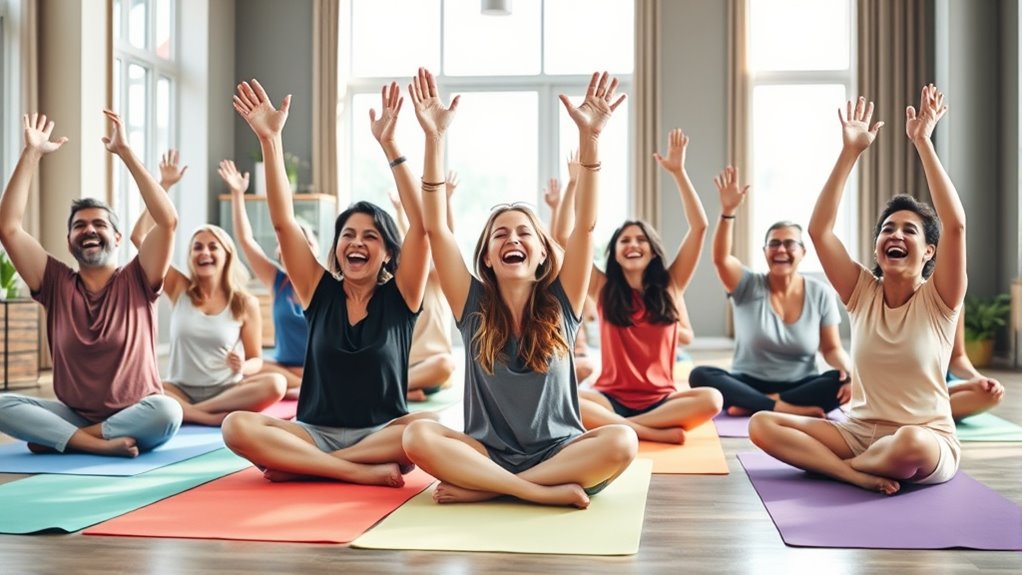

Yoga Nidra is a simple, guided meditation that helps you achieve a deep state of relaxation while maintaining awareness. As you lie comfortably and follow calming instructions, you activate your parasympathetic nervous system, promoting rest and mental clarity. This practice helps you reset your nervous system, reduce stress, and build emotional resilience. With regular practice, you’ll notice greater calm and focus in your daily life—keep going to discover how it can transform your well-being.

Get books, candles and calm essentials delivered free — and shop member deals
- Fast, free delivery on millions of items
- Access to Prime Big Deal Days deals on October 6–7
- Prime Video, Amazon Music and more included
Key Takeaways
- Yoga Nidra guides you into a deep, conscious relaxation, helping to reset the nervous system and reduce mental clutter.
- It enhances mindfulness and emotional balance by accessing the subconscious mind through guided visualization.
- Regular practice activates the parasympathetic nervous system, promoting rest, recovery, and resilience to stress.
- The technique requires no physical exertion, making it accessible for all experience levels to achieve mental clarity.
- Yoga Nidra serves as a powerful tool for stress relief, mental reset, and maintaining calmness in a fast-paced world.

Yoga Nidra, often called “yogic sleep,” is a powerful meditation technique that guides you into a deep state of relaxation while remaining aware. It’s a practice that allows you to access the subconscious mind, releasing built-up tension and mental clutter. When you engage in Yoga Nidra, you’re fundamentally combining elements of mindfulness meditation with proven stress reduction techniques to create a space for mental clarity and emotional balance. This method is accessible to everyone, regardless of experience level, because it doesn’t require physical exertion or complex postures. Instead, you simply lie down comfortably and follow the guided instructions, which lead you through a series of mental and physical awareness exercises.
During a typical session, you might be asked to focus on different parts of your body, breathe deeply, or visualize calming images. These steps serve to anchor your attention and deepen your relaxation. As you become more familiar with the practice, you’ll notice how it helps diminish the effects of stress, anxiety, and fatigue. The practice’s emphasis on mindfulness meditation allows you to stay present in the moment, observing thoughts or sensations without judgment. This non-reactive awareness enhances your ability to manage stress outside of your practice, making it a valuable stress reduction technique in today’s fast-paced world. Incorporating techniques like toilet flushing mechanisms can help in maintaining a calm environment, especially when practicing mindfulness at home.
Yoga Nidra encourages a state of conscious relaxation that bridges the gap between wakefulness and sleep. This unique state is particularly effective because it activates the parasympathetic nervous system, which promotes rest and recovery. As you settle into this deeply relaxed state, your mind becomes less reactive to external stressors, and your body resets from daily tensions. Over time, consistent practice can help rewire your stress response, making you more resilient when facing challenges. It’s like giving your nervous system a reset button, allowing you to approach life with calmer, clearer focus.
guided Yoga Nidra meditation audio
As an affiliate, we earn on qualifying purchases.
As an affiliate, we earn on qualifying purchases.
Frequently Asked Questions
Can Yoga Nidra Help With Chronic Pain Management?
Yes, Yoga Nidra can help manage chronic pain by reducing stress and improving mindfulness benefits. As you practice, you become more aware of pain perception and learn to dissociate emotional reactions from physical discomfort. This deep relaxation technique calms your nervous system, decreases tension, and fosters a sense of control, making pain feel less intense. Over time, it can be a valuable tool in your pain management routine.
How Often Should I Practice Yoga Nidra for Best Results?
You should practice yoga nidra daily or at least every few days. While it might seem like overdoing it, sticking to consistent practice provides the best results. Following frequency guidelines helps deepen relaxation and mental clarity. Remember, the irony is that by doing less, you often gain more. So, embrace regularity, and you’ll likely notice more profound benefits in stress relief and mental reset.
Is Prior Meditation Experience Necessary to Benefit From Yoga Nidra?
You don’t need a meditation background to benefit from Yoga Nidra. It’s designed to be accessible for beginners, making it easy to start regardless of your experience level. Even if you’re new to meditation, you’ll find it straightforward to relax deeply and reset your mind. With regular practice, you’ll notice improved mental clarity and stress relief, so no prior experience is necessary to enjoy its calming benefits.
Are There Any Contraindications or Health Risks Involved?
Yoga Nidra is generally safe, but you should consider safety precautions and health considerations. If you have severe health issues, like recent surgeries, mental health conditions, or are pregnant, consult your healthcare provider before practicing. Some may find certain positions uncomfortable or experience emotional release, so listen to your body. Always practice in a safe environment, avoid practicing while driving, and inform your instructor of any health concerns to guarantee a secure experience.
Can Yoga Nidra Improve Sleep Quality Long-Term?
Yoga Nidra acts like a gentle reset button for your mind, helping improve sleep quality long-term. It enhances your sleep hygiene by promoting relaxation and reducing stress, which can lead to deeper, more restorative sleep night after night. With consistent practice, you may find your sleep becomes more regular, and your stress levels drop, creating a positive cycle that benefits your overall well-being and sleep health over time.
As an affiliate, we earn on qualifying purchases.
Conclusion
As you gently drift back from this peaceful space, imagine yourself basking in warm sunlight, each breath easing tension away like waves softly lapping at the shore. Feel your mind refreshed, like a clear blue sky after a storm, ready to embrace the rest of your day with calm and clarity. Remember, this tranquil sanctuary is always within you—just a few deep breaths away, whenever you need a mental reset.
As an affiliate, we earn on qualifying purchases.
As an affiliate, we earn on qualifying purchases.
Halloween Picks
halloween
As an affiliate, we earn on qualifying purchases.