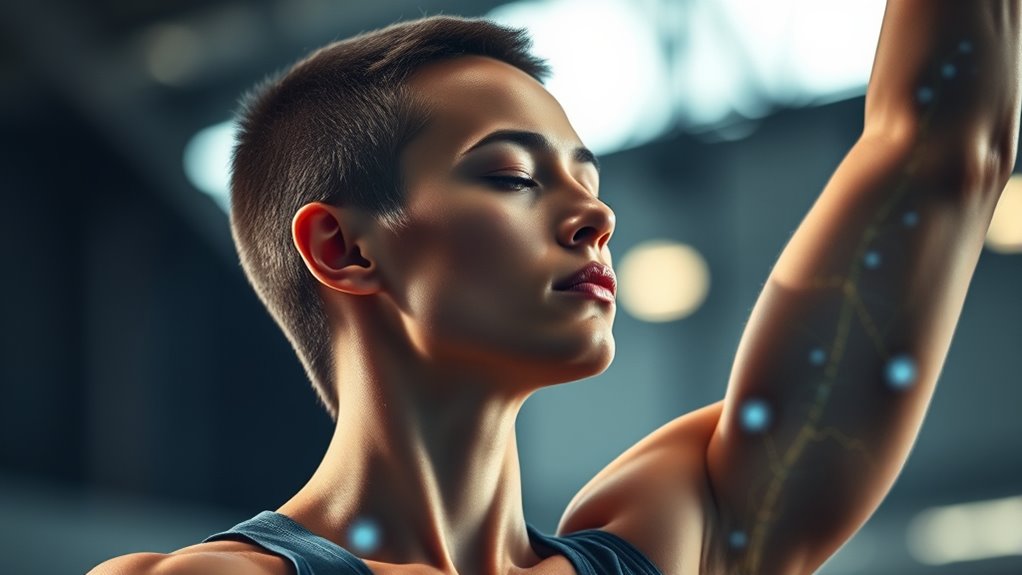

Visualization and motor imagery activate the same neural pathways as actual movement, helping you strengthen skills and boost performance. By mentally rehearsing, you prime your brain, making physical actions smoother, more precise, and automatic. This technique is especially useful when physical practice is limited, as it reinforces connections and builds confidence. Keep exploring how mental imagery can make your training more effective and contribute to lasting improvements in your performance.

Turn your quiet moments into listening time
- Thousands of audiobooks, podcasts and originals
- Listen on your phone, tablet or Echo — also offline
- Cancel anytime
Key Takeaways
- Visualization activates neural pathways similar to physical movement, reinforcing skills through mental practice.
- Mental imagery improves performance by priming motor regions, leading to smoother and more confident movements.
- Repeated visualization strengthens neural connections, accelerating skill acquisition and enhancing motor learning.
- It helps maintain and refine skills during injury or limited physical practice, supporting ongoing performance.
- Visualization boosts psychological readiness, reducing anxiety and increasing focus during high-pressure situations.
Visualization and motor imagery are powerful techniques that allow you to mentally rehearse movements without physically performing them. When you vividly imagine executing a skill or movement, you’re engaging your brain in a process called mental rehearsal. This mental process isn’t just daydreaming; it activates specific neural pathways similar to those used during actual physical activity. In fact, research shows that when you visualize an action, neural activation occurs in the motor cortex, premotor areas, and other regions involved in planning and executing movement. This means your brain responds as if you’re physically performing the task, strengthening the neural connections necessary for skill acquisition and performance improvement. By repeatedly engaging in mental rehearsal through visualization, you reinforce these neural pathways, making your actual movement smoother, more precise, and more automatic over time.
The beauty of mental rehearsal lies in its ability to enhance performance even when you’re unable to practice physically. Whether you’re sidelined due to injury, limited by time, or simply seeking to sharpen your skills, visualization allows you to keep your brain actively engaged in the learning process. As you imagine a perfect swing, a precise dance move, or a successful race, you’re effectively training your brain to prepare for the real event. This process relies heavily on neural activation because it primes the motor regions of your brain, ensuring that when you do perform physically, your movements feel more natural and confident. The more vividly and frequently you visualize, the stronger these neural pathways become, making the mental rehearsal more effective.
Furthermore, mental rehearsal through visualization can help you manage anxiety and boost confidence. By mentally practicing the steps and seeing yourself succeed, you create a positive mental image that can translate into improved focus and reduced performance nerves. It’s a way of mentally preparing yourself for high-pressure situations, leveraging your brain’s capacity for plasticity—its ability to adapt and change based on repeated mental activity. Regularly incorporating visualization techniques into your training routine can maximize neural engagement and accelerate skill development. Over time, this can lead to measurable improvements in your actual performance, as your brain has effectively trained itself to execute the movements with precision and ease. So, by incorporating visualization into your routine, you’re not just imagining success—you’re actively rewiring your brain for better performance through consistent neural activation and mental rehearsal.
As an affiliate, we earn on qualifying purchases.
Frequently Asked Questions
Can Visualization Improve Athletic Performance Instantly?
Yes, visualization can instantly improve your athletic performance by sharpening your mental focus and boosting your confidence. When you vividly imagine executing a skill successfully, your brain activates the same neural pathways as real practice. This mental rehearsal helps you stay calm under pressure and enhances your overall performance. While consistent practice is essential, even a quick visualization session can give you an immediate edge in competitions or training.
How Does Motor Imagery Differ From Mental Rehearsal?
You might think motor imagery and mental rehearsal are the same, but they differ in focus. Motor imagery involves vivid mental simulations that activate neural pathways related to movement, enhancing performance. Mental rehearsal, however, uses cognitive strategies to visualize routines or scenarios without necessarily engaging the motor system. Both boost your skills, but motor imagery directly stimulates neural activation, making it a more dynamic tool for improving athletic or skill-based performance.
Are There Any Risks Associated With Visualization Techniques?
Yes, there are risks with visualization techniques. You might experience mental fatigue if you practice for too long, which can reduce effectiveness. Additionally, false confidence might develop if you imagine success without addressing actual skills, leading you to underestimate challenges. To avoid these risks, keep sessions brief, stay realistic about your progress, and balance visualization with actual practice. This way, you maximize benefits without risking burnout or misplaced confidence.
What Age Groups Benefit Most From Visualization Training?
You benefit most from visualization training during specific developmental stages, especially in children and adolescents, because of their high neuroplasticity. Age-specific benefits mean younger individuals can develop motor skills and confidence more effectively, while older adults may use visualization to maintain cognitive and physical health. As you progress through different age groups, visualization adapts to your developmental needs, enhancing performance across all life stages.
How Long Does It Take to See Results From Motor Imagery?
Like planting a seed, you might start noticing results from motor imagery within a few days to a few weeks. Timing expectations vary depending on your consistency and the activity, but many see effectiveness within this period. Keep practicing regularly, as the benefits can last months if you maintain your routine. Patience and persistence are key to maximizing the effectiveness duration of your mental training.
As an affiliate, we earn on qualifying purchases.
Conclusion
By now, you can see how visualization and motor imagery truly boost performance. Some research suggests these techniques activate similar brain regions as actual movement, making them powerful tools for skill improvement. While not a magic fix, many athletes and performers swear by their benefits. So, next time you prepare for a big event, try mentally rehearsing—you might just unleash your full potential through the power of your mind.
motor imagery training equipment
As an affiliate, we earn on qualifying purchases.
As an affiliate, we earn on qualifying purchases.
performance enhancement visualization products
As an affiliate, we earn on qualifying purchases.
As an affiliate, we earn on qualifying purchases.
Halloween Picks
halloween
As an affiliate, we earn on qualifying purchases.