
TL;DR

Turn your quiet moments into listening time
- Thousands of audiobooks, podcasts and originals
- Listen on your phone, tablet or Echo — also offline
- Cancel anytime
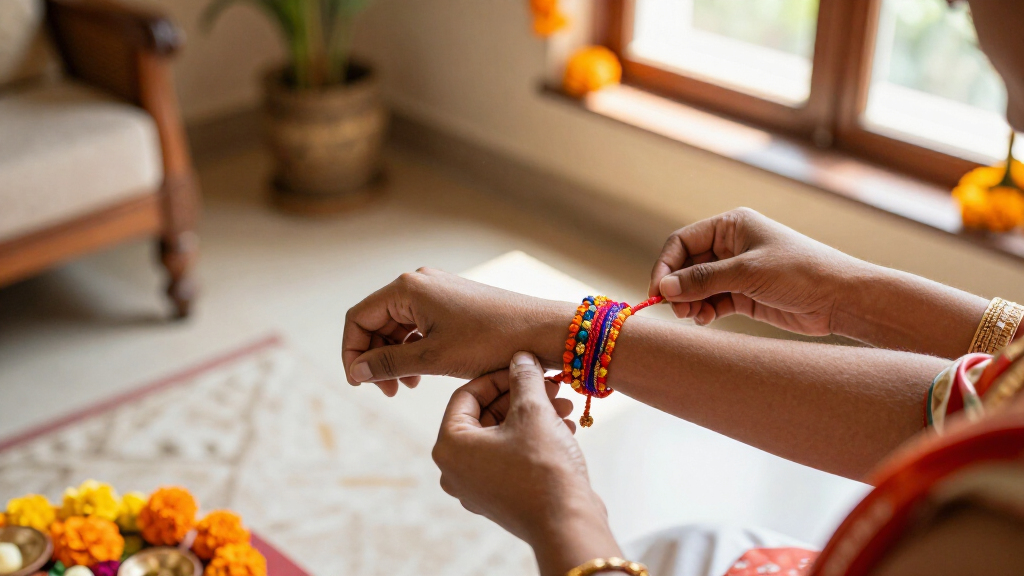
Raksha Bandhan, a traditional Indian festival celebrating sibling bonds, is seeing a significant rise in global media coverage. Reports indicate a 5.7-fold increase in mentions, reflecting its expanding cultural relevance worldwide.
Raksha Bandhan has experienced a notable increase in international media coverage this week, with mentions rising by more than five times compared to typical levels, according to the GDELT database. This increase highlights the festival’s growing visibility and recognition in international news outlets.
The GDELT (Global Database of Events, Language, and Tone) analysis reports that Raksha Bandhan was mentioned 97 times in global media outlets within a recent reporting window, representing a 5.7-fold increase over the baseline. This surge includes coverage from newspapers, online news portals, and social media platforms across multiple countries, notably in regions outside India where the festival is traditionally celebrated.
Experts suggest that this increase may be associated with heightened media interest in Indian cultural festivals, possibly influenced by diaspora communities and cultural exchange initiatives. Coverage has generally focused on the festival’s themes of sibling bonds, mutual protection, and cultural heritage, which have resonated with international audiences.
While the data confirms the increase in mentions, it remains uncertain whether this has led to a corresponding rise in public participation or celebrations of Raksha Bandhan outside India. Reports indicate some diaspora-led events and social media campaigns, but comprehensive data on public engagement is still being gathered.
Why the Global Media Surge Matters for Cultural Recognition
The increase in international coverage of Raksha Bandhan reflects broader recognition of Indian cultural traditions on the global stage. Such media attention can contribute to increased cultural understanding, support tourism, and strengthen connections within diaspora communities. It also indicates a growing awareness of Indian cultural practices beyond traditional regions.
This trend may influence future media narratives, encouraging more diverse coverage of cultural festivals and fostering cross-cultural appreciation. For Indian communities abroad, increased visibility could support participation and cultural pride, contributing to the festival’s integration into global cultural calendars.
Raksha Bandhan brother sister gift set
As an affiliate, we earn on qualifying purchases.
As an affiliate, we earn on qualifying purchases.
Recent Trends in International Coverage of Indian Festivals
Over the past decade, Indian festivals such as Diwali, Holi, and Raksha Bandhan have gained recognition outside their traditional contexts, driven by the growth of the Indian diaspora and increasing global interest in multicultural events. Media coverage has historically been variable but has recently increased due to social media and international cultural festivals.
The GDELT database, which monitors global news mentions, indicates a steady rise in interest in Indian festivals, with recent spikes associated with diaspora events or cultural campaigns. The current surge in coverage of Raksha Bandhan aligns with this broader trend, reflecting an evolving global cultural landscape that is more inclusive of diverse traditions.
Prior to this week, coverage outside India was relatively limited and often confined to community-specific outlets. The recent increase suggests a potential expansion in interest that could influence future media narratives and public awareness of the festival.
“The increase in media coverage indicates a growing interest in Indian traditions, and Raksha Bandhan is increasingly recognized as a symbol of familial bonds that can resonate across cultures.”
— Dr. Anjali Patel, Cultural Studies Expert
As an affiliate, we earn on qualifying purchases.
Unclear Impact on Public Participation Outside India
Although media mentions of Raksha Bandhan have increased, it is not yet clear whether this has resulted in a corresponding rise in public participation or celebrations outside India. Data on actual events, participation rates, or social media engagement beyond mentions remains limited, and further analysis is needed to assess the overall cultural impact.
As an affiliate, we earn on qualifying purchases.
Monitoring Future Media Trends and Cultural Engagement
Media analysts and cultural organizations will continue to observe coverage and engagement levels in the coming weeks. Future steps may include tracking social media activity, community-led events, and coverage in different regions, particularly in countries with large Indian diaspora populations. Increased visibility could also promote cultural exchanges and festival celebrations globally.
cultural festival Raksha Bandhan decor
As an affiliate, we earn on qualifying purchases.
As an affiliate, we earn on qualifying purchases.
Key Questions
Why is Raksha Bandhan gaining more international attention now?
The increase in global media coverage is likely related to greater diaspora activities, cultural exchange initiatives, and social media promotion, which have contributed to raising awareness of the festival internationally.
Does increased media coverage mean more celebrations outside India?
Not necessarily. While mentions and social media activity are rising, it is uncertain whether this translates into more physical celebrations or community participation abroad.
Which countries are most involved in this surge?
Coverage is notably increasing in countries with significant Indian diaspora populations, including the United States, Canada, the United Kingdom, and Australia, among others.
Will this media attention influence future celebrations?
Potentially. Greater visibility may encourage more community events, educational programs, and cultural exchanges, fostering increased engagement with the festival worldwide.
Source: gdelt
Fall Picks
fall essentials
As an affiliate, we earn on qualifying purchases.