Mindfulness & Well‑Being
Office Mindfulness: Quiet Practices You Can Do at Your Desk
Mindfulness at your desk can transform stress into calm, but discovering the quiet practices that work best for you can unlock lasting focus and peace.
To boost focus and reduce stress at your desk, try simple mindfulness practices like breathing exercises and brief meditation pauses. Sit comfortably, take slow deep breaths through your nose, hold briefly, then exhale gently. Focus on your breath or bodily sensations, noting thoughts without judgment. Even a few minutes of this can clear your mind and promote calm throughout your day. Exploring more techniques can help you create a peaceful, productive workspace—discover how further inside.
Key Takeaways
- Practice quick breathing exercises, like deep inhales and gentle exhales, to reduce stress and improve focus at your desk.
- Incorporate brief desk meditation sessions by observing breath or bodily sensations without judgment.
- Use visualization techniques during exhalation to release tension and promote calmness throughout your workday.
- Maintain a regular routine of short mindfulness practices to enhance mental clarity and emotional resilience.
- Focus on consistency; even brief, quiet pauses can break stress cycles and boost overall well-being during office hours.

Have you ever wondered how a moment of calm can transform your busy workday? In the midst of deadlines and meetings, taking a brief pause can make all the difference. One simple way to introduce calm into your routine is through breathing exercises. These can be done right at your desk and require nothing more than a few focused breaths. Just sit comfortably, close your eyes if you like, and take a slow, deep inhale through your nose. Hold it for a count of three, then exhale gently through your mouth. Repeat this for a few cycles, paying close attention to the sensation of your breath. This practice helps reduce stress hormones, clears your mind, and improves your focus. Breathing exercises are quick, portable, and effective, making them perfect for busy professionals.
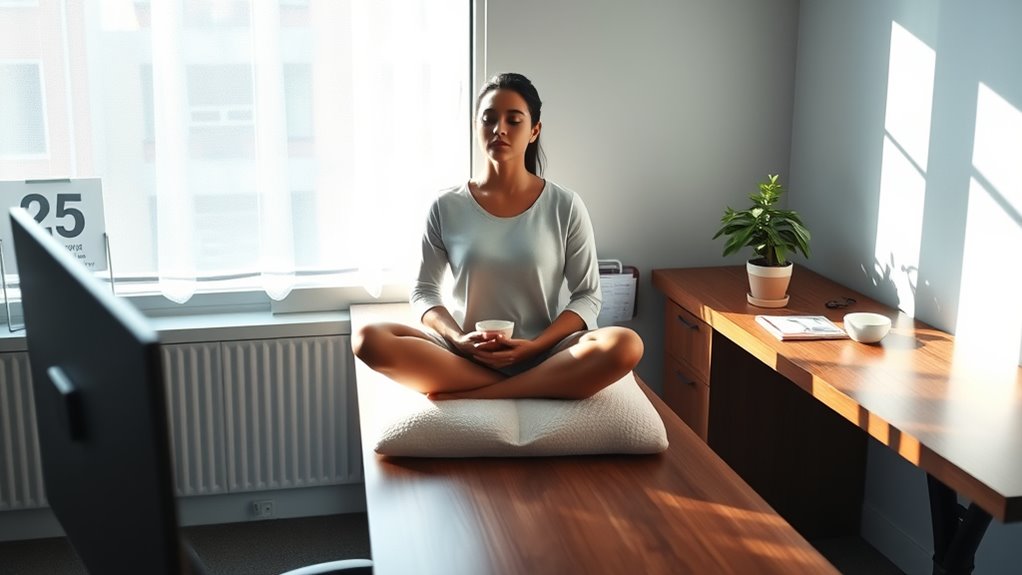
Another effective quiet practice you can incorporate is desk meditation. Unlike traditional meditation, which might seem time-consuming or requiring special space, desk meditation involves a brief, mindful pause at your workspace. To start, sit upright with your feet flat on the ground and your hands resting comfortably. Close your eyes or soften your gaze, and bring your attention to your breath or the sensations in your body. Focus on the present moment, observing thoughts or distractions without judgment. If your mind wanders, gently redirect it back to your breath or bodily sensations. Even just a minute or two of desk meditation can help break the cycle of stress and mental clutter that often accumulates during the day.
You can also combine breathing exercises with desk meditation for a more integrated approach. For example, take a deep breath, hold it briefly, then exhale slowly while visualizing releasing tension. Repeat this cycle a few times, consciously relaxing your muscles as you breathe out. This combination enhances your awareness, centers your thoughts, and fosters a sense of calm amid your busy schedule. The key is consistency, as even short, daily sessions can markedly boost your mental clarity and emotional resilience over time.
Frequently Asked Questions
Can Mindfulness Improve Productivity at Work?
Mindfulness benefits your work focus by helping you stay present and reduce distractions. When you practice mindfulness, you become more aware of your thoughts and emotions, allowing you to manage stress better. This clarity boosts your productivity, enabling you to complete tasks efficiently. Incorporating simple mindful habits into your day can transform your work routine, making you more focused, calm, and effective in achieving your professional goals.
How Long Should Office Mindfulness Sessions Last?
Research shows that even brief mindfulness sessions can boost focus and reduce stress. When considering mindfulness duration, aim for sessions of 5 to 10 minutes; this is often enough to reap benefits without disrupting your workflow. Keep session length manageable, and gradually extend it if you find it helpful. Short, consistent mindfulness practices fit well into a busy workday and enhance overall well-being.
Are There Apps to Guide Desk Mindfulness Exercises?
Yes, there are apps that guide desk mindfulness exercises. You can find apps offering guided meditation and breathing exercises, perfect for quick stress relief. These apps help you stay focused and calm during busy workdays, making it easier to integrate mindfulness into your routine. Try apps like Headspace, Calm, or Insight Timer—they provide step-by-step guidance for effective breathing exercises and meditation sessions right at your desk.
Is Mindfulness Suitable for High-Stress Work Environments?
You might wonder if mindfulness suits high-stress workplaces. Many believe mindfulness is just about relaxing, but misconceptions exist. It actually helps reduce workplace stress by increasing focus and emotional resilience. You can practice simple techniques at your desk, making it practical for busy environments. So, yes, mindfulness is suitable—it can improve your well-being and productivity, even in high-pressure settings. Just start with small, consistent steps to see its benefits.
Can Mindfulness Help Reduce Workplace Conflicts?
Mindfulness can definitely help reduce workplace conflicts by improving interpersonal harmony. When you practice mindfulness, you become more aware of your emotions and reactions, which aids in conflict resolution. This awareness helps you respond calmly and thoughtfully rather than impulsively. As a result, you foster a more collaborative environment, resolve misunderstandings more effectively, and create a more harmonious workplace where conflicts are minimized and relationships are strengthened.
Conclusion
By practicing these simple mindfulness techniques at your desk, you’ll transform your workspace into a sanctuary of calm amidst chaos. Imagine turning your cluttered desk into a peaceful oasis, where stress melts away like ice cream in the sun. With just a few quiet moments, you’ll feel more centered than a mountain peak and more focused than a laser beam. Embrace these practices, and watch your workday become a serene, unstoppable wave of clarity and calm.

Mindfulness & Well‑Being
Mental Wellness Apps: Evidence‑Based Digital Therapeutics
Guided by evidence-based techniques and personalized AI, mental wellness apps offer transformative support—discover how they can enhance your mental health journey.
Mental wellness apps use evidence-based techniques like mindfulness and cognitive restructuring to support your mental health conveniently and effectively. They personalize your experience using AI, adapting content based on your mood, responses, and progress. These apps boost engagement with interactive features, reminders, and gamification, making therapy feel seamless. By providing immediate access to tools and tailored interventions, they empower you to build resilience and coping skills. Discover how these innovative solutions can enhance your mental wellness journey as you explore further.
Key Takeaways
- Mental wellness apps incorporate scientifically validated techniques like mindfulness and cognitive restructuring to deliver evidence-based support.
- AI personalizes interventions by analyzing user responses, mood patterns, and behaviors for tailored therapeutic experiences.
- These apps improve engagement through interactive features, gamification, reminders, and seamless integration into daily routines.
- They offer immediate, accessible mental health tools, reducing wait times and enhancing continuous support.
- Digital therapeutics in mental wellness apps foster resilience, coping skills, and sustained mental health improvements over time.

In today’s fast-paced world, maintaining mental wellness can be challenging, but thankfully, technology offers new solutions. Mental wellness apps have become increasingly popular by providing accessible, evidence-based support that fits into your busy schedule. These apps leverage AI integration to personalize your experience, adapting content and interventions based on your unique needs and progress. This technology-driven approach helps keep you engaged, making it easier to stick with therapeutic activities over time. When an app uses AI, it can analyze your responses, mood patterns, and behaviors to deliver tailored recommendations, ensuring that the support you receive is relevant and effective. Additionally, many of these apps incorporate verified therapeutic techniques, aligning digital support with established mental health practices.
User engagement is at the core of successful mental wellness apps. Developers design these platforms to be intuitive and interactive, encouraging you to participate actively rather than passively consuming content. Gamification features, such as progress badges or daily challenges, motivate you to stay committed. Notifications and reminders serve as gentle prompts, reminding you to practice mindfulness exercises or complete cognitive behavioral tasks. This ongoing engagement helps reinforce positive habits and makes the therapeutic process feel less like a chore and more like a part of your daily routine.
Engaging apps use gamification and reminders to build positive habits and make therapy a seamless part of daily life.
Moreover, the integration of evidence-based therapeutic techniques into these apps ensures that you’re receiving scientifically validated support. Whether it’s mindfulness training, cognitive restructuring, or stress management strategies, these tools aim to replicate aspects of traditional therapy in a digital format. AI can enhance this process by continuously learning from your input, adjusting the level of difficulty or focus areas to match your evolving needs. This dynamic adaptation increases the likelihood of sustained engagement because the app remains relevant and challenging without becoming overwhelming.
The convenience of mental wellness apps means you can access support whenever you need it, without waiting for appointments or traveling to a therapist’s office. This immediacy fosters a sense of empowerment, giving you tools to manage anxiety, depression, or stress right at your fingertips. As these apps integrate AI and focus on user engagement, they create a more personalized, interactive experience that encourages consistent use. Over time, this consistency can lead to meaningful improvements in your mental health, helping you develop resilience and coping skills that last beyond the app.
In essence, the combination of AI integration and user engagement strategies makes mental wellness apps a potent resource in today’s mental health landscape. They offer a blend of scientific rigor and accessible technology designed to support you on your journey toward better mental health. By actively participating in these digital therapeutics, you take an empowered role in managing your well-being, making mental health support more reachable, personalized, and effective than ever before.
Frequently Asked Questions
How Do Mental Wellness Apps Ensure User Privacy and Data Security?
You can trust mental wellness apps to protect your privacy by using data encryption, which secures your information during transmission and storage. They also prioritize user anonymity, allowing you to engage without revealing your identity. These measures guarantee your personal data stays safe from unauthorized access, giving you peace of mind while accessing therapeutic tools. Always review the app’s privacy policy to understand how your data is managed and protected.
Are Mental Wellness Apps Suitable for Severe Mental Health Conditions?
Think of mental wellness apps as a first aid kit, not a full hospital. For severe mental health conditions, they’re often not enough on their own. You need a professional’s severity assessment and crisis intervention when symptoms escalate. These apps can support your journey, but they shouldn’t replace urgent care. Always seek immediate help if your condition worsens, ensuring you get the thorough treatment you deserve.
How Effective Are Mental Wellness Apps Compared to Traditional Therapy?
You’ll find that mental wellness apps, as digital interventions, can boost user engagement and provide helpful support. However, their effectiveness varies; they often complement traditional therapy rather than replace it. Apps work best for managing mild to moderate conditions, but for severe issues, in-person therapy remains essential. So, while useful, mental wellness apps should be part of a broader treatment plan, not your sole solution.
Can Mental Wellness Apps Replace In-Person Mental Health Treatment?
Think of mental wellness apps as a helpful compass, but not the entire map. They can supplement your journey with peer support and empathy training, yet they can’t fully replace in-person treatment. Face-to-face therapy offers nuanced understanding and human connection that apps struggle to replicate. You might find apps beneficial for support, but your mental health voyage still needs the guidance of trained professionals for deep healing.
What Are the Costs Associated With Accessing Evidence-Based Mental Wellness Apps?
You’ll find that accessing evidence-based mental wellness apps typically involves app subscription costs, which can range from free to around $15-20 per month. Premium feature pricing may add extra expenses if you want advanced tools or personalized support. Some apps also offer one-time purchases or discounts for longer subscriptions. Overall, these costs are generally affordable compared to traditional therapy, but it’s important to take into account what features you need.
Conclusion
As you explore mental wellness apps, remember they’re like guiding stars on your journey to better health. While they offer valuable support, they’re most effective when combined with professional care. Trust the evidence behind these digital therapeutics, and stay open to trying different tools until you find what fits. With patience and persistence, you’ll navigate toward brighter days, like a traveler finding their way through a calm, clear night sky.
Mindfulness & Well‑Being
Personalized Wellness: Tailoring Practices to Your Identity
Navigating personalized wellness means customizing your health journey to truly fit you, and discovering how to make it work can transform your life.
Personalized wellness means customizing your health practices to fit your unique body, mindset, and lifestyle. Instead of generic routines, you focus on strategies that truly resonate with you, making it easier to stay committed. Mindfulness techniques like deep breathing or body scans can be tailored to your preferences, helping you manage stress effectively. Creating a calming environment further supports sustainable habits. Keep exploring to discover how personalized approaches can transform your wellness journey.
Key Takeaways
- Personalization ensures wellness practices align with individual body types, goals, and lifestyles for more effective health outcomes.
- Tailoring routines fosters greater adherence by considering personal preferences and routines.
- Mindfulness techniques can be customized through preferred methods like guided or silent practices to suit individual comfort.
- Creating calming environments enhances the effectiveness of personalized mindfulness and relaxation practices.
- Recognizing individual differences enables the development of sustainable, meaningful wellness strategies.

Have you ever wondered why one-size-fits-all health plans often fall short? The truth is, everyone’s body, mindset, and lifestyle are unique, so generic approaches rarely hit the mark. That’s where personalized wellness comes into play, helping you craft practices that genuinely suit your individual needs. Instead of following broad guidelines, you can focus on specific strategies like mindfulness techniques and nutrition customization that align with your goals and preferences. When you tailor your wellness routine, you’re more likely to stay committed and see meaningful results.
Mindfulness techniques are a great starting point for personalizing your health journey. They encourage you to become more aware of your thoughts, emotions, and physical sensations, fostering a deeper connection to your body. You might find that simple practices like deep breathing, body scans, or mindful meditation help reduce stress and improve mental clarity. The key is to experiment and discover what resonates with you. Maybe you prefer guided meditation apps, or perhaps silent breathing exercises work best when you’re alone. Incorporating mindfulness into your daily routine makes your wellness practice more sustainable because it’s rooted in your preferences rather than a generic prescription. Over time, this personalized approach can help you manage stress better, improve sleep, and enhance overall well-being. Additionally, understanding sound recording techniques can assist in creating a calming environment that supports relaxation and mindfulness practices at home.
Frequently Asked Questions
How Do Cultural Backgrounds Influence Personalized Wellness Practices?
Your cultural background shapes your personalized wellness practices by influencing your use of cultural rituals and traditional remedies. You might incorporate specific foods, teas, or massage techniques rooted in your heritage, which can boost your well-being. Your cultural beliefs also guide your approach to health, making certain practices more meaningful and effective for you. Embracing these traditions helps you create a wellness routine that truly resonates with your identity.
Can Personalized Wellness Methods Adapt Over Time?
You can definitely adapt personalized wellness methods over time, like changing your mind as seasons shift. As your needs evolve, you might incorporate new mindfulness techniques or dietary adjustments that better suit your current lifestyle. Keep an open mind and stay flexible, because wellness isn’t a one-size-fits-all journey. Regularly reassessing your practices helps you stay in tune with what works best for your body and mind at each stage.
What Role Does Gender Identity Play in Wellness Customization?
Your gender identity plays a vital role in wellness customization because it influences your gender expression and how you navigate social norms. When wellness practices align with your identity, they feel more authentic and supportive. Recognizing your unique gender expression helps tailor approaches that respect your preferences and experiences, leading to better mental and physical health. Embracing these aspects guarantees your wellness journey honors your true self.
How Do Genetic Factors Impact Personalized Wellness Plans?
Genetic factors substantially impact your personalized wellness plan by revealing your genetic predispositions to certain health conditions or nutrient needs. This allows you to tailor your diet, exercise, and lifestyle choices more effectively. Personalized medicine uses your genetic information to create targeted strategies that optimize your health. By understanding your unique genetic makeup, you can make informed decisions that enhance your overall well-being and prevent potential health issues before they arise.
Are There Specific Wellness Practices for Different Age Groups?
Like a tailored suit, wellness practices vary by age. For younger adults, focus on mindfulness meditation to reduce stress and improve focus, while incorporating nutritional timing to support energy levels. Middle-aged individuals benefit from strength training and heart-healthy diets, whereas seniors should prioritize gentle activities like stretching and balance exercises. Adjusting practices to your age guarantees essential health and vitality, making your wellness routine as unique as your life’s stage.
Conclusion
When you tailor wellness practices to your unique identity, you tap into a powerful way to enhance your overall well-being. It’s not just about following generic advice; it’s about honoring what works best for you. By listening to your body and understanding your needs, you create a sustainable routine that truly supports your health. So, trust the process, stay curious, and remember—personalized wellness is your key to feeling your best every day.
Mindfulness & Well‑Being
Self‑Care Evolution: Transforming Routine Into Indulgence
Great self-care evolves into personalized indulgence, transforming daily routines—discover how this shift can redefine your well-being and inspire you to explore more.
Self-care has shifted from simple routines to personalized, indulgent experiences that prioritize your well-being. Now, you can incorporate mindfulness, wellness tech, and intentional acts that make daily habits meaningful and enjoyable. It’s about viewing self-care as an essential part of life rather than a chore, turning everyday moments into opportunities for relaxation and growth. To discover how this transformation can enhance your routine, explore what’s next.
Key Takeaways
- Modern self-care emphasizes personalized, accessible practices like mindfulness and wellness tech over traditional chores.
- Mindfulness techniques foster present-moment awareness, reducing stress and enhancing emotional resilience.
- Wellness technologies, such as wearables and apps, enable proactive health monitoring and tailored self-care routines.
- Self-care has shifted from a task to a meaningful, indulgent activity that supports overall well-being and personal growth.
- Incorporating diverse experiences and innovative tools transforms daily routines into opportunities for relaxation and self-indulgence.

Have you ever wondered how self-care has transformed over the years? It’s no longer just about taking a quick bath or getting a massage; today, self-care has evolved into a sophisticated blend of mindfulness practices and wellness technology that empowers you to prioritize your mental and physical health more effectively than ever before. Modern self-care routines are more personalized and accessible, allowing you to tailor your wellness journey to fit your unique needs and lifestyle.
Mindfulness practices have become a cornerstone of this evolution, helping you cultivate a greater awareness of your thoughts, feelings, and bodily sensations. Instead of simply going through the motions, you’re encouraged to slow down and focus on the present moment. Whether it’s through meditation, breathing exercises, or mindful walking, these practices help you reduce stress, improve mental clarity, and foster emotional resilience. With apps and guided recordings readily available, integrating mindfulness into your daily routine is easier than ever, making self-care not just a task but a meaningful experience.
Mindfulness practices foster awareness, reduce stress, and turn self-care into a meaningful, present-focused experience.
Alongside mindfulness, wellness technology plays a pivotal role in transforming your approach to self-care. Wearable devices now monitor your heart rate, sleep patterns, and activity levels, giving you real-time insights that help optimize your health goals. These gadgets turn self-care into an interactive process, encouraging you to stay active, maintain proper sleep hygiene, and manage stress more effectively. Additionally, digital platforms offer personalized coaching, virtual therapy, and guided relaxation sessions, making mental health support more accessible and stigma-free. You’re no longer limited by time or location — self-care becomes a seamless part of your daily life, driven by technology that adapts to your needs.
This combination of mindfulness practices and wellness technology shifts your perspective from reactive to proactive self-care. Instead of waiting until burnout hits or health issues arise, you’re constantly tuned into your body and mind, making adjustments before problems escalate. The evolution also encourages you to indulge in self-care as a form of self-love rather than a chore. You’re encouraged to treat yourself with compassion, integrating small, intentional acts into your routine that bring joy and balance.
Moreover, engaging with diverse culinary experiences, such as enjoying live music at restaurants, can serve as a form of relaxation and mental rejuvenation, further enriching your self-care journey. Ultimately, the transformation of self-care into an indulgent yet practical activity reflects a broader cultural shift. It’s about recognizing that your well-being isn’t a luxury but a necessity. With access to innovative tools and mindful practices, you’re empowered to create a sustainable, enriching routine that nurtures your body, mind, and spirit — turning everyday moments into opportunities for growth and relaxation.
Frequently Asked Questions
How Do Cultural Differences Influence Self-Care Practices?
Cultural differences shape your self-care practices through unique rituals and traditional remedies. You might incorporate specific cultural rituals like meditation or herbal baths, depending on your background. Traditional remedies, such as herbal teas or massage techniques, influence how you approach wellness. Embracing these diverse practices allows you to personalize your self-care routine, making it more meaningful and indulgent by honoring your cultural heritage and its healing traditions.
What Role Does Technology Play in Modern Self-Care Evolution?
Technology revolutionizes your self-care routine, turning it into a futuristic experience. Wearable technology tracks your health seamlessly, while digital detoxes help you disconnect from overwhelming screens. These tools make self-care more personalized and accessible, almost like having a wellness coach in your pocket. Embrace digital detoxes to recharge mentally, and utilize wearable gadgets to optimize your well-being—your self-care game is now more innovative than ever before!
Can Self-Care Routines Be Customized for Individual Needs?
Yes, you can customize self-care routines for your individual needs. Personalization strategies help you identify what works best for you, whether it’s adjusting skincare, exercise, or mindfulness practices. Adaptive routines allow you to modify your self-care based on your changing needs and lifestyle. By experimenting and listening to your body, you create a tailored self-care plan that promotes overall well-being and fits seamlessly into your daily life.
How Has the Concept of Self-Care Changed Over Decades?
Over decades, self-care has shifted from simple routines to mindful practices like mindfulness meditation and luxurious skincare rituals. You now see it as an essential way to prioritize your mental and physical well-being. Instead of just maintenance, self-care encourages indulgence and personal growth. This evolution helps you embrace self-compassion, making routines more personalized and meaningful, so you feel more balanced and refreshed in everyday life.
What Are the Psychological Benefits of Transforming Routine Into Indulgence?
You’ll find that turning routine into a gentle indulgence offers profound psychological benefits, like enhanced mindfulness and reduced stress. This approach encourages you to savor small moments, fostering a greater sense of calm and clarity. As you embrace these mindful pleasures, you build resilience against daily pressures, boosting your overall emotional well-being. Indulging thoughtfully helps you reconnect with yourself, cultivating inner peace and a more positive outlook on life.
Conclusion
As you embrace this self-care evolution, remember that transforming routines into indulgences is about celebrating yourself, just like a Victorian lady savoring her afternoon tea. You now hold the brush to paint your well-being with vibrant hues of self-love and mindfulness. Keep evolving, blending tradition with modernity, and don’t forget—your self-care journey is a timeless masterpiece in the making. So, step into this new era and make every moment a luxurious sanctuary.
-
Wish Notes1 year agoBest Caption to Wish Myself a Happy Birthday That Everyone Will Like!
-
Wish Notes1 year agoThe Best Birthday Wishes to Make Your Uncle's Day Bright!
-
Wish Notes1 year agoThe Sweetest Happy Birthday Wishes for Your Wife!
-
Wish Notes1 year agoThe Best Happy Birthday Wish for Your Brother That Will Make Him Smile!
-
Wish Notes1 year agoHeartwarming Birthday Messages for Mom in Spanish
-
Wish Notes1 year agoThe Best Happy Birthday Wishes for Your Husband That Will Make His Day!
-
Wish Notes1 year agoThe Ultimate Birthday Wishes to Celebrate Yourself!
-
Wish Notes1 year agoThe Most Heartfelt Good Night Wishes Ever!