
Connect with us

Mindfulness & Well‑Being

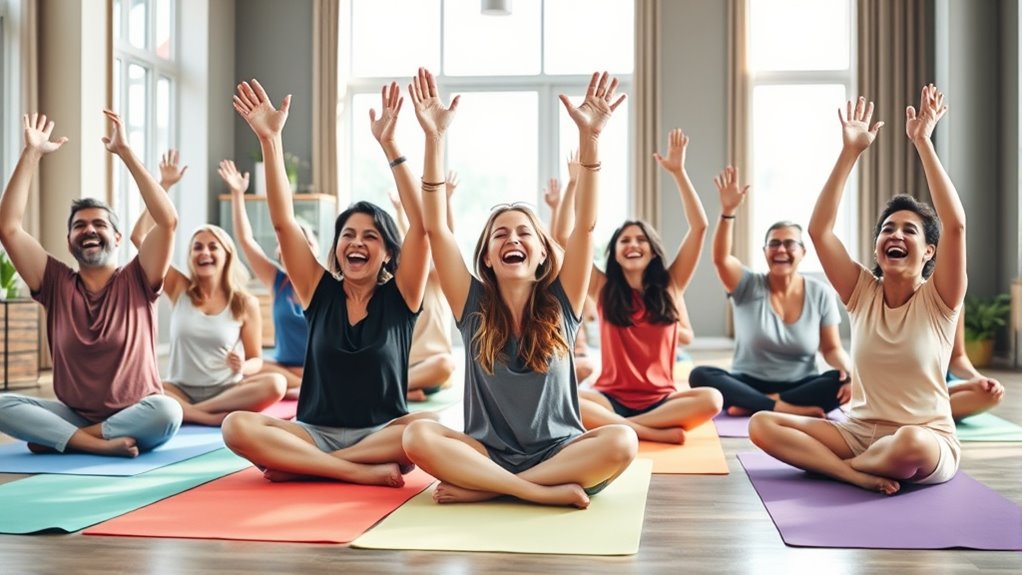
Laughter Yoga: The Science of Joyful Exercise

Jumpstart your well-being with laughter yoga, where joyful exercise meets science—discover why this fun practice might just change your life.

Published

on

laughter yoga promotes joyful exercise

Laughter yoga blends intentional laughter with breathing exercises to boost your physical and mental health. By engaging in this joyful practice, you activate feel-good chemicals like endorphins, reduce stress hormones, and improve your immune function. The physical act of laughing mimics moderate exercise, promoting relaxation, oxygen flow, and emotional release. As you continue exploring, you’ll discover how incorporating laughter yoga can transform your approach to stress and wellness.

Key Takeaways

  • Laughter yoga combines intentional laughter with breathing exercises to promote physical and mental health benefits.
  • It activates endorphin release, reducing stress hormones and boosting mood naturally.
  • The practice enhances the mind-body connection, fostering relaxation and resilience against stress.
  • Laughter increases oxygen flow and relaxes muscles, supporting overall physical well-being.
  • Regular laughter yoga sessions can improve immune function and promote emotional balance.
laughter boosts mental health

Have you ever wondered how laughter can boost your well-being? It might seem simple, but laughter is a powerful tool that taps into your mind-body connection and promotes stress relief. When you laugh, you’re not just engaging your muscles; you’re activating a complex network that influences your mental and physical health. Laughter yoga combines intentional laughter with breathing exercises, creating a unique form of joyful exercise that leaves you feeling refreshed and energized. This practice isn’t about humor or comedy—it’s about generating genuine laughter without relying on jokes or funny stories, which makes it accessible to everyone. As you participate, you start to notice how your mood lifts and your body responds positively.

The mind-body connection plays an essential role in how laughter influences your overall well-being. When you laugh, your brain releases feel-good chemicals like endorphins, which enhance your mood and reduce pain perception. Simultaneously, laughter triggers a relaxation response, calming your nervous system and easing tension. This interaction between mind and body helps you feel more grounded, even during stressful times. Practicing laughter yoga regularly can reinforce this connection, making it easier to access feelings of joy and calmness in everyday life. It’s like giving your mental state a workout, strengthening your resilience against stress and anxiety.

Stress relief is one of the most immediate benefits you’ll notice from laughter yoga. When you laugh, your body reduces levels of stress hormones like cortisol and adrenaline. This biochemical shift not only makes you feel better momentarily but also contributes to long-term health benefits, including lowered blood pressure and improved immune function. The act of laughing also encourages deep breathing, which enhances oxygen flow and relaxes your muscles. As you engage in sustained laughter, your heart rate increases temporarily, mimicking some of the benefits of moderate exercise. Afterward, you often feel a sense of lightness or release—like a weight has been lifted. That’s because laughter acts as a natural stress reliever, helping you break free from the cycle of worry and tension.

Incorporating laughter yoga into your routine can transform how you handle stress and connect with yourself. It’s a joyful practice that acknowledges the power of humor and physical movement to heal and energize. By consciously engaging in laughter, you strengthen your mind-body connection, making it easier to access calm and happiness amid daily challenges. Over time, these moments of intentional laughter become a fundamental part of your stress management toolkit, helping you navigate life with a lighter heart and a more resilient spirit. So, next time life feels overwhelming, remember that a simple laugh could be the key to feeling better—mind, body, and soul.

Frequently Asked Questions

Can Anyone Participate in Laughter Yoga Regardless of Age or Health?

Yes, you can participate in laughter yoga regardless of age or health. It promotes inclusive participation, making it suitable for everyone. The exercises are adaptable for seniors, allowing them to join comfortably and safely. You don’t need special skills or fitness levels, just a willingness to laugh and have fun. This makes laughter yoga an accessible, joyful activity that benefits all, regardless of physical condition or age.

Advertisement

How Does Laughter Yoga Compare to Traditional Aerobic Exercise?

Think of laughter yoga as a gentle river flowing alongside a rushing stream. While traditional aerobic exercise boosts your physical benefits with intense effort, laughter yoga offers a lighter route that still enhances mental health and relaxes your body. Both improve your overall well-being, but laughter yoga emphasizes joy and connection, making it accessible and enjoyable, especially if you prefer a less strenuous way to stay balanced physically and mentally.

Are There Any Scientific Studies Supporting Laughter Yoga’s Health Benefits?

Yes, scientific studies support laughter yoga’s health benefits. Clinical trials have shown that it induces positive physiological effects like reduced stress hormones, improved immune function, and enhanced mood. You can experience these benefits as laughter yoga stimulates your cardiovascular system and releases endorphins, offering a natural boost to your well-being. The evidence suggests that incorporating laughter yoga into your routine can promote both mental and physical health.

How Long Does a Typical Laughter Yoga Session Last?

A typical laughter yoga session lasts about 30 to 45 minutes, similar to a good workout. You might attend classes once or twice a week, depending on your goals. Think of it like tuning your mental instrument; regular sessions help maintain the joy and health benefits. The duration is designed to keep you energized without overdoing it, so you can enjoy sustained laughter and stress relief.

Can Laughter Yoga Be Practiced Alone at Home?

Yes, you can definitely practice laughter yoga solo at home. Incorporate simple home routines by following guided videos or creating your own laughter exercises. Find a quiet space, start with deep breaths, and then engage in laughter exercises like hearty chuckles or playful eye contact with yourself. Solo practice helps you enjoy the benefits of laughter yoga anytime, making it a flexible and accessible way to boost your mood and reduce stress.

Conclusion

So, why not give laughter yoga a shot? It’s like opening a secret superpower that transforms your mood faster than a lightning strike. With just a few minutes of joyful breathing and giggles, you can boost your happiness and reduce stress—no expensive gym membership needed. Embrace the contagious energy of laughter, and watch your world brighten. Trust me, once you start, you’ll wonder how you ever lived without this incredible, joyful exercise!


Advertisement

Mindfulness & Well‑Being

Mindful Self‑Compassion: Treating Yourself Kindly

Caring for yourself with mindful compassion can transform your emotional resilience—discover how gentle kindness in tough moments can unlock inner strength.

Published

on

be kind to yourself

Practicing mindful self-compassion means intentionally being kind to yourself, especially during tough times. When you notice feelings of disappointment or overwhelm, pause and acknowledge your emotions without judgment. Use gentle affirmations like “It’s okay to feel this way.” Developing this compassionate approach helps build emotional resilience and fosters a sense of connection to your feelings. By consistently treating yourself kindly, you’ll find it becomes easier to handle setbacks and cultivate inner strength, opening the door to greater well-being.

Key Takeaways

  • Practice pausing to observe and acknowledge your emotions with kindness instead of self-criticism.
  • Use affirmations like “It’s okay to feel this way” to foster a compassionate inner dialogue.
  • Develop empathy for yourself, recognizing struggles as part of the human experience.
  • Reframe setbacks as opportunities for growth, building emotional resilience through self-compassion.
  • Consistently nurture self-kindness to enhance well-being and manage difficult moments more effectively.
practice kindness during hardships

Have you ever wondered how you treat yourself during difficult times? It’s easy to be your harshest critic when life gets tough, but practicing mindful self-compassion can dramatically change that. When you approach yourself with kindness instead of judgment, you develop empathy development that strengthens your connection to your own feelings. This isn’t about self-indulgence or ignoring problems; it’s about recognizing your pain without adding shame or blame. As you become more aware of your inner experience, you start to see that struggles are a universal part of being human. This awareness fosters emotional resilience, helping you bounce back more quickly from setbacks. Instead of spiraling into negativity, you learn to hold your feelings with gentle acceptance, which builds a stable foundation for facing future challenges.

In the moment when you’re feeling overwhelmed or disappointed, pause and notice what’s going on inside. Instead of criticizing yourself for feeling upset, acknowledge your emotions with compassion. Say to yourself, “It’s okay to feel this way,” or “Everyone goes through tough times.” This simple act of kindness shifts your mindset from one of resistance to one of understanding. As you do this regularly, you start to develop a more empathetic inner voice that doesn’t judge but comforts. Over time, this practice enhances your empathy development, allowing you to extend that same compassion outward toward others. You realize that everyone, including you, deserves kindness during times of hardship. Engaging in these practices can also activate the Law of Attraction, aligning your mindset with positive outcomes and creating a ripple effect of well-being.

Building emotional resilience through mindful self-compassion isn’t about avoiding pain but about learning to sit with it without being overwhelmed. When you treat yourself kindly, you’re less likely to get caught in negative thought patterns that drain your energy. Instead, you create space for growth and healing. You begin to see setbacks not as personal failures but as opportunities to learn and grow stronger. This shift in perspective is essential for resilience, as it encourages you to face difficulties with patience and understanding rather than frustration. Over time, this resilience becomes a core part of how you handle stress, making difficult moments less intimidating and more manageable. By consistently practicing mindfulness and self-compassion, you reinforce your capacity to care for yourself, nurture inner strength, and sustain your emotional wellbeing through life’s inevitable ups and downs.

Frequently Asked Questions

How Can I Practice Self-Compassion During Stressful Moments?

During stressful moments, you can practice self-compassion by taking deep, mindful breaths to calm your mind. Acknowledge your feelings without judgment and speak to yourself kindly. Try compassionate journaling to express your emotions and offer gentle support. This helps you stay present and gentle with yourself, reducing stress. Remember, treating yourself with patience and understanding in tough times fosters resilience and emotional well-being.

What Are Common Barriers to Developing Self-Compassion?

You might face barriers like cultural expectations that emphasize toughness or self-criticism, making it hard to be kind to yourself. Fear of vulnerability also holds you back, as opening up about your feelings can feel unsafe or uncomfortable. These obstacles can prevent you from practicing self-compassion, but recognizing them is the first step. Gradually challenge these beliefs, and remind yourself that kindness toward yourself is essential for growth and resilience.

Advertisement

Can Self-Compassion Improve Mental Health Outcomes?

Imagine planting a seed that blossoms into emotional resilience; self-compassion acts as that nurturing water. It can profoundly improve your mental health by fostering positive psychology, reducing stress, and boosting self-esteem. When you treat yourself kindly, you build a more resilient mind capable of weathering life’s storms. Embracing self-compassion transforms your inner dialogue, creating a foundation for lasting well-being and emotional strength.

How Does Self-Compassion Differ From Self-Indulgence?

Self-compassion differs from self-indulgence because it involves balancing self-love with healthy boundaries and self-care. While self-criticism destroys confidence, self-compassion encourages you to treat yourself kindly during setbacks. Self-indulgence, on the other hand, often ignores boundaries and may temporarily soothe but doesn’t foster genuine growth. Practicing self-compassion means nurturing yourself without overdoing it, promoting mental well-being while maintaining accountability and respect for your limits.

Are There Specific Exercises to Enhance Self-Kindness?

Think of self-kindness exercises as watering your inner garden. You can enhance self-compassion through guided meditations that focus on loving kindness, which help you send compassion to yourself. Practice daily by repeating gentle affirmations or engaging in loving kindness exercises, where you intentionally send warmth and understanding to your heart. These simple acts nurture your well-being, making kindness a natural part of your daily life.

Conclusion

Think of self-compassion as tending to a delicate garden. When you water it with kindness and prune away harsh judgments, it blossoms with resilience and peace. Remember, you’re both the gardener and the bloom—nurturing yourself with gentle care. As sunlight warms each leaf, let understanding and patience shine within. By tending your inner garden kindly, you create a space where growth, healing, and self-love flourish naturally and beautifully.

Advertisement
Continue Reading

Mindfulness & Well‑Being

Technology & Mindfulness: VR Meditation and Future Tools

Discover how cutting-edge technology like VR meditation and AI is transforming mindfulness practices and what exciting innovations lie ahead to enhance your journey.

Published

on

vr meditation future tools

Technology is revolutionizing mindfulness with immersive tools like VR meditation, which transports you to calming environments, reducing distractions and enhancing focus. AI personalizes your experience, analyzing mood and stress levels to suggest tailored exercises, while wearables provide real-time physiological feedback, prompting breathing or relaxation techniques. Future innovations will combine these tools seamlessly, offering personalized virtual spaces and real-world prompts. Keep exploring how these advancements could transform your mindfulness journey into more engaging and effective practices.

Key Takeaways

  • VR meditation creates immersive environments that reduce distractions and enhance focus during mindfulness practice.
  • AI personalizes VR experiences by adapting environments and guidance based on user responses and physiological data.
  • Wearable devices monitor bodily responses, enabling real-time feedback and tailored mindfulness prompts within VR sessions.
  • Future tools include AR overlays and AI virtual coaches to make mindfulness more accessible and engaging in daily life.
  • Integration of soundscapes, narratives, and immersive tech transforms mindfulness into interactive, personalized experiences for diverse users.
technology enhances personalized mindfulness

Have you ever wondered how technology influences your ability to stay present? In today’s fast-paced world, it’s easy to get overwhelmed by constant notifications, multitasking, and digital distractions. But technology also offers tools that can enhance your mindfulness practice, making it more accessible and personalized. AI integration, for instance, plays a pivotal role in tailoring experiences to your needs. Smart algorithms analyze your responses, mood, and progress, helping you customize meditation sessions that resonate with you. These intelligent systems can suggest exercises based on your stress levels or emotional state, guiding you to deeper relaxation and focus.

Technology personalizes mindfulness by analyzing responses and moods to suggest tailored meditation experiences.

Wearable devices further revolutionize how you engage with mindfulness. Devices like smartwatches or fitness bands monitor your physiological signals—heart rate, skin conductance, or even sleep patterns—and provide real-time feedback. This data helps you become more aware of your body’s responses during meditation or everyday moments. For example, if your wearable detects heightened heart rate due to stress, it might prompt you to take a few deep breaths or shift to a calming meditation session. These devices bridge the gap between technology and your physical experience, making mindfulness more tangible and immediate.

Additionally, VR meditation takes this synergy to another level. Virtual reality immerses you in calming environments—beach scenes, lush forests, or serene temples—that help you disconnect from external chaos. The immersive aspect minimizes distractions, enabling you to focus solely on your breathing or visualizations. As you interact with these virtual worlds, technology guides you through mindfulness exercises, often incorporating AI to adapt the experience based on your reactions. This dynamic interaction keeps you engaged and ensures that the practice remains effective over time.

Looking ahead, future tools will likely integrate even more seamlessly into your daily life. Imagine wearable devices that not only monitor your physiological signals but also suggest personalized VR environments to help you reset during stressful moments. Augmented reality could overlay calming visuals or prompts in your real-world surroundings, making mindfulness a natural part of your routine. AI-powered virtual coaches might offer real-time guidance, encouraging you to stay present or adjust your focus as needed. Moreover, as the speaking style used by professionals like those on the National Geographic Channel demonstrates, incorporating engaging narratives and immersive soundscapes can further enhance the effectiveness of these tools. These innovations will make mindfulness practices more intuitive, accessible, and tailored to your unique needs.

In essence, technology is transforming mindfulness from a solitary, often abstract practice into an interactive, personalized experience. By blending AI integration, wearable devices, and VR meditation, you gain powerful tools that support your journey to staying present amidst life’s chaos. Embracing these advancements lets you harness the full potential of technology to foster a calmer, more centered mind every day.

Advertisement

Frequently Asked Questions

How Accessible Are VR Meditation Tools for Different Age Groups?

You’ll find VR meditation tools are becoming increasingly accessible across different age groups, thanks to improved design and user-friendly interfaces. Younger people tend to adopt new tech quickly, but older adults are gradually embracing these tools through simplified setups and guided instructions. As tech adoption widens, age accessibility improves, making VR meditation a viable option for everyone seeking mindfulness benefits. This trend highlights how technology continues to bridge generational gaps in wellness practices.

What Are the Potential Risks of Using VR for Mindfulness Practices?

Using VR for mindfulness can pose risks like cybersickness, causing nausea or dizziness during sessions. You might also experience emotional desensitization if overusing the technology, which could dull your emotional responses over time. To minimize these risks, take regular breaks, limit session duration, and stay mindful of how VR affects your well-being. Always listen to your body and consult professionals if you notice adverse effects.

How Do VR Meditation Experiences Compare to Traditional Methods?

VR meditation offers a heightened sensory immersion that can deepen your mindfulness experience compared to traditional methods. The realism enhancement makes virtual environments feel more authentic, helping you focus and relax more effectively. However, it may lack the tactile and personal connection of face-to-face practices. While VR can be a powerful tool, it’s essential to balance it with conventional meditation for well-rounded mindfulness and avoid over-reliance on technology.

Can VR Mindfulness Tools Be Integrated Into Daily Routines Effectively?

Yes, VR mindfulness tools can be effectively integrated into your daily routines. By making it easy to access, you can develop a mindfulness habit that fits seamlessly into your day. Set aside a few minutes each morning or evening to use VR meditation, helping you stay consistent and focused. With regular practice, these tools can enhance your overall well-being and make mindfulness a natural part of your daily life.

What Future Technological Advancements Could Enhance VR Meditation Experiences?

Future advancements could revolutionize your VR meditation experience, with AI customization expected to tailor sessions to your mood and goals. Sensory integration will likely deepen immersion, engaging your senses more fully for relaxation. Studies show 75% of users report increased calmness with personalized content. These innovations will make your practice more effective and immersive, helping you achieve mindfulness more effortlessly and consistently in your daily routine.

Advertisement

Conclusion

As you step into a virtual world of serenity, technology becomes your mindful companion, blending innovation with calm. Imagine the bustling city outside, loud and chaotic, while inside your headset, a peaceful forest awaits. This contrast reminds you that future tools can bridge the gap between stress and stillness. Embracing VR meditation lets you navigate both worlds effortlessly, turning digital landscapes into personal sanctuaries where mindfulness and technology unite to transform your well-being.

Continue Reading

Mindfulness & Well‑Being

Fasting & Mindfulness: Combining Nutrition and Awareness

Harnessing fasting and mindfulness together unlocks deeper health insights and emotional resilience—discover how this powerful combination can transform your well-being.

Published

on

fasting and mindfulness practice

Combining fasting with mindfulness helps you develop a deeper, more respectful relationship with food and your body. By paying close attention to hunger cues, textures, and flavors, you can improve digestion, boost mental clarity, and increase emotional resilience. This approach encourages awareness of your physical signals and emotional needs, making your fasting journey more meaningful and sustainable. Keep exploring how blending nutrition and mindfulness can release bigger health benefits for you.

Key Takeaways

  • Combining fasting with mindfulness enhances mental clarity, emotional stability, and overall well-being through increased awareness of bodily signals.
  • Mindful fasting encourages savoring food, slowing down, and differentiating genuine hunger from emotional cravings.
  • Integrating personal data and predictive analytics optimizes fasting routines for improved physical and mental health.
  • Mindfulness during fasting fosters self-awareness, compassion, and a respectful relationship with food and body.
  • A holistic approach links nutrition and awareness to support sustainable, effective fasting practices and overall wellness.
mindful fasting enhances well being

Fasting and mindfulness are powerful tools that, when combined, can enhance your mental clarity, emotional stability, and overall well-being. By practicing mindful fasting techniques, you not only improve your physical health but also deepen your awareness of your body’s signals and your relationship with food. One of the key advantages of this approach is the variety of intermittent benefits you can experience. These benefits extend beyond weight management, affecting your energy levels, digestion, and mental focus. When you pay close attention to your fasting periods, you become more in tune with your body’s needs, which helps prevent overeating and emotional eating.

Combining fasting and mindfulness boosts mental clarity, emotional stability, and overall well-being beyond just weight management.

Mindful fasting techniques involve more than just abstaining from food; they require you to be present during your eating and fasting windows. During your eating periods, you focus on savoring each bite, noticing textures, flavors, and scents. This heightened awareness slows down your eating, promoting better digestion and reducing the likelihood of overeating. During fasting periods, mindfulness encourages you to observe hunger cues without acting impulsively. You learn to differentiate between genuine hunger and habitual or emotional cravings. This awareness creates a more balanced relationship with food, allowing you to make intentional choices rather than reacting out of habit or emotion.

Incorporating mindful fasting techniques also helps you recognize the subtle signals your body sends. For example, you might notice that your energy dips at certain times or that your mood fluctuates in response to your fasting schedule. These insights give you greater control over your well-being and help you tailor your fasting routine to suit your individual needs. Additionally, mindful fasting encourages compassion towards yourself, reducing guilt or frustration if you slip up. This gentle, non-judgmental approach fosters consistency and sustainability in your fasting practice.

Furthermore, aligning your fasting practices with insights from predictive analytics can help you optimize your routine based on your personal data and patterns. As you develop a routine that combines mindful fasting techniques with intermittent benefits, you’ll notice changes in your mental clarity. Clearer thinking, improved concentration, and emotional resilience become more accessible. This holistic approach supports your overall health by integrating awareness with nutrition, making the experience more meaningful and effective. Ultimately, mindful fasting is about cultivating a respectful, attentive relationship with your body and food. When you approach fasting with mindfulness, you *release* its full potential—supporting your physical health while nurturing your mental and emotional well-being.

Frequently Asked Questions

Can Fasting Improve Mental Clarity and Focus?

Yes, fasting can improve your mental clarity and focus. Intermittent benefits from fasting, like increased alertness, often lead to enhanced mental sharpness. When you fast, your body releases more brain-boosting chemicals, helping you stay attentive and clear-headed. Over time, many find that fasting supports sustained concentration, making it a valuable tool for boosting mental performance and maintaining sharpness throughout your day.

Advertisement

What Are the Best Mindfulness Techniques During Fasting?

Think of your mind as a peaceful pond—calm and clear. During fasting, practice mindfulness meditation to steady your thoughts and deepen your body awareness. Focus on your breath, sensations, and the present moment, like tuning into a gentle melody. These techniques help you stay grounded, reduce cravings, and foster inner calm, making fasting a more mindful journey. Keep your attention soft and compassionate toward yourself.

How Does Fasting Affect Emotional Well-Being?

Fasting can boost your emotional well-being by strengthening emotional resilience and lowering stress levels. As you fast, you may find it easier to manage emotional triggers and stay calm under pressure. The practice encourages self-awareness and discipline, which promotes stress reduction. Over time, fasting can help you develop a more balanced outlook, increasing your capacity to handle life’s emotional challenges with greater resilience and a clearer, calmer mind.

Are There Specific Foods That Enhance Mindfulness?

You notice a piece of dark chocolate melting slowly in your mouth, and suddenly, you’re practicing mindful eating. Foods like berries, nuts, and leafy greens naturally enhance food mindfulness by engaging your senses. These mindful eating choices encourage presence and gratitude, helping you stay attuned to hunger cues and savor each bite. Incorporating such foods into your diet fosters greater awareness, making every meal a moment of nourishment and mental clarity.

How Do I Start Combining Fasting With Mindfulness Practices?

To start combining fasting with mindfulness practices, begin by practicing meditation techniques that focus on breath and body awareness during your fasting periods. Incorporate mindful eating when you break your fast, paying attention to textures, flavors, and your hunger cues. Gradually extend your fasting windows while maintaining this mindful approach. This helps you develop a deeper connection with your body, making fasting a more conscious and enriching experience.

Conclusion

By blending fasting with mindfulness, you can deepen your awareness of hunger and nourishment, making each meal more meaningful. Imagine Sarah, who started practicing mindful fasting and discovered she felt more in tune with her body’s signals, leading to healthier choices and increased energy. When you pay close attention to your body’s cues during fasting, you not only improve your physical health but also foster a stronger connection to your overall well-being.

Advertisement
Continue Reading

Trending