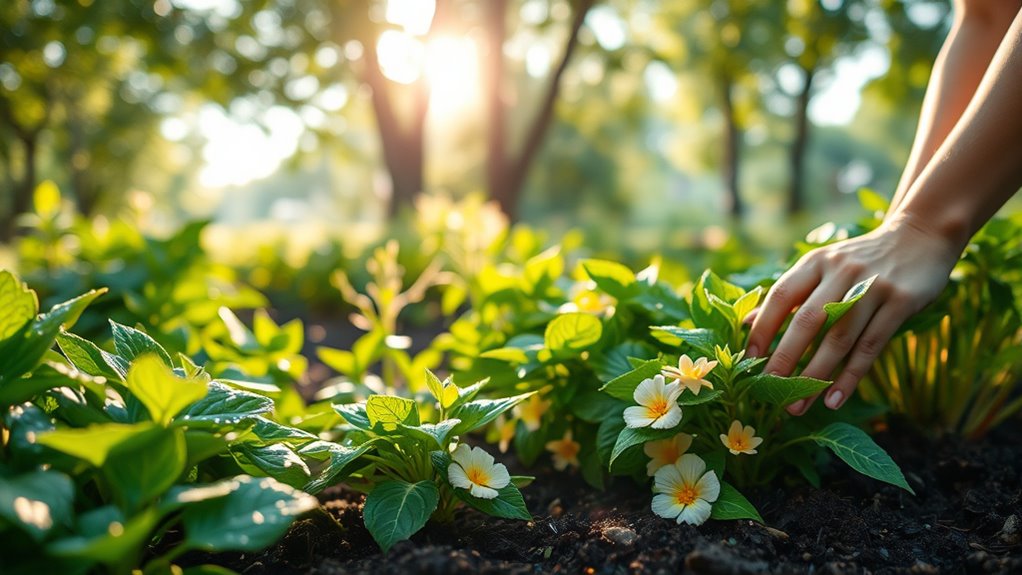

Mindful gardening allows you to connect deeply with the earth, turning routine plant care into a calming, intentional practice. By feeling soil textures, observing plants closely, and approaching pest management calmly, you foster patience and reduce stress. Enriching soil, removing debris, and introducing beneficial insects become moments of reflection and tranquility. As you focus on these mindful actions, you cultivate inner peace and resilience. Keep exploring how nurturing your garden can support your well-being in everyday life.
Key Takeaways
- Engaging with soil through tactile and mindful practices fosters calmness and enhances overall well-being.
- Preparing soil patiently and attentively creates a nurturing environment that promotes resilient plant growth and stress relief.
- Observing plants carefully and using eco-friendly pest management encourages a peaceful, focused gardening experience.
- Practicing mindfulness during gardening transforms routine tasks into meditative moments that reduce stress.
- Connecting deeply with the natural world through gardening nurtures inner peace and supports mental health.
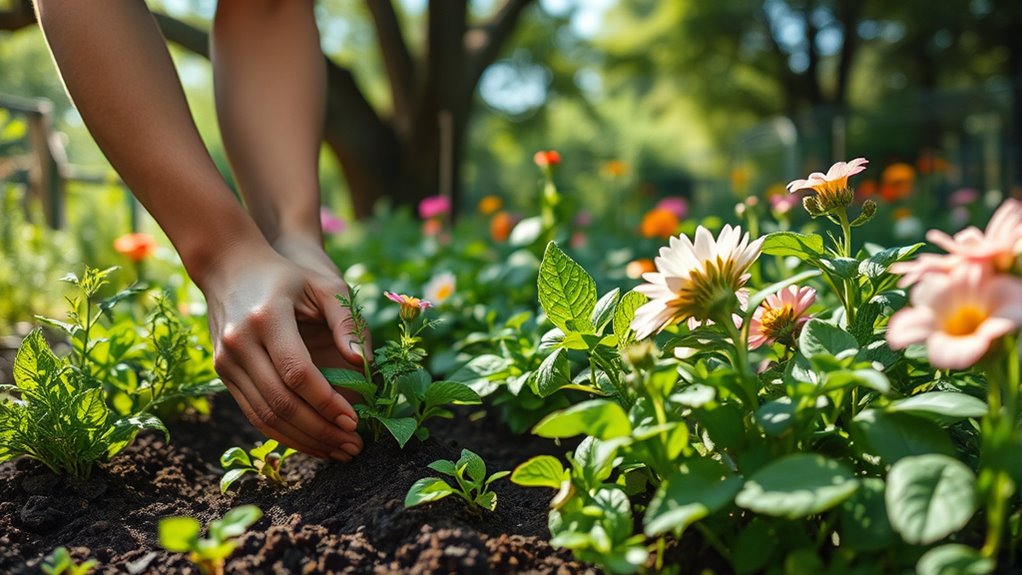
Mindful gardening invites you to connect deeply with the natural world while tending to your plants. As you step into your garden, you become aware of the soil beneath your hands, feeling its texture and temperature. Proper soil preparation is essential, setting the foundation for healthy plants and a calming experience. You might start by loosening the soil with gentle movements, removing rocks or debris, and enriching it with organic compost. This deliberate process encourages you to slow down and pay close attention to the earth’s needs, fostering a sense of mindfulness. When your soil is well-prepared, your plants grow stronger and more resilient, which can reduce your worries about pests and disease. Additionally, understanding support hours for any gardening resources or assistance can help you plan your mindful gardening sessions effectively.
Pest management is another aspect where mindfulness plays a crucial role. Instead of rushing to spray chemicals, you observe your plants carefully, noticing any signs of pests or distress. You learn to identify common issues early, which allows you to take targeted, eco-friendly actions. For example, you might gently remove aphids with your fingers or introduce beneficial insects like ladybugs to naturally control pests. By approaching pest management with patience and awareness, you avoid unnecessary harm to beneficial insects and the surrounding environment. This mindful approach transforms pest control from a stressful chore into an opportunity to connect with your garden on a deeper level. It encourages you to be present in each moment, appreciating the complexity and balance of a healthy garden ecosystem.
As you engage in soil preparation and pest management with mindfulness, you cultivate a sense of calm that extends beyond your garden. These practices teach patience and attentiveness, helping you let go of anxiety and focus on the here and now. You learn to trust your senses and instincts, which enhances your overall well-being. Maintaining healthy soil and managing pests mindfully also fosters a stronger bond with your plants, making gardening a meditative act. Each step becomes a conscious ritual, transforming routine chores into moments of reflection and serenity. Over time, this mindful approach not only promotes a thriving garden but also nurtures your inner peace, turning gardening into a powerful stress-relief practice.
organic compost for garden soil
As an affiliate, we earn on qualifying purchases.
As an affiliate, we earn on qualifying purchases.
Frequently Asked Questions
How Does Gardening Improve Mental Health?
Gardening boosts your mental health by reducing stress and increasing happiness. When you tend to indoor container gardens and aromatic plants, you engage in a calming activity that promotes mindfulness. Caring for these plants helps you focus, lowers anxiety, and improves mood. Plus, the scent of aromatherapy plants can enhance relaxation. By nurturing your garden, you create a peaceful space that supports your emotional well-being and mental clarity.
What Are Beginner-Friendly Plants for Stress Relief?
You should start with beginner-friendly indoor plants like snake plants, pothos, and peace lilies. These easy care greenery options thrive with minimal attention, making them perfect for reducing stress. As you nurture these indoor plants, you’ll find yourself more relaxed and mindful. They clean the air and create a calming environment, turning your space into a peaceful retreat. Focus on caring for these simple plants to enhance your mental well-being effortlessly.
How Much Time Should I Dedicate to Mindful Gardening?
You should dedicate about 15-30 minutes daily to mindful gardening, allowing you to fully engage in garden design and plant selection. Focus on being present as you tend to your plants, whether watering, pruning, or simply observing. Consistency matters more than duration, so find a routine that fits your schedule. This practice helps reduce stress, enhances your connection with nature, and makes gardening a calming, rewarding experience.
Can Gardening Help With Anxiety and Depression?
Sure, gardening therapy isn’t a magic cure, but it can genuinely help with anxiety and depression. You might think talking to plants is silly, yet plant-based mindfulness promotes calm and focus. As you nurture your garden, you create a soothing routine that boosts mood and reduces stress. So, don’t underestimate the power of soil and leaves—your mental health could flourish alongside your garden.
What Tools Are Essential for Mindful Gardening?
You’ll need basic tools like a trowel, pruning shears, and gloves to start mindful gardening. Always prioritize garden tool safety by handling tools carefully and storing them properly. A watering can or hose helps keep plants healthy, and understanding composting basics enriches your soil naturally. These tools and knowledge foster a calming, focused gardening experience, helping you stay present and reduce stress while nurturing your plants.
beneficial insects for pest control
As an affiliate, we earn on qualifying purchases.
As an affiliate, we earn on qualifying purchases.
Conclusion
As you nurture your garden, remember that just 20 minutes of mindful gardening can substantially reduce stress levels. By staying present with each plant and sensation, you boost your mental well-being and foster a calming routine. Gardening isn’t just about growing plants; it’s about growing peace within yourself. So, next time you’re in the soil, embrace the moment fully—your mind and body will thank you for it. Happy gardening!
gardening gloves for mindfulness
As an affiliate, we earn on qualifying purchases.
As an affiliate, we earn on qualifying purchases.
soil loosening tools
As an affiliate, we earn on qualifying purchases.
As an affiliate, we earn on qualifying purchases.