Connect with us

Mindfulness & Well‑Being

Mindfulness in Motion: Tai Chi & Qigong for Balance

Mindfulness in motion with Tai Chi and Qigong enhances balance and mental clarity, inviting you to discover the transformative power of gentle movement and focused awareness.

Published

on

mindfulness tai chi qigong

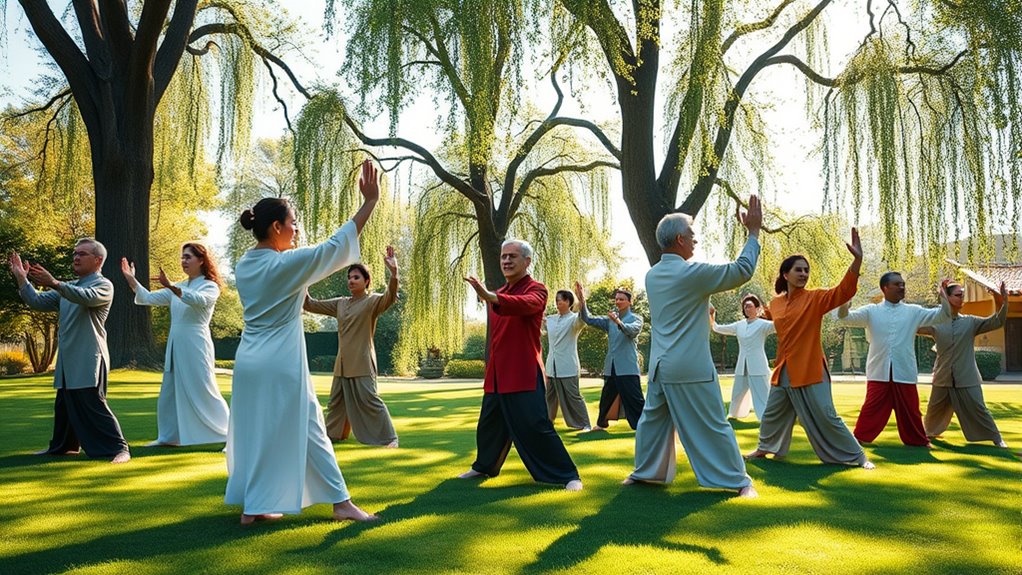
Mindfulness in motion with Tai Chi and Qigong helps you improve balance and mental clarity by combining gentle movement, focused breathing, and proper posture. As you practice, you’ll become more aware of your sensations, energy flow, and the connection between breath and body. This mindful approach reduces stress and enhances stability, turning each session into a calming, healing experience. Keep exploring these techniques, and you’ll discover how they deepen your awareness and overall well-being.

Key Takeaways

  • Mindfulness in Tai Chi and Qigong involves focused awareness of movement, breath, and sensations to cultivate mental clarity and physical balance.
  • Proper posture alignment enhances energy flow and stability while supporting mindful movement practices.
  • Deep, slow breathing anchors attention, calms the nervous system, and deepens awareness during each movement.
  • Synchronizing breath with gentle movements improves balance, stability, and overall mind-body harmony.
  • Regular mindful movement practice reduces stress, boosts balance, and fosters holistic well-being through increased awareness.

mindful movement enhances well being

Mindfulness in motion combines the practice of being present with physical activity, allowing you to cultivate awareness while engaging your body. When practicing Tai Chi or Qigong, you focus on your movements and breath, creating a harmonious connection between mind and body. One of the fundamental aspects of these practices is mastering breathing techniques. Deep, slow breaths help anchor your attention, calming your nervous system and increasing your sense of presence. As you inhale, imagine drawing energy into your body, and with each exhale, release tension and distractions. These breathing techniques aren’t just about relaxation; they serve as a tool to deepen your awareness of each movement and sensation. Incorporating visualization and affirmations can further enhance your mental focus and reinforce positive intentions during practice.

Deep, slow breathing anchors awareness, calms the nervous system, and enhances mind-body connection during movement practices.

Posture alignment plays a critical role in enhancing the benefits of Tai Chi and Qigong. Proper posture ensures that your energy flows freely and that your movements are efficient and balanced. As you move through each posture, pay close attention to how your spine is aligned — keeping it straight but relaxed, with your shoulders soft and your head balanced on your neck. This alignment not only prevents strain but also helps you stay centered, which is crucial for maintaining stability during slow, deliberate movements. When your posture is aligned correctly, you can better feel the subtle shifts of your weight and the flow of energy through your body, making each movement more mindful and effective.

Practicing mindful breathing and maintaining proper posture are interconnected. When you focus on your breath, you often naturally become aware of your body’s position and alignment. Conversely, when your posture is correct, it becomes easier to breathe deeply and evenly. This synergy enhances your overall sense of balance and presence. During your practice, slow down and observe how your breath influences your posture and vice versa. For example, as you extend your arms or shift your weight, synchronize your movements with your breath. This mindful coordination helps you stay grounded and attentive, fostering a state of calm and clarity.

As you continue to incorporate breathing techniques and posture alignment into your Tai Chi or Qigong routine, you’ll notice a greater sense of balance not just physically but mentally as well. These elements train you to be fully present with each movement, transforming simple gestures into a powerful meditation in motion. Over time, this mindful approach can improve your stability, reduce stress, and cultivate a deeper connection with your body. Embracing these fundamentals ensures that your practice remains effective, centered, and enriching, turning movement into a pathway for mindfulness and well-being. Recognizing the importance of mindfulness in motion can help deepen your overall practice and mental clarity.

Frequently Asked Questions

Can Beginners Easily Learn Tai Chi and Qigong Movements?

Yes, beginners can easily learn Tai Chi and Qigong movements because they have a gentle learning curve and are designed to be beginner-friendly. You’ll find that these practices focus on slow, deliberate movements, making it easier to pick up and master. With consistent practice and simple techniques, you’ll notice improvements in balance and relaxation, even as a newcomer. Plus, instructors often tailor lessons to suit beginners’ needs.

Advertisement

Is Prior Meditation Experience Necessary to Benefit From These Practices?

You don’t need meditation prerequisites or prior experience to benefit from Tai Chi and Qigong. These practices are designed to be accessible, allowing beginners to start at any level. As you engage, you’ll develop mindfulness and balance naturally. You might find that prior experience with meditation helps you deepen your focus, but it’s not necessary. These gentle movements are easy to learn and can enhance your well-being regardless of your background.

How Long Does It Take to See Improvements in Balance?

You can start noticing improvement indicators in your balance within a few weeks of regular practice. The progress timeframe varies based on your consistency and initial skill level, but many people see visible changes after 4 to 6 weeks. Keep an eye on increased stability, better coordination, and reduced dizziness as signs of progress. Staying committed and practicing mindfully will help you achieve steady improvements faster.

Are There Any Health Conditions That Prevent Practicing Tai Chi or Qigong?

About 20% of adults have medical restrictions or physical limitations that might affect practicing Tai Chi or Qigong. However, most people can adapt these gentle exercises to fit their needs. If you have health conditions or physical limitations, it’s best to consult your doctor or a qualified instructor first. They can help modify movements to guarantee safety and maximize benefits, making these practices accessible for nearly everyone.

Can These Practices Be Adapted for Elderly or Disabled Individuals?

Yes, you can adapt Tai Chi and Qigong for elderly or disabled individuals. Using chair adaptations and seated exercises, you can perform gentle movements that improve balance, flexibility, and strength. These modifications allow you to participate safely and comfortably, even if mobility is limited. By focusing on slow, controlled motions, you can enjoy the benefits of these practices without strain or risk, making them accessible for everyone.

Conclusion

As you deepen your practice of tai chi and qigong, you might discover more than just improved balance. There’s a subtle power waiting to unfold—something beyond the physical. Will you unseal the full potential of mindfulness in motion? The next step could change everything, revealing secrets your mind and body have been quietly holding. Are you ready to take that leap? Your journey into balance and beyond is just beginning.

Advertisement

Mindfulness & Well‑Being

Art Therapy: Creative Expression for Healing

Unlock the power of creative expression to promote healing and emotional resilience—discover how art therapy can transform your well-being and what techniques await.

Published

on

healing through creative art

Art therapy combines creative activities with psychological healing, helping you express emotions that are hard to put into words. Using techniques like drawing, collage, or guided imagery, you can explore feelings, reduce stress, and build emotional resilience. Colors play a key role in influencing your mood, promoting calm or energizing you based on your needs. If you’re curious about how these methods can support your healing journey, there’s more to discover ahead.

Key Takeaways

  • Art therapy combines creative expression with psychological healing to facilitate emotional awareness and growth.
  • Color psychology guides deliberate color choices to influence mood and support therapeutic goals.
  • Techniques like guided imagery, free drawing, and collage help access subconscious feelings and promote healing.
  • Symbolism in art allows clients to communicate complex emotions and gain insight into their inner world.
  • Overall, art therapy reduces stress, builds resilience, and fosters self-awareness through safe, expressive creative practices.
colors and emotional healing

Art therapy is a powerful tool that combines creative expression with psychological healing. When you engage in art therapy, you’re not just making pretty pictures; you’re tapping into a deeper part of yourself that can reveal emotions, thoughts, and memories often difficult to articulate with words alone. One of the key elements that makes art therapy effective is the understanding of color psychology. Colors can influence your mood and emotional state, and through deliberate use of specific hues, you can access different feelings or promote healing. For example, using calming blues and greens might help reduce anxiety, while vibrant reds and oranges can energize or inspire confidence. Recognizing how these colors impact your mood allows you to choose the right palette for your therapeutic goals. Additionally, understanding the emotional effects of color can enhance your ability to select colors that support your healing process.

Colors influence mood and healing—calming blues reduce anxiety, vibrant reds inspire confidence. Choose hues deliberately for emotional well-being.

Art therapy techniques are designed to be accessible and adaptable, making it easier for you to process complex emotions. These techniques include guided imagery, where you create visuals based on your inner thoughts, or free drawing, which encourages spontaneous expression without judgment. You might also work with collage, combining images and materials to symbolize your feelings or experiences. These methods help bypass the internal critic that often inhibits honest expression, allowing your subconscious to surface through your art. As you practice these techniques, you’ll notice how your creative process becomes a mirror of your emotional state, providing insight and clarity.

Another effective art therapy technique involves the use of symbolism, where specific images or objects carry personal meaning. This method helps you communicate feelings that words might struggle to capture. For instance, drawing a storm might symbolize inner turmoil, while a blooming flower could represent hope or renewal. Using symbolism allows you to explore difficult topics safely, fostering a sense of control and empowerment in your healing journey. Additionally, journaling alongside your art can deepen your reflection, helping you connect visual expressions with your thoughts and experiences.

Through consistent practice of these art therapy techniques, you’ll discover new ways to manage stress, process grief, or confront fears. The act of creating becomes not just an outlet but a form of self-care that nurtures your emotional resilience. As you explore color psychology and various artistic methods, you’ll find that your creative expressions become a personalized language for healing. This process encourages you to trust your intuition, fostering self-awareness and emotional growth. Ultimately, art therapy offers a safe space where your inner world can be expressed, understood, and transformed into a source of strength.

Frequently Asked Questions

Can Art Therapy Be Effective for Children?

Yes, art therapy can be highly effective for children. It encourages child engagement, making it easier for kids to express emotions they might not put into words. Through creative activities, children develop emotional skills and resilience, helping them process feelings and experiences. As you guide them, you’ll see their emotional development improve, fostering self-awareness and confidence. Art therapy provides a safe space where children can explore and heal through their artistic expressions.

Advertisement

What Materials Are Commonly Used in Art Therapy Sessions?

You’ll find that common art supplies like colored pencils, markers, paints, and clay are essential for art therapy sessions. These creative mediums help you express feelings visually and tangibly, making complex emotions easier to explore. Some sessions might also include collage materials, pastels, or even digital tools. With a variety of art supplies on hand, you can confidently create a safe space for self-expression and emotional healing through different visual representations.

How Does Art Therapy Differ From Traditional Psychotherapy?

You’ll find that art therapy differs from traditional psychotherapy because it emphasizes visual expression alongside verbal processing. Instead of solely talking through issues, you create art to explore emotions, which can reveal insights that words might not capture. This approach helps you access subconscious feelings, promotes healing, and encourages self-discovery through creative activities, making it a powerful complement or alternative to traditional talk therapy.

Are There Any Risks or Contraindications in Art Therapy?

Did you know that about 10% of clients might experience emotional risks during art therapy? While generally safe, you could face emotional risks like distress or discomfort, especially with sensitive topics. Physical limitations might also hinder participation for some individuals. Always work with a trained therapist to navigate these risks safely, ensuring your emotional well-being is prioritized and adaptations are made if needed.

How Long Does It Typically Take to See Benefits From Art Therapy?

You might start noticing benefits from art therapy within a few sessions, but the therapy duration and your progress timeline vary based on your goals and individual needs. Typically, consistent attendance over several months helps you see meaningful improvements in emotional well-being. Stay patient and committed, as progress often unfolds gradually. Regular sessions build momentum, allowing you to experience the positive effects of creative expression on your healing journey.

Conclusion

As you pick up the brush and let your colors flow, remember that your artwork is a lighthouse guiding you through storms inside. Each stroke is a step toward understanding and healing, illuminating hidden corners of your mind. Embrace this creative journey, knowing that your art is more than just images—it’s a mirror reflecting your resilience. Through your unique expression, you open the power to transform pain into hope, lighting your path forward.

Advertisement
Continue Reading

Mindfulness & Well‑Being

Mindful Relationships: Emotional Intelligence & Communication

Mindful relationships enhance emotional intelligence and communication, revealing how staying present can transform your connections—discover the secret to lasting bonds.

Published

on

emotional intelligence in relationships

Practicing mindfulness in relationships helps you boost emotional intelligence and improve communication. By staying present and attentive, you become more aware of your feelings and better at understanding others. This deepens your connection, fosters empathy, and promotes healthier conflict resolution. Mindfulness encourages active listening and calm responses, making interactions more meaningful. If you stay open and curious, you’ll discover ways to strengthen your relationships and create lasting bonds through genuine presence.

Key Takeaways

  • Practicing mindfulness enhances emotional awareness, leading to better understanding and expression within relationships.
  • Mindful communication encourages active listening and reduces reactive responses, fostering trust and clarity.
  • Developing emotional intelligence through mindfulness helps manage conflicts calmly and empathetically.
  • Presence in interactions deepens emotional bonds and cultivates authentic, meaningful connections.
  • Mindfulness supports ongoing self-regulation, promoting respectful and compassionate exchanges with others.
mindful presence fosters empathy

Have you ever wondered how being truly present can transform your relationships? When you commit to mindfulness, you open the door to deeper connections and a greater understanding of others. One of the key benefits of mindfulness is its ability to foster empathy development. As you become more aware of your own emotions and observe others without judgment, you naturally become more empathetic. This heightened awareness allows you to see situations from your partner’s or friend’s perspective, making it easier to truly understand their feelings and needs. When you’re fully present, you pick up on subtle cues—body language, tone of voice—that might otherwise go unnoticed. This attentiveness helps you respond more thoughtfully, which in turn builds trust and emotional intimacy.

Being truly present deepens empathy and fosters genuine connections with others.

In addition, mindfulness enhances your conflict resolution skills. Instead of reacting impulsively or defensively when disagreements arise, you learn to pause and assess the situation calmly. By staying present, you can identify the core issue without getting caught up in emotional reactivity. This clarity enables you to address conflicts constructively, seeking solutions rather than escalating tensions. Mindful communication encourages you to listen actively, truly hearing what the other person is saying instead of planning your response while they speak. As a result, misunderstandings diminish, and both parties feel heard and valued.

Practicing mindfulness also helps you manage your emotional responses. When you’re aware of your feelings in the moment, you avoid letting anger, frustration, or impatience take over. This self-regulation creates a more peaceful environment where difficult conversations become opportunities for growth rather than battles to win. Additionally, by approaching disagreements with compassion and curiosity rather than judgment, you foster an atmosphere of mutual respect. This mindset not only resolves conflicts more effectively but also strengthens your emotional bonds over time.

Ultimately, integrating mindfulness into your daily interactions allows you to cultivate a genuine presence that others can sense. When you are truly attentive and empathetic, you create a safe space where open, honest communication can flourish. This ongoing practice enhances your emotional intelligence, making you more adaptable and understanding in all your relationships. As you develop these skills, you’ll find that conflicts become less frequent and less intense, replaced by a shared sense of connection and understanding. Mindfulness isn’t just a technique; it’s a way of engaging with others that enriches your relationships and deepens your emotional intelligence.

Frequently Asked Questions

How Can I Develop Better Emotional Intelligence in Relationships?

To develop better emotional intelligence in relationships, start by increasing your emotional awareness—notice your feelings and those of others without judgment. Practice active listening and empathetic communication, which strengthens relationship resilience. Reflect on your reactions and seek feedback to improve understanding. By consistently honing these skills, you’ll build deeper connections, handle conflicts better, and foster a more supportive, resilient partnership.

Advertisement

What Are Common Barriers to Effective Communication?

You might face barriers like misinterpreting nonverbal cues or overlooking cultural differences, which can hinder effective communication. When you ignore body language or tone, messages can be misunderstood. Cultural differences also impact how you express and perceive emotions, leading to confusion or offense. To improve, pay attention to nonverbal cues and learn about diverse backgrounds, fostering clearer, more empathetic interactions that bridge gaps and build stronger connections.

How Does Mindfulness Improve Conflict Resolution?

Mindfulness improves conflict resolution by helping you practice mindful listening, which allows you to truly understand the other person’s perspective. It also enhances emotional regulation, so you stay calm and composed during disagreements. When you’re present and attentive, you respond thoughtfully rather than react impulsively. This creates a safe space for open dialogue, making it easier to find mutual solutions and strengthen your relationship through understanding and patience.

Can Emotional Intelligence Be Taught or Improved?

Yes, you can definitely teach and improve emotional intelligence. By developing emotional awareness, you become more attuned to your feelings and others’. Practicing self-regulation helps you manage your reactions better, fostering healthier interactions. Through exercises like active listening and reflection, you strengthen these skills over time. With consistent effort, you’ll notice improvements in your ability to understand emotions, navigate social situations, and build stronger, more mindful relationships.

What Role Does Empathy Play in Healthy Relationships?

Empathy plays a vital role in healthy relationships by fostering emotional awareness and deep understanding. You develop empathy through active listening and genuine curiosity, which strengthens your connection. When you practice empathy development, you become more attuned to your partner’s feelings, creating trust and reducing conflicts. This emotional awareness allows you to respond thoughtfully, building a supportive environment where both of you feel valued and understood, ultimately nurturing a resilient, loving relationship.

Conclusion

As you deepen your understanding of emotional intelligence and mindful communication, imagine the possibilities ahead. Every conversation becomes a bridge, every moment an opportunity to connect on a genuine level. But the true test lies in how you navigate the unseen currents of emotion and intention. Will you let misunderstandings drift you apart, or will you steer your relationships toward harmony? The choice is yours—what new connection will you discover next?

Advertisement
Continue Reading

Mindfulness & Well‑Being

Compassion Fatigue: Recognizing and Preventing Burnout

Overcoming compassion fatigue requires awareness of emotional signs; discover key strategies to prevent burnout and sustain your well-being.

Published

on

recognize prevent compassion fatigue

Recognizing compassion fatigue starts with noticing feelings of emotional exhaustion, sadness, or irritability that persist despite rest. To prevent burnout, prioritize self-care by setting boundaries, engaging in activities you enjoy, and practicing mindfulness or deep breathing. Maintaining physical health through sleep, nutrition, and exercise also boosts resilience. Remember, caring for yourself is essential to sustain your ability to care for others effectively. If you’re interested, there’s more to explore on maintaining your emotional well-being and avoiding burnout.

Key Takeaways

  • Recognize early signs like emotional exhaustion, irritability, or feeling overwhelmed to prevent burnout.
  • Engage in regular self-care activities, including mindfulness, hobbies, and setting boundaries.
  • Maintain physical health through adequate sleep, nutrition, and exercise to build resilience.
  • Seek support from colleagues, friends, or professionals to share feelings and gain perspective.
  • Prioritize self-compassion, understanding that caring for oneself is essential for sustainable caregiving.
prioritize self care and boundaries

Have you ever felt emotionally drained after caring for others? That overwhelming sense of fatigue, where your energy seems to evaporate, is a common experience for those in caregiving roles. This feeling often signals emotional exhaustion, a core component of compassion fatigue. When you pour so much of yourself into supporting others, it’s easy to neglect your own needs, leading to burnout over time. Recognizing this early is essential, and developing effective self-care strategies can make a significant difference. These strategies aren’t just about occasional breaks; they involve intentional actions to replenish your emotional reserves and maintain your well-being.

Feeling emotionally drained signals the need for self-care to prevent burnout and support your well-being.

Start by paying attention to your emotional state. If you notice persistent feelings of sadness, irritability, or feeling overwhelmed, it’s a sign you need to pause and prioritize self-care. Incorporating simple practices, like mindfulness or deep breathing exercises, helps ground you amid emotional chaos. Regularly engaging in activities that bring you joy—whether it’s a hobby, exercise, or time with loved ones—can also serve as powerful self-care strategies. These activities provide a mental escape and help you reconnect with yourself, reducing the risk of emotional exhaustion taking hold. Remember, setting boundaries is essential. You don’t have to be available 24/7; learning to say no when your plate is full protects your energy and prevents burnout.

Taking care of your physical health also plays an essential role in managing compassion fatigue. Adequate sleep, balanced nutrition, and regular physical activity boost your resilience and emotional strength. When your body feels good, it’s easier to handle emotional stress. Additionally, seeking support from colleagues, friends, or mental health professionals can provide an outlet for your feelings and help you gain perspective. Sharing your experiences reduces feelings of isolation and reminds you that you’re not alone in this journey. Recognizing the signs of emotional exhaustion early allows you to implement preventative measures before burnout occurs.

Practicing self-compassion is equally important. Acknowledge that your feelings are valid and that caring for others doesn’t mean neglecting yourself. Be kind to yourself, and recognize that taking time for self-care isn’t selfish—it’s necessary for sustained compassion and effective caregiving. Over time, these self-care strategies build resilience, helping you to manage emotional exhaustion and avoid sliding into burnout. Remember, caring for yourself enables you to care more effectively for others, creating a sustainable balance that benefits everyone involved.

Frequently Asked Questions

How Does Compassion Fatigue Differ From General Burnout?

Compassion fatigue differs from general burnout mainly through emotional exhaustion and empathy overload. You experience compassion fatigue when your emotional resources are drained by constantly caring for others, leading to feelings of numbness or detachment. Unlike burnout, which can affect anyone in a demanding job, compassion fatigue specifically affects caregivers who absorb others’ pain, making empathy overload a key factor. Recognizing these signs helps you prevent long-term emotional harm.

Advertisement

What Are Early Signs of Compassion Fatigue?

Think of compassion fatigue as a slowly deflating balloon. You might notice emotional exhaustion creeping in and empathy decline, making it harder to connect with others. You feel drained, less emotionally responsive, and start to detach from your work and clients. These early signs signal you’re running low on emotional reserves, so it’s essential to step back, recharge, and seek support before burnout takes hold.

Can Compassion Fatigue Affect Personal Relationships?

Yes, compassion fatigue can affect your personal relationships. When you’re emotionally drained, you may struggle to maintain healthy boundaries, leading to irritability or withdrawal. This emotional exhaustion impacts your ability to connect deeply, causing misunderstandings or distance in your relationships. To protect both yourself and loved ones, it’s essential to set emotional boundaries, recognize signs of fatigue early, and seek support when needed.

Are Certain Professions More Vulnerable to Compassion Fatigue?

Yes, certain professions are more vulnerable to compassion fatigue, especially those involving high emotional resilience demands like healthcare, social work, and emergency services. You’re more at risk if you lack strong workplace support and effective coping strategies. To protect yourself, focus on building emotional resilience and seek out supportive work environments. Regular self-care and open communication can also help you prevent burnout and maintain your well-being.

What Role Does Self-Care Play in Prevention?

Think of self-care as your shield against burnout. You play a essential role in prevention by embracing mindfulness practices, which keep your mind clear and resilient. Peer support acts as your sanctuary, providing comfort and understanding during tough times. By actively prioritizing these, you reinforce your emotional armor, preventing compassion fatigue from draining your energy and passion. You safeguard your well-being, ensuring you stay strong and compassionate for others.

Conclusion

As you walk this path of caregiving, remember that compassion is your flame, but even flames need tending. Guard your light against the winds of burnout, and don’t let exhaustion dim your spark. Embrace self-care as your shield, and let your empathy be a steady river, flowing without overflow. Balance is your compass, guiding you through the shadows. By nurturing yourself, you keep your inner lighthouse shining bright, illuminating hope for others and yourself alike.

Advertisement
Continue Reading

Trending