TL;DR

Turn your quiet moments into listening time
- Thousands of audiobooks, podcasts and originals
- Listen on your phone, tablet or Echo — also offline
- Cancel anytime
A two-minute breathing practice may ease physical arousal for a short period, but the LifeHack report says it should not be treated as a lasting reset of a person’s stress baseline. The evidence it cites includes longer practices studied over weeks, so a single two-minute session is an extrapolation. How long any relief lasts for an individual, and what is driving recurring stress, remain questions to track rather than assume.
A LifeHack report argues that a brief breathing exercise can lower physical arousal temporarily, but should not be expected to reset a person’s longer-term stress baseline. The distinction matters because people may interpret the return of tension as evidence that a technique failed, even when the practice was intended to provide short-term relief.
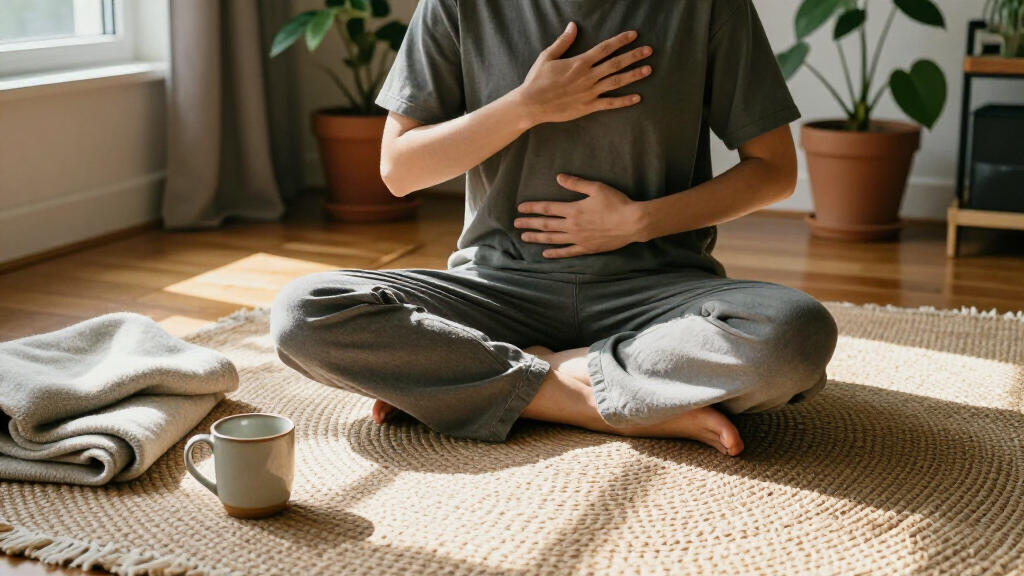
The report describes a “nervous system reset” as a short practice, commonly slow or patterned breathing, that can shift arousal for a limited period. It rejects the idea that a single brief exercise reboots the body or changes the circumstances to which a person returns. A calmer feeling after breathing may be real, while its duration and effect on later stress remain limited or variable.
One study cited by the report, published in Cell Reports Medicine in 2023, compared four five-minute daily practices among 108 participants over 28 days. The study found cyclic sighing performed better than mindfulness meditation on mood improvement and lowering respiratory rate, according to the report. The tested pattern involved an inhale through the nose, a second shorter inhale, and a long exhale through the mouth. The report cautions that using this finding to support one two-minute session is an extrapolation: that dose was not what the trial measured.
The report also cites a review of 15 studies of breathing at fewer than 10 breaths per minute, which found autonomic changes during practice, including increased heart-rate variability. It warns that a change in HRV is not itself a measure of stress. A wearable device can show a physiological reading, but that reading should not be treated as a definitive stress score.
Short Relief Is Not a Lower Baseline
The distinction can change how people judge a coping practice. If tension returns after a breathing exercise, that does not by itself show the exercise did nothing. It may have eased arousal for a while without changing the workload, sleep loss, schedule or other conditions that contribute to recurring stress. The report’s central point is that temporary relief and lasting change are different outcomes.
That framing also sets a limit on wellness advice. Breathing can be a practical, private way to respond in the moment, but presenting it as a complete solution risks placing the responsibility for persistent stress solely on the person experiencing it. The report suggests paying attention to how often distress returns and considering whether an ongoing input needs to change. It does not establish that any specific lifestyle adjustment will resolve an individual’s stress.
wearable heart rate variability monitor
As an affiliate, we earn on qualifying purchases.
As an affiliate, we earn on qualifying purchases.
What the Cited Studies Measured
The research discussed in the report covers different questions and timescales. A laboratory study by Giles and colleagues, published in PLOS ONE in 2014, is cited for the observation that cortisol typically peaks 10 to 30 minutes after a stressor and takes around 90 minutes to move back toward baseline. The report says this is a lab time course, not a universal countdown for every person or stressful event.
A 2021 paper by Paulus and colleagues in Frontiers in Psychiatry is cited on the term “dysregulation.” The report describes it as a term researchers use across conditions, not a defined clinical diagnosis someone can give themselves. This qualification matters because popular wellness language can make a broad description sound like a medical finding.
Across these sources, the report distinguishes bodily changes during or after breathing from longer-term changes in baseline stress. The 2023 trial tested daily five-minute practice over four weeks; the review looked at breathing rates across multiple studies; neither, as described in the source, establishes that a single two-minute exercise changes a person’s baseline.
“It did the only thing two minutes can do.”
— LifeHack report
As an affiliate, we earn on qualifying purchases.
How Long Relief Lasts for Each Person
The supplied report does not establish a reliable duration of relief from a single two-minute exercise, or show that the same pattern works equally well for everyone. Its cited trial tested five minutes daily for 28 days, while the two-minute suggestion is identified as an extrapolation. The report also does not provide enough detail here to determine how participants’ results varied or whether they persisted after the study ended.
The cortisol timing is presented as a laboratory pattern rather than a rule for an individual. It cannot predict exactly when a particular person will feel calmer after a meeting. Nor do the cited findings identify the cause of recurring stress for any one reader. The report offers tracking as a way to notice patterns, not as a diagnostic method or proof that a particular change will work.
As an affiliate, we earn on qualifying purchases.
Track Patterns Beyond the Breathing
The report proposes trying a tested breathing pattern, then checking in later rather than judging the result only in the moment. It suggests a check roughly 90 minutes afterward and tracking across a working week how often the stress returns. That interval is a practical suggestion in the report, not a guaranteed physiological deadline.
If the pattern repeatedly returns, the report recommends examining possible inputs such as sleep, the structure of the day and workload, rather than continually switching breathing techniques. It does not prescribe a universal fix. The next useful step depends on the circumstances, and the report does not say that breathing practice replaces professional care when stress is severe or persistent.
As an affiliate, we earn on qualifying purchases.
Key Questions
Can a two-minute breathing exercise calm someone down?
It may lower physical arousal temporarily, according to the LifeHack report. How much it helps and how long the effect lasts can vary, and the source does not identify a guaranteed duration for one two-minute session.
Did the cited trial test a two-minute practice?
No. The report describes a 2023 trial of five minutes of daily practice for 28 days among 108 participants. It explicitly calls applying those findings to one two-minute session an extrapolation.
Does a higher heart-rate variability reading mean stress is lower?
Not necessarily. The report says HRV can change during breathing practice, but HRV is not a direct stress measurement. A wearable reading should not be treated as a definitive stress score.
What should someone do if stress keeps returning?
The report suggests noticing when it returns and looking at recurring conditions, including sleep, daily schedule and workload. That is a way to identify possible patterns, not a diagnosis or a guaranteed remedy.
Source: rss
Halloween Picks
halloween
As an affiliate, we earn on qualifying purchases.