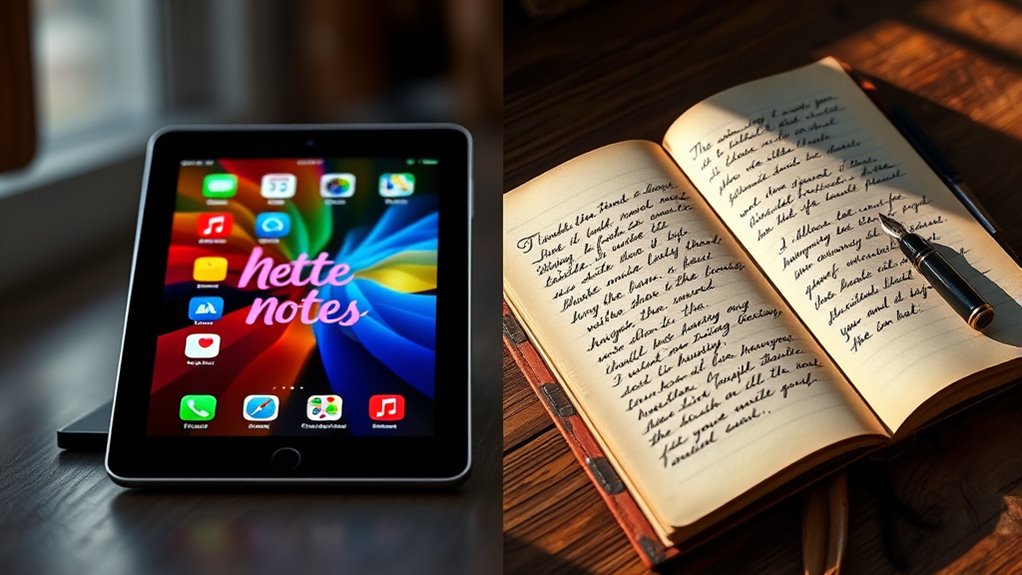

When choosing between digital and paper journals, consider your priorities around privacy, environment, and how you prefer to connect with your writing. Digital options offer convenience, quick access, and are eco-friendly since they save paper, but they come with security concerns. Paper journals provide a tangible, private experience that can enhance reflection without digital distractions. Exploring these factors further will help you pick the best tool for your needs.
Key Takeaways
- Consider privacy and security needs: digital journals offer encryption, while paper journals are naturally private.
- Evaluate environmental impact: digital reduces paper use, but device energy consumption has its own footprint.
- Think about convenience and accessibility: digital journals allow quick editing and multi-device access; paper journals offer tactile satisfaction.
- Assess emotional and reflective benefits: physical writing can enhance mindfulness and trauma release, supporting emotional regulation.
- Decide based on lifestyle and preferences: a hybrid approach combines digital convenience with the tactile benefits of paper.
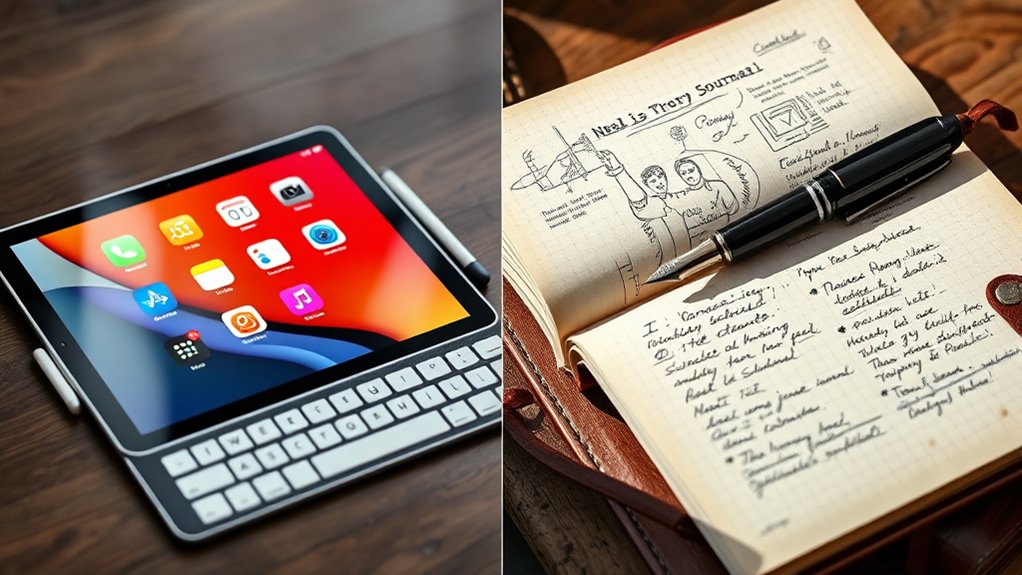
Have you ever wondered whether digital or paper journals better support your writing and reflection? It’s a common question, and the answer depends on what matters most to you. Digital journals offer convenience, easy editing, and quick access, but they come with distinct considerations like privacy concerns and environmental impact. When you choose a digital journal, you need to be mindful of how your data is stored and protected. Cybersecurity threats pose risks of hacking or data breaches, which can compromise the privacy of your personal thoughts and reflections. While many platforms implement encryption and security measures, the possibility of unauthorized access remains a valid concern. On the other hand, paper journals naturally solve these privacy issues—they’re private by default, unless someone physically accesses them. That simplicity can give you peace of mind, especially if you’re wary of digital privacy vulnerabilities.
Environmental impact is another significant factor. Digital journals have a comparatively low environmental footprint, since they don’t require paper, ink, or physical storage space. You save trees and reduce waste by opting for electronic writing tools. However, it’s worth noting that digital devices consume energy, and manufacturing electronics involves resource extraction and pollution. Over time, the energy use of servers and devices can add up, contributing to carbon emissions. Conversely, paper journals, although tangible and straightforward, involve cutting down trees, paper production, and transportation, all of which impact the environment. If sustainability influences your decision, you might prefer digital, especially if you use eco-friendly devices and support renewable energy initiatives. However, some people find the physical act of writing on paper more satisfying and beneficial for reflection, which adds another layer to your choice. Additionally, research into somatic therapy indicates that engaging in mindful activities like writing can support emotional regulation and trauma release, emphasizing the importance of choosing tools that encourage reflection.
Ultimately, weighing these factors depends on your priorities. If you value privacy and minimizing environmental impact, digital journals might be more aligned with your needs—provided you choose secure platforms and eco-conscious devices. If you prefer a tangible, straightforward approach without digital vulnerabilities, paper journals stand out. Consider your lifestyle, values, and how you engage with your reflections. You might even find a hybrid approach works best: use digital tools when convenience and security are paramount, and resort to paper when you want a more personal, tactile experience. Whatever your choice, understanding these aspects helps you select the journal type that truly supports your writing journey, making it more meaningful and aligned with your values.
digital journal app with encryption
As an affiliate, we earn on qualifying purchases.
As an affiliate, we earn on qualifying purchases.
Frequently Asked Questions
How Secure Are Digital Journals Against Hacking or Data Loss?
Digital journals can be quite secure if you take proper precautions. Cybersecurity risks exist, so you should use strong passwords, enable two-factor authentication, and keep software updated. Regular data backup is essential to prevent data loss from hacking or technical failures. While no system is completely foolproof, these steps markedly reduce vulnerabilities, ensuring your digital journal remains safe and accessible when you need it.
Can Paper Journals Be Easily Shared With Others?
Yes, paper journals can be easily shared with others, especially because handwriting authenticity adds a personal touch that digital files often lack. You can simply hand someone your physical journal or scan pages for quick sharing. Plus, their physical portability makes it convenient to carry and show your journal in person. Unlike digital files, there’s no need for passwords or tech skills, making sharing straightforward and accessible.
Which Option Is More Environmentally Friendly?
You’d likely find digital journals more environmentally friendly because they avoid recyclability concerns linked to paper production impacts. Paper journals require cutting down trees, energy, and water, contributing to deforestation and pollution. Digital options eliminate these issues and reduce waste, making them a greener choice overall. However, consider energy use for devices; if you’re mindful of that, digital journaling can markedly lessen your environmental footprint.
How Do Digital Journals Support Multimedia Entries?
Digital journals support multimedia entries through seamless multimedia integration, allowing you to add images, videos, and audio recordings effortlessly. You can enhance your entries with interactive content, making your journaling more engaging and dynamic. This flexibility helps you express yourself more vividly, capturing moments with richer detail. By using digital journals, you benefit from easy editing, organization, and sharing options, making your journaling experience more versatile and interactive.
Are There Costs Associated With Digital Journaling Platforms?
Yes, there can be costs associated with digital journaling platforms. You might encounter subscription fees for premium features or additional storage costs if you need extra space for multimedia entries. Some platforms offer free options, but they may have limited features or storage. Be sure to review the pricing plans to choose a platform that fits your budget and needs, ensuring you get the most value without unexpected expenses.
leather hardcover paper journal
As an affiliate, we earn on qualifying purchases.
As an affiliate, we earn on qualifying purchases.
Conclusion
Ultimately, choosing between digital and paper journals is like picking the perfect tool for your unique journey. Digital journals offer convenience and instant access, while paper ones provide a tangible connection to your thoughts. Think of it as selecting a trusted compass or a sturdy map—both guide you, but in different ways. Whichever you choose, make sure it helps you navigate your thoughts smoothly and keeps your ideas flowing like a river that never runs dry.
eco-friendly reusable notebook
As an affiliate, we earn on qualifying purchases.
As an affiliate, we earn on qualifying purchases.
mindfulness writing journal
As an affiliate, we earn on qualifying purchases.
As an affiliate, we earn on qualifying purchases.