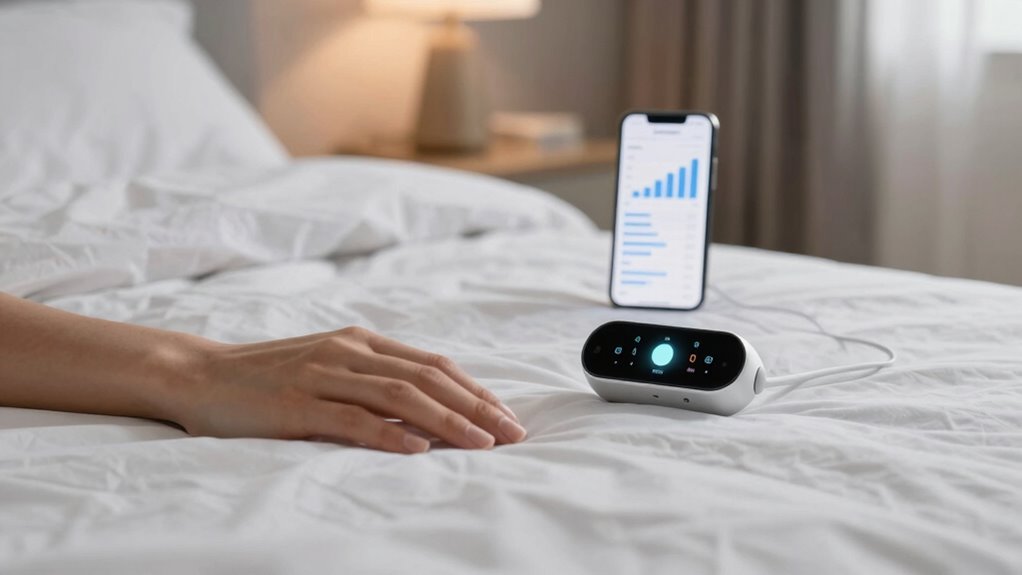

Smart sleep trackers provide you with detailed insights into your sleep stages, showing if your sleep is restorative or disrupted. They measure physiological signals like heart rate variability to gauge stress levels, helping you understand if stress is affecting your recovery. By analyzing sleep patterns, these devices suggest lifestyle adjustments to improve deep and REM sleep. If you want to learn more about how these tools can optimize your recovery and overall well-being, keep exploring the details.
Key Takeaways
- They analyze sleep stages (light, deep, REM) to assess recovery quality and identify disruptions.
- They measure physiological signals like HRV to gauge stress levels affecting recovery.
- Sleep patterns reveal stress-related disturbances, guiding stress management practices.
- Data helps optimize sleep duration and quality for tissue repair, immune function, and mental clarity.
- Tracking insights enable targeted lifestyle adjustments to improve overall recovery and well-being.
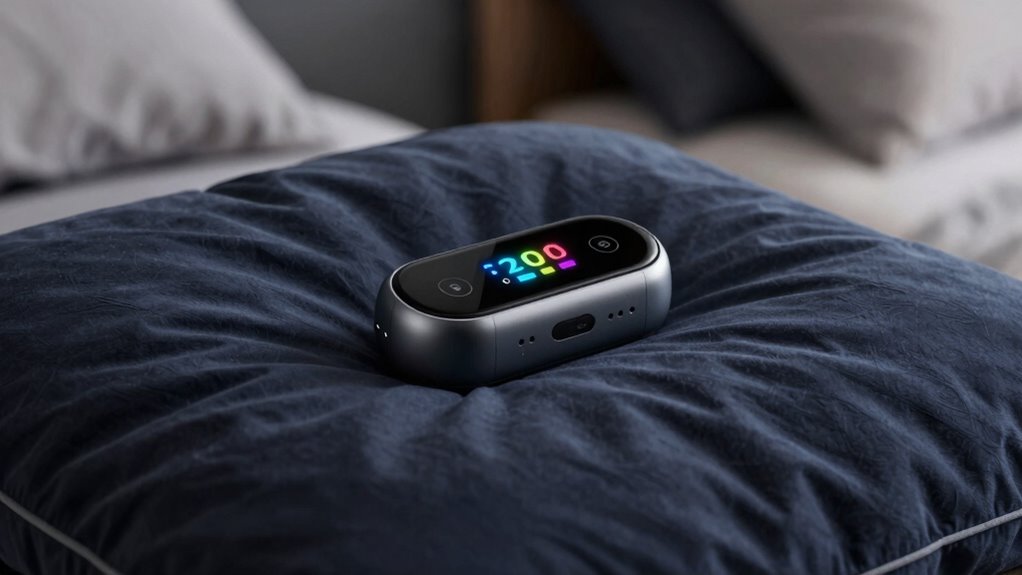
Getting quality sleep is essential for your recovery, and smart sleep trackers have become valuable tools in optimizing your rest. These devices analyze your sleep patterns, providing insights into your sleep cycle analysis—how long you spend in light, deep, and REM sleep. Knowing this helps you understand if your sleep is restorative or if disruptions are preventing you from reaching the most critical sleep stages. When your sleep cycle is balanced, your body can repair tissues, strengthen your immune system, and consolidate memories more effectively. If your tracker shows frequent awakenings or a disproportionate amount of light sleep, it’s a signal to consider adjustments to your routine or environment. Additionally, understanding sleep cycle analysis can help you identify patterns that may be affecting your overall health.
One of the key elements these trackers reveal is how stress impact influences your sleep quality. Elevated stress levels can cause fragmented sleep, making it difficult to reach the deep and REM stages needed for recovery. When stress is high, your body’s fight-or-flight response remains active, preventing you from achieving the restful states essential for physical and mental repair. By monitoring your sleep patterns over time, you can notice correlations between stressful days and poorer sleep quality. Armed with this knowledge, you can implement stress-reduction techniques such as mindfulness, meditation, or relaxing routines before bed, which can improve your sleep cycle analysis results. Recognizing the role of stress impact in sleep disturbances can motivate targeted lifestyle changes to enhance recovery. Incorporating biological signals, like HRV, provides deeper insight into your body’s stress response and recovery status, empowering you to make more informed decisions about your health.
Furthermore, understanding sleep stages and their significance can help you better interpret your sleep data and make targeted improvements. Smart sleep trackers also often measure heart rate variability (HRV) and other physiological signals that reflect your stress levels. If HRV is consistently low, it indicates that your body is under stress, which can hinder your recovery. Recognizing these signs early allows you to take proactive steps to manage stress, like adjusting your activity levels or incorporating breathing exercises into your daily routine. As you learn to control stress impact, you may find it easier to fall asleep faster, stay asleep longer, and reach those critical deep sleep stages that promote muscle repair and mental clarity.
Ultimately, these devices do more than just tell you how long you slept—they help you interpret what your sleep quality means for your recovery. They highlight the connection between stress impact and sleep disturbance, guiding you to make informed lifestyle changes. By paying close attention to your sleep cycle analysis and understanding how stress influences your rest, you empower yourself to optimize recovery, enhance performance, and improve overall well-being. With consistent tracking and mindful adjustments, you can turn your sleep data into actionable insights, ensuring you wake up refreshed and ready to tackle your day.
smart sleep tracker with HRV monitoring
As an affiliate, we earn on qualifying purchases.
As an affiliate, we earn on qualifying purchases.
Frequently Asked Questions
Can Sleep Trackers Predict Future Sleep Problems?
Sleep trackers can’t precisely predict future sleep problems, but they can alert you when signs of sleep deprivation or poor rest quality emerge. By monitoring your sleep patterns, they help you spot issues early, allowing you to adjust your habits before problems worsen. While they don’t forecast future issues directly, consistent tracking helps you maintain better sleep health and potentially prevent future sleep disturbances.
How Accurate Are Sleep Trackers Compared to Medical Devices?
Sleep trackers are less accurate than medical devices, especially when it comes to data accuracy. While they give you useful insights into your sleep quality, they often misjudge sleep stages or wake times. Medical-grade devices are more precise, but they’re also more invasive and expensive. So, if you’re seeking detailed, reliable data for serious health concerns, rely on medical equipment; for daily trends, sleep trackers still offer valuable, though imperfect, info.
Do Sleep Trackers Account for Different Sleep Needs?
Sleep trackers typically don’t fully account for your unique sleep needs. They focus on measuring sleep quality and sleep duration based on general algorithms. While they can show you patterns, they don’t personalize recommendations for best rest, which vary by individual. Your sleep needs depend on factors like age, activity level, and health, so it’s important to interpret tracker data as a guide rather than a definitive measure of your ideal sleep.
Can Sleep Trackers Detect Underlying Health Issues?
Sleep trackers can sometimes hint at underlying health issues by monitoring sleep quality, but they have device limitations. While significant disruptions or poor sleep patterns might suggest health concerns, they can’t diagnose medical conditions. You should consult a healthcare professional if you notice persistent sleep problems. Relying solely on a device isn’t enough; it’s a helpful tool, but always seek medical advice for thorough health assessments.
Are Sleep Tracker Recommendations Personalized for Each User?
Surprisingly, sleep tracker recommendations aren’t perfectly personalized for everyone. You might think they’d cater to your unique sleep patterns, but due to user variability and limited personalization accuracy, results can be hit or miss. While some devices adapt over time, many still rely on generic algorithms. So, don’t rely solely on them—use their insights as a starting point, but listen to your body for real recovery cues.
best sleep cycle analysis device
As an affiliate, we earn on qualifying purchases.
As an affiliate, we earn on qualifying purchases.
Conclusion
Smart sleep trackers offer valuable insights into your recovery, helping you understand your sleep patterns and overall health. But remember, they’re tools, not absolute authorities—your body’s signals matter most. Will you rely solely on gadgets, or will you listen to your body’s natural cues? By combining data with intuition, you can optimize your sleep and recovery more effectively. So, why not use these trackers as guides, not guarantees, and prioritize your well-being?
sleep recovery and stress monitoring wearable
As an affiliate, we earn on qualifying purchases.
As an affiliate, we earn on qualifying purchases.
deep sleep and REM sleep tracker
As an affiliate, we earn on qualifying purchases.
As an affiliate, we earn on qualifying purchases.