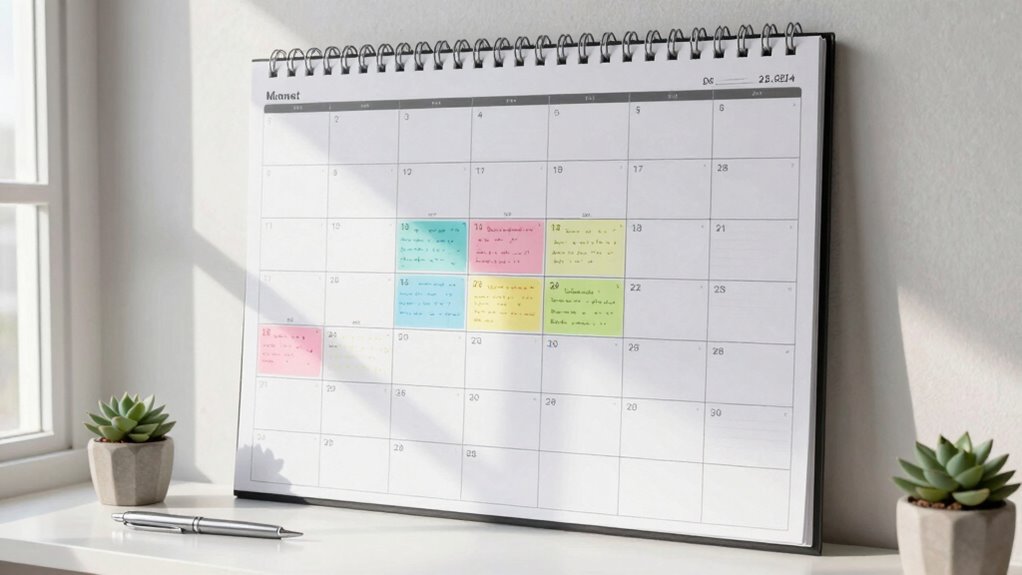

Wall planners help you stay on top of commitments by making tasks constantly visible, which boosts your motivation and accountability. They use visual cues to reinforce responsibilities and help you remember deadlines effortlessly. Seeing progress and crossing off items gives you a psychological boost, fostering habits and routines that improve time management. By externalizing your responsibilities, you free mental space and stay focused. Keep exploring to discover how these tools can transform your productivity habits even further.

Turn your quiet moments into listening time
- Thousands of audiobooks, podcasts and originals
- Listen on your phone, tablet or Echo — also offline
- Cancel anytime
Key Takeaways
- Visible wall planners serve as constant visual cues, reinforcing commitments and enhancing memory of tasks and deadlines.
- They leverage spatial processing in the brain, making task recall and prioritization more intuitive.
- Regularly updating and crossing off tasks boosts motivation and psychological satisfaction.
- External visual reminders reduce mental clutter, freeing cognitive resources for other responsibilities.
- Consistent use of wall planners fosters habit formation and long-term time management skills.
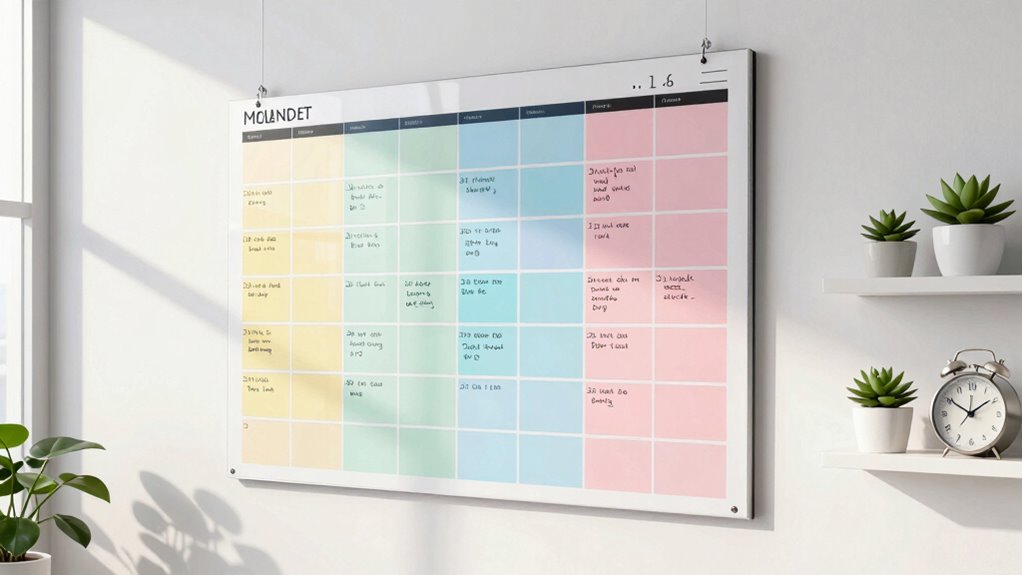
Wall planners have become a powerful tool for turning intentions into actions by making commitments highly visible. When you hang a wall planner in a prominent spot, you create a constant visual reminder of what you need to accomplish. This simple act can notably improve your time management, helping you allocate your hours more efficiently. Seeing your tasks laid out in front of you transforms vague intentions into concrete goals, making it easier to prioritize and stay on track. The visual nature of wall planners taps into your brain’s preference for spatial cues, which enhances your ability to remember deadlines and appointments. As you glance at your planner throughout the day, it reinforces your commitment to your goals, reducing the likelihood of procrastination. Incorporating visual cues into your routine leverages your brain’s natural tendencies to process spatial information, further boosting your productivity.
Wall planners boost productivity by making commitments visible and transforming intentions into actionable, accessible goals.
In terms of motivation strategies, wall planners serve as a powerful reinforcement tool. When you see your progress—whether it’s crossing off completed tasks or noting upcoming deadlines—you get a psychological boost. This visual evidence of achievement fuels your motivation to keep pushing forward. It creates a sense of accountability, as you’re less likely to ignore your commitments when they stare back at you daily. This constant exposure to your goals helps maintain your focus and enthusiasm, especially during challenging moments. Plus, the act of planning on a wall surface engages your brain more actively than digital or paper lists tucked away in a drawer. The physical act of writing and the visual layout foster greater engagement, making it more likely that you’ll follow through. Additionally, the visual organization provided by wall planners aligns with how humans naturally process spatial information, which can improve your overall memory retention of your commitments and deadlines.
Furthermore, regular updates to your planner can promote habit formation, which is essential for developing long-term time management skills. As you regularly update and review your planner, you cultivate a routine that keeps your responsibilities front and center. This habit-building aspect is essential because it transforms sporadic planning into a consistent practice. Over time, the visual structure of your planner becomes an external memory aid, freeing up mental space that would otherwise be cluttered with details and deadlines. You begin to anticipate busy periods and allocate your energy accordingly, which minimizes last-minute stress.
In essence, by making your commitments visible, wall planners leverage the psychology of visual cues to boost your productivity. They sharpen your focus, reinforce your motivation strategies, and help you manage your time more skillfully. As a result, a plain wall becomes a powerful ally in turning your intentions into tangible achievements.
wall planner with magnetic dry erase surface
As an affiliate, we earn on qualifying purchases.
As an affiliate, we earn on qualifying purchases.
Frequently Asked Questions
How Do Wall Planners Compare to Digital Scheduling Tools?
Wall planners give you a tangible, visually appealing way to organize your schedule, making paper aesthetics a key benefit. You can easily incorporate color coding to highlight different tasks or priorities, which digital tools often lack. Unlike digital scheduling, wall planners offer a constant visual reminder of your commitments, helping you stay focused. However, digital tools provide flexibility and easy updates. It’s about choosing what best supports your planning style.
Can Wall Planners Help Improve Long-Term Goal Setting?
Like a captain steering a ship through fog, your wall planner guides your long-term goals with visual memory and spatial organization. It helps you see the big picture at a glance, making progress tangible. This visible commitment keeps you motivated, reminds you of deadlines, and reinforces your focus. By constantly engaging with your goals on the wall, you’re more likely to stay on track and turn dreams into reality.
What’s the Best Placement for a Wall Planner at Home or Work?
You should place your wall planner where it’s easily visible daily, like near your workspace or kitchen. This boosts your personal motivation by constantly reminding you of your goals, and improves visual organization, helping you stay on track. By seeing your plans regularly, you reinforce commitment and make progress feel more tangible. Keep it in a spot where you naturally glance, ensuring it becomes a motivating part of your routine.
Do Wall Planners Increase Accountability Among Team Members?
Imagine a bright, bold wall planner catching your eye daily—its physical presence acts as a constant visual motivation, boosting accountability among your team. With everyone able to see upcoming deadlines and responsibilities, team members stay more engaged and committed. The visible commitment creates a sense of shared accountability, encouraging timely actions and better collaboration. So yes, wall planners do increase accountability by making goals and progress physically present and impossible to ignore.
How Often Should I Update or Review My Wall Planner?
You should review your wall planner at least once a week to maintain effective habit tracking and sustain visual motivation. Regular updates help you stay aware of upcoming tasks and progress, reinforcing your commitments. By consistently engaging with your planner, you create a habit of accountability, making it easier to stay focused and motivated. Weekly reviews guarantee your goals remain visible and top of mind, boosting your overall productivity and commitment.
large visual wall calendar for productivity
As an affiliate, we earn on qualifying purchases.
As an affiliate, we earn on qualifying purchases.
Conclusion
By placing a wall planner where you see it every day, you’re like a captain steering your ship through busy waters. It keeps your goals visible and your commitments clear, helping you stay focused and motivated. When your plans are right in front of you, they become part of your daily routine—like a loyal compass guiding you forward. Embrace this simple tool, and watch your productivity sail smoothly toward your destinations.
motivational wall planner for time management
As an affiliate, we earn on qualifying purchases.
As an affiliate, we earn on qualifying purchases.
As an affiliate, we earn on qualifying purchases.
Halloween Picks
halloween
As an affiliate, we earn on qualifying purchases.