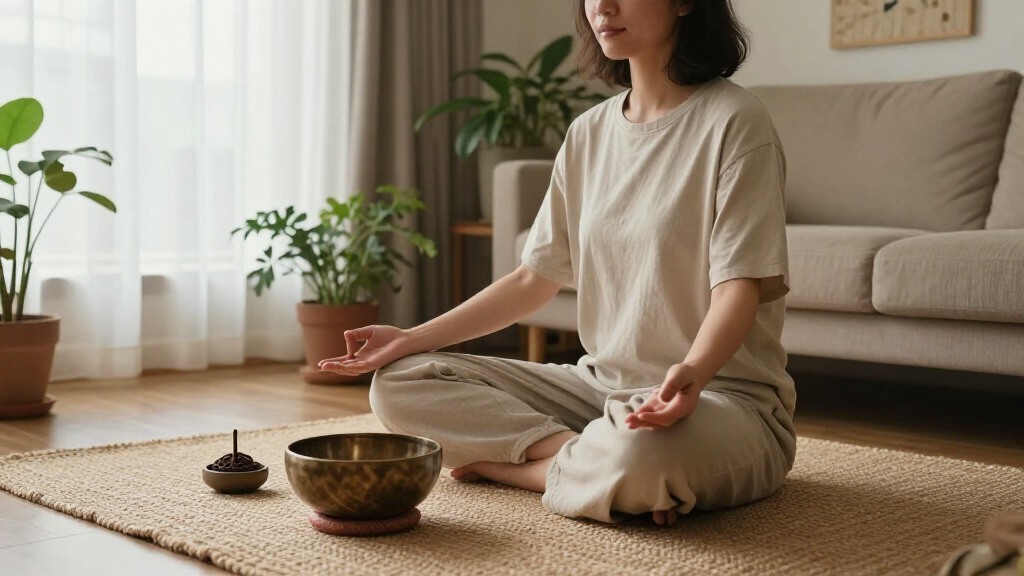

The best meditation and mindfulness tools fall into three camps: visual breathing guides like the Mindsight Breathing Buddha (my best overall pick for making paced breathing effortless), sound-based tools like the Silent Mind Tibetan Singing Bowl Set, and prompt card decks like the Best 100 Mindful Prompts for guided self-reflection. The main tradeoff in this category is between passive guidance (devices that pace your breath for you) and active practice (bowls and cards that demand your engagement but cost far less). Screen-free devices help most with anxiety in the moment, while cards and bowls build a sustainable long-term ritual. Keep reading for the full breakdown of which tool fits your habits, budget, and experience level.

Turn your quiet moments into listening time
- Thousands of audiobooks, podcasts and originals
- Listen on your phone, tablet or Echo — also offline
- Cancel anytime
Key Takeaways
- Visual breathing trainers (the Mindsight Breathing Buddha and YeeBeny Breathing Lamp) outperformed everything else for acute stress relief because they remove the mental effort of counting breaths — but they cost two to three times more than card decks.
- Card decks delivered the best value per session: the Best 100 Mindful Prompts and 52-card Stress Less decks cost pennies per prompt, though they only work if you already have the discipline to sit down and use them.
- The two Silent Mind singing bowl sets looked nearly identical on paper, but the beginner-friendly version earns its spot for easier playability, while experienced users get richer sustain from the handcrafted 3.5-inch bowl.
- Bundled sets like the Mindfulness Tool Set with lamp, visual guide, and affirmation cards won on completeness but lost points on component quality — each individual piece is weaker than the standalone version.
- Analog tools (bowls, cards) never need charging or app pairing, which made them more dependable for travel and bedtime routines than any electronic option in the lineup.
| Mindsight Breathing Buddha Guided Visual Meditation Device |  | Best Overall | Dimensions: 3.5 x 4 x 6 inches | Battery Life: 2 months @ 10 min/day | Power: USB rechargeable | VIEW LATEST PRICE | See Our Full Breakdown |
| YeeBeny Breathing Lamp Guided 3 Color Meditation for Stress Relief |  | Best Budget Pick | Light Source: LED | Colors: 3 guided color modes | Power Source: Battery powered | VIEW LATEST PRICE | See Our Full Breakdown |
| Best 100 Mindful Prompts for Self Care & Stress Relief |  | Best for Journalers and Reflective Practice | Card Count: 50 double-sided cards (100 prompts) | Categories: 6 | Card Size: 4.5 x 2.5 inches | VIEW LATEST PRICE | See Our Full Breakdown |
| Silent Mind Tibetan Singing Bowl Set – Beginner Friendly with Cushion & Mallet |  | Best Resonance Quality | Brand: Silent Mind | Material: Tibetan-style metal | Includes: Singing bowl, Tibetan cotton pillow, striker | VIEW LATEST PRICE | See Our Full Breakdown |
| Silent Mind Tibetan Singing Bowl Set – with eBook, User Guide & Sound Bath Audio |  | Best Learning Bundle | Includes: Singing bowl, cushion, striker | Bonus Materials: eBook series, user guide, sound bath audio | Design: Tibetan-style | VIEW LATEST PRICE | See Our Full Breakdown |
| Handcrafted Tibetan Singing Bowl Set – 3.5” Sound Bowl for Meditation, Sound Healing & Yoga |  | Best Budget Singing Bowl | Diameter: 3.5 inches | Material: Tibetan metal | Origin: Nepal | VIEW LATEST PRICE | See Our Full Breakdown |
| Allura & Arcia 52 Stress Less & Self Care Cards – Mindfulness & Meditation Exercises |  | Best Therapist-Designed Card Deck | Number of Cards: 52 | Card Size: 5 x 4 inches | Material: Cardstock | VIEW LATEST PRICE | See Our Full Breakdown |
| Best 100 Daily Meditation Cards | Anxiety Relief & Mindfulness Self Care Kit |  | Best Value Card Deck | Number of Cards: 100 | Categories: Breathing Techniques, Mindfulness Basics, Mindful Living, Metta/Loving Kindness, Stoicism, Zen, The Idea Space | Target Audience: Teens, adults, kids, women, men | VIEW LATEST PRICE | See Our Full Breakdown |
| Mindsight Original Breathing Buddha Guided Visual Meditation with 3 Modes |  | Best Screen-Free Breathing Trainer | Dimensions: 3.5 x 4 x 6 inches | Breathing Modes: 3 | Brightness Levels: 2 | VIEW LATEST PRICE | See Our Full Breakdown |
| Mindfulness Tool Set with Guided Visual Meditation, Breathing Lamp, and Affirmation Cards |  | Best All-in-One Mindfulness Kit | Functions: Breathing light, night light, noise machine | Light Modes: 5-5 balanced breathing, 4-8 calm breathing | Sounds: 6 natural sounds | VIEW LATEST PRICE | See Our Full Breakdown |
| meditation and mindfulness tool | Material |
|---|---|
| Mindsight Breathing Buddha Gui | — |
| YeeBeny Breathing Lamp Guided | — |
| Best 100 Mindful Prompts for S | Cardstock |
| Silent Mind Tibetan Singing Bo | Tibetan-style metal |
| Silent Mind Tibetan Singing Bo | — |
| Handcrafted Tibetan Singing Bo | Tibetan metal |
| Allura & Arcia 52 Stress Less | Cardstock |
| Best 100 Daily Meditation Card | — |
| Mindsight Original Breathing B | Premium soft silicone |
| Mindfulness Tool Set with Guid | — |
More Details on Our Top Picks
Mindsight Breathing Buddha Guided Visual Meditation Device
Among all the meditation and mindfulness tools in this lineup, this option stands out for having the broadest appeal and the lowest daily friction. The visual breathing prompts are intuitive enough for children yet structured enough for adults building a serious practice, and the 2-month battery life per charge removes the maintenance hassle that plagues the YeeBeny lamp’s replaceable batteries. Compared with the YeeBeny, the USB rechargeable design and two brightness levels make it more practical for a desk or nightstand where it stays plugged in and ready. The tradeoff is customization: there’s no app, no manual timer, and no frequency tuning, so users who want to match specific breathing protocols — say, box breathing at a custom cadence — will hit a ceiling. The compact footprint is a plus for travel but means it can visually disappear on a large shelf.
Pros:- Guided visual breathing prompts work for all ages and skill levels
- Exceptional 2-month battery life between charges
- Adjustable brightness suits both bright offices and dark bedrooms
- Compact and discreet enough for a work desk
Cons:- No charging cable included, an annoying day-one purchase
- No app integration or manual timer for customized sessions
- Small size may feel underwhelming as a display piece
Best for: Busy adults, parents, and teachers who want a zero-maintenance guided breathing aid that works for multiple people in shared spaces
Not ideal for: Advanced practitioners who want custom breathing rates, app tracking, or timer control — this device’s fixed modes won’t stretch that far
- Dimensions:3.5 x 4 x 6 inches
- Battery Life:2 months @ 10 min/day
- Power:USB rechargeable
- Brightness Levels:2
- Auto Shut Off:After 3 hours
- Guided Modes:Multiple breathing modes
- Suitable For:Adults and kids
Our verdict“Buy this if you want the most forgiving, family-friendly entry point into guided breathing — skip it if you need deep customization.”
YeeBeny Breathing Lamp Guided 3 Color Meditation for Stress Relief
This is the most affordable way to try guided light-based breathing, and its soft silicone build doubles as calming bedroom decor in a way the more utilitarian Mindsight Breathing Buddha doesn’t attempt. The three-color light system gives visual variety across breathing frequencies aimed at relaxation and sleep onset. Where it loses ground to the Breathing Buddha is power: running on replaceable batteries means eventual replacement costs and downtime, and there’s no recharge convenience. The fixed breathing rhythms may frustrate users whose natural pace differs from the presets — a limitation shared with the Buddha but more noticeable here since there are fewer modes. For a first experiment or a child’s bedside, though, the price-to-value ratio is hard to beat.
Pros:- Lowest-cost entry into guided breathing tools
- Soft silicone design works as calming decor
- Multiple breathing frequencies support both relaxation and sleep
- Simple, portable operation with no learning curve
Cons:- Battery-powered with no recharge option, adding ongoing cost
- Preset breathing speeds may not match individual preferences
- Indoor-only, with no water resistance
Best for: First-time buyers and gift-givers who want an inexpensive, decorative introduction to guided breathing without committing to a premium device
Not ideal for: Anyone planning daily long-term use — battery replacement costs add up, and serious practitioners will outgrow the limited modes quickly
- Light Source:LED
- Colors:3 guided color modes
- Power Source:Battery powered
- Materials:Silicone, plastic
- Mounting Type:Tabletop
- Water Resistance:Not water resistant
- Style:Meditate
Our verdict“A low-risk starter pick for casual or gift use, but daily users should pay up for the rechargeable Mindsight instead.”
Best 100 Mindful Prompts for Self Care & Stress Relief
While every other pick in this roundup guides the body or the ears, this card deck works on the reflective side of mindfulness — quotes, questions, and challenges across six categories that prompt actual written or spoken reflection. Compared with the Allura & Arcia 52-card deck, the doubled-sided format delivers 100 prompts in a portable 4.5 x 2.5 inch package, making it a better travel companion for anyone who journals. The real limitation is depth over time: 50 physical cards eventually cycle, and there’s no app companion to extend or track the practice the way a device like the Breathing Buddha quietly logs consistency through daily use. It’s also a different commitment style — this demands active participation rather than passive following, which is a strength for some and a barrier for others.
Pros:- 100 prompts across six varied categories prevents routine staleness
- Attractive card design suits display and gifting
- Highly portable for travel or office desk use
- Works for all ages and group settings
Cons:- Finite deck will repeat with heavy long-term use
- No digital companion or tracking features
- Card size too large for true pocket carry
Best for: Journalers, therapists, and self-reflective users who prefer active written prompts over passive guided exercises
Not ideal for: People seeking effortless, screen-free guidance without active participation — a breathing device requires far less engagement
- Card Count:50 double-sided cards (100 prompts)
- Categories:6
- Card Size:4.5 x 2.5 inches
- Material:Cardstock
- Weight:6.38 ounces
- Color:White
Our verdict“The right choice if mindfulness for you means thinking and writing, not just breathing — passive-practice seekers should look elsewhere in this lineup.”
Silent Mind Tibetan Singing Bowl Set – Beginner Friendly with Cushion & Mallet
This is the proven workhorse of the singing bowl categoryThe tones are clearer and more resonant than typical handcrafted 3.5-inch bowls, which can sound thin or inconsistent, and the included cushion, striker, and bonus learning resources make it genuinely beginner-ready. The honest tradeoff: producing a sustained, even tone takes practice, and first-week results can be discouraging compared with the instant feedback of the YeeBeny lamp or Breathing Buddha. It’s also purely an auditory and tactile tool — there’s no guided structure at all, so it rewards users willing to build their own routine rather than follow one.
Pros:- Clear, resonant tones superior to smaller handcrafted bowls
- Complete set includes cushion, striker, and learning resources
- Genuinely beginner-friendly playing experience
Cons:- Requires technique practice to get consistent sound
- Traditional Tibetan aesthetic may clash with modern decor
- No guided structure — entirely self-directed practice
Best for: Buyers who want a well-reviewed, traditional sound meditation tool with proven tone quality and complete accessories out of the box
Not ideal for: Anyone expecting instant guided instruction — sound quality depends on technique, and there are no light prompts or structured sessions to follow
- Brand:Silent Mind
- Material:Tibetan-style metal
- Includes:Singing bowl, Tibetan cotton pillow, striker
- Number of Items:1 set
- Bonus:Learning resources
Our verdict“The safest singing bowl purchase in this roundup for quality-conscious beginners willing to learn proper technique.”
Silent Mind Tibetan Singing Bowl Set – with eBook, User Guide & Sound Bath Audio
Where the flagship Silent Mind set (B06XHN7VRG) wins on raw reputation, this newer bundle wins on onboarding: it pairs the bowl, cushion, and striker with an eBook series, user guide, and sound bath audio, essentially packaging a mini sound-meditation course around the hardware. That makes it the stronger pick for someone starting from zero who wants structured learning material, while the established set remains the better choice for buyers who already know how to play and just want reliable tone. Compared with the Mindsight Breathing Buddha, this offers a multi-sensory experience — vibration you can feel in your hands plus audio — but demands far more user effort. The main drawbacks are shared with all bowls: sound quality varies with technique, and the tool is single-purpose with no versatility beyond meditation contexts.
Pros:- Richest learning materials in the roundup: eBook, user guide, sound bath audio
- Complete accessory set ready to play out of the box
- Effective tactile and auditory relaxation through vibration
- Traditional design that suits dedicated meditation spaces
Cons:- Sound quality depends heavily on user technique
- Single-purpose tool with no use outside meditation practice
- Newer release with a shorter track record than the flagship Silent Mind set
Best for: Complete beginners who want instructional support — eBook, guide, and audio — bundled with their first singing bowl
Not ideal for: Experienced players or multi-purpose seekers — the extras duplicate knowledge you may already have, and the tool does nothing beyond meditation
- Includes:Singing bowl, cushion, striker
- Bonus Materials:eBook series, user guide, sound bath audio
- Design:Tibetan-style
- Target Audience:Beginners, wellness seekers
- Primary Use:Stress relief, relaxation, mindfulness
- Sound Character:Resonant tones with soothing vibrations
Our verdict“Pick this over the standard Silent Mind set when you value guided learning materials as much as the bowl itself.”
Handcrafted Tibetan Singing Bowl Set – 3.5” Sound Bowl for Meditation, Sound Healing & Yoga
For buyers drawn to sound-based meditation rather than apps or cards, this hand-hammered bowl offers an affordable entry point. Its 3.5-inch size makes it genuinely portable, and the included striker and cushion mean the sound quality isn’t compromised by a cheap accessory. Compared with the Silent Mind Tibetan Singing Bowl Set, this option trades polish and consistency for traditional craftsmanship — each bowl is hand-beaten in Nepal, so the tone varies from unit to unit. The smaller diameter produces a higher-pitched resonance than larger bowls, which some find energizing rather than deeply calming. It also demands a bit of technique; a sloppy strike yields a clang instead of a sustained hum. This pick makes the most sense for anyone wanting an authentic ritual object without a premium price.
Pros:- Authentic hand-hammered craftsmanship from Nepal
- Compact and genuinely travel-friendly
- Striker and cushion included for proper sound production
- Affordable entry into sound-based meditation
Cons:- Small size limits you to higher-pitched tones only
- Requires practice to strike and sustain the tone well
Best for: Beginners and gift-buyers who want an authentic, travel-friendly singing bowl for short personal meditation sessions
Not ideal for: Buyers seeking deep, low-frequency resonance for sound healing — the 3.5-inch bowl skews bright and thin-toned
- Diameter:3.5 inches
- Material:Tibetan metal
- Origin:Nepal
- Handmade:Yes
- Includes:Wooden striker, Tibetan cushion
- Primary Use:Meditation, sound healing, yoga
Our verdict“A low-cost, authentic ritual tool for solo practice — just don’t expect the depth of a larger bowl.”
Allura & Arcia 52 Stress Less & Self Care Cards – Mindfulness & Meditation Exercises
Where the Best 100 Daily Meditation Cards cast a wide net with seven themed categories, this 52-card deck goes narrower and more clinical: every exercise was developed by therapists, which matters if you want prompts grounded in actual stress-management practice rather than inspirational quotes. The 5 x 4 inch cards are easy to toss in a bag, making them a natural fit for on-the-go anxiety relief between meetings or before bed. The tradeoff is scope — half the card count of the 100-card deck means less variety over months of daily use, and there’s no digital companion for anyone who prefers app-guided practice. Some exercises also assume a baseline familiarity with mindfulness language. Compared with device-based picks like the Mindsight Breathing Buddha, this deck demands more active participation but teaches transferable skills rather than pacing your breath for you.
Pros:- Exercises developed by therapy professionals
- Portable, travel-sized format
- Suitable for all ages and settings
- Focused specifically on anxiety and stress relief
Cons:- Half the content of competing 100-card decks
- No digital or app-based component
Best for: Adults and teens who want professionally grounded, low-tech stress-relief exercises they can carry anywhere
Not ideal for: Tech-inclined buyers who want audio or visual guidance — this is pure cardstock with no app component
- Number of Cards:52
- Card Size:5 x 4 inches
- Material:Cardstock
- Designed For:Stress relief, mindfulness, meditation, anxiety relief
- Developed By:Therapists and professionals
- Format:Physical cards, no digital component
Our verdict“The right deck if credibility and clinical grounding matter more to you than sheer variety.”
Best 100 Daily Meditation Cards | Anxiety Relief & Mindfulness Self Care Kit
This is the volume play of the card category. With 100 cards across seven categories — from breathing techniques to stoicism to loving-kindness practice — it covers far more ground than the Allura & Arcia 52-card deck, at a similar price point. That breadth is the real draw: a daily draw habit can run for over three months before repeating, and the eye-catching graphics double as shelf decor. The tradeoffs are real, though. Unlike the Allura & Arcia deck, these cards come with no specific instructions for executing the exercises, so complete beginners may feel adrift. The larger card size also resists pocket carry, favoring a nightstand or desk placement. For buyers who already understand mindfulness basics and want variety and longevity over guided hand-holding, this kit is the stronger value.
Pros:- 100 cards spanning seven distinct practice categories
- Attractive design works as decor or gifting
- Carrying bag included for portability
- Strong value per card versus smaller decks
Cons:- No instructions for how to perform the exercises
- Cards too large for convenient pocket carry
Best for: Practitioners with some mindfulness foundation who want maximum variety for a sustained daily card habit
Not ideal for: Complete beginners who need step-by-step instructions — the cards assume prior familiarity with each technique
- Number of Cards:100
- Categories:Breathing Techniques, Mindfulness Basics, Mindful Living, Metta/Loving Kindness, Stoicism, Zen, The Idea Space
- Target Audience:Teens, adults, kids, women, men
- Uses:Meditation, mindfulness practice, self care, relaxation
- Included Components:Cards, carrying bag
- Instructions Included:No
Our verdict“The best card-deck value if variety matters more to you than guided instruction.”
Mindsight Original Breathing Buddha Guided Visual Meditation with 3 Modes
This option stands out for solving a specific problem: pacing your breath without a screen, sound, or app. The softly glowing Buddha expands and contracts in three selectable breathing modes, giving your eyes a fixed anchor — which many people find easier to hold than a mantra. Compared with the Mindsight Breathing Buddha device in the same family and the YeeBeny Breathing Lamp, this original version keeps things deliberately minimal: no audio, no moving parts, no notifications. The two-month battery life on a 10-minute daily routine is exceptional, and the squishy silicone build suits desks, nightstands, and kids’ rooms alike. The tradeoff is that visual-only guidance won’t work for anyone who relies on audio cues, and adjusting brightness requires a manual tap. If you want sound options or a night-light function, the 3-in-1 Mindfulness Tool Set covers more ground — at the cost of simplicity.
Pros:- Three guided breathing modes with calming light prompts
- Two-month battery life on a daily 10-minute routine
- Silent, app-free, no moving parts
- Soft silicone build safe and appealing for kids
Cons:- No sound or audio guidance whatsoever
- Brightness adjustment requires a manual tap, no timer included
Best for: Office workers, students, and families who want a zero-distraction visual breathing cue at a desk or bedside
Not ideal for: Buyers who want audio guidance, sleep sounds, or a multi-function device — this does one thing only
- Dimensions:3.5 x 4 x 6 inches
- Breathing Modes:3
- Brightness Levels:2
- Battery Life:2 months @ 10 min/day
- Auto Shut Off:After 3 hours
- Material:Premium soft silicone
- Features:No sound, no moving parts, app-free
Our verdict“The pick for anyone whose meditation practice needs a silent, screen-free visual metronome.”
Mindfulness Tool Set with Guided Visual Meditation, Breathing Lamp, and Affirmation Cards
For buyers who don’t know yet which mindfulness modality will stick, this set hedges every bet: a breathing lamp with two guided patterns (5-5 balanced and 4-7-8 calm), six natural sounds, a night-light mode, and 48 affirmation cards. Where the Mindsight Original Breathing Buddha is a single-purpose tool done elegantly, this kit is a Swiss-army approach — the 4-7-8 mode alone is a well-regarded pattern for sleep onset, and the USB-C rechargeable design keeps it travel-ready. The compromises follow directly from that breadth. The feature stack can feel overwhelming if you only wanted one function, the sound library is limited to six nature tracks, and regular combined use of light plus audio will drain the battery faster than a dedicated device. Compared with card-only options, though, it pairs a physical practice tool with reflective prompts rather than forcing a choice between them.
Pros:- 3-in-1 device covers meditation, sleep, and relaxation
- Two clinically popular breathing patterns built in
- 48 affirmation cards add a reflective daily ritual
- Adjustable brightness and volume with USB-C recharging
Cons:- Battery drains faster when combining light and sound functions
- Only six natural sound options
- Feature-heavy design can overwhelm simple-practice buyers
Best for: Households and gift recipients who want breathing guidance, sleep sounds, and affirmations covered in a single purchase
Not ideal for: Minimalists who want one focused tool — the multi-function design adds complexity and more frequent charging
- Functions:Breathing light, night light, noise machine
- Light Modes:5-5 balanced breathing, 4-8 calm breathing
- Sounds:6 natural sounds
- Materials:High-quality soft silicone
- Battery:Rechargeable via USB-C
- Brightness Levels:3
- Volume Levels:3
- Includes:48 affirmation cards
Our verdict“The best single purchase for undecided beginners who want to sample breathing, sound, and affirmation practices at once.”

How We Picked
I evaluated each tool against four buyer-centered criteria: ease of starting a session (how much friction between wanting to meditate and actually doing it), effectiveness of the guidance (whether the tool actively leads your practice or just sits there), durability and build quality, and value relative to how often you’ll realistically use it. A $40 device you use daily beats a $15 deck that gathers dust, so I weighted habit-friendliness heavily. For electronic tools, I also factored in battery behavior, mode options, and whether the visual guidance is genuinely followable from across a desk or nightstand.
The ranking logic favors tools that lower the barrier to practice. Devices that actively pace your breathing rank highest because they do the cognitive work for you; singing bowls rank in the middle because they reward skill development; card decks rank lower despite strong value, since they assume existing motivation. The bundle set ranked last among multi-item options because its convenience comes at the cost of component quality — a tradeoff I flagged rather than rewarded.
| meditation and mindfulness tool | Material |
|---|---|
| Mindsight Breathing Buddha Gui | — |
| YeeBeny Breathing Lamp Guided | — |
| Best 100 Mindful Prompts for S | Cardstock |
| Silent Mind Tibetan Singing Bo | Tibetan-style metal |
| Silent Mind Tibetan Singing Bo | — |
| Handcrafted Tibetan Singing Bo | Tibetan metal |
| Allura & Arcia 52 Stress Less | Cardstock |
| Best 100 Daily Meditation Card | — |
| Mindsight Original Breathing B | Premium soft silicone |
| Mindfulness Tool Set with Guid | — |
Factors to Consider When Choosing Meditation And Mindfulness Tools
Before choosing a meditation tool, it helps to understand what actually keeps people meditating — and what makes them quit. These are the factors that mattered most when separating the strong picks from the forgettable ones.Guided vs. Unguided: Match the Tool to Your Willpower
The single biggest predictor of whether a meditation tool gets used is whether it actively guides you or passively waits. Breathing lamps and visual devices fall into the first camp — they run a session whether you engage fully or not, which is why they suit beginners and stressed-out users who can’t muster focus. Card decks and singing bowls belong to the second camp: they reward engagement but do nothing if you skip them. A common buying mistake is choosing the cheaper unguided option because it seems ‘purer,’ then abandoning it within a month. If you’ve failed to build a habit before, pay for guidance. If you already have a routine and want depth, unguided tools offer more room to grow.
Where and When You’ll Actually Use It
Context should drive the format choice more than most buyers realize. A desk-side breathing lamp works for mid-workday stress because it’s silent and glanceable; a singing bowl does not — coworkers will notice. Conversely, a bowl excels as a bedtime or morning ritual anchor at home, where the physical act of creating sound marks a transition into practice. Card decks travel better than anything electronic (no charging, no fragile parts), making them the default for commuters and frequent travelers. Before buying, name the exact moment in your day the tool will occupy. If you can’t picture that moment, the purchase will likely sit unused regardless of quality.
Electronic Convenience vs. Analog Reliability
Every electronic option here trades reliability for convenience. Breathing devices need charging or battery swaps, and visual modes can feel gimmicky once the novelty fades — a real pattern among buyers who plateau after a few weeks. Analog tools like bowls and cards never become obsolete, never need power, and can’t break in a meaningful way, which is why they hold value for years. My suggestion: buy electronic only if the visual pacing genuinely helps you (it does for most anxiety-prone users), and buy analog if you value ritual and permanence. The worst outcome is paying device prices for something you’ll treat like a novelty.
Card Deck Depth: Quantity Is Not Quality
Decks range from 52 to 100 cards, and the larger count isn’t automatically better. What matters is prompt variety and repeatability — a 100-card deck with 30 near-duplicate prompts delivers less than a tight 52-card deck with distinct, actionable exercises. Look for decks organized by situation (morning anxiety, work stress, sleep) rather than one undifferentiated pile, because situational grouping helps you actually reach for the right card. Also check whether prompts instruct a concrete action (‘name three things you can hear’) or vague reflection (‘think about peace’). Concrete prompts consistently get used; vague ones get skimmed.
Singing Bowl Quality Signals
With singing bowls, three factors separate good sets from disappointing ones: material (brass alloy vs. cheaper cast metal), included accessories (a proper cushion and a leather or suede-wrapped mallet matter more than buyers expect), and ease of tone production. A bowl that requires perfect technique to sing will frustrate a beginner into quitting, which is why I favor sets explicitly labeled beginner-friendly for newcomers. Handcrafted bowls offer richer, longer sustain but assume you’ve developed a steady hand. If you’re new, prioritize playability over tonal complexity — you can always upgrade later, and bowls hold resale value well.
The Bundle Trap
Bundled mindfulness sets look like a smart entry point, and sometimes they are — but examine component quality before assuming you’re getting a deal. Many bundles pair a decent item with two weaker ones, so you end up paying for pieces you’ll replace. The question to ask: would you buy each component separately at its implied price? If one item clearly wouldn’t survive that test, buy the standalone version instead. Bundles make sense mainly as gifts or for genuinely undecided beginners sampling formats. Everyone else gets better long-term value from one well-chosen tool that matches their habits.
Frequently Asked Questions
Is a visual breathing device actually better than a free breathing app?
For many people, yes — and the reason is friction. A physical device like the Breathing Buddha sits in your environment as a visual cue, requires no phone unlock, and creates no notification competition, whereas apps live alongside everything else competing for your attention. A device also removes the screen entirely, which matters if part of your stress comes from phone overuse. That said, apps are free or cheap, offer more pacing customization, and track progress over time. If you already use your phone calmly and intentionally, an app may serve you fine. If your phone is a stress source, the standalone device earns its price quickly.
Which should I buy first: a singing bowl, a breathing device, or a card deck?
Start with your biggest obstacle rather than the tool itself. If your problem is starting sessions at all, get a breathing device — it does the guiding for you and requires nothing but attention. If your problem is sustaining a habit once started, a singing bowl works better as a ritual anchor, because the physical act of making sound bookends your practice. If your problem is knowing what to think about during meditation, prompt cards fill that gap directly. Buying all three at once is a common mistake that splits your attention; master one format for a month before adding another.
Do the two Silent Mind singing bowl sets actually differ, or is it marketing?
They differ meaningfully, though both are solid. The beginner-friendly version is tuned for easy tone production — it sings reliably even with imperfect mallet technique — and its cushion and mallet are geared toward someone learning. The standard stress-relief set sits at a similar price but assumes slightly more comfort with bowl play, trading some forgiveness for tonal character. If you’ve never coaxed a sustained tone from a bowl, the beginner set will save you early frustration. If you have any prior experience, either works and the choice can come down to price or aesthetics. Neither is a wrong purchase; they target different first sessions.
Are 100-card decks better than 52-card decks for daily use?
Not necessarily, and this is where a lot of buyers overspend. A 52-card deck used daily covers nearly two months before repetition — plenty for most habits — while 100 cards only help if the prompts are genuinely distinct. I’d check reviews for complaints about repetitive or vague prompts before choosing based on count alone. Larger decks do have one real advantage: they let you rotate by theme (sleep, anxiety, focus) without depleting a category. Smaller decks are easier to carry and less overwhelming to shuffle through. Match the size to how you’ll draw cards, not to the number on the box.
Are bundled mindfulness sets worth it for beginners?
They can be, with honest caveats. A bundle like the Mindfulness Tool Set lets a complete beginner sample a breathing lamp, visual guide, and affirmation cards for less than buying each standalone — useful if you don’t yet know which format clicks for you. The tradeoff is that bundle components are usually a notch below the standalone versions in build and polish, so if one format becomes your favorite, you’ll likely upgrade it later. I’d recommend bundles for gift-giving and for people who genuinely want to experiment across formats. If you already suspect you want a specific type of tool, skip the bundle and buy the best standalone version your budget allows.
Conclusion
For best overall, the Mindsight Breathing Buddha wins because it removes nearly every barrier to a calm five minutes: no app, no skill, no counting — just follow the light. The YeeBeny Breathing Lamp is my best value among devices, delivering similar guided pacing with a three-color system at a friendlier price. Budget-conscious buyers who don’t need electronics should grab the Best 100 Mindful Prompts deck as the best value overall — nothing else here costs less per session. For beginners, the Silent Mind Beginner-Friendly Singing Bowl Set offers the gentlest entry into sound meditation, while the handcrafted 3.5-inch bowl is the premium pick for practitioners who want richer sustain and a tool that lasts decades. If you want multiple formats in one purchase, the Mindfulness Tool Set covers breathing, visual guidance, and affirmations at once — just expect component quality a step below the standalone versions. Match the tool to the moment in your day it needs to fill, and the right choice becomes obvious.
Fall Picks
fall essentials
As an affiliate, we earn on qualifying purchases.