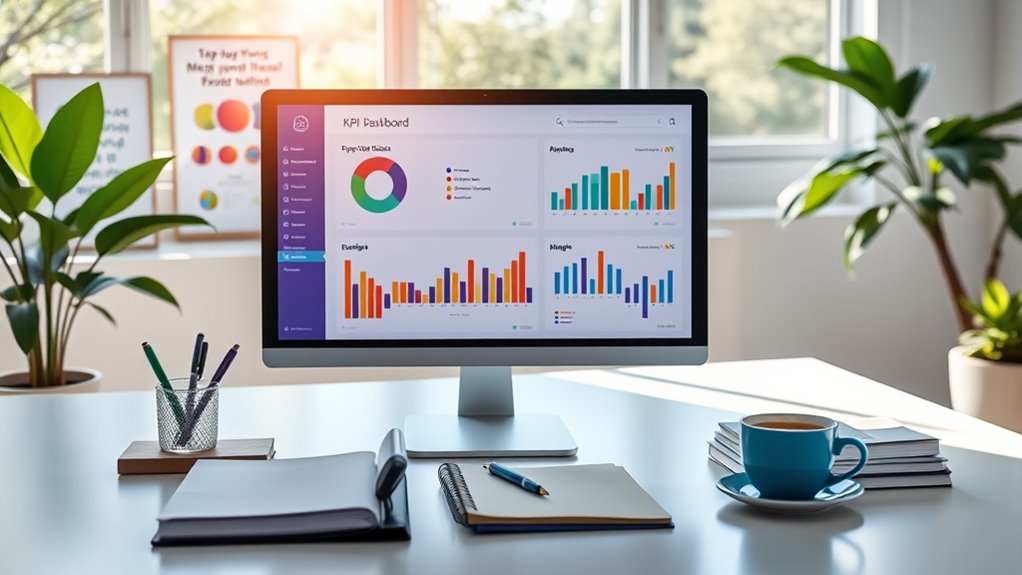

To build a personal KPI dashboard, start by identifying key areas like time management, habits, and goal progress. Choose simple tools such as spreadsheets or apps to track relevant metrics like hours worked, habits formed, or savings achieved. Set clear targets and review your data regularly—daily, weekly, or monthly—to stay focused and adjust strategies as needed. By organizing your data clearly with visual indicators, you’ll gain valuable insights into your growth and stay motivated to improve. Keep exploring to learn how to customize your dashboard further.
Key Takeaways
- Identify key personal metrics such as time management, habits, and goal progress to track relevant KPIs effectively.
- Choose simple tools like spreadsheets, apps, or custom dashboards for easy data collection and visualization.
- Set clear, measurable goals and define specific KPIs to monitor progress toward personal objectives.
- Regularly review and update your dashboard to reflect current data, adjusting strategies as needed.
- Use visual elements like charts, color codes, and progress bars to enhance clarity and motivation.
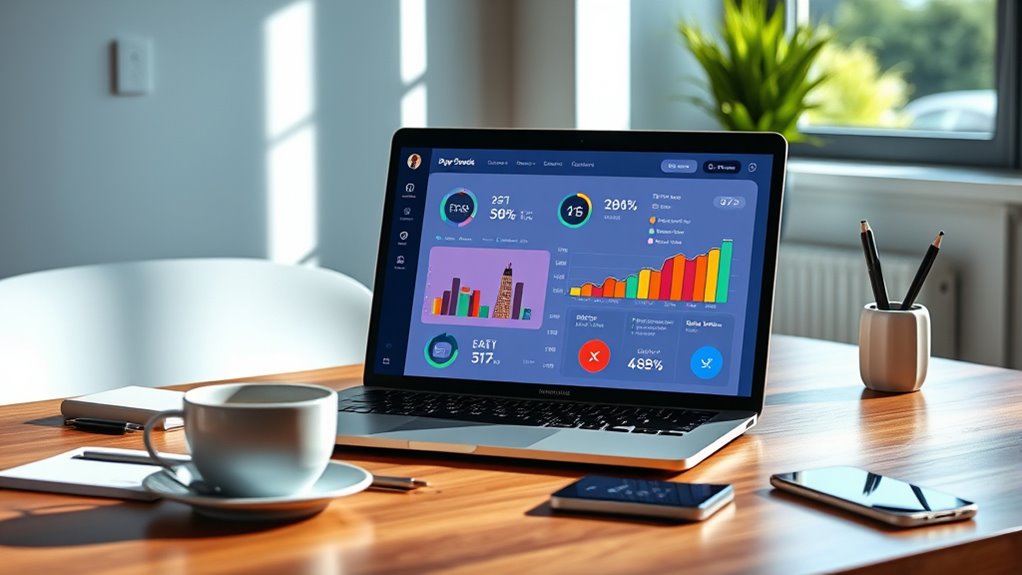
Creating a KPI dashboard for your personal life can help you stay focused and achieve your goals more effectively. By monitoring key metrics, you gain clarity on how you’re progressing and where you need to adjust. One of the most important aspects of personal KPI dashboards is tracking your time management. When you actively measure how you spend your hours each day, you’re better equipped to identify habits that boost productivity or waste precious minutes. For example, tracking the amount of time you dedicate to work, exercise, relaxation, and personal development allows you to see patterns and make informed decisions. If you notice that you’re spending too much time on social media or procrastinating, you can set specific goals to reduce those activities and reallocate that time toward more meaningful pursuits. Incorporating tools with high accuracy can further improve your tracking reliability.
Tracking your daily hours improves productivity and helps you focus on what truly matters.
Goal tracking is another core component of your dashboard. Instead of vague intentions, you set clear, measurable objectives—like reading for 30 minutes daily, exercising four times a week, or saving a certain amount of money each month. Your dashboard visually displays your progress, making it easier to stay motivated and accountable. When you can see your achievements and setbacks at a glance, you’re more likely to stay committed to your personal growth. Additionally, goal tracking helps you prioritize your efforts. If a particular goal isn’t moving forward, you can analyze why and adjust your approach rather than feeling discouraged. This iterative process keeps you aligned with your long-term vision.
Building your dashboard involves choosing simple tools—spreadsheets, apps, or custom tracking systems—that fit your lifestyle. You’ll want to identify the most relevant KPIs for your personal goals, such as hours spent on hobbies, calories consumed, or savings milestones. Set regular intervals—daily, weekly, or monthly—to review your data. This consistency ensures you stay aware of your progress and can swiftly make course corrections. Keep your dashboard straightforward; cluttered or overly complex visuals can undermine your motivation. Use clear charts, color codes, or progress bars to make the information digestible and engaging.
Ultimately, your KPI dashboard for personal life becomes a powerful feedback loop. It transforms abstract goals into concrete, trackable metrics, making your aspirations tangible. With regular updates and honest reflection, you’ll develop a deeper understanding of your habits, strengths, and areas for improvement. This clarity helps you stay focused, manage your time better, and celebrate your wins along the way. Building and maintaining a personal KPI dashboard isn’t just about tracking numbers; it’s about creating a system that propels you towards a more intentional, balanced, and fulfilling life.

Google Sheets for Personal Finance: Your Road from Novice to Skilled Professional
As an affiliate, we earn on qualifying purchases.
As an affiliate, we earn on qualifying purchases.
Frequently Asked Questions
What Tools Are Best for Creating Personal KPI Dashboards?
When choosing tools for creating personal KPI dashboards, consider tracking apps like Fitbit, MyFitnessPal, or Todoist to gather data. Pair these with visualization tools such as Google Sheets, Excel, or Notion, which help you organize and visualize your progress. These tools enable you to monitor your goals effectively, stay motivated, and make data-driven decisions about your personal development. Pick the ones that best fit your lifestyle and goals.
How Often Should I Update My Personal KPIS?
You should update your personal KPIs regularly, whether you’re tracking habits or setting targets. Weekly updates help you stay accountable, identify trends, and make adjustments. Monthly reviews allow for broader reflections and strategic shifts. Consistent updates keep your motivation high, guarantee you’re on track, and help you adapt to changing priorities. By maintaining this rhythm, you create a habit of continuous improvement and stay aligned with your goals.
Can I Automate Data Collection for My Dashboard?
Yes, you can automate data collection for your KPI dashboard, but you should prioritize data validation and address privacy concerns. Use trusted apps and integrations that securely sync your data automatically. Always verify the accuracy of the data and guarantee your privacy settings are tight. This way, you keep your dashboard reliable while protecting sensitive information, saving you time and effort in manual updates.
How Do I Choose Relevant KPIS for My Personal Goals?
When choosing relevant KPIs for your personal goals, focus on goal alignment and priority setting. Identify what truly matters to you, whether it’s health, finances, or growth, and select metrics that reflect progress in those areas. Keep your KPIs simple and actionable, ensuring they motivate you without overwhelming. Regularly review and adjust them to stay aligned with your evolving priorities, helping you stay focused and driven toward your personal success.
What Are Common Mistakes to Avoid When Building a Personal KPI Dashboard?
When building your personal KPI dashboard, avoid overcomplicating metrics, which can make tracking overwhelming. Don’t ignore the context behind your data; understanding why a metric changes is essential. Keep your KPIs simple and relevant, and regularly review them to stay aligned with your goals. By focusing on clarity and context, you’ll create a dashboard that genuinely supports your personal growth instead of adding unnecessary confusion.

Google Sheets for Goal Tracking: Your Road from Novice to Skilled Professional
As an affiliate, we earn on qualifying purchases.
As an affiliate, we earn on qualifying purchases.
Conclusion
Imagine your life as a vibrant garden, each KPI a seed you nurture daily. With your personalized dashboard, you become the gardener, tending to what flourishes and pruning what doesn’t. As you watch your goals bloom and setbacks fade into compost, you’ll see how clarity and consistency transform chaos into a lush landscape of growth. Keep tending your dashboard, and watch your personal garden thrive beyond what you ever thought possible.

90 Day Scratch Off Habit Tracker (11.7" x 16.5") | Daily Streak Keeper & Goal Tracker with Motivational Prompts – Morning Routine & Productivity Chart for Adults
SCRATCH OFF DAILY. BUILD AN UNSTOPPABLE STREAK – One square every day you show up. Watch 90 days…
As an affiliate, we earn on qualifying purchases.
As an affiliate, we earn on qualifying purchases.

Activity Log Book Notebook & Time Tracker, 5.5 x 8.5 Daily Log Book for Work, Project Management, Time Sheet, Call Log for Office, Manager Supplies, Time Management Tools, 50 Double Sided Pages
Track Time & Prioritize Tasks: This time tracker and activity log allows you to plan and document your…
As an affiliate, we earn on qualifying purchases.
As an affiliate, we earn on qualifying purchases.