
If you’re aiming to stay on track with your goals in 2025, I recommend exploring some of the best OKR journals available. Options like the OKRs Field Book, the 100-Day Goal Journal, and the High Performance Planner offer structured layouts, visual trackers, and motivational prompts to keep you focused. Each tool is designed to boost your productivity and habit formation. Keep going, and you’ll discover even more ways to find the perfect match for your goals.
Key Takeaways
- These journals incorporate proven goal-setting strategies like SMART goals, reflection prompts, and habit tracking to ensure effective OKR management.
- They feature durable, high-quality materials with flexible, undated formats suitable for long-term use in 2025.
- Designed for both personal and team goals, they promote active engagement, accountability, and continuous progress tracking.
- Many options include motivational prompts, visual progress tracking, and reflection pages to boost focus and commitment.
- They vary from minimalist planners to comprehensive coaching tools, catering to different user preferences and organizational needs.
Amazon Product 1119816424
As an affiliate, we earn on qualifying purchases.
The OKRs Field Book: A Step-by-Step Guide for Objectives and Key Results Coaches
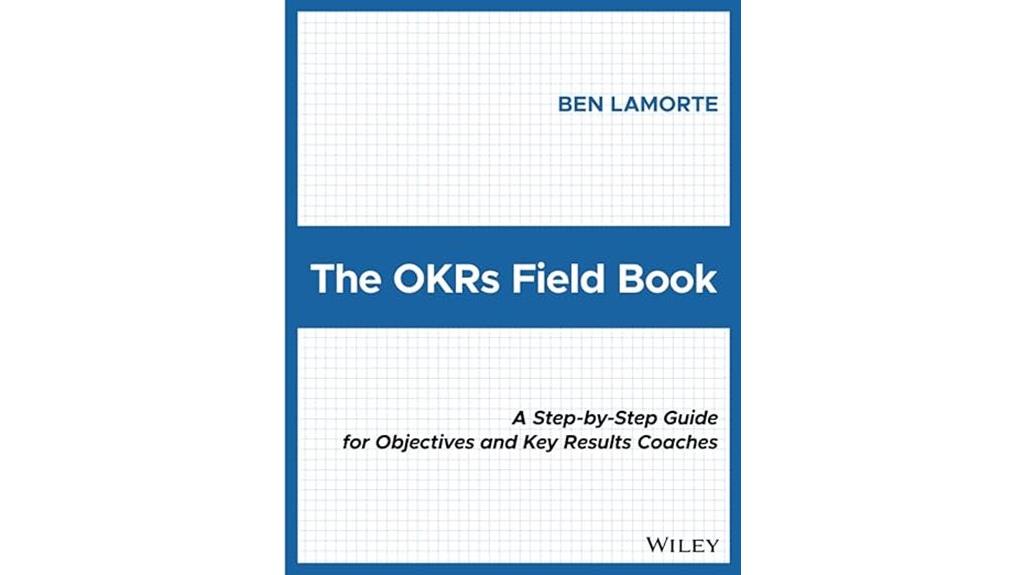
If you’re an OKR coach or leader looking for a practical, hands-on guide to implementing Objectives and Key Results, The OKRs Field Book is a must-have resource. Authored by Ben Lamorte, it offers step-by-step instructions, best practices, and real-world insights tailored for coaching teams through setting, aligning, and tracking OKRs. This book emphasizes a coaching approach, helping you facilitate effective conversations, avoid common pitfalls, and build confidence in deploying OKRs at all organizational levels. With exercises, templates, and case studies, it bridges the gap between theory and practice, ensuring you can implement OKRs with clarity and sustainable success.
Best For: OKR coaches, leaders, and change agents seeking a practical, step-by-step manual to effectively implement and sustain Objectives and Key Results within their organizations.
Pros:
- Provides detailed, actionable guidance with exercises, templates, and real-world case studies.
- Emphasizes a coaching approach that enhances team engagement and long-term adoption.
- Bridges the gap between theory and practice, helping prevent common pitfalls in OKRs deployment.
Cons:
- Focuses primarily on methodology and coaching strategies, not specific OKRs software tools.
- May be less suitable for those seeking an introductory overview of OKRs principles.
- Assumes some familiarity with OKRs concepts and prior reading of foundational texts like *Measure What Matters*.
Amazon Product 1454930748
As an affiliate, we earn on qualifying purchases.
The 100-Day Goal Journal: Accomplish What Matters to You
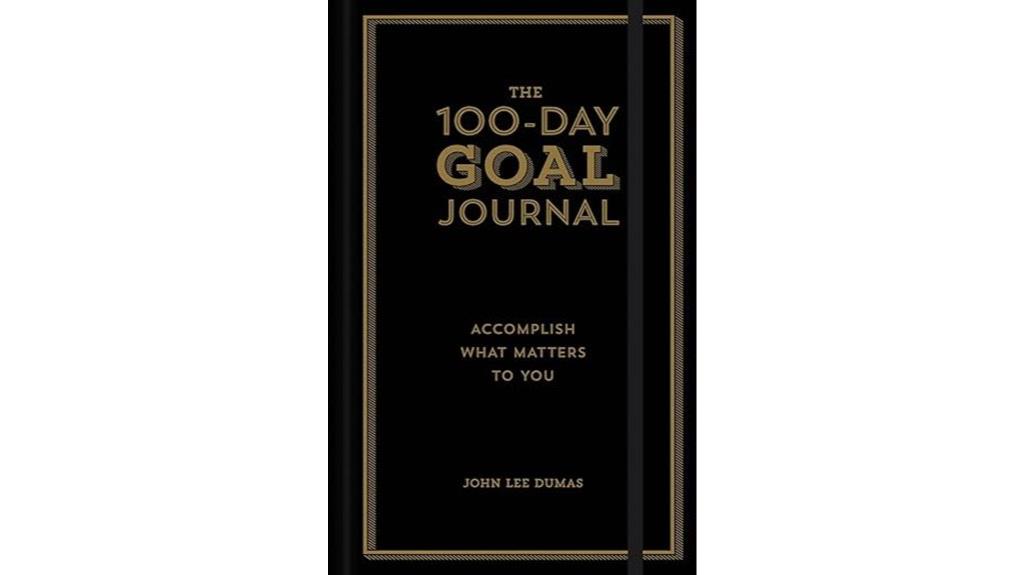
The 100-Day Goal Journal is ideal for individuals who thrive on structured progress and enjoy tracking their goals through regular check-ins. I’ve found it transforms intentions into action with its clear framework, helping me stay focused and motivated. Its high-quality materials, sturdy cover, and elegant design make it a pleasure to use daily. I appreciate how it can be customized to fit my routines, whether for long-term projects or daily tasks. This journal keeps me accountable and visually reminds me of my priorities. Many users, including myself, consider it an essential tool for turning dreams into tangible accomplishments within just 100 days.
Best For: individuals who thrive on structured goal tracking, enjoy writing by hand, and want a high-quality, customizable planner to turn their ambitions into achievements within 100 days.
Pros:
- Facilitates clear goal setting and regular progress check-ins to maintain motivation.
- Crafted with high-quality materials and an elegant design that enhances daily use and makes it a motivating desk accessory.
- Versatile and customizable, allowing users to adapt sections to personal routines or project needs.
Cons:
- May not appeal to those who prefer digital planning or dislike handwriting.
- Requires consistent daily engagement to maximize its effectiveness, which might be challenging for some users.
- Some users might find the 100-day focus limiting if their projects or goals extend beyond this timeframe.
Amazon Product 0525536221
As an affiliate, we earn on qualifying purchases.
Measure What Matters Book
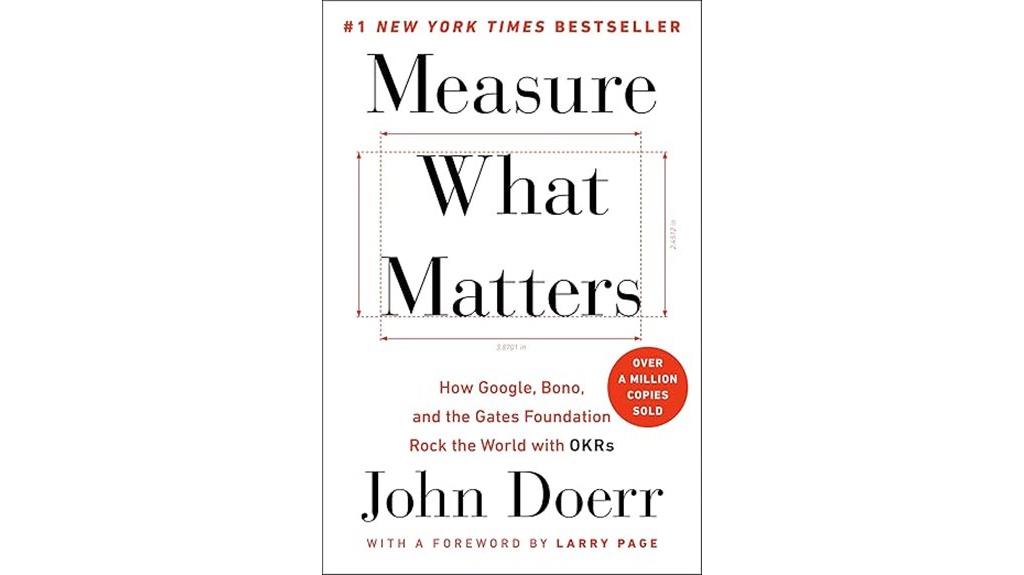
“Measure What Matters” by John Doerr stands out as an essential resource for leaders and organizations seeking a proven framework to set and achieve bold goals. The book explores Objectives and Key Results (OKRs), showing how giants like Google and the Gates Foundation have used this system to boost focus, alignment, and performance. It highlights the importance of leadership, culture, and strategic planning in successful OKR implementation. While providing inspiring stories and practical insights, it also emphasizes the need for organizational readiness. Overall, this book offers valuable lessons on harnessing OKRs to drive innovation and growth in any setting.
Best For: leaders, managers, and organizations aiming to implement a proven goal-setting framework to enhance focus, alignment, and performance across teams.
Pros:
- Provides inspiring real-world examples from top organizations like Google and the Gates Foundation.
- Emphasizes the importance of leadership and organizational culture in successful OKR adoption.
- Offers motivational insights and practical lessons to drive strategic growth and innovation.
Cons:
- Lacks detailed, step-by-step guidance for developing specific OKRs, which may limit applicability for beginners.
- Some examples and marketing tone may seem exaggerated or less credible.
- Implementation can be challenging for large or less mature organizations without proper preparation and culture shifts.
Amazon Product B08RRDTB5Y
As an affiliate, we earn on qualifying purchases.
OKR Log Book for Goal Setting and Productivity
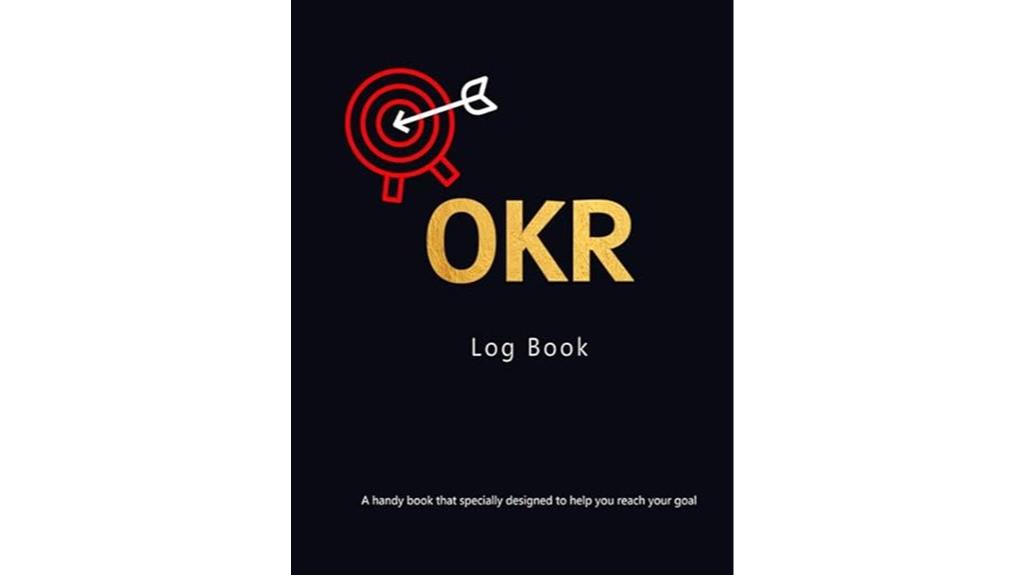
For those who want a straightforward tool to track their objectives and stay productive, the OKR Log Book offers a simple, journal-lined design to help keep goals organized. However, its practical use falls short due to confusing layout choices. After the first yearly page, it provides only four quarterly spreads and 80 note pages, expecting users to create their own charts over multiple years—inefficient and cumbersome. The inconsistency between the objectives listed annually and only one objective shown quarterly adds to the confusion. Many find it a poor investment, wasting money on blank pages and limited functionality, leading to frustration and regret.
Best For: individuals seeking a simple journal-style tool to track their OKRs who are willing to customize and work around design limitations.
Pros:
- Minimalist, journal-lined pages that encourage personalized goal tracking
- Compact size convenient for daily use and quick reference
- Encourages user creativity by allowing customization of charts and notes
Cons:
- Limited quarterly spreads with inconsistent objectives, leading to confusion
- Many blank pages that do not contribute to goal tracking, wasting space and money
- Poor design choices make it inefficient for long-term, structured goal management
The High Performance Planner
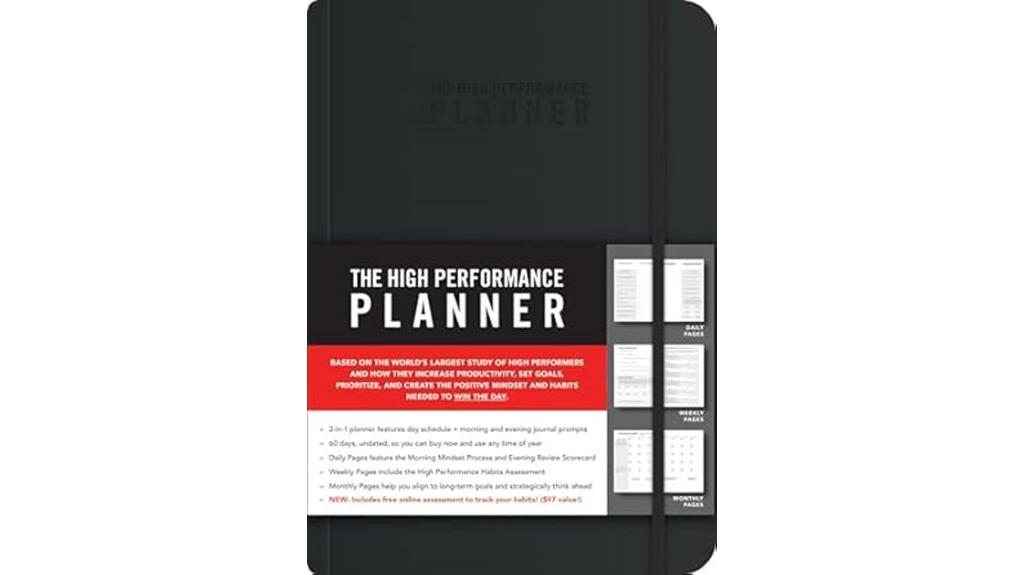
If you prefer a goal-setting tool that emphasizes mindfulness and personal reflection, the High Performance Planner stands out as an excellent choice. This 60-day physical planner focuses on deep reflection, self-awareness, and daily discipline, encouraging handwritten goals and mindset shifts. Its flexible, undated design with prompts like “If I was going to…” sparks creativity and keeps you engaged. With assessment pages inspired by Brendon Burchard, it helps track progress and reinforce positive habits. Many users find it boosts motivation, organization, and accountability, especially for those who thrive on tactile, intentional planning. It’s a powerful tool for aligning your mindset with your goals in a meaningful way.
Best For: individuals seeking a mindful, reflection-driven goal-setting tool that fosters personal growth and daily discipline through handwritten planning.
Pros:
- Encourages deep self-reflection and mindset shifts with thoughtfully designed prompts
- Promotes accountability and motivation through tactile, handwritten goals
- Flexible, undated format allows for customized use anytime
Cons:
- Can be bulky and less portable, especially in its A4 size
- Limited initial space in pages may require extra printing or photocopying for comprehensive exercises
- Repetitive daily questions may become monotonous without rotating prompts or adding variety
The Phoenix Journal Daily Goal Planner & Organizer (12 Weeks, Hardcover, Black)
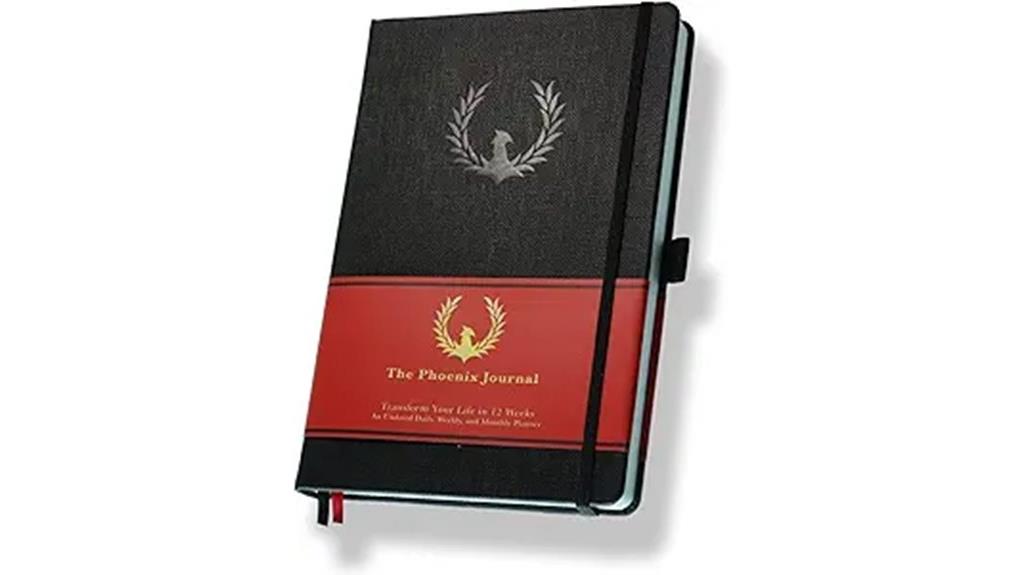
The Phoenix Journal Daily Goal Planner & Organizer is ideal for individuals seeking a structured yet flexible tool to boost daily productivity and personal growth. I love its proven strategies for enhancing self-fulfillment and focus. With goal clarity, gratitude prompts, and habit trackers, it helps me reflect on progress in fitness, work, and relationships. The undated, hardcover design offers flexibility, while features like hourly scheduling and daily reflection pages keep me on track. It’s not just about organizing tasks but actively encouraging action across all life areas. Using this journal, I feel more motivated, intentional, and confident in reaching my goals over the 12-week span.
Best For: individuals seeking a comprehensive, flexible planner to enhance daily productivity, personal growth, and goal achievement over a 12-week period.
Pros:
- Incorporates proven strategies for self-fulfillment, motivation, and habit formation.
- Undated design allows for customizable start dates and ongoing use.
- Features includes hourly scheduling, reflection pages, and specialized templates for goal setting and tracking.
Cons:
- Hardcover may be less portable compared to softer planners.
- Limited to 12 weeks, requiring additional planning tools for long-term goals.
- May require consistent user engagement to fully benefit from the system’s features.
The Bullet Journal Method Book
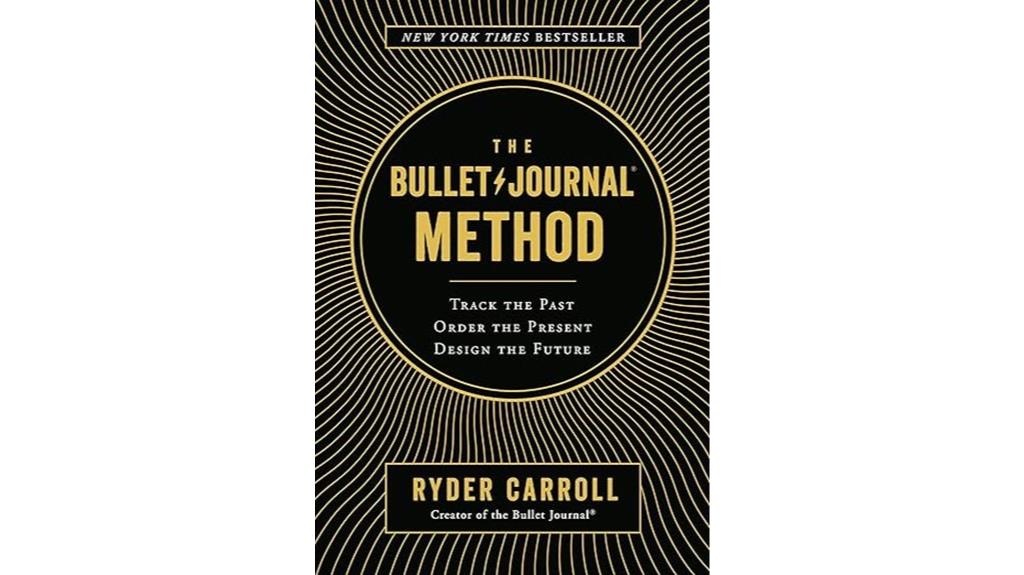
Many people seeking a flexible, customizable planning system turn to Ryder Carroll’s Bullet Journal Method Book because it empowers users to tailor their journals to fit any lifestyle or goal. The book explains how the Bullet Journal’s simple system—using dots, circles, and hyphens—helps manage life efficiently, especially for those with ADHD. It emphasizes function over aesthetics, encouraging personalization to suit individual needs. By incorporating logs, collections, and reflections, it improves organization, reduces mental clutter, and boosts goal achievement. I’ve found it inspiring and practical, helping me focus on meaningful progress rather than superficial perfection, making it a versatile tool for lifelong growth.
Best For: individuals seeking a flexible, personalized planning system to improve organization, focus, and goal achievement, especially those with ADHD or a preference for functional over aesthetic journaling.
Pros:
- Highly customizable to fit any lifestyle or specific needs
- Encourages focus on meaningful tasks and personal growth
- Reduces mental clutter and enhances time management
Cons:
- May require an initial learning curve to understand the system
- Lacks pre-designed templates, which might be challenging for beginners
- Physical journal options can be more expensive, though alternatives are available
BestSelf 13-Week Self Journal & Goal Planner
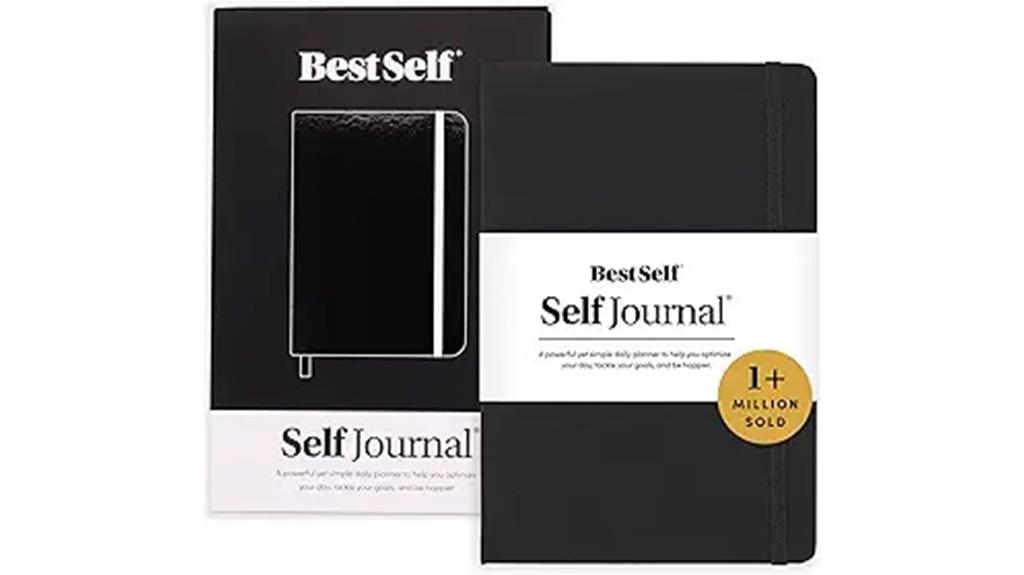
Designed for anyone seeking a flexible yet structured approach to goal-setting, the BestSelf 13-Week Self Journal & Goal Planner stands out with its undated format and ADHD-friendly features. Its sleek black hardcover and portable size make it easy to use anywhere—at home, work, or on the go. The journal combines science-backed SMART goals with prompts for gratitude, reflection, and habit tracking, helping me stay focused and intentional. With a 13-week format, it encourages progress in areas like health, career, and relationships. Many users, including myself, find it boosts productivity, fosters mindfulness, and makes goal achievement feel manageable and rewarding.
Best For: individuals seeking a flexible, structured, and science-backed planner to achieve their goals over 13 weeks, especially those who prefer an undated, portable journal that supports mindfulness and habit-building.
Pros:
- Undated format allows for flexible start times and reuse
- Combines goal-setting, reflection, and habit tracking based on proven scientific principles
- Compact, durable, and portable design suitable for daily use anywhere
Cons:
- Lacks additional features like a back pocket or ritual cards found in some planners
- Elastic strap may stretch over time with frequent use
- Some users may prefer more pre-designed prompts or guided content
The High Performance Journal
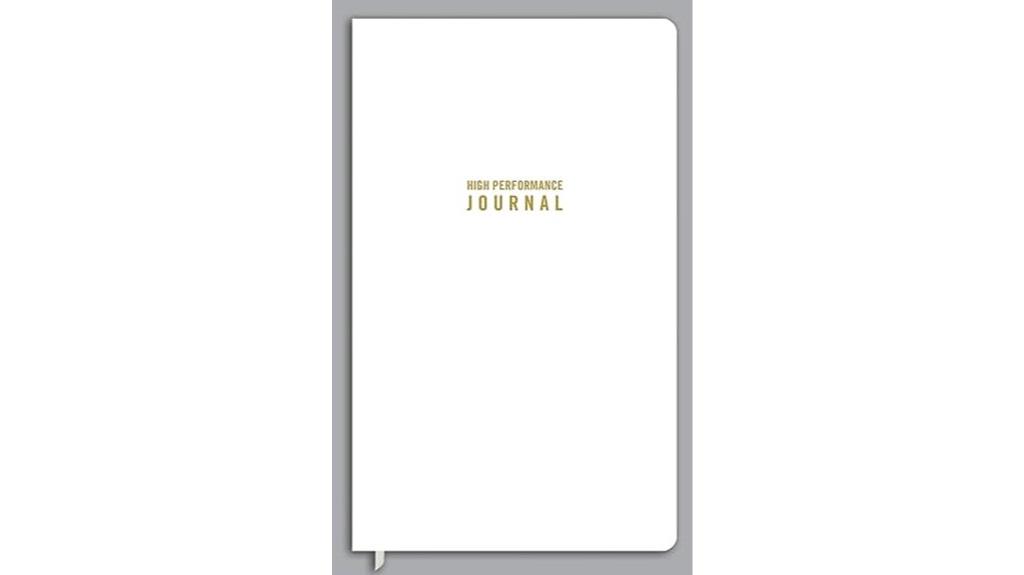
If you’re seeking a journal that combines elegant design with practical tools for self-improvement, the High Performance Journal stands out as an excellent choice. Its white cover with gold embossing and rounded corners feels luxurious and inspiring. Inside, it offers dotted pages, guided prompts, and space for free writing, all crafted to boost self-awareness, clarity, and focus. With over 100 prompts covering feelings, health, relationships, and goals, it encourages deep reflection. Many users find it helps combat negativity and enhances personal growth, making it a powerful tool for anyone committed to high performance. Despite its size, it’s perfect for focused, short-term reflection and progress tracking.
Best For: individuals seeking a beautifully designed, practical journal to enhance self-awareness, focus, and personal growth through guided prompts and reflective writing.
Pros:
- Elegant design with luxurious white cover, gold embossing, and rounded corners that feels inspiring and high-quality
- Offers a well-balanced layout with prompts and space for free writing, supporting deep reflection and goal setting
- Compact size suitable for short-term use, making it easy to carry and focus on personal development over two months
Cons:
- Smaller size may limit extensive or lengthy journaling sessions for some users
- Some users find the prompts superficial or unhelpful, leading to quick discard after initial use
- Packaging may lack outer wrapping, which could raise concerns about cleanliness or newness upon arrival
Self Improvement Journal for Men & Women
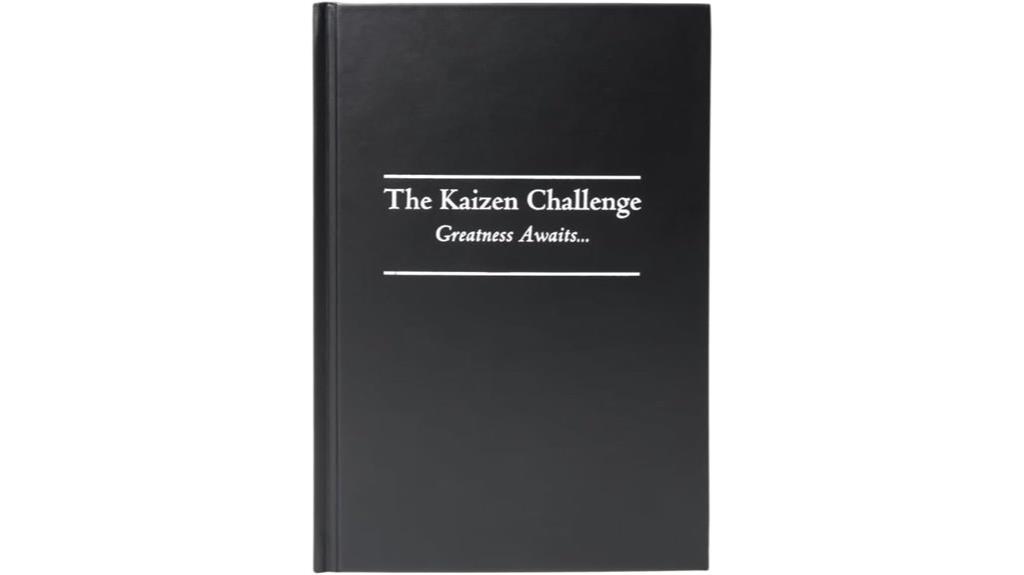
The Kaizen Challenge Self-Improvement Journal stands out as an ideal choice for men and women committed to developing daily habits and cultivating personal growth over an extended period. I find its 20-week structure, with daily reflection and habit tracking, incredibly effective for staying accountable. The minimalist design reduces overwhelm, making it easy to focus on small, meaningful steps. Its durable hardcover and high-quality pages ensure longevity, while motivational quotes and milestones keep me inspired. Users report increased focus, better organization, and reduced stress. For anyone serious about continuous self-improvement, this journal acts as a personal coach, guiding you toward your goals one day at a time.
Best For: individuals seeking a structured, sustainable approach to personal growth, habit formation, and goal achievement over an extended period.
Pros:
- Durable hardcover and high-quality pages ensure long-term use and resilience
- Minimalist layout reduces overwhelm, promoting focus on small, meaningful steps
- Motivational quotes and milestones enhance inspiration and sustained engagement
Cons:
- As an undated planner, it requires consistent dedication to make the most of the 20-week structure
- May not include extensive customization options for highly specific or advanced planning needs
- Some users might prefer digital or more interactive tools for tracking habits and progress
Success Journal / Sunny Pink: A Productivity Goal Planner
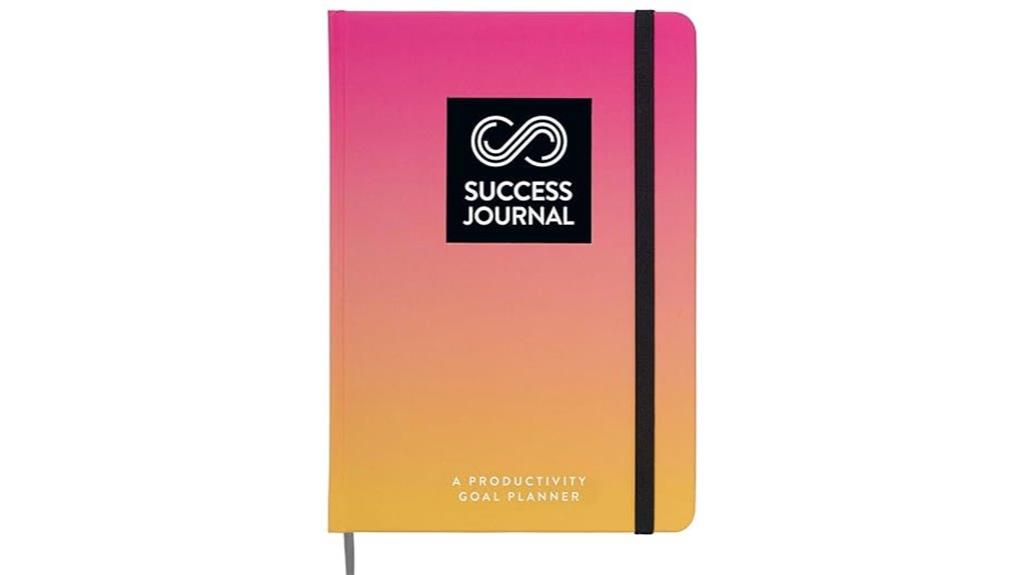
Are you looking for a journal that acts like a personal life coach to keep you motivated and organized? The Success Journal / Sunny Pink is exactly that. It offers an all-encompassing design with goal setting, habit tracking, motivation, and reflection tools that help you stay focused on short-term and long-term goals. Made with high-quality materials and a sturdy hardcover, it’s built to last. Users love its thoughtful layout, motivational questions, and structured approach, making it a powerful self-development tool. Whether you’re aiming to build habits or clarify your purpose, this journal guides you step-by-step toward success and personal growth.
Best For: individuals seeking a comprehensive, motivational planner that functions as a personal life coach to enhance goal setting, habit formation, and self-development.
Pros:
- Combines goal setting, habit tracking, motivation, and reflection tools in one structured journal
- Made with high-quality materials, sturdy binding, and a durable hardcover for long-term use
- Thoughtful layout with motivational questions that encourage self-reflection and personal growth
Cons:
- Some users find the information density overwhelming initially
- Limited writing space per section may restrict detailed journaling
- Notable issues with covers arriving damaged or the journal not lying flat for easier writing
Factors to Consider When Choosing OKR Journals

When selecting an OKR journal, I focus on layout clarity, goal alignment features, and how easy it is to use. I also consider visual tracking options to stay motivated and the journal’s durability for daily use. These factors help me find a tool that’s both effective and reliable in supporting my goals.
Clarity of Layout
A clear layout in an OKR journal is essential because it helps prevent confusion and makes tracking progress straightforward. I look for journals that distinctly separate objectives from key results, so I can easily see my goals and how I’m progressing. Visual hierarchy, like bold headings or color coding, helps me quickly identify sections and prioritize my focus. Well-organized pages with designated spaces for setting, reviewing, and updating OKRs support consistency and accountability. Including prompts or guided questions within the layout guides me through the goal-setting process step-by-step, making it less overwhelming. An intuitive layout minimizes cognitive load, so I stay engaged and consistent without feeling disorganized or overwhelmed, ultimately helping me stay on track with my goals.
Goal Alignment Features
To guarantee your OKRs stay aligned across different levels of your organization, it’s important to choose a journal that offers goal alignment features. Look for journals that provide space for cascading objectives, ensuring consistency from top to bottom. Visual tools like charts or diagrams can help link individual, team, and organizational goals clearly. Tracking how Key Results support broader Objectives promotes strategic coherence and keeps everyone on the same page. Journals with prompts or questions designed to reflect on goal alignment can deepen understanding of how daily tasks contribute to overall strategy. Including sections for cross-functional or interdepartmental goals helps teams manage diverse priorities without losing sight of shared objectives. These features make it easier to maintain alignment and ensure collective progress.
Ease of Use
Choosing an OKR journal that’s easy to use starts with a clear and intuitive layout. I look for journals that simplify setting, tracking, and reviewing goals with guided prompts or structured templates. These features help me quickly understand how to record progress without a steep learning curve. Consistent formatting, like dedicated sections for quarterly, monthly, and weekly check-ins, makes navigation predictable and efficient. Visual elements such as progress bars, color coding, or charts make tracking more straightforward and keep me motivated. I also prioritize designs that minimize clutter and unnecessary features, so I stay focused on my goals without feeling overwhelmed. An easy-to-use journal keeps the process smooth and encourages regular engagement, which is essential for staying on track throughout the year.
Visual Tracking Options
Visual tracking options like charts, progress bars, and dashboards play a essential role in helping me quickly gauge my progress and stay motivated. These tools offer at-a-glance updates on my goal status, making it easier to see how far I’ve come and what still needs attention. Effective visual elements, especially when color-coded or marked with visual cues, help me distinguish between objectives, key results, and different team or individual levels. I consider how complex my OKRs are and how often I review them to choose the right visual tools. Incorporating these elements into my journal boosts transparency, accountability, and engagement. Clear visual tracking keeps my focus sharp and ensures I stay aligned with my goals throughout the year.
Durability and Quality
Since I use my OKR journal daily, durability and quality are vital considerations. A sturdy cover made from hardcover or thick cardstock helps it withstand frequent handling without showing wear. Premium, bleed-resistant paper ensures my notes stay clear and intact over time, even if I write heavily or use different pens. Reinforced binding and sewn edges prevent pages from loosening or tearing, which is crucial for long-term use. Features like elastic closures and ribbon markers not only add convenience but also extend the journal’s lifespan by protecting its pages. Investing in a well-constructed journal means it remains functional and looks good after months of daily use. Durability and quality give me confidence that my goals are stored safely, making my planning process smooth and reliable.
Flexibility and Customization
To make the most of an OKR journal, I look for one that offers ample flexibility and customization options. I prefer journals with customizable sections for objectives, key results, and progress tracking, so I can adapt them to my specific needs. Flexible formatting, like undated pages or modular layouts, allows me to tailor the planning process over time without feeling constrained. I also seek journals with prompts or templates that I can modify or skip, supporting my personalized approach to goal setting. Space for iterative updates, reflections, or adjustments is essential, as it helps me stay aligned with evolving priorities. Ultimately, I prioritize journals that facilitate multiple levels of planning—team, project, or organizational—to support flexible scaling and alignment strategies.
Motivational Elements
Motivational elements play a crucial role in selecting an effective OKR journal because they directly influence how engaged and committed I stay to my goals. I look for journals that include inspiring quotes or prompts, which can boost my motivation and accountability. Incorporating daily or weekly reflection questions helps reinforce my commitment and keeps me focused on my objectives. Visual cues like progress bars or achievement trackers give immediate feedback, encouraging me to keep pushing forward. Journals with affirmations or positive reinforcement messages foster a growth mindset and resilience during setbacks. When motivational content is tailored to my personal or team goals, it creates a stronger emotional connection, making it easier to persevere and stay motivated throughout my journey.
Price and Value
When choosing an OKR journal, it’s important to weigh its price against the quality of materials, layout, and features it offers. Affordable journals may save you money initially but often lack durability or all-encompassing prompts, which can hinder long-term use and engagement. Higher-priced options typically feature premium materials, detailed templates, and extra coaching tools that add value to your goal-tracking process. Comparing costs over time helps determine whether a pricier journal provides better overall value than cheaper alternatives. Look for journals that strike a balance between affordability and practical features, such as clear layouts, space for reflection, and goal-setting prompts. Investing in a well-designed journal can enhance your consistency and help you stay on track without wasting money on less effective options.
Frequently Asked Questions
How Do OKR Journals Differ From Traditional Goal Planners?
OKR journals differ from traditional goal planners because they focus specifically on Objectives and Key Results, helping me align my efforts with clear, measurable outcomes. Unlike standard planners that just track tasks, OKR journals encourage me to set ambitious goals and regularly review progress. This structured approach keeps me accountable and flexible, ensuring I stay motivated and on track toward bigger, strategic achievements rather than just daily chores.
Can OKR Journals Be Customized for Personal or Team Use?
Did you know 78% of successful teams customize their goal tools? Yes, OKR journals can be tailored for both personal and team use. I love personalizing mine with specific metrics and deadlines, making it more relevant. For teams, I recommend adding collaborative sections. Customization helps keep everyone aligned and motivated, ensuring your goals stay on track. It’s flexible and makes goal-setting more effective for any context.
What Features Should I Look for in an Effective OKR Journal?
When choosing an effective OKR journal, I look for clear sections to set and track objectives and key results. It should have space for regular check-ins, progress notes, and reflections. I also value customizable templates, visual progress indicators, and prompts that keep me accountable. A well-organized layout helps me stay focused, motivated, and aligned with my goals, making the journaling process both efficient and inspiring.
Are Digital OKR Tools More Effective Than Paper Journals?
I believe digital OKR tools can be more effective because they offer real-time updates, easy collaboration, and seamless tracking. I’ve found that they adapt quickly to changes and keep me organized across devices. However, some prefer paper journals for their tactile experience and reduced distractions. Ultimately, it depends on your personal style—both can work well, but digital tools provide more flexibility and immediate access.
How Often Should I Review and Update My OKR Journal?
I review and update my OKR journal weekly to stay aligned with my goals and track progress effectively. Regular check-ins help me identify what’s working and what needs adjustment. I also do a more thorough review monthly to reflect on achievements and set new priorities. This consistent rhythm keeps me motivated, focused, and adaptable, ensuring I stay on course toward my objectives without losing momentum.
Conclusion
Choosing the right OKR journal isn’t just about tracking goals—it’s about shaping your future. While some focus sharply on metrics, others inspire reflection. Like a compass guiding a ship through fog, your journal can steer you toward success or leave you adrift. Remember, it’s not just what you record but how you use it that matters. Ultimately, your journaling tool is a mirror reflecting your commitment—and your journey to growth.