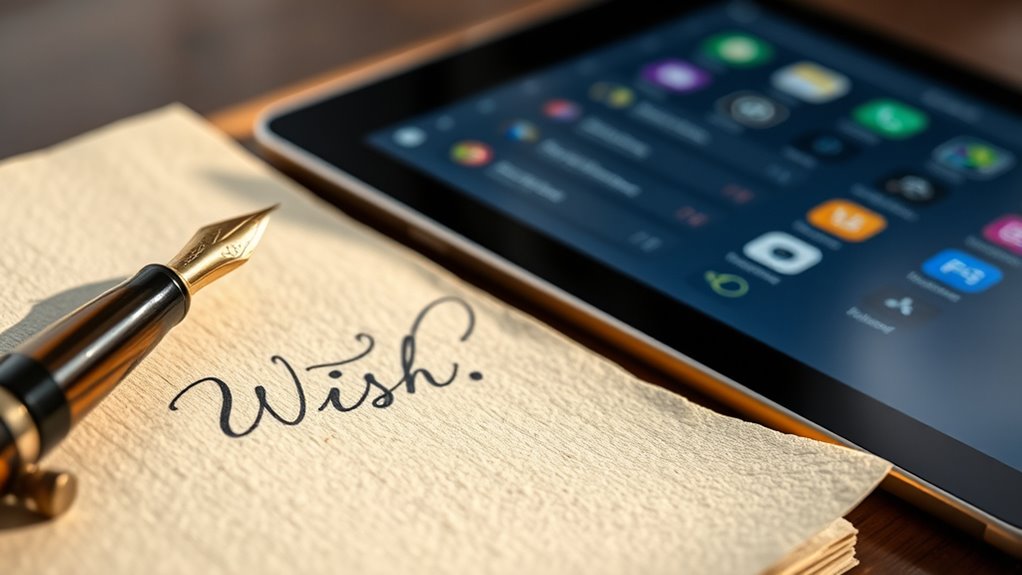

When choosing between handwritten and digital wishes, consider that handwriting offers a personal touch, conveying genuine emotions, but requires time and good penmanship. Digital options are quick, flexible, and visually polished, yet can feel less intimate. The best choice depends on whether you value heartfelt sincerity or convenience. To explore how each method can best suit your needs and create meaningful messages, what specific aspects matter most to you?

Get books, candles and calm essentials delivered free — and shop member deals
- Fast, free delivery on millions of items
- Access to Prime Big Deal Days deals on October 6–7
- Prime Video, Amazon Music and more included
Key Takeaways
- Handwritten wishes convey genuine emotion and personal effort, while digital wishes offer quick customization and editing.
- Handwriting adds a unique, aesthetic touch with varied stationery, whereas digital formats allow for decorative elements and professional looks.
- Handwriting requires more time and effort but creates tangible, heartfelt keepsakes; digital methods are faster and more convenient for multiple messages.
- Handwritten notes may be less tidy but feel more personal; digital messages can lack physicality but ensure consistency and visual appeal.
- The choice depends on valuing emotional sincerity and physical connection versus efficiency and design flexibility.
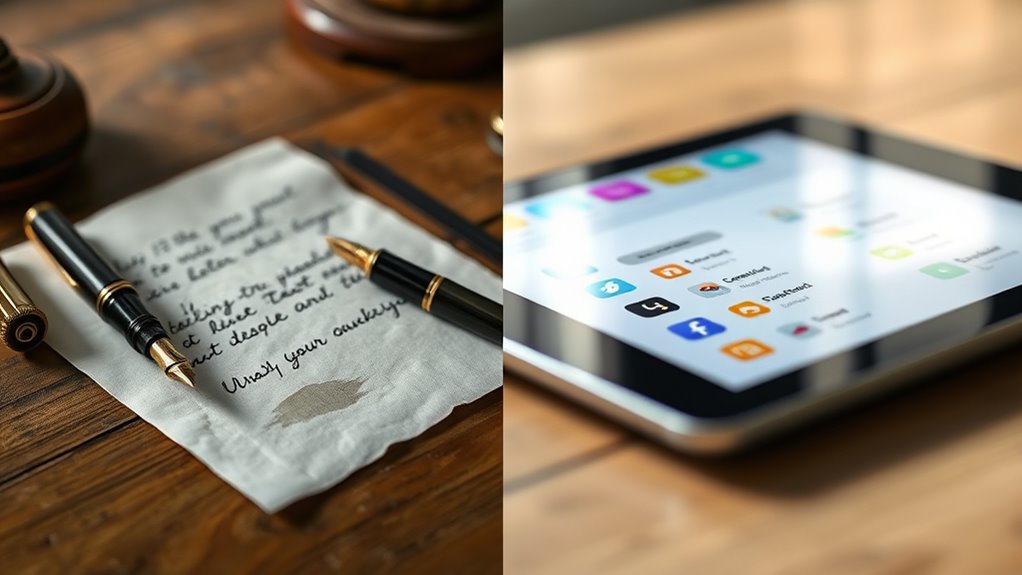
When it comes to writing wishes, you can choose between the timeless charm of analog methods or the convenience of digital tools. Each approach offers unique advantages that can influence how your message is received. If you prefer a personal touch, harnessing handwriting techniques allows your wishes to feel genuine and heartfelt. The way you write—your pen strokes, letter spacing, and even the pressure you apply—adds a layer of emotion that digital messages often lack. Handwritten wishes seem more intentional, showing you’ve taken the time to craft something special. Plus, with a variety of stationery and pens, you can enhance your message’s aesthetic, making it more memorable.
On the other hand, digital customization has come a long way and offers impressive flexibility. With digital tools, you can easily experiment with fonts, colors, and layouts, making your wishes visually appealing. You can add decorative elements like stickers, images, or animations that capture the recipient’s attention instantly. Digital customization also allows for quick edits—if you make a typo or want to change the wording, it’s simple to correct without starting over. This convenience minimizes stress and saves time, especially if you’re preparing multiple wishes for different people or occasions. Additionally, digital platforms often provide templates that streamline the process, ensuring your wishes look polished and professional, even if you’re not confident in your design skills.
Digital tools offer quick edits, creative customization, and professional templates for polished, visually appealing wishes.
However, each method has its drawbacks. Handwriting requires patience, good penmanship, and sometimes, a steady hand. If your handwriting isn’t your strongest suit, your wishes might not look as neat as you’d like, which can detract from their sincerity. Conversely, digital customization can sometimes feel impersonal or overly polished, risking the loss of that warm, human touch that handwritten wishes naturally convey. Some people still value the tangible connection of holding a handwritten note, which digital messages can’t replicate. Also, understanding color accuracy and how it influences visual appeal can help you design more impactful digital wishes.
In the end, your choice depends on what you value most. If you want to express genuine emotion and create something tangible, investing time in handwriting techniques will serve you well. But if you’re pressed for time or want a perfectly designed message, digital tools provide a quick, versatile alternative. Both methods can be meaningful—it’s just about aligning your approach with your intent and the recipient’s preferences.
best fountain pens for handwritten notes
As an affiliate, we earn on qualifying purchases.
As an affiliate, we earn on qualifying purchases.
Frequently Asked Questions
How Does Handwriting Affect Wish Retention and Recall?
Handwriting markedly boosts your wish retention and recall accuracy. When you write by hand, your brain engages more deeply with the material, creating stronger handwriting memory links. This active process helps you remember your wishes better and recall details more accurately. You’re more likely to internalize and retain your intentions, making handwriting a powerful tool for enhancing your overall wish-fulfillment experience.
Can Digital Wish Writing Be More Environmentally Friendly Than Analog?
Is digital wish writing more eco-friendly than analog? Absolutely. Digital options often involve less paper waste and can use eco-friendly alternatives like recycled materials or energy-efficient devices. By switching to digital, you reduce paper waste and minimize environmental impact. Think about how much paper you save—it’s a simple step toward sustainability. Wouldn’t you prefer a more environmentally conscious way to express your wishes?
What Are the Security Concerns With Digital Wish Storage?
When you store wishes digitally, you face privacy risks and data breaches. Hackers might access your personal information, revealing your wishes or sensitive details. Weak passwords or insecure platforms increase vulnerability, making your data susceptible to theft. To protect yourself, use strong passwords, enable two-factor authentication, and choose reputable, secure services. Staying cautious helps guarantee your wishes remain private and safe from cyber threats.
How Do Personal Preferences Influence Choice Between Analog and Digital?
Your personal preferences greatly influence your choice between analog and digital wish writing. If you value personal comfort, you might prefer the tactile experience of writing by hand, which offers a sense of connection and authenticity. On the other hand, if aesthetic appeal matters to you, digital options can provide sleek designs and customizable visuals. Ultimately, your comfort and style preferences guide you toward the method that feels most meaningful and inspiring.
Are There Any Cultural Differences in Preferred Wish-Writing Methods?
Have you noticed how cultural traditions and regional preferences shape wish-writing methods? In some cultures, handwritten wishes are cherished as a sign of respect and personal connection, while others embrace digital formats for convenience. Do you think these differences reflect deeper societal values? Recognizing these cultural nuances helps you appreciate diverse approaches, making your wish-writing more meaningful and respectful of traditions worldwide.
personalized stationery for wishes
As an affiliate, we earn on qualifying purchases.
As an affiliate, we earn on qualifying purchases.
Conclusion
So, whether you choose the timeless charm of analog or the sleek efficiency of digital wish writing, one thing’s certain—you’re shaping your future in a way that’s uniquely yours. But what if the next wish you write could change everything? As you hold that pen or tap that screen, remember, the power to turn dreams into reality is in your hands. The choice is yours—are you ready to see where it leads?
As an affiliate, we earn on qualifying purchases.
As an affiliate, we earn on qualifying purchases.
Fall Picks
fall essentials
As an affiliate, we earn on qualifying purchases.