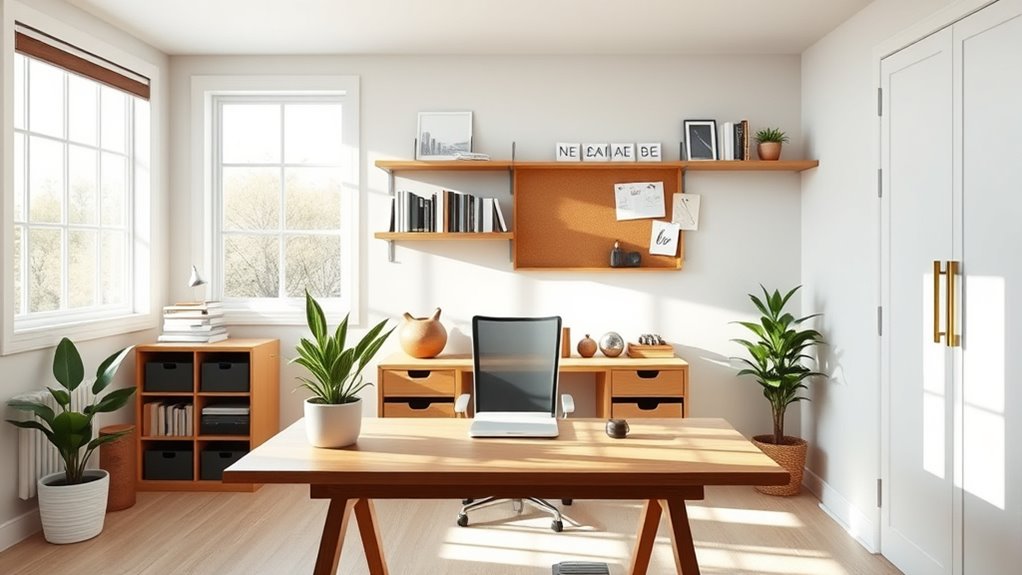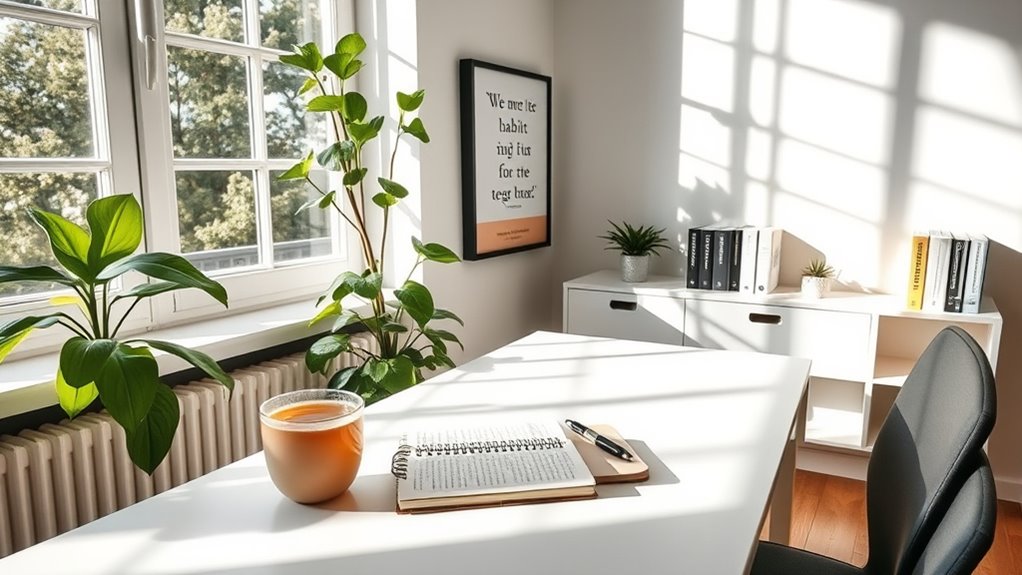

To design your environment for automatic good habits, make it easy and inviting to perform positive behaviors. Remove obstacles and create clear cues—like placing workout clothes visible or setting reminders in strategic spots—that trigger habits effortlessly. Organize your space to minimize decision fatigue and support your goals. When your surroundings are aligned with your intentions, good habits become second nature. Keep exploring to discover how small changes can lead to lasting transformation.
Key Takeaways
- Create an environment with visible cues and triggers that prompt healthy behaviors automatically.
- Organize your space to make healthy choices easy and unhealthy options less accessible.
- Use habit stacking by linking new habits to existing routines for seamless integration.
- Minimize decision fatigue by simplifying your environment and reducing distractions.
- Design your surroundings to turn desired actions into default, effortless behaviors over time.

Creating an environment that encourages good habits is one of the most effective ways to make positive changes automatic. When your surroundings are designed thoughtfully, you set yourself up for success by reducing friction and making healthy choices easier. One powerful strategy is habit stacking, which involves linking new behaviors to existing routines. For example, if you want to start flossing daily, do it immediately after brushing your teeth. By attaching a new habit to a well-established one, you create a seamless chain that becomes second nature over time. This technique leverages your brain’s tendency to operate on routines, making it easier to adopt new behaviors without relying solely on motivation.
Environmental cues play a vital role in shaping your habits. These cues are the signals in your environment that trigger specific behaviors. If you want to read more, place a book on your pillow or next to your coffee mug. If you aim to exercise regularly, keep your workout clothes where you can see them—perhaps by your bed or on a chair in your living room. When these cues are visible and accessible, they serve as reminders and prompts that nudge you toward action. Over time, your brain begins to associate these cues with the behavior, making the habit almost automatic. The key is to make these cues obvious, attractive, and easy to access, so they stand out and demand your attention.
You can also design your environment to minimize barriers to good habits. If you want to eat healthier, keep nutritious snacks within arm’s reach and hide less healthy options. If you’re trying to reduce screen time, set up a dedicated space for reading or hobbies and remove tempting distractions from your view. By adjusting your environment, you reduce the mental effort needed to make healthy choices, turning them into the default option. Over time, these small modifications compound, creating a setting that naturally supports your goals.
Minimize barriers by organizing your space to support healthy habits and reduce decision fatigue.
Additionally, understanding habit formation principles can help you craft an environment that fosters lasting change. Habit stacking and environmental cues work hand in hand. When you attach a new habit to an existing routine and support it with clear, visible cues, you’re creating a system that encourages consistency. Your environment becomes a silent partner in your efforts, guiding your behavior without requiring constant willpower. The more you tailor your surroundings to support your goals, the more automatic your good habits become. In this way, designing your environment isn’t just about aesthetics; it’s about setting yourself up for a lifetime of positive change by making the right actions easy, obvious, and ingrained.
Frequently Asked Questions
How Long Does It Typically Take to Form a New Habit?
Habit formation varies, but most people need about 21 to 66 days to establish a new habit. The time frame depends on factors like the complexity of the habit and your consistency. You might see quick results, or it could take longer, so stay patient. Focus on regular practice, and over time, your new behavior will become automatic, making it easier to stick with your goals.
Can Environmental Design Help Break Bad Habits?
Imagine your environment as a garden, where changing the landscape helps weeds fade away. Yes, environmental design can help break bad habits by using habit stacking and cue-routine linking. When you rearrange your space, you create new cues that trigger healthier routines, making bad habits less convenient. This natural shift guides your behavior effortlessly, turning your surroundings into allies in your journey toward better habits.
What Are Common Mistakes When Redesigning Your Environment?
When redesigning your environment, avoid common mistakes like ignoring distraction triggers and sensory overload. You might think adding more cues helps, but too many can overwhelm your senses, making it harder to form good habits. Failing to identify and remove triggers for bad habits can backfire. Instead, keep your space simple and intentional, reducing clutter and distractions, so your environment naturally encourages positive behaviors without overwhelming your senses.
How Do I Maintain Habits During Life Changes?
When life changes, you need to adapt your behavior triggers and habit cues to stay consistent. Recognize new routines, reshape your environment, and set clear, manageable goals to reinforce your habits. Stay flexible, adjust your triggers as needed, and remind yourself of your motivations. By actively managing these cues and maintaining a resilient mindset, you’ll keep your habits strong through life’s shifts and continue progressing toward your goals.
Is Visual Clutter Affecting My Habit Formation?
Visual clutter can definitely disrupt your habit cues, making it harder to form new habits. When your environment is cluttered, your brain struggles to recognize the signals that trigger your habits, leading to distraction and inconsistency. To improve habit formation, clear visual clutter around your cue points. Organize your space so that habit cues stand out, helping your brain associate specific signals with desired actions more easily and automatically.
Conclusion
Remember, “You are what you repeatedly do.” By intentionally shaping your environment, you make good habits effortless and automatic. Small changes in your surroundings can lead to big, lasting improvements in your life. Keep it simple, stay consistent, and let your environment do the work for you. When your space supports your goals, success becomes second nature. Start today—your future self will thank you for the positive habits you create now.