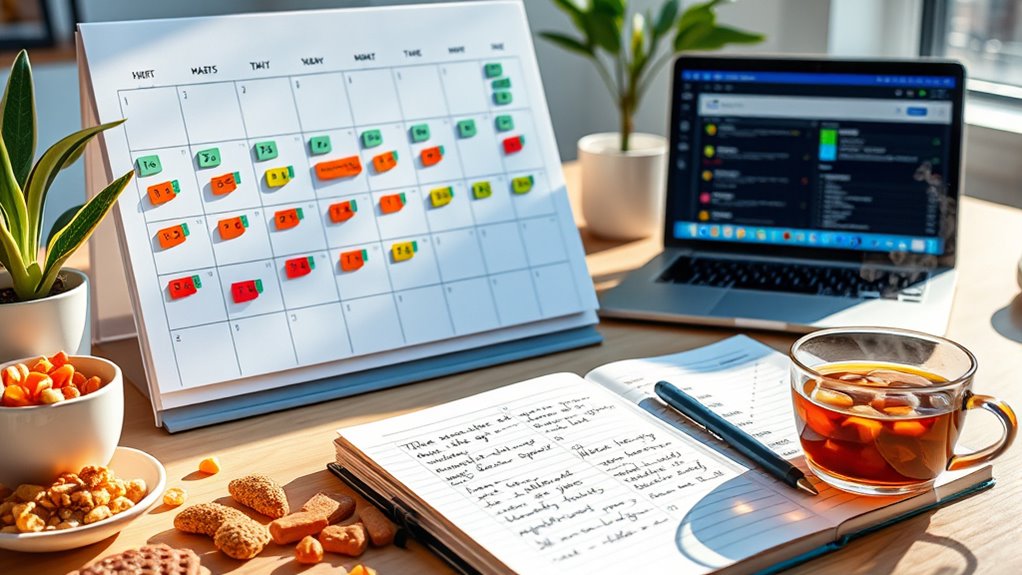
Habit loops are built around three core parts: a cue, routine, and reward. The cue triggers your brain to start a behavior automatically, often without you realizing. The routine is the action you perform, and the reward reinforces the pattern by satisfying a craving or mood. Your brain stores these habits in the basal ganglia, making them easier over time. Understanding this cycle can help you change behaviors—if you keep exploring, you’ll discover how to reprogram your habits effectively.
Key Takeaways
- Habit loops consist of three elements: cue, routine, and reward, which reinforce behaviors through neural pathways.
- Cues trigger the brain’s basal ganglia to activate automatic routines, conserving mental energy.
- Rewards satisfy cravings or improve mood, strengthening the habit loop and making behaviors more persistent.
- Triggers can be environmental, emotional, or contextual, often operating unconsciously to initiate habits.
- Reprogramming habits involves identifying and modifying cues, routines, or rewards to form healthier behaviors.

Have you ever wondered how habits form and stick? It’s a fascinating process rooted in neuroscience insights that reveal how your brain responds to behavioral triggers. Your brain loves efficiency, so it creates habits to save energy and streamline repeated actions. When you encounter a specific cue or trigger—like walking into your kitchen or feeling stressed—your brain automatically shifts into a habitual mode, bypassing conscious decision-making. These triggers, known as behavioral triggers, set off a chain reaction that leads to a routine or action you’ve repeated before. Over time, your brain associates certain cues with specific routines, making the process almost automatic.
Habits form through cues, routines, and rewards that become automatic over time.
Understanding this loop involves recognizing three key elements: the cue, the routine, and the reward. The cue is the trigger that signals your brain to initiate a behavior. It might be a time of day, an emotional state, or an environmental cue. Once the cue appears, your brain kicks into gear, prompting you to perform a routine—be it brushing your teeth, grabbing a snack, or checking your phone. The routine is the behavior itself, which can be simple or complex. After completing the routine, your brain seeks a reward, which reinforces the entire loop. Rewards are *essential* because they satisfy a craving or boost your mood, making it more likely you’ll repeat the behavior when faced with the same cue again.
Neuroscience insights have uncovered that these habit loops are deeply embedded in the brain’s basal ganglia, a region responsible for storing habits and automatic behaviors. When a habit forms, neural pathways strengthen, making the routine easier and faster to perform. This automaticity saves cognitive resources, allowing your brain to focus on more complex decisions. The power of behavioral triggers lies in their ability to activate these pathways almost instantly, creating a link between a specific cue and a habitual response. This is why certain environments or emotional states can reliably trigger specific habits, even without conscious awareness. Additionally, home theatre projectors utilize similar automatic processes in the brain to deliver immersive visuals effortlessly when properly calibrated and positioned.
Once you understand how these habit loops operate, you gain control over them. You can identify your triggers, modify routines, or change rewards to build better habits or break unwanted ones. Recognizing the role of neural pathways and behavioral triggers helps you reprogram your brain, replacing old routines with healthier or more productive ones. It’s a process that takes awareness and effort, but with the right insights, you can influence your habits at their core, creating lasting change.
Frequently Asked Questions
How Do Habit Loops Form in Early Childhood?
In early childhood development, habit loops form as your brain’s neural plasticity allows strong connections between actions and outcomes. When a child repeatedly experiences a cue, such as hunger, and responds with a routine like eating, the brain reinforces this pattern. Over time, these connections become automatic. Your child’s environment and consistent responses shape these habits, making early childhood critical for establishing lifelong behaviors through neural pathway strengthening.
Can Habit Loops Be Changed Without Awareness?
Did you know that about 45% of daily actions are habits, performed subconsciously? You can change habit loops without full awareness by identifying subconscious triggers and gradually replacing routines. While it’s challenging, increasing habit awareness helps you recognize cues before they trigger automatic responses. Over time, this conscious effort rewires your brain, allowing you to transform habits even without initially realizing it.
What Role Do Emotions Play in Habit Loops?
Emotions play a vital role in habit loops by acting as emotional triggers that drive your habit motivation. When you experience certain feelings, they reinforce the routine, making it more likely you’ll repeat the behavior. Recognizing these emotional triggers helps you understand why habits form and persist. By becoming aware of your emotional responses, you can intentionally change the habit loop, replacing negative routines with healthier ones.
How Long Does It Take to Break a Habit Loop?
On average, it takes about 66 days to break a habit loop, but this varies depending on the habit’s complexity. You can accelerate habit formation and change strategies by consistently practicing new routines and replacing old cues. Remember, persistence is key—your brain needs time to rewire. Stay committed, and with patience, you’ll reprogram your habits and create lasting change.
Are Some Habits More Resistant to Change Than Others?
Yes, some habits are more resistant to change because of habit formation and resistance factors like emotional attachment, frequency, and environmental triggers. You might find habits formed over years harder to break, especially if they’re linked to stress or comfort. To overcome this, you need to identify these resistance factors and actively work on replacing the routine, making it easier to change even stubborn habits.
Conclusion
Think of your habits as a secret garden, where each cue is a guiding lantern, routines are the paths you walk, and rewards are the blooms that keep you coming back. When you understand this loop, you hold the key to tending your garden with intention. With each mindful step, you can cultivate healthier habits, transforming your mind into a thriving oasis. Master the loop, and watch your inner garden flourish beyond what you imagined.