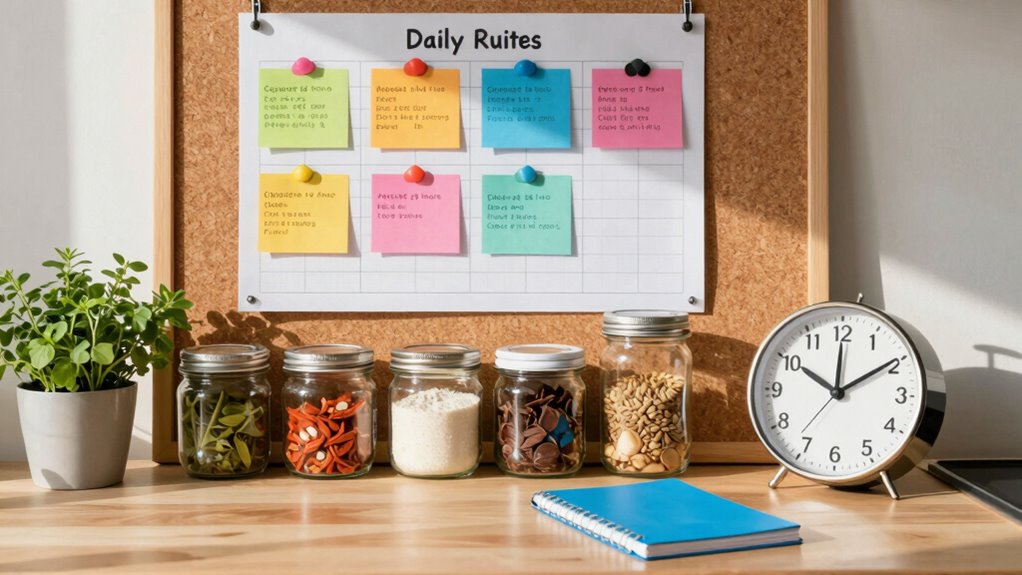
To use visual cues for new routines, start by incorporating colorful elements like sticky notes or planners to represent different tasks, assigning colors for easy recognition. Create reminder charts to track habits, marking off completed tasks for a sense of accomplishment. Place visual schedules in high-traffic areas to keep your goals in sight and integrate motivational posters with affirmations around you. These strategies can streamline your efforts, making habit formation enjoyable. You’ll discover even more techniques along the way.
Key Takeaways
- Utilize color coding in planners and sticky notes to visually distinguish between different tasks, enhancing motivation and focus.
- Create reminder charts to track daily habits, marking off completed tasks for a sense of accomplishment and reinforcing commitment.
- Develop visual schedules and place them in high-traffic areas to keep goals visible and easily accessible, aiding routine consistency.
- Incorporate motivational posters and affirmations in your environment to inspire and uplift, creating a positive atmosphere for habit formation.
- Strategically place visual cues where they’re most needed to remind you of your goals and encourage adherence to new routines.
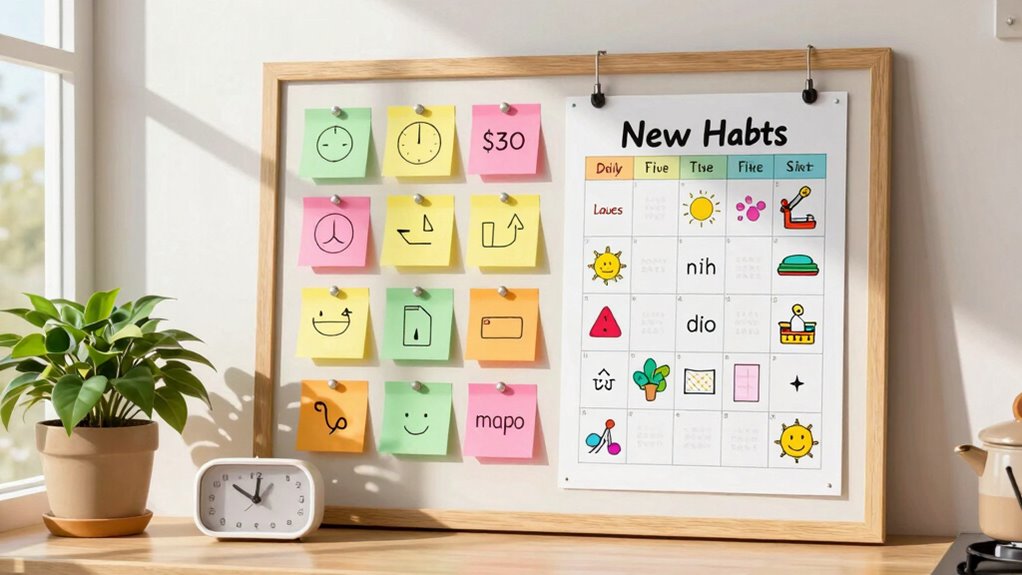
When you want to establish new routines, using visual cues can make all the difference. They serve as reminders of your goals and help keep you motivated. Whether you’re trying to develop healthier habits or manage your time more effectively, implementing visual elements can greatly enhance your commitment. Incorporating visual cues into your environment can also foster a sense of joy and connection, making the process more enjoyable. Start by using color coding in your planner or on sticky notes. Assign different colors to various tasks or activities. For example, you might use green for exercise, blue for work tasks, and yellow for personal projects. This quick glance at your day can boost your motivation and help you prioritize effectively. It makes everything less overwhelming, allowing you to focus on what’s important. Visual cues can also serve as memory aids, helping you recall important tasks or routines without stress or confusion. The strategic placement of these cues can significantly improve your ability to form lasting habits. Properly placed cues leverage visual organization principles to make routine adherence more intuitive. Next, consider creating reminder charts. These can be as simple or as elaborate as you like. A visual chart that tracks your daily habits can serve as a powerful motivator. When you see your progress, you’re more likely to keep going. Each time you complete a task, mark it off. The satisfaction of visual progress can reinforce your commitment and help you stick to your new routines. Additionally, incorporating habit stacking strategies with visual cues can help you build routines more seamlessly by linking new habits to existing ones. Visual schedules are another excellent tool. You can create a daily or weekly schedule that outlines your tasks and responsibilities. Hang it somewhere you’ll see it often, like on your fridge or near your workspace. This keeps your goals front and center, making it easier to stay on track. You could even integrate habit tracking into this schedule, allowing you to monitor your progress visually. Properly placed visual cues can enhance routine consistency and reduce the likelihood of forgetting important steps. Cue placement is essential, too. Think about where you place your visual cues. If you want to remember to drink more water, keep a colorful bottle in your line of sight. If you’re trying to read more, place a book on your pillow. These cues will prompt you to act, making it easier to form new habits. Lastly, don’t underestimate the power of motivational posters. Surrounding yourself with positive affirmations and inspiring messages can uplift your spirit and keep you focused. Choose quotes that resonate with you and display them in places you frequently visit.
color-coded planner stickers
As an affiliate, we earn on qualifying purchases.
As an affiliate, we earn on qualifying purchases.
Frequently Asked Questions
What Are Visual Cues, and Why Are They Effective for Routines?
Visual cues are prompts like images, colors, or symbols that trigger specific actions or behaviors. They’re effective for routines because they provide cognitive reinforcement, helping you remember and follow through with your tasks. By consistently seeing these cues, you build routine consistency, making it easier to establish new habits. So, when you use visual cues, you’re not just reminding yourself; you’re actively reinforcing the behaviors you want to maintain.
Can Visual Cues Be Used for Children and Adults Alike?
Absolutely, visual cues work wonders for both children and adults! Think of them like a GPS for your daily tasks. You can use visual reminders, like charts or pictures, to keep everyone on track. These cues offer routine reinforcement, making it easier to remember new habits. Whether it’s a colorful calendar or sticky notes, they can motivate you and your kids to stay consistent. So, why not give them a try? You’ll likely see results!
How Do I Create My Own Visual Cues?
To create your own visual cues, start by applying design principles like simplicity and clarity. Choose cue types that resonate with you—icons, color codes, or images. Make sure they’re easily recognizable and placed where you’ll see them often. Experiment with different styles until you find what motivates you. You can also involve others for feedback, ensuring your cues effectively support your routine. Personalizing them will make them more impactful and engaging for you.
What Are Some Examples of Successful Visual Cue Implementations?
Imagine a rainbow guiding your daily tasks. Successful visual cue implementations often use color coding and symbol systems. For instance, you might assign specific colors to different activities—blue for work, green for exercise. A simple checklist with symbols can signal when it’s time to shift from one task to another. These cues create clarity, making it easier for you to navigate new routines and stay focused on your goals.
How Long Does It Take to See Results From Visual Cues?
You can start seeing results from visual cues in about two to six weeks, depending on your consistency and how well you integrate them into your daily routine. It’s essential to set realistic timing expectations; changes won’t happen overnight. By maintaining cue consistency, you reinforce the new behaviors you want to adopt. Stick with it, and you’ll likely notice improvements in your habits as the cues become part of your routine.
habit tracking reminder charts
As an affiliate, we earn on qualifying purchases.
As an affiliate, we earn on qualifying purchases.
Conclusion
Incorporating visual cues into your new routines can transform the way you approach daily tasks. With each color-coded chart and sticky note, you’re not just reminding yourself; you’re building a bridge to success. Embrace these cues as your allies, guiding you through the maze of change. Remember, every small step you take is a leap toward consistency, lighting the path to your goals. So go ahead, let those visuals lead the way and watch your routines flourish!
motivational posters for home
As an affiliate, we earn on qualifying purchases.
As an affiliate, we earn on qualifying purchases.
visual schedule whiteboard
As an affiliate, we earn on qualifying purchases.
As an affiliate, we earn on qualifying purchases.