
Using wearables helps you reinforce healthy habits by providing personalized insights into your activity, sleep, and overall health. They motivate you through social competition, making goals more engaging and less lonely. Wearables allow you to set realistic challenges tailored to your abilities, creating a feedback loop that encourages consistency. As your personal coach and cheerleader, they support long-term healthy routines. Staying committed with these tools can transform habits into a natural part of your daily life—discover how they can truly make a difference.
Key Takeaways
- Utilize personalized feedback from wearables to set achievable health goals and monitor progress consistently.
- Leverage social features to create friendly competitions that boost motivation and accountability.
- Use goal-setting capabilities to tailor challenges based on individual fitness levels, ensuring steady habit development.
- Rely on real-time insights and reminders to reinforce healthy behaviors and integrate them into daily routines.
- Benefit from wearables acting as personal coaches, providing encouragement and emotional support to sustain long-term habits.
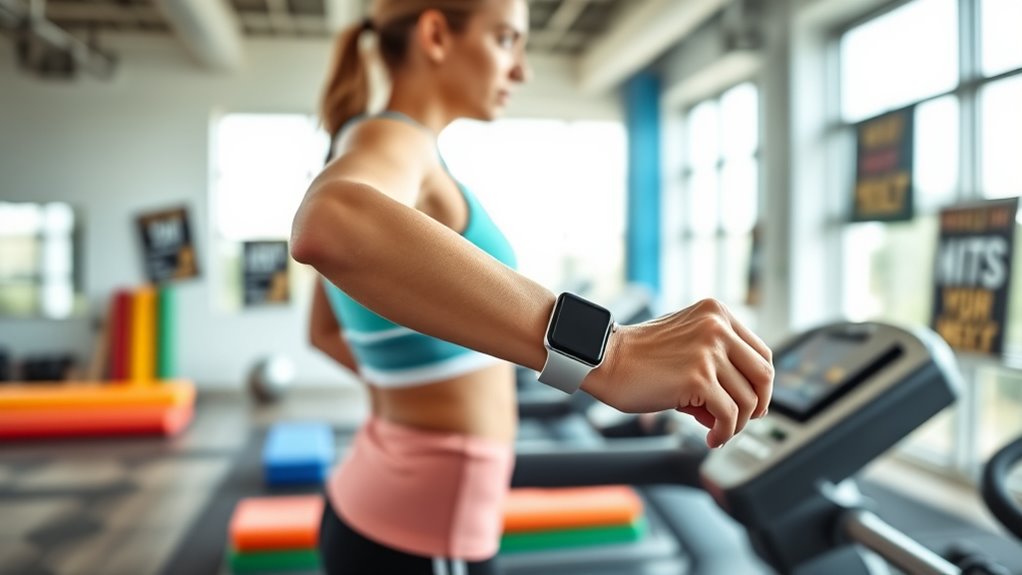
Have you ever wondered how wearable devices can help you build healthier habits? These gadgets do more than just track steps or calories—they provide personalized feedback that keeps you motivated and on track. When you wear a fitness tracker or smartwatch, you’re not just collecting data; you’re receiving tailored insights about your activity levels, sleep quality, and overall health. This real-time feedback helps you understand your habits better, highlighting areas where you’re excelling and pinpointing where improvements are needed. Instead of vague goals, you get specific suggestions based on your unique patterns, making your health journey more manageable and less overwhelming. Personalized feedback acts as a constant coach, encouraging you to push a little further or rest when necessary, ensuring you’re making sustainable progress.
Wearables offer personalized feedback that keeps you motivated and helps you achieve healthier habits effortlessly.
Another powerful way wearables reinforce healthy habits is through social competition. Many devices connect you with friends, family, or online communities, turning fitness into a friendly rivalry. When you see others achieving their goals or hitting milestones, it sparks your motivation to do the same. Social competition taps into your natural desire for social approval and recognition, turning exercise from a chore into a fun, engaging activity. Whether it’s competing for the most steps, longest streaks, or highest calorie burn, the element of competition keeps you accountable. It pushes you to stay consistent, even on days when motivation dips. Plus, sharing your successes with others creates a sense of camaraderie and support, making your healthy habits more enjoyable and less isolating.
Wearables also allow you to set challenges and goals that are personalized to your fitness level. Because the feedback is tailored to your current capabilities, you’re more likely to stay committed without feeling overwhelmed. The social features amplify this effect by fostering a community that celebrates your progress, no matter how small. When you’re part of a group, you’re less likely to skip workouts or neglect your sleep goals because you don’t want to fall behind or let others down. This combination of personalized feedback and social competition creates a powerful feedback loop—your progress motivates you, and the support from others encourages you to keep going. Over time, these features help embed healthy behaviors into your daily routine, making them feel less like a chore and more like a natural part of your life.
In essence, wearables serve as your personal health coach and social cheerleader rolled into one, helping you build habits that stick. Additionally, understanding the importance of emotional alignment can enhance your ability to sustain these healthy behaviors by fostering a positive mindset and resilience.
Frequently Asked Questions
How Do Wearables Adapt to Different Individual Health Goals?
Wearables adapt to your individual health goals through personalization strategies and goal setting techniques. They analyze your data, such as activity levels and sleep patterns, to customize recommendations. You can set specific targets, like step counts or calorie intake, and the device adjusts prompts and feedback accordingly. This tailored approach helps you stay motivated and on track, ensuring your health journey aligns with your unique needs and objectives.
Can Wearables Replace Professional Health Monitoring?
Think of wearables like a helpful map, but they aren’t a doctor’s expert navigation. While they give you useful insights, they can’t replace professional health monitoring. Medical accuracy varies, and data security is key to protecting your info. You should still see healthcare providers for serious concerns. Wearables are great for daily tracking but shouldn’t stand in for personalized medical advice or diagnosis.
What Privacy Concerns Are Associated With Wearable Devices?
When using wearable devices, you should be aware of privacy concerns like data security and user consent. Your personal health data is often stored online, making it vulnerable to breaches if security isn’t robust. Always review privacy policies and verify you give informed consent before sharing your information. Being conscious of how your data is used and protected helps you maintain control over your personal health information.
How Do Wearables Motivate Long-Term Habit Changes?
You stay motivated long-term through wearables by engaging in gamification strategies that make healthy habits fun and rewarding. These devices often include challenges, badges, and progress tracking, encouraging you to improve over time. Additionally, social accountability features let you connect with friends or communities, providing support and motivation. Together, these elements keep you committed, making it easier to turn healthy behaviors into lasting habits.
Are There Age-Specific Wearables for Children or Seniors?
You’ll find child-specific wearables designed to be fun, engaging, and safe for kids, encouraging healthy activity through colorful displays and parental controls. For seniors, senior-friendly devices prioritize simplicity, larger screens, and easy-to-use features that promote independence and safety. These age-specific wearables help users stay motivated, monitor health, and remain connected, making them essential tools tailored to your age group’s needs and capabilities.
Conclusion
By now, you see how wearables can seamlessly help you build healthier habits and stay motivated. With real-time feedback and personalized insights, you’re empowered to make smarter choices every day. So, why not take advantage of this technology to transform your lifestyle? Isn’t it time you let your wearable be your personal health coach? Start today, and watch how small changes can lead to big results over time.