
TL;DR

Turn your quiet moments into listening time
- Thousands of audiobooks, podcasts and originals
- Listen on your phone, tablet or Echo — also offline
- Cancel anytime
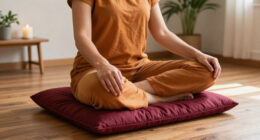
Spiritual meditation cushions are supportive seats that can raise your hips and make some seated practices more comfortable. Choose a shape, height, and fill that let you sit steadily without forcing your posture; a chair, firm pillow, or folded blanket can work just as well. A cushion may support your practice, but it is not a spiritual requirement or a guarantee of better meditation.
A meditation session can start with a small distraction: your ankles go numb, your knees ache, or you keep shifting to escape the floor. A spiritual meditation cushion can make sitting feel steadier by raising your hips, though it cannot promise a deeper practice or a calmer mind.
This guide explains what cushions do, how popular shapes and fills differ, and how to test whether one suits your body. You’ll also learn when a folded blanket or chair may serve you just as well, so you can choose support based on comfort rather than appearance or tradition.
A meditation cushion can raise your hips and support a steadier sitting posture, but it is not required for meditation.
Round, crescent, rectangular, and flat cushions serve different needs; test the shape in your usual sitting position.
Choose cushion height and firmness by how your body feels, not by a universal measurement.
Buckwheat hulls are adjustable and heavier, kapok is lighter and springy, and foam offers consistent support.
A firm pillow, folded blanket, or chair may meet your needs; check cover care and product details before buying.
What a Meditation Cushion Can—and Can’t—Do for You
A spiritual meditation cushion is a supportive seat used during meditation, prayer, breathwork, or other seated practices. It can raise your hips so your spine rests more comfortably upright, but it cannot guarantee focus, calm, or spiritual insight. Its value is practical: it helps you settle into a position you can maintain.
When your hips sit slightly higher than your knees, a cross-legged position may feel less cramped. Try sitting on a firm cushion for five minutes, then compare it with the floor. If your lower back feels easier and your knees have somewhere comfortable to rest, the added height may be useful.
The phrase spiritual meditation cushions covers a wide range of products, from traditional forms to colorful home-practice seats. A cushion is a supportive seat used for many kinds of practice, including seated breathwork or other seated routines. You do not need one to meditate: a kitchen chair, firm pillow, or folded blanket can work if it gives you stable support.
Cushions can also carry personal meaning. A practitioner might choose a deep blue cover because it reminds them of a quiet morning practice, while someone else may prefer a plain, washable seat. Neither choice makes the practice more or less valid. Treat the cushion as an aid, not a spiritual requirement.
Popular right now

Dyson Ball Animal 3 Upright Vacuum

Dyson V8 Cyclone Cordless Vacuum

Shark Rotator Lift-Away Upright Vacuum with DuoClean PowerFins, Wine Purple, LA702
As an affiliate, we earn on qualifying purchases.
Match the Cushion Shape to the Way You Sit
Round, crescent, and rectangular cushions offer different amounts of room and support, so the best shape depends on your sitting posture and body. A round zafu is often used for cross-legged sitting, a crescent can leave extra space for the legs, and a rectangular gomden gives you a broader, firmer base.
A zabuton is different: it is a flat mat that usually sits underneath a raised cushion to pad the knees, ankles, or feet. Japanese terms such as zafu and zabuton are associated with Zen practice, though cushion designs appear across different meditation settings. A name or tradition does not tell you whether a cushion will fit your body.
For example, imagine you sit cross-legged but your thighs press against a round cushion’s edge. A crescent shape may give your legs more room. If you prefer kneeling or want broad, firm support, a rectangular base could feel steadier. Someone who sits in a chair may need no floor cushion at all.
Use this quick comparison as a starting point, then test the seat in your usual posture:
| Shape | Often suits | What to check |
|---|---|---|
| Round zafu | Many cross-legged sitters | Whether your thighs have room |
| Crescent | Sitters who want more leg space | Whether the curved front feels comfortable |
| Rectangular gomden | People who prefer a broader base | Whether its firmness and width fit your posture |
| Flat zabuton | People who want padding under knees or ankles | Whether it adds enough cushioning underneath |
Shapes are clues, not rules. Try the position you actually use at home; a photo of a cushion cannot show how it feels after ten quiet minutes.
Find a Height and Firmness That Let You Relax
The right cushion height is high enough to let your hips rest comfortably above your knees, if that position suits you. It should support a relaxed, stable posture rather than force your back straight or your legs into a particular shape. There is no universal height because bodies, mobility, and preferred positions vary.
Test small changes: sit on a folded blanket, add another fold, and notice how your hips, knees, and lower back respond. If a higher seat makes your legs feel strained, lower it or change your posture. You might find that sitting on a chair works better than sitting cross-legged on the floor.
Firmness also changes how a seat feels. A cushion that collapses may leave you sinking toward the floor; one that feels like a brick may make it hard to relax. Imagine a 15-minute morning session: if you keep shifting to find a level spot, the fill may be too soft, the shape may not fit, or the height may need adjusting.
Comfort is useful feedback, not a test of discipline. If sitting causes sharp or persistent discomfort, change position or stop. A cushion may help with comfort, but it cannot address every cause of back or knee pain. Seek appropriate health advice when discomfort continues, and avoid pushing through pain to keep a particular posture.
Choose a Fill and Cover That Fit Your Routine
Buckwheat hulls, kapok, and foam feel different under your body, and no fill is best for everyone. Buckwheat hulls are heavier and can be added or removed to adjust the cushion’s shape. Kapok is lighter and springier, while foam tends to provide consistent support.
Picture carrying your cushion from a living room to a quiet corner in a shared home. Buckwheat may feel dependable on the floor but weigh more in your arms. Kapok or foam may be easier to move, though you might prefer buckwheat’s firmer, adjustable feel. The choice depends on whether you value portability, a particular firmness, or a fill you can customize.
Check the cover before you buy. Removable covers make cleaning simpler, especially if you practice in a sunny room with an open window or share the seat with other family members. Cotton, linen, and other natural fabrics are common, but fabric alone does not prove how a product was made or how sustainable it is. Read the maker’s specific material and care details.
Some newer cushions offer adjustable fill, washable covers, travel-friendly sizes, or a raised seat paired with a floor mat. These features can help, but they do not all matter to everyone. If your cushion stays beside a home altar, portability may be irrelevant; if you carry it to a weekly group, a handle and lighter weight could earn their keep.
Use This Simple Test Before You Buy
You can choose a meditation seat by testing your real posture, checking the care details, and comparing the cost with alternatives you already own. Start with a folded blanket or firm household pillow if you have one; this shows whether added height helps before you spend money. A store visit or a generous return policy can help you test a specialized cushion.
- Choose your usual position. Sit cross-legged, kneel, or use a chair—the position you expect to practice in at home.
- Adjust the height. Add or remove folded fabric until your hips feel supported and your knees are comfortable.
- Stay seated briefly. Try five to ten minutes and notice whether you feel stable or keep shifting.
- Check the details. Look at dimensions, fill, firmness, cover care, portability, and price.
- Compare your options. If a blanket or chair already works, you may not need a dedicated cushion.
For instance, if your improvised blanket collapses after a few minutes, a firmer seat may help. If the height feels good but your ankles press into the floor, a flat mat underneath could be a better first purchase than a larger cushion.
Claims about organic fabrics, recycled materials, or local production differ by maker, so check the product details instead of relying on a label alone. A careful purchase comes down to fit, construction, and care instructions. Give yourself permission to choose a plain, practical seat.
Keep Your Practice Comfortable and Your Cushion Simple
You can adapt your seat as your practice or body changes; a cushion should make it easier to sit, not lock you into one posture. A chair can be a good choice for a person whose knees dislike the floor, and a folded blanket can work for someone who only needs a little extra height. The best support is the one that lets you practice without forcing discomfort.
Suppose you usually meditate on a thin rug, then find your ankles tender after a longer session. Before replacing your whole setup, try a soft mat underneath your seat or shift to a chair for a few days. Notice which change helps. Small adjustments can tell you more than buying a matching cushion set.
Follow the maker’s cleaning instructions. Many covers can be removed and washed, while inner fill may need airing or occasional adjustment instead. Keep the cushion dry, and check for a zipper or inner liner before handling loose fill. A quick monthly check can reveal a flattened seat before it becomes distracting.
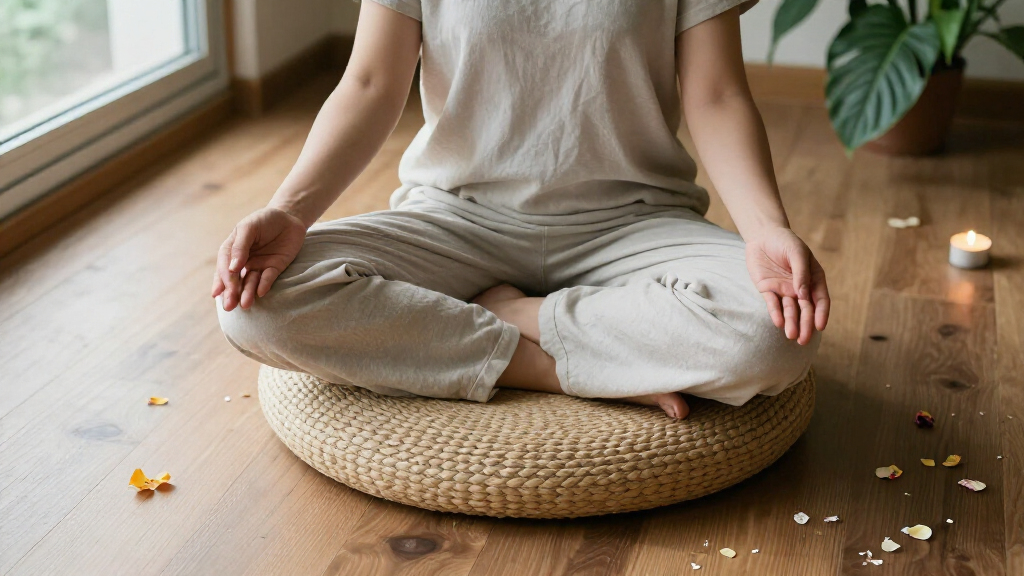
A cushion can become part of a comforting routine: you unfold the mat, feel the woven fabric beneath your hand, and take a seat. That ritual may help you begin, but the cushion does not create the practice. The few minutes you spend paying attention are the heart of it.
Let comfort guide your setup. A cushion supports your practice; it does not define your beliefs or measure your progress.
Frequently Asked Questions
Do I need a meditation cushion?
No. A chair, firm pillow, folded blanket, or the floor may work just as well. A cushion can help if raising your hips makes your chosen sitting position more comfortable.
How high should a meditation cushion be?
Try a height that lets your hips sit comfortably above your knees, if that suits your posture. Test a few heights with folded blankets rather than relying on one measurement for every body.
What is the difference between a zafu and a zabuton?
A zafu is a raised sitting cushion, often used for cross-legged positions. A zabuton is a flatter mat placed underneath to cushion knees, ankles, or feet.
Is buckwheat or kapok better?
Buckwheat hulls are heavier and can be added or removed to adjust the cushion. Kapok is lighter and tends to feel springier; your preferred firmness and need to carry the cushion can guide your choice.
Can a cushion help with back or knee discomfort?
It may make a sitting position more comfortable, but it cannot address every cause of pain. Change position or use a chair if needed, and stop if you feel sharp or persistent discomfort.
Can I use a regular pillow for meditation?
Yes, if it feels firm and stable enough to support you without collapsing. A folded blanket is another simple way to test whether added height helps.
Conclusion
Choose support that lets you sit comfortably and steadily, whether that means a dedicated cushion, a folded blanket, or a chair. Start with what you have, adjust the height, and listen when your body asks you to move.
A good seat can hold you steady while you practice. It cannot do the practicing for you.