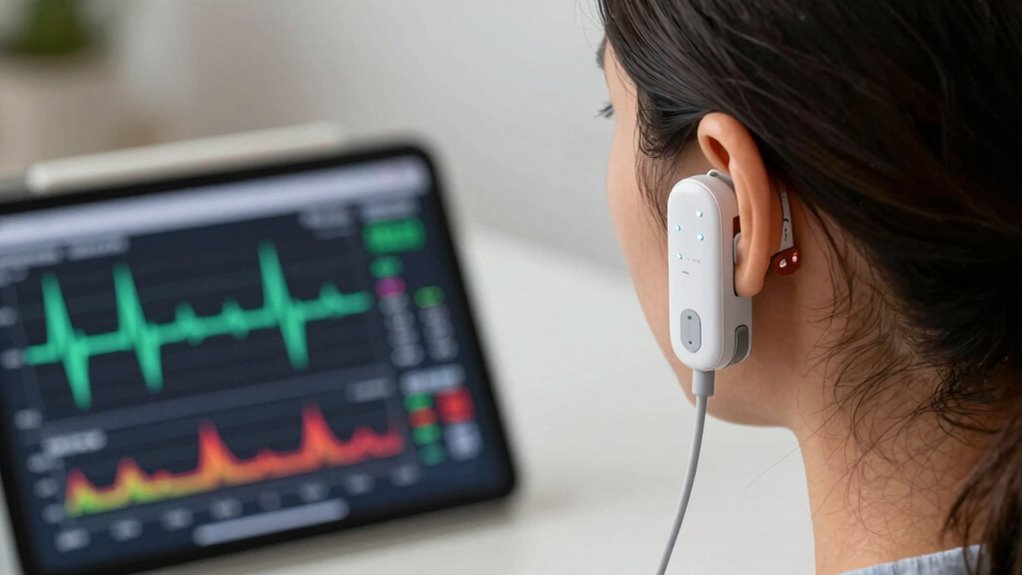

Biofeedback devices are revolutionizing stress management by giving you real-time physiological data that help you understand and control your stress responses. They track heart rate, skin conductance, and other signals, allowing you to see how your body reacts to different situations. With instant feedback, you can develop personalized strategies to stay calm and focused. If you want to learn how these devices can transform your approach to stress, keep exploring the powerful insights they offer.

Turn your quiet moments into listening time
- Thousands of audiobooks, podcasts and originals
- Listen on your phone, tablet or Echo — also offline
- Cancel anytime
Key Takeaways
- Biofeedback devices provide real-time physiological data, enabling personalized and precise stress management strategies.
- Integration of mindfulness with biofeedback enhances awareness and helps maintain calm during stressful situations.
- Wearable technology allows continuous, unobtrusive monitoring, supporting routine stress reduction practices.
- Data analysis identifies stress triggers and optimal times for relaxation, facilitating targeted interventions.
- Biofeedback transforms stress management into a proactive, data-driven process, improving long-term resilience and outcomes.
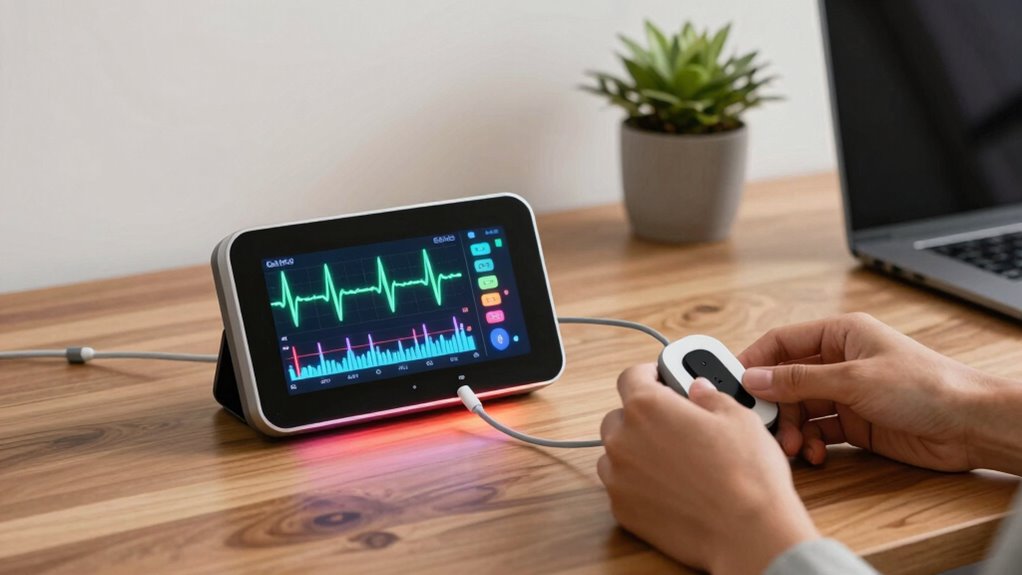
In today’s fast-paced world, managing stress effectively is more important than ever, and biofeedback devices are revolutionizing how we do it. These devices provide real-time data about your body’s physiological responses, allowing you to develop better awareness of your stress levels and learn how to control them. With advancements in wearable technology, you can now monitor your heart rate, muscle tension, skin temperature, and even breathing patterns with remarkable accuracy. This immediate feedback helps you understand how your body reacts to different situations, empowering you to implement effective stress reduction techniques.
Real-time physiological data from biofeedback devices enhances stress awareness and supports effective management strategies.
One of the most popular methods integrated with biofeedback devices is mindfulness techniques. When you combine mindfulness with real-time data, you gain a clearer picture of how your mind and body interact. For example, as you focus on your breathing or acknowledge your thoughts, the device tracks changes in your heart rate variability or skin conductance. Seeing this data visually or through alerts reinforces your mindfulness practice, making it easier to stay present and calm during stressful moments. Over time, this consistent feedback helps you develop a habit of self-awareness that’s grounded in concrete physiological evidence.
Wearable technology makes it easier to incorporate biofeedback into your daily routine. Unlike traditional therapy sessions or static devices, wearables are portable, unobtrusive, and user-friendly. Whether you’re at work, commuting, or relaxing at home, you can wear these devices continuously, collecting valuable data without interrupting your day. Many devices sync seamlessly with smartphone apps, which analyze your data and offer personalized insights. These insights might include identifying patterns that trigger stress, suggesting optimal times for relaxation exercises, or reminding you to practice mindfulness techniques when your stress levels spike. Additionally, understanding the physiological responses that contribute to stress is essential for developing effective coping mechanisms. Incorporating data-driven approaches allows for a more targeted and efficient stress management process. Recognizing the importance of accurate measurement can lead to more effective interventions and better long-term results.
Using data-driven insights, you can tailor your stress management strategies more effectively. For instance, if your device indicates a rise in heart rate during certain times of the day, you can plan targeted mindfulness exercises or breathing techniques to counteract that stress response. Over time, this personalized approach helps you build resilience and better control your emotional responses. The integration of biofeedback with wearable technology transforms stress management from guesswork into a precise, proactive process. It’s like having a personal coach who guides you to stay calm, focused, and balanced, no matter what challenges come your way.
wearable biofeedback stress management device
As an affiliate, we earn on qualifying purchases.
As an affiliate, we earn on qualifying purchases.
Frequently Asked Questions
Are Biofeedback Devices Suitable for Children or Elderly Users?
Biofeedback devices can be suitable for children and elderly users if designed with child safety and elderly usability in mind. For kids, look for devices with simple interfaces, safety features, and age-appropriate functions. For seniors, choose ergonomic designs, clear instructions, and features that accommodate mobility or sensory challenges. Always consult healthcare professionals to confirm the device’s safety and effectiveness for the specific age group, ensuring a positive stress management experience.
How Accurate Are Consumer-Grade Biofeedback Devices Compared to Clinical Ones?
Think of consumer-grade biofeedback devices as trying to tune a guitar with a slightly off string—they can be useful but aren’t perfectly precise. Their data reliability varies, and device calibration may drift over time, affecting accuracy. While they offer valuable insights for personal stress management, they aren’t as reliable as clinical devices. You should consider their limitations and, when precision matters, seek professional-grade equipment for better results.
Can Biofeedback Help With Chronic Mental Health Conditions?
Yes, biofeedback can help with chronic mental health conditions by teaching you mindfulness training and cognitive restructuring techniques. By using biofeedback devices, you become more aware of your physiological responses, which helps you manage stress and anxiety more effectively. With consistent practice, you can learn to control your reactions, promote emotional regulation, and improve your overall mental health, making biofeedback a valuable part of your mental health toolkit.
What Are the Potential Privacy Concerns With Stress Data Collection?
You might worry about privacy concerns with stress data collection, such as data security and user anonymity. When you share your stress levels, there’s a risk that sensitive information could be accessed or misused if proper data security measures aren’t in place. Ensuring your data remains anonymous and protected helps prevent unauthorized access, giving you peace of mind while benefiting from stress management insights.
How Long Does It Typically Take to See Stress Reduction Benefits?
Research suggests that with consistent use of biofeedback devices, you can start noticing stress reduction benefits within a few weeks. Incorporating mindfulness training alongside these devices can accelerate progress. You might also see improvements in sleep quality, which further reduces stress. While individual results vary, regular practice—often daily—can help you experience meaningful benefits in as little as two to four weeks, promoting overall well-being.
heart rate variability monitor for stress
As an affiliate, we earn on qualifying purchases.
As an affiliate, we earn on qualifying purchases.
Conclusion
As you explore biofeedback devices and data-driven stress management, it’s clear that technology offers powerful tools to better understand and control your stress. These devices give you real-time insights, empowering you to make proactive choices for your mental health. But as you rely more on data, ask yourself: are you truly tuning into your body’s signals, or just tracking them? Embracing these tools can transform your approach—are you ready to take control?
skin conductance biofeedback device
As an affiliate, we earn on qualifying purchases.
As an affiliate, we earn on qualifying purchases.
mindfulness biofeedback wearable
As an affiliate, we earn on qualifying purchases.
As an affiliate, we earn on qualifying purchases.
Halloween Picks
halloween
As an affiliate, we earn on qualifying purchases.