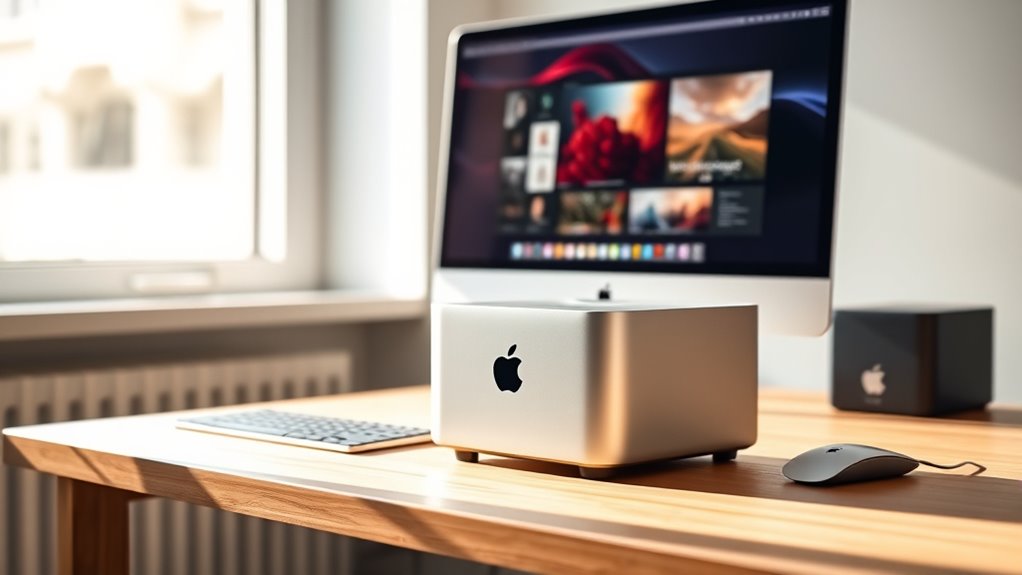

If you’re looking for the best Mac Studio setups for 2025, I recommend configurations with the M4 Pro chip, offering a 12-core CPU and 16-core GPU, plus 24GB of unified memory. Pair this with at least 1TB of fast SSD storage for smooth multitasking and handling demanding tasks. For ultimate power, consider models with larger storage and memory options. Keep exploring, and you’ll uncover more details to help you choose the perfect setup.
Key Takeaways
- Opt for Mac Studio with M4 Pro chip, 24-core CPU, 16-core GPU, and 24GB RAM for optimal power and multitasking.
- Prioritize models with 2TB or larger SSDs to handle large files and intensive workflows efficiently.
- Select configurations with multiple Thunderbolt and USB-C ports for versatile connectivity and future expandability.
- Consider models supporting advanced macOS features for seamless Apple ecosystem integration and productivity.
- Ensure maximum RAM and storage capacities are available for long-term performance scalability in demanding tasks.
Apple 2024 Mac mini Desktop Computer with M4 Pro chip
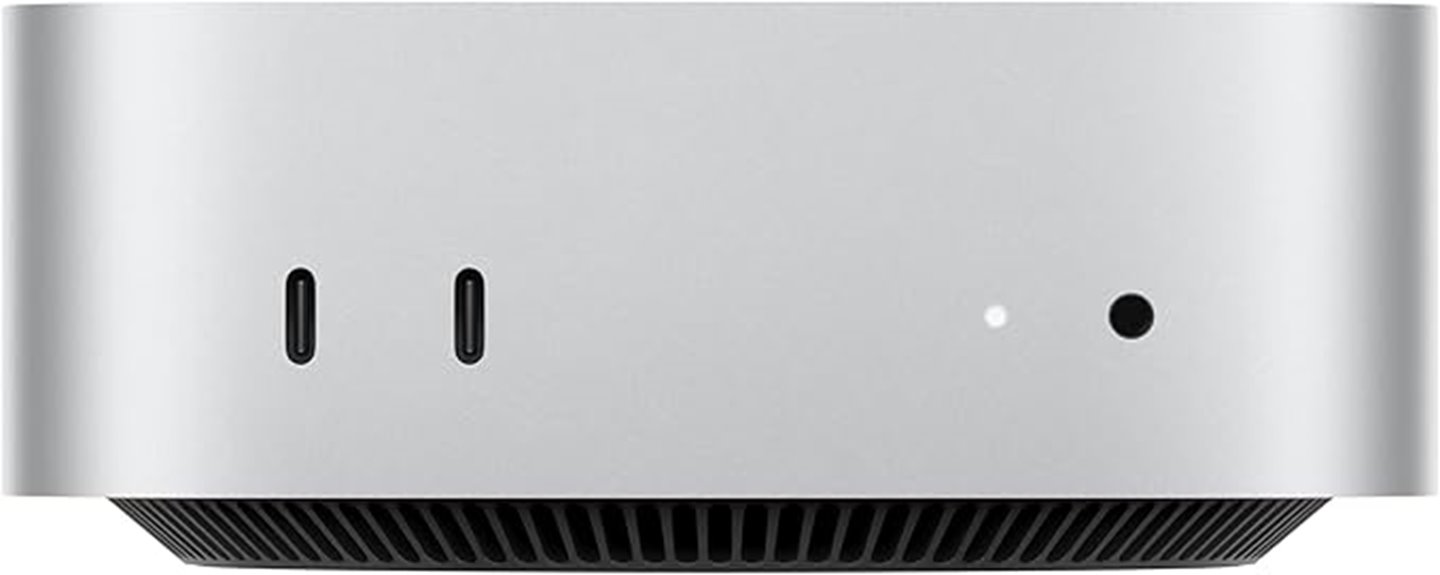
If you’re looking for a compact desktop that doesn’t compromise on power, the Apple 2024 Mac mini with the M4 Pro chip is an excellent choice. Its five-by-five-inch design packs a 12-core CPU and 16-core GPU, delivering impressive speed for demanding tasks. With 24GB of unified memory and a 512GB SSD, multitasking and data access are smooth and fast. The Mac mini offers versatile connectivity, including Thunderbolt, HDMI, Gigabit Ethernet, front USB-C ports, and a headphone jack. Built on Apple silicon, it seamlessly integrates with the Apple ecosystem, supporting apps like Microsoft 365 and Adobe Creative Cloud while enhancing productivity and security.
Best For: professionals and creatives seeking a powerful yet compact desktop computer that seamlessly integrates with the Apple ecosystem for demanding tasks and multitasking.
Pros:
- Compact five-by-five-inch design that saves space without sacrificing performance
- Equipped with the powerful M4 Pro chip, 12-core CPU, and 16-core GPU for demanding applications
- Supports multiple connectivity options including Thunderbolt, HDMI, Gigabit Ethernet, and front USB-C ports
Cons:
- Limited to 512GB SSD storage, which may require external storage for large files
- May be more expensive compared to other compact desktops with similar specs
- No dedicated graphics card option, relying solely on integrated GPU for graphics performance
Apple 2024 Mac mini Desktop Computer with M4 Chip

The Apple 2024 Mac mini with the M4 chip is an ideal choice for professionals and power users who need a compact yet powerful desktop solution. Its 10-core CPU and GPU deliver impressive performance, handling demanding apps like Adobe Creative Cloud and Microsoft 365 with ease. The 16GB unified memory and 512GB SSD guarantee smooth multitasking and quick data access. Its small five-by-five-inch design fits easily beside monitors or in tight spaces. With multiple ports, including front-facing USB-C and a headphone jack, plus seamless integration with other Apple devices, this Mac mini offers a perfect balance of power, connectivity, and space efficiency.
Best For: professionals and power users seeking a compact yet high-performance desktop capable of handling demanding creative and productivity applications.
Pros:
- Compact five-by-five-inch design fits easily in tight spaces or next to monitors
- Powerful 10-core CPU and GPU with 16GB unified memory delivers excellent performance for demanding tasks
- Seamless integration with Apple ecosystem enhances device connectivity and user experience
Cons:
- Limited storage options starting at 512GB, which may not suffice for all users
- Premium price point may be a consideration for budget-conscious buyers
- Fewer upgrade options post-purchase due to integrated design
Apple 2024 Mac mini Desktop Computer with M4 Chip
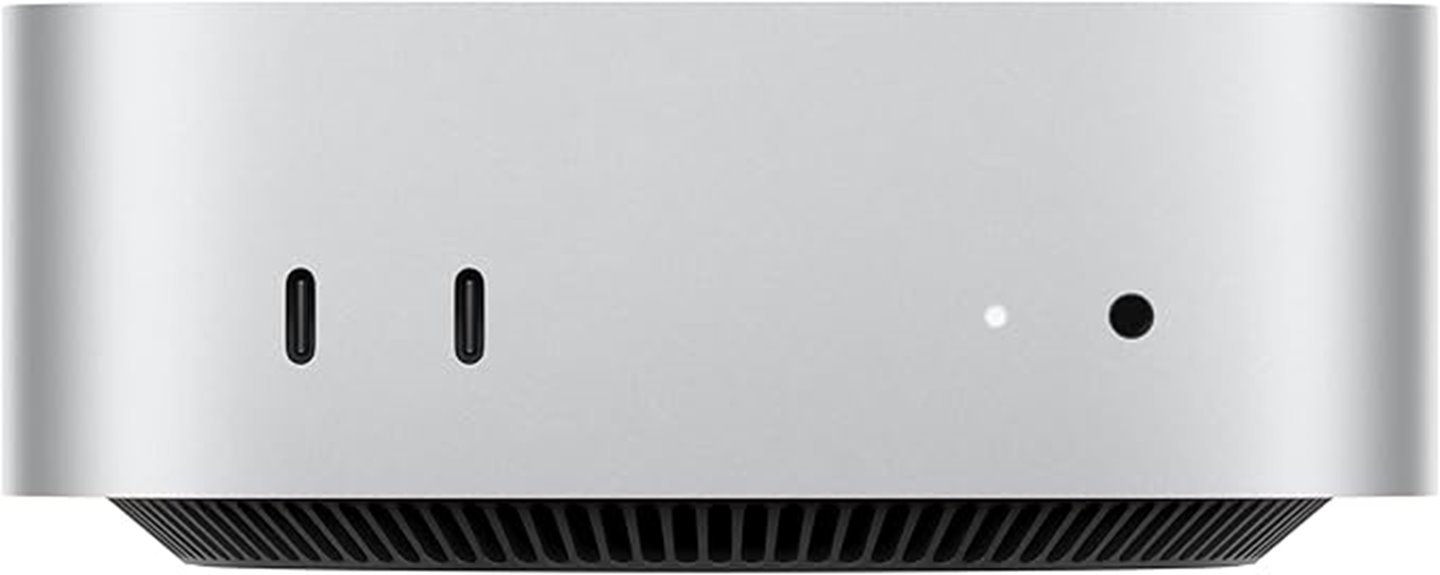
For anyone seeking a compact yet powerful desktop solution, the Apple 2024 Mac mini with M4 chip stands out. Its small 5×5-inch design fits easily next to any monitor or workspace, yet it packs incredible performance. The redesigned M4 chip features a 10-core CPU and GPU, delivering swift, responsive operation for demanding tasks. With 24GB of unified memory and a 512GB SSD, it handles multitasking and storage effortlessly. Connectivity options like Thunderbolt, HDMI, and USB-C ensure versatile peripheral support. Overall, this Mac mini combines size, power, and seamless Apple ecosystem integration, making it an ideal choice for both productivity and creative work in 2025.
Best For: users seeking a compact yet powerful desktop that seamlessly integrates with Apple devices for productivity and creative tasks in 2025.
Pros:
- Small 5×5-inch footprint easily fits into any workspace or next to monitors
- Powered by the advanced M4 chip with 10-core CPU and GPU for exceptional performance
- Compatible with macOS and Apple ecosystem features like device mirroring and file sharing
Cons:
- Limited internal storage at 512GB may require external solutions for large files
- No dedicated user-upgradable hardware components due to integrated design
- May be overpowered for basic users who do not need high-performance capabilities
Apple 2024 Mac mini Desktop Computer with M4 Chip

The Apple 2024 Mac mini with the M4 chip stands out as an ideal choice for professionals and creatives seeking a compact yet powerful desktop solution. Its sleek five-by-five-inch design fits effortlessly in any workspace, whether next to a monitor or in tight areas. Powered by the 10-core CPU and GPU, it delivers exceptional speed and fluidity across all tasks, from creative applications to productivity tools. With 16GB of unified memory and a 256GB SSD, it ensures smooth multitasking and quick access to files. Its extensive port selection, including Thunderbolt, HDMI, USB-C, and Ethernet, guarantees seamless connectivity, making it a versatile and efficient computing option.
Best For: professionals and creatives seeking a compact, powerful, and versatile desktop computer for productivity and creative tasks.
Pros:
- Compact five-by-five-inch design fits easily in any workspace
- Powered by the M4 chip with 10-core CPU and GPU for fast, efficient performance
- Extensive connectivity options including Thunderbolt, HDMI, USB-C, and Ethernet
Cons:
- Limited storage with 256GB SSD may require external solutions for large files
- Lacks dedicated graphics card options for high-end gaming or specialized graphics work
- No built-in optical drive, which could be a drawback for some users needing legacy media support
Factors to Consider When Choosing Mac Studio Configurations
When choosing a Mac Studio configuration, I consider my performance needs, budget, and storage requirements to find the best fit. Connectivity options and software compatibility are also essential to guarantee smooth workflows. By weighing these factors, I can select a setup that balances power and value for my specific tasks.
Performance Needs Assessment
Choosing the right Mac Studio configuration starts with understanding your performance needs. I consider the complexity and intensity of my workload—whether I need a high-core CPU, like 18 or 24 cores, for demanding tasks. I also evaluate the types of applications I run; intensive tasks like video editing or 3D rendering benefit from more GPU cores and ample memory. Multitasking plays a role as well—more RAM and processing power keep everything running smoothly. I think about future-proofing, opting for higher-performance specs to handle upcoming software updates and increased workloads. Finally, I match my performance requirements with my budget, knowing that higher-end configurations offer better power but come at increased costs and energy use. This assessment helps me choose the most suitable setup for my needs.
Budget Constraints
Setting a clear budget range is essential before selecting a Mac Studio configuration, as it helps me focus on options that align with my financial limits. Knowing my maximum spend prevents me from overshooting and guarantees I stay realistic about what I can afford. I prioritize essential features and performance needs within that budget, avoiding unnecessary upgrades that don’t add value for my use. It’s also helpful to compare the cost difference between base models and higher-tier configurations—sometimes, the extra expense isn’t justified without significant gains. Keep in mind that upgrading components later can be more costly than choosing the right setup initially. Balancing my performance goals with my available funds ensures I get a suitable Mac Studio without exceeding my financial constraints.
Storage Requirements
After narrowing down my budget, I need to focus on storage requirements to guarantee my Mac Studio can handle my workload now and in the future. I consider choosing at least 512GB or 1TB of SSD storage to avoid frequent upgrades or reliance on external drives. If I work with large files like 4K videos, high-res images, or extensive project archives, I might need 2TB or more. I also evaluate whether cloud services or external drives can supplement internal storage, especially if I prefer minimal on-device space for mobility. While larger capacities cost more, they ensure quicker data access and smoother performance, especially during multitasking or large file transfers. Striking the right balance between storage capacity and budget is essential for long-term productivity.
Connectivity Options
When selecting a Mac Studio configuration, it’s vital to prioritize connectivity options that match your workflow. I look for enough Thunderbolt ports to handle high-speed data transfer and multiple devices simultaneously. It’s also important to check for several USB-C or USB-A ports to connect peripherals like external drives, monitors, and accessories without hassle. Video outputs matter too, so I verify the presence of HDMI or other compatible ports for my display setup. Wired internet stability is key, so I ensure there’s Gigabit Ethernet or faster ports. Finally, I consider audio connectivity—headphone jacks and line outs—if I need reliable audio input or output. Proper connectivity ensures my setup runs smoothly and supports demanding tasks efficiently.
Software Compatibility
Choosing the right Mac Studio configuration isn’t just about hardware; it also means guaranteeing your software runs smoothly. First, I check that the system supports the latest macOS version, which guarantees compatibility with current applications. I verify that the CPU, GPU, and memory meet the minimum requirements for my essential software, avoiding performance issues. For creative tools like Adobe Creative Cloud or productivity apps such as Microsoft 365, I confirm they’re optimized for the M4 Pro or M4 chip architecture. If I rely on specialized or legacy software, I ensure updates or workarounds are available to function on Apple silicon. Lastly, I review the configuration’s ports and connectivity options to support external devices and peripherals critical to my workflow, preventing bottlenecks or compatibility problems down the line.
Port Selection
Selecting the right ports on your Mac Studio is crucial to guarantee smooth workflow and easy connectivity. You want a variety of ports, like Thunderbolt, USB-C, HDMI, and Ethernet, to support your peripherals and network needs without hassle. Think about the number and type of ports your tasks require—whether for external displays, audio gear, or data transfer—to avoid constantly searching for adapters. Check if the configuration includes front-facing ports, making frequently used connections like USB-C or headphones more accessible. Also, ensure the ports are compatible with your existing devices to prevent connection issues. For demanding workflows, prioritize models with multiple high-speed ports, so you can connect everything you need without sacrificing performance or convenience.
Future Expansion Plans
Considering future expansion plans guarantees your Mac Studio can grow alongside your projects. I recommend checking the number and types of ports to make sure you can connect upcoming peripherals and expansion cards. It’s also essential to evaluate the maximum RAM and storage capacities supported so your system can scale with increased project demands. Look into whether the configuration allows for hardware upgrades, like adding SSDs or memory modules, to extend its lifespan. Compatibility with future connectivity standards is another key factor—making certain your Mac can support new standards or expansion cards as they emerge. Lastly, plan for a robust power supply and cooling system to handle potential hardware upgrades and higher performance needs, guaranteeing your Mac Studio remains reliable and efficient as your workflow evolves.
Ecosystem Integration
Ecosystem integration plays a crucial role in maximizing your Mac Studio’s productivity and convenience. Seamless compatibility with your iPhone and iPad means smoother workflows, like copying and pasting across devices or mirroring your iPhone’s screen. Features like Messages and FaceTime allow quick communication without switching devices, saving time and effort. Continuity features enable starting a task on one device and finishing it on another effortlessly, keeping your work flowing uninterrupted. Deep integration also ensures your devices stay up-to-date with the latest software, security, and synchronized settings, creating a consistent user experience. When choosing a Mac Studio configuration, consider how well it supports ecosystem features, so you can leverage the full power of Apple’s interconnected environment for enhanced efficiency and productivity.
Frequently Asked Questions
How Does Thermal Management Affect Mac Studio Performance in 2025?
Thermal management greatly impacts the Mac Studio’s performance in 2025. When temperatures stay ideal, the system can maintain high speeds without throttling, ensuring smooth multitasking and intensive tasks. Poor cooling causes overheating, which forces the device to slow down to protect components. I’ve noticed that good cooling solutions, like efficient fans and heat sinks, keep my Mac running at peak performance longer and prevent sudden slowdowns.
Can I Upgrade Components in the Mac Studio After Purchase?
Like trying to upgrade a flip phone in the era of smartphones, upgrading components in the Mac Studio isn’t really possible. Apple designs these machines with integrated, non-upgradable parts to guarantee ideal performance and thermal management. So, if you want better specs, you’ll need to choose your configuration wisely upfront. Trust me, it’s a small price to pay for the sleek, powerful performance that Apple delivers right out of the box.
What Are the Best Peripherals Compatible With High-End Mac Studios?
If you’re looking for the best peripherals for high-end Mac Studios, I recommend a 4K or 5K monitor like the Apple Studio Display or LG UltraFine series for stunning visuals. Pair them with a high-quality mechanical keyboard, such as the Apple Magic Keyboard or a custom mechanical option, and a precise mouse like the Apple Magic Mouse or a Logitech MX series. Don’t forget external drives and audio interfaces for peak productivity.
How Does Energy Efficiency Impact Long-Term Costs of Mac Studio Setups?
Energy efficiency considerably impacts the long-term costs of my Mac Studio setup by reducing my electricity bills and lowering my environmental footprint. I notice that efficient models and peripherals consume less power, meaning I save money over time. Plus, energy-efficient devices generate less heat, which can extend their lifespan and reduce maintenance costs. Overall, investing in energy-saving options makes my setup more cost-effective and environmentally friendly in the long run.
Are There Specific Software Optimizations for Mac Studio Hardware in 2025?
You might be surprised, but yes — there are exciting software optimizations for Mac Studio hardware in 2025. I’ve seen how developers are tailoring their apps to leverage the latest silicon architecture, boosting speed and efficiency. This means smoother workflows and better resource management. I’m keen to see how future updates will reveal even more potential, making your Mac Studio an unstoppable powerhouse. Stay tuned; the best is yet to come!
Conclusion
So, there you have it—your ultimate guide to Mac Studio setups that scream “I mean business” in 2025. Whether you’re crushing tasks with the M4 Pro or just pretending to need that extra GPU power, remember: the real performance boost comes from convincing yourself you need it. Choose wisely, or keep dreaming of that shiny new rig while sipping your coffee. After all, who needs practicality when you’ve got power fantasies?