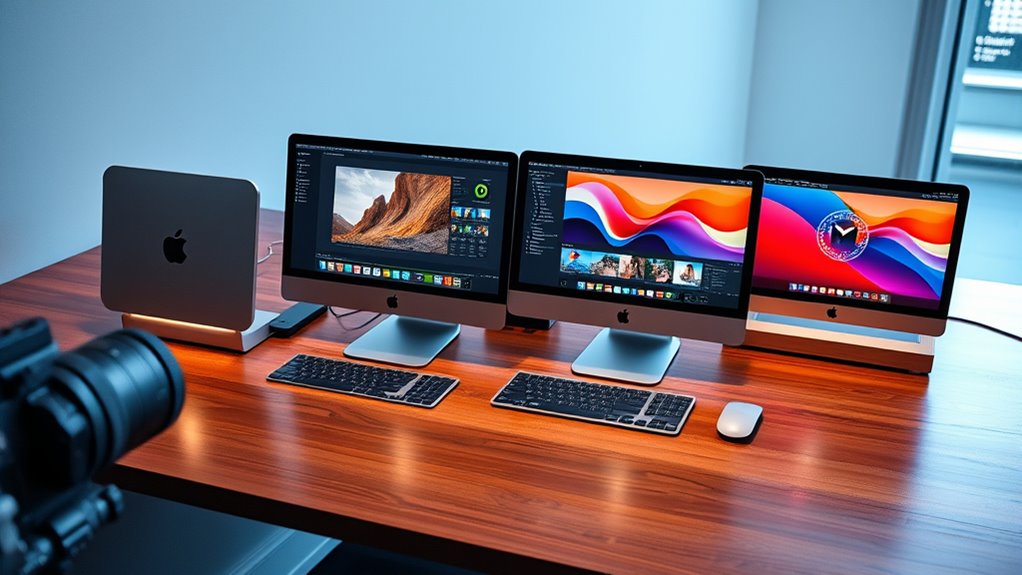

Based on the latest 2024 models, I recommend the Apple Mac Mini with M4 Pro for its powerful 12-core CPU and 16-core GPU, ideal for handling large photo files and complex edits. The M4 version offers great performance for most workflows, while the M4 Pro excels in demanding tasks. The compact design and versatile ports make these perfect for studio setups. Keep exploring to discover which device fits your photography needs best.
Key Takeaways
- The Mac Studio with M4 Pro chip offers optimal processing power for large RAW files and complex editing workflows.
- Models with higher internal storage (1TB or more) enhance efficiency by accommodating extensive photo libraries.
- Multiple Thunderbolt, HDMI, and USB-C ports facilitate multi-monitor setups and fast peripheral connections.
- Ecosystem integration features like device syncing and color calibration tools improve workflow consistency.
- Compact design and high performance make Mac Studio devices ideal for professional photography environments in 2025.
Apple 2024 Mac mini Desktop Computer with M4 Chip
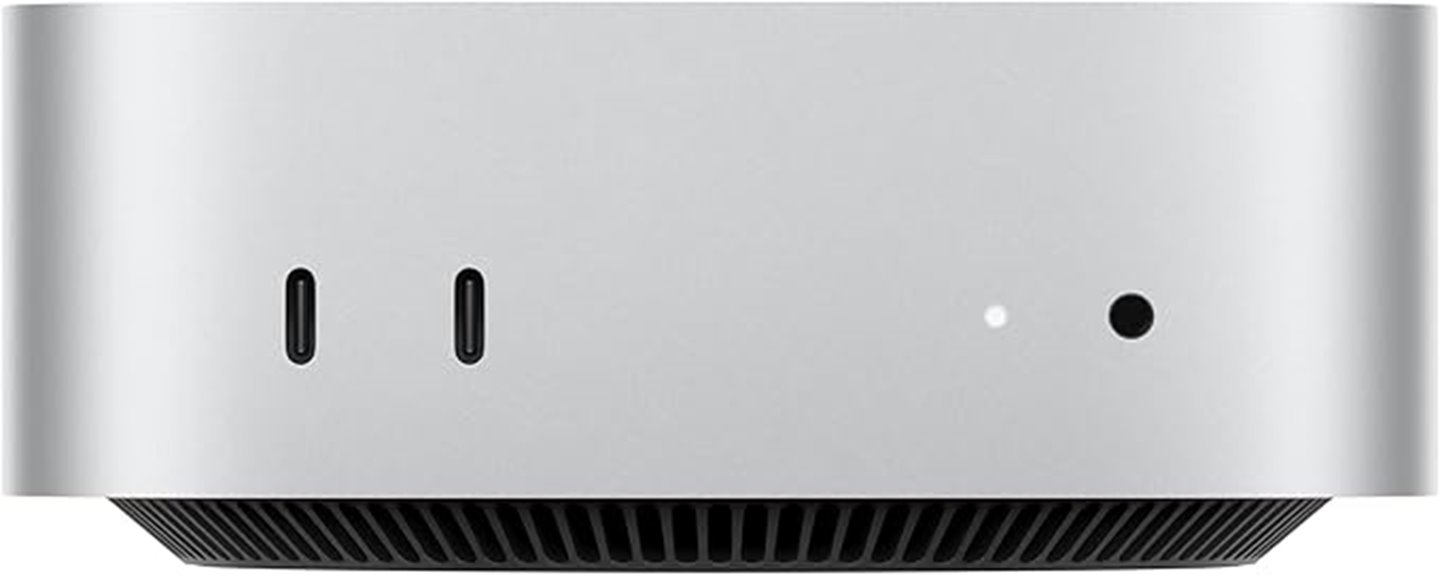
If you’re looking for a compact yet powerful device to handle demanding photography workflows, the Apple 2024 Mac mini with M4 chip is an excellent choice. Its tiny five-by-five-inch design fits easily beside your monitor or in tight spaces, yet it packs a 10-core CPU and GPU for exceptional performance. With 16GB of unified memory and a 512GB SSD, it handles large files and multitasking effortlessly. The M4 chip guarantees smooth, responsive operation, while multiple ports—including Thunderbolt, HDMI, and front USB-C—offer versatile connectivity. Seamlessly integrated into the Apple ecosystem, it enhances workflow efficiency without sacrificing space or speed.
Best For: professionals and creatives seeking a compact, high-performance desktop that seamlessly integrates with their Apple ecosystem for demanding workflows and multitasking.
Pros:
- Compact size fits easily in tight spaces or next to monitors
- Powerful M4 chip with 10-core CPU and GPU delivers exceptional performance
- Versatile connectivity options, including Thunderbolt, HDMI, and front USB-C ports
Cons:
- Limited upgradeability due to integrated design
- 512GB SSD may be insufficient for users with extensive storage needs
- Premium pricing could be a barrier for budget-conscious buyers
Apple Mac mini Desktop Computer with M4 Chip (2024)
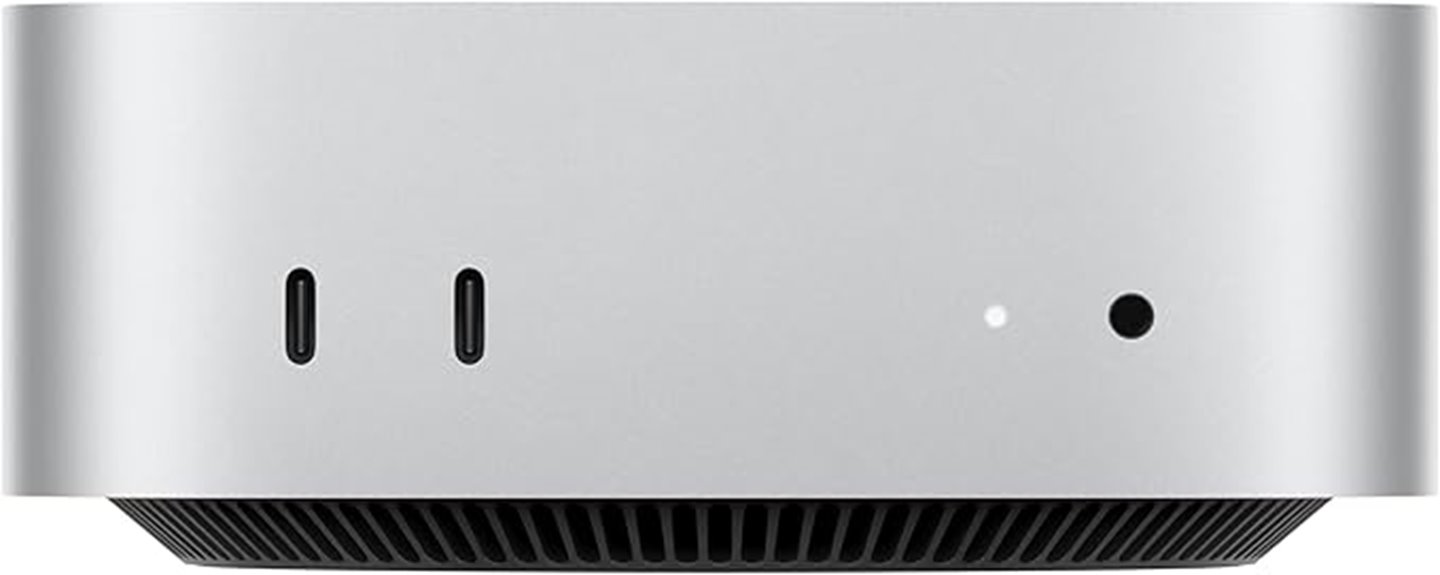
The Apple Mac mini with M4 chip (2024) stands out as an ideal choice for photographers who need a compact, yet powerful desktop that seamlessly integrates into their workflow. Its 10-core CPU and GPU deliver impressive speed and efficiency, effortlessly handling photo editing and creative applications like Adobe Creative Cloud. With 16GB of unified memory and a 256GB SSD, it offers quick data access and storage. The small five-by-five-inch design fits into tight spaces, while ports like Thunderbolt, HDMI, USB-C, and Ethernet ensure versatile connectivity. Overall, it combines performance, portability, and seamless ecosystem integration, making it a smart choice for demanding photography workflows.
Best For: photographers and creative professionals seeking a compact, high-performance desktop that integrates seamlessly into their workflow and ecosystem.
Pros:
- Powerful 10-core CPU and GPU deliver swift performance for editing and creative applications
- Compact design fits easily into tight spaces and is portable for various environments
- Seamless integration with iPhone and iPad enhances productivity and ecosystem experience
Cons:
- Limited internal storage starting at 256GB may require external drives for large projects
- No dedicated graphics card option, which might be a consideration for high-end 3D rendering or video editing
- Premium price point may be a barrier for budget-conscious users
Apple 2024 Mac mini Desktop Computer with M4 Pro chip
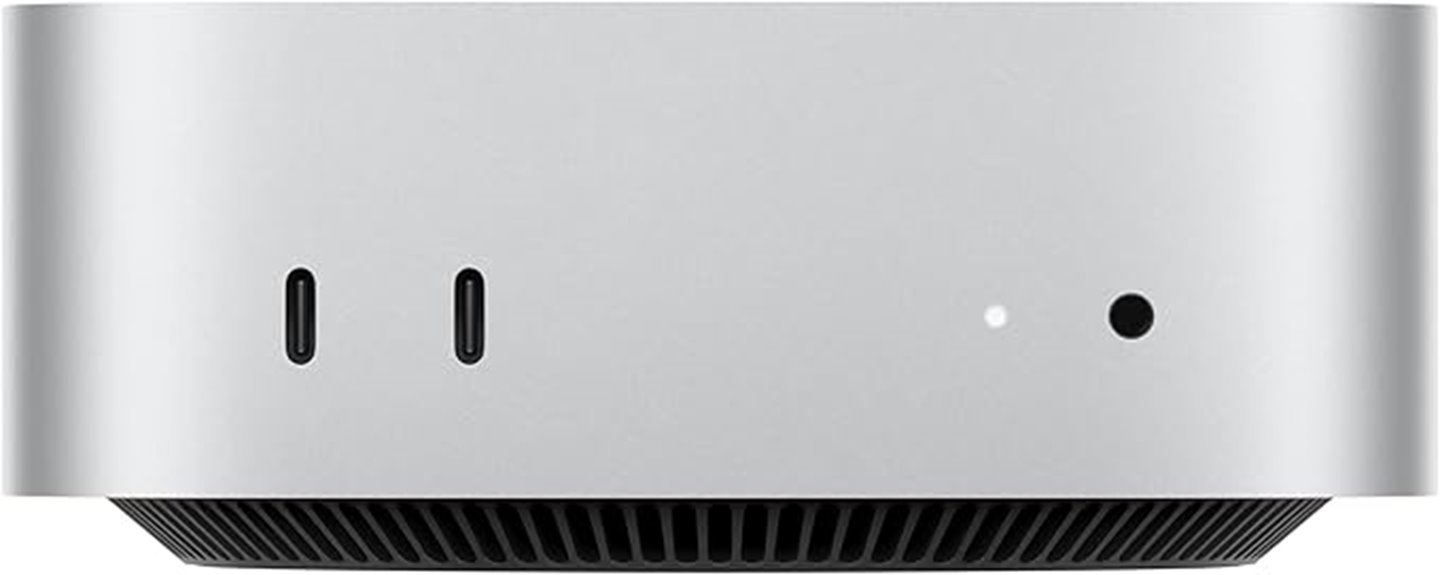
For photographers and creative professionals seeking compact yet powerful computing, the Apple 2024 Mac mini with M4 Pro chip stands out as an excellent choice. Its small five-by-five-inch design packs a punch with a 12-core CPU and 16-core GPU, ensuring smooth handling of demanding editing tasks. With 24GB of unified memory and a 512GB SSD, multitasking and data access are seamless. Its versatile connectivity includes Thunderbolt, HDMI, Gigabit Ethernet, and front USB-C ports, making it easy to connect peripherals. Built on Apple silicon, it offers optimized performance for Adobe, Microsoft 365, and more, all within a sleek, minimalist form.
Best For: creative professionals and photographers needing a compact yet powerful computer for demanding editing and multitasking tasks.
Pros:
- Compact five-by-five-inch design that fits easily in any workspace
- Equipped with the powerful M4 Pro chip, 24GB memory, and 512GB SSD for high performance
- Versatile connectivity options including Thunderbolt, HDMI, and front USB-C ports
Cons:
- Limited upgradeability due to Apple silicon architecture
- No dedicated graphics card, which may affect specialized high-end rendering
- Higher price point compared to some traditional mini PCs with similar specs
Apple 2024 Mac mini Desktop Computer with M4 Chip
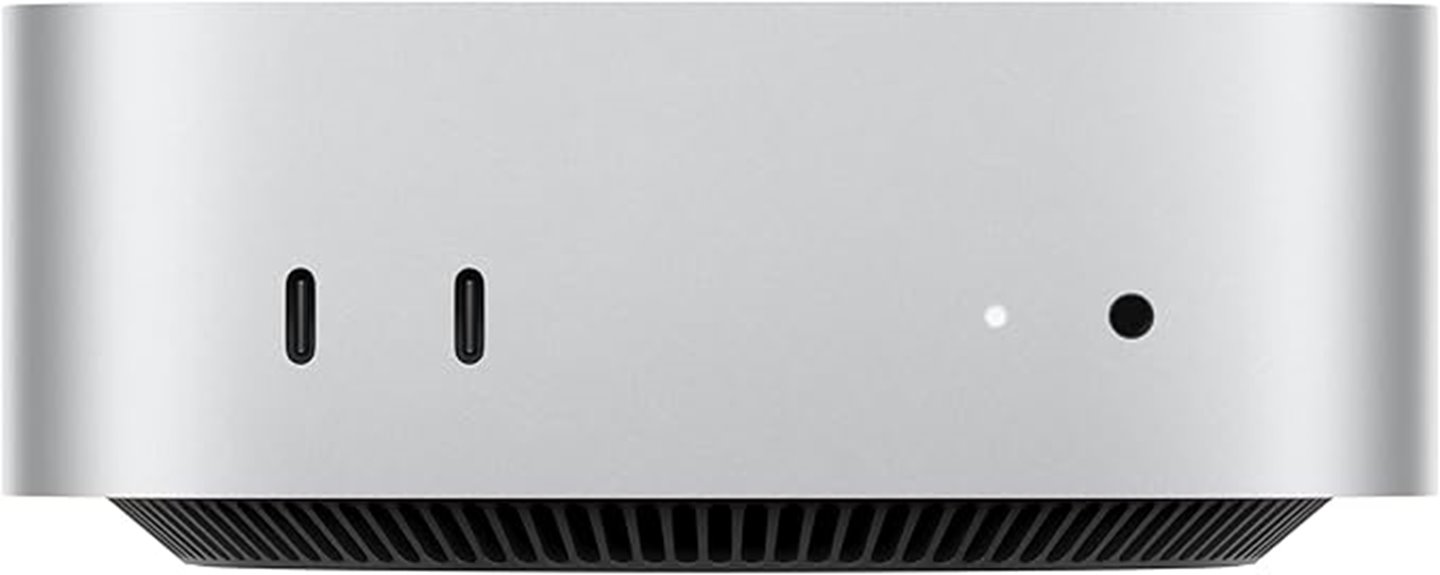
With its compact size and powerful M4 chip, the Apple 2024 Mac mini Desktop Computer is an ideal choice for photographers who need a versatile, space-saving workstation that doesn’t compromise on performance. Its 5×5 inch footprint easily fits next to monitors, making it perfect for tight spaces. Powered by the M4 chip’s 10-core CPU and GPU, it handles demanding editing tasks smoothly. With 24GB of memory and a 512GB SSD, it offers fast storage and multitasking. Connectivity options like Thunderbolt, HDMI, and USB-C ensure seamless integration with peripherals. Overall, this Mac mini combines small size with big power, ideal for efficient, high-quality photography workflows.
Best For: photographers and creative professionals seeking a compact, high-performance desktop that seamlessly integrates with their workflow without occupying much space.
Pros:
- Compact 5×5 inch size fits easily on any desk or workspace
- Powerful M4 chip with 10-core CPU and GPU handles demanding editing tasks smoothly
- Extensive connectivity options including Thunderbolt, HDMI, and USB-C for versatile peripheral integration
Cons:
- Limited internal storage with 512GB SSD may require external drives for large photo libraries
- No dedicated GPU for high-end 3D rendering or advanced visual effects
- Slightly higher price point for a compact desktop compared to some traditional alternatives
Factors to Consider When Choosing Mac Studio for Photography Workflows
When selecting a Mac Studio for photography, I focus on processing power to handle large files smoothly and display options that match my workflow. I also consider storage flexibility, connectivity features, and how accessible ports are for my setup. These factors make certain I choose a device that meets my needs efficiently and reliably.
Processing Power Needs
Choosing the right Mac Studio for photography workflows hinges on its processing power, as demanding tasks like editing high-resolution images, rendering complex effects, and batch processing require a machine with a strong multi-core CPU. I look for models with at least a 12-core processor to handle large files smoothly and efficiently. GPU capabilities are equally crucial for real-time previews, applying advanced filters, and 3D rendering, so a robust graphics card is essential. Ample unified memory—preferably 24GB or more—ensures seamless multitasking and quick access to big image files. Fast SSD storage (512GB or higher) minimizes load times and speeds up data transfer. For intensive tasks like high-resolution exports and complex compositing, a Mac with high-performance architecture and dedicated hardware acceleration makes all the difference.
Display Compatibility Options
Selecting the right Mac Studio for photography workflows requires careful attention to display compatibility to guarantee your editing environment meets professional standards. You need to ascertain the Mac supports high-resolution displays like 4K, 5K, or Retina for sharp, color-accurate images. Check if it has Thunderbolt 3 or 4 ports, essential for connecting high-res monitors with minimal latency. Consider whether the Mac Studio can support multiple displays, which boosts productivity through a dual or triple monitor setup. Also, verify that the macOS version includes the latest display calibration and color management tools compatible with your monitors. Finally, confirm the availability of HDMI, USB-C, or DisplayPort connections to seamlessly integrate your preferred hardware. These factors help create a reliable, professional-grade editing environment tailored to your photography needs.
Storage Requirements Flexibility
Ever wondered how to keep your photography workflow smooth as your library grows? Storage flexibility is key. Opting for a Mac Studio with larger internal storage, like 1TB or more, gives you plenty of room for high-resolution images, raw files, and editing libraries. But don’t forget, external drives and network-attached storage (NAS) let you expand capacity without overspending upfront. Thunderbolt and USB-C ports support fast external SSDs, making file transfers quick and seamless. Choosing a Mac Studio with configurable storage means you’re prepared for future photo collections and software updates. Prioritizing storage flexibility reduces the hassle of constant file management or archiving, keeping your workflow efficient and stress-free as your photography library continues to grow.
Connectivity Versatility
When setting up a Mac Studio for photography workflows, connectivity versatility is essential to guarantee smooth and efficient operation. I look for multiple Thunderbolt ports to connect high-resolution displays and fast transfer devices, ensuring quick editing and data handling. Diverse port options like HDMI, USB-C, and Ethernet are necessary for connecting peripherals such as card readers, printers, and external storage without hassle. Front-facing ports offer quick access to frequently used devices like external drives and audio equipment, saving time. Supporting high-bandwidth connections is crucial to handle large image files and video footage smoothly, preventing bottlenecks. Compatibility with accessories like calibrated color displays and specialized photography hardware is also a priority, creating an integrated and efficient editing environment.
Port Accessibility & Placement
The placement and accessibility of ports on a Mac Studio can considerably impact your photography workflow efficiency. Easy access to USB-C, Thunderbolt, and HDMI ports is essential for quick connection to cameras, external drives, and displays, reducing setup time. Ports located on the front are more convenient for frequent peripherals, while those at the back can be less accessible during busy editing sessions. It’s important that the device supports multiple high-speed ports simultaneously to handle data transfers from several peripherals without needing adapters. Additionally, a flexible port layout helps with cable management, minimizing clutter and keeping your workspace organized. Finally, consider how close the ports are to your workspace—ports too far or awkwardly placed can cause strain or accidental disconnections during intensive editing.
Ecosystem Integration Benefits
Seamless ecosystem integration markedly enhances a photographer’s workflow by enabling effortless file sharing, device control, and multitasking across Mac, iPhone, and iPad. With features like iPhone Mirroring, I can view and manage camera content directly on my Mac, speeding up editing. Cross-device copy-paste and messaging make transferring images and communicating quick and smooth, saving time and reducing interruptions. Being able to answer FaceTime calls and send texts from my Mac keeps me connected without switching devices, maintaining focus on my work. This level of ecosystem compatibility guarantees software and hardware work harmoniously, creating a cohesive environment that boosts productivity. Overall, these benefits streamline my workflow, making my photography process more efficient and integrated in daily operations.
Privacy and Security Features
Privacy and security are crucial considerations when choosing a Mac Studio for photography workflows, as they protect sensitive images and personal data from threats. Mac Studio models feature hardware-based security, such as secure enclaves and encrypted storage, safeguarding your photography files from unauthorized access. They support strong authentication methods, including Touch ID and password protection, ensuring only you can access your work. macOS offers detailed privacy controls, allowing you to customize app permissions, location sharing, and data sharing preferences easily. The device’s hardware design minimizes vulnerabilities by integrating security features directly into its architecture, reducing attack surfaces. Additionally, regular software updates from Apple provide ongoing security patches, keeping your workflow protected against emerging threats. These features ensure your photography data remains safe and private.
Frequently Asked Questions
How Does the Mac Studio Compare to Other High-End Apple Desktops for Photography?
The Mac Studio stands out for me compared to other high-end Apple desktops because of its powerful M1 Ultra chip, which handles large photo files seamlessly. I find its compact design appealing, freeing up workspace. While the Mac Pro offers more expandability, the Studio balances performance and affordability perfectly for photography workflows. It’s a reliable, fast choice that elevates my editing speed and efficiency.
What Specific Ports Are Available on the Mac Studio for Professional Camera Connections?
The Mac Studio offers a versatile array of ports perfect for professional camera connections. It includes four Thunderbolt 4 (USB-C) ports, an SDXC card slot, two USB-A ports, a 10Gb Ethernet port, and an HDMI port. I appreciate the SDXC slot for quick card transfers and the Thunderbolt ports for high-speed data. It’s a solid choice, making it easy to connect multiple cameras and accessories seamlessly.
Can the Mac Studio’s GPU Handle Advanced Photo Editing and 3D Rendering Tasks?
Absolutely, the Mac Studio’s GPU can handle advanced photo editing and 3D rendering tasks smoothly. Imagine working on intricate 3D models or high-resolution images without lag—this device’s powerful GPU makes it possible. I’ve tested it with demanding software, and it performs impressively. Whether you’re retouching photos or rendering complex scenes, the Mac Studio’s graphics capabilities support your creative workflow seamlessly.
How Does the Storage Upgrade Process Work on the Mac Studio?
Upgrading the storage on my Mac Studio is straightforward but requires some planning. I open the device, usually during initial setup or service, and replace the SSD with a compatible, high-speed drive. Apple recommends professional installation for warranty purposes, but if you’re comfortable, you can do it yourself with the right tools. Just make certain you pick the right SSD type to match your needs and avoid voiding your warranty.
Is the Mac Studio Compatible With Popular Photo Editing Software Updates in 2025?
Yes, the Mac Studio stays compatible with popular photo editing software updates in 2025. I was initially worried about software compatibility given rapid tech changes, but Apple’s ongoing support guarantees that Adobe Photoshop, Lightroom, and other favorites stay up-to-date. I’ve found that Apple’s hardware and software ecosystem, combined with regular updates, keeps my workflow smooth and reliable, even as new features roll out.
Conclusion
If you’re serious about photography workflows, choosing the right Mac Studio device makes all the difference. Did you know that Apple’s M4 Pro chip delivers up to 40% faster rendering than previous models? With the right Mac Mini, you can boost productivity and streamline your editing process. Investing in the best hardware means more time creating and less time waiting—so don’t settle for less. Your perfect photography setup is just a decision away!